


France Urges Yemeni Parties to Engage in Good Faith in Political Talks

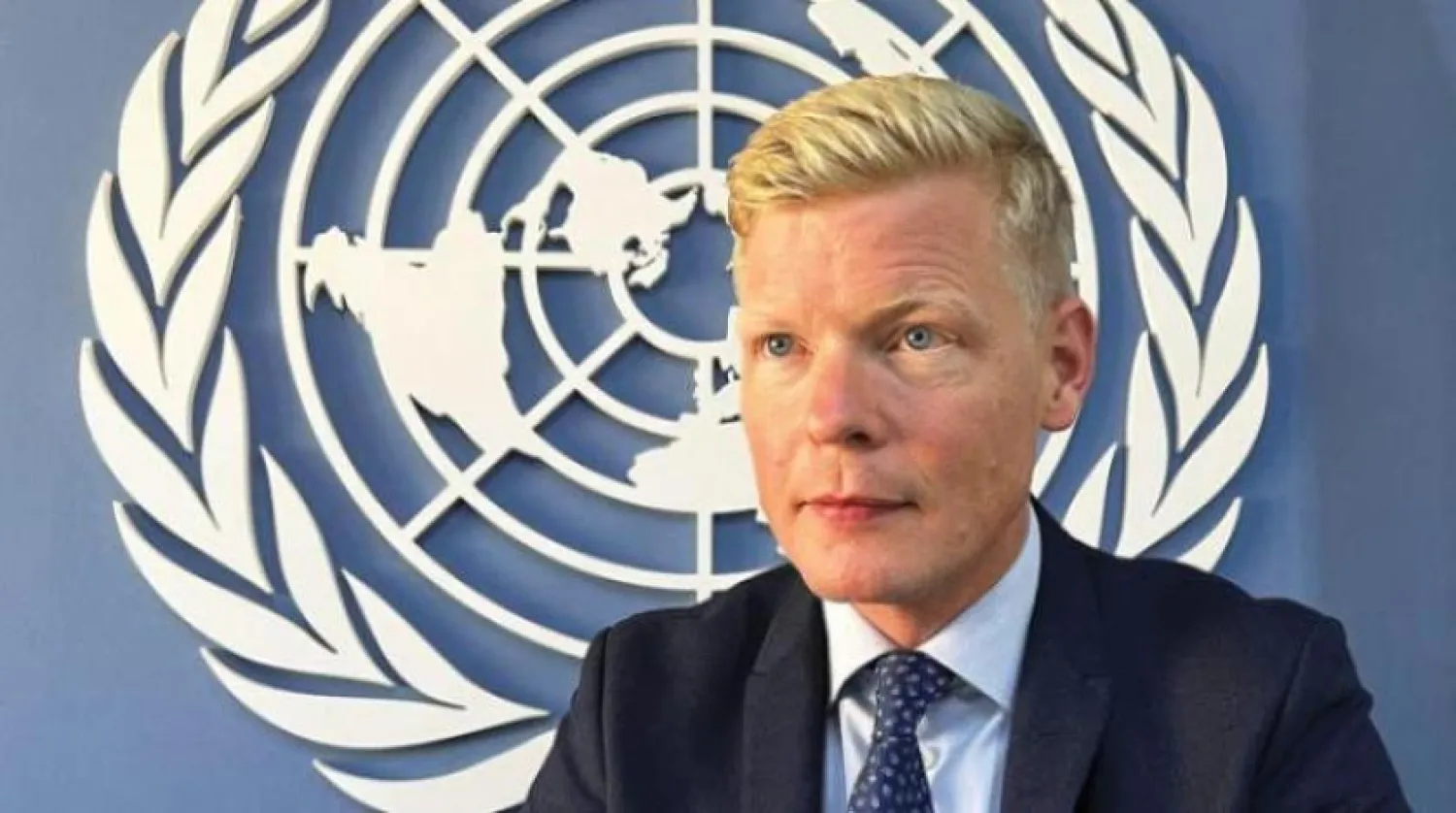
UN Special Envoy to Yemen Hans Grundberg. Reuters
TT

France Urges Yemeni Parties to Engage in Good Faith in Political Talks

UN Special Envoy to Yemen Hans Grundberg. Reuters

France has urged the Yemeni parties, particularly the Houthis, to engage in good faith in the negotiations led by the United Nations and Hans Grundberg, the UN Special Envoy to Yemen.

It commended the Saudi and Omani efforts to reach a ceasefire and revive the political talks.

The UN Special Envoy described the current opportunity for peace between Yemenis as “delicate and rare,” pledging to intensify efforts to achieve a permanent ceasefire and revive the political process.

The French Foreign Ministry offered its condolences to the families of the victims of the stampede in Houthi-ruled Sanaa, which left more than 200 people dead and injured.

“This tragedy underscores the urgent need to end the suffering and the humanitarian crisis experienced by the Yemeni people by resolving the conflict in Yemen,” according to the ministry.

“France reaffirms its full support for the UN Secretary-General’s Special Envoy, whose efforts are vital to achieving a comprehensive political settlement – the only way to bring about a lasting peace and to end the civil war that has been ravaging the country for more than eight years.”

In a statement, a copy of which was obtained by Asharq Al-Awsat, France called on all the parties, “particularly the Houthis, to negotiate in good faith”.

“France commends the efforts by Saudi Arabia and Oman to bring about a comprehensive ceasefire and to revive political negotiations between the Yemeni government and the Houthis under the auspices of the UN.”

“France particularly applauds the positive dynamic that led to the recent release of more than 900 prisoners, notably thanks to the support of the International Committee of the Red Cross and the UN.”

Grundberg said on Monday there is the most serious opportunity in eight years to make progress toward ending the conflict.

He told the UN Security Council that “the parties have recently shown that negotiations can deliver results.”

“I am concerned about recent military activity in Marib, Shabwa, Taiz, and other governorates... I call on the parties to exercise maximum restraint, and refrain from provocative actions.”

The latest developments follow the visit of a Saudi delegation led by the Kingdom's Ambassador to Yemen, Mohammed Al-Jaber, to Sanaa.

Al-Jaber said on Monday his visit to Sanaa aims to stabilize the truce and ceasefire, support the prisoner exchange process, and explore dialogue prospects between the Yemeni components to reach a sustainable and comprehensive political solution.

The Saudi Ministry of Foreign Affairs noted days ago that the “meetings and discussions featured transparency in an optimistic and positive atmosphere”.


Lebanon War Toll Rises to 2,055 Dead as Israel Pounds Country's South

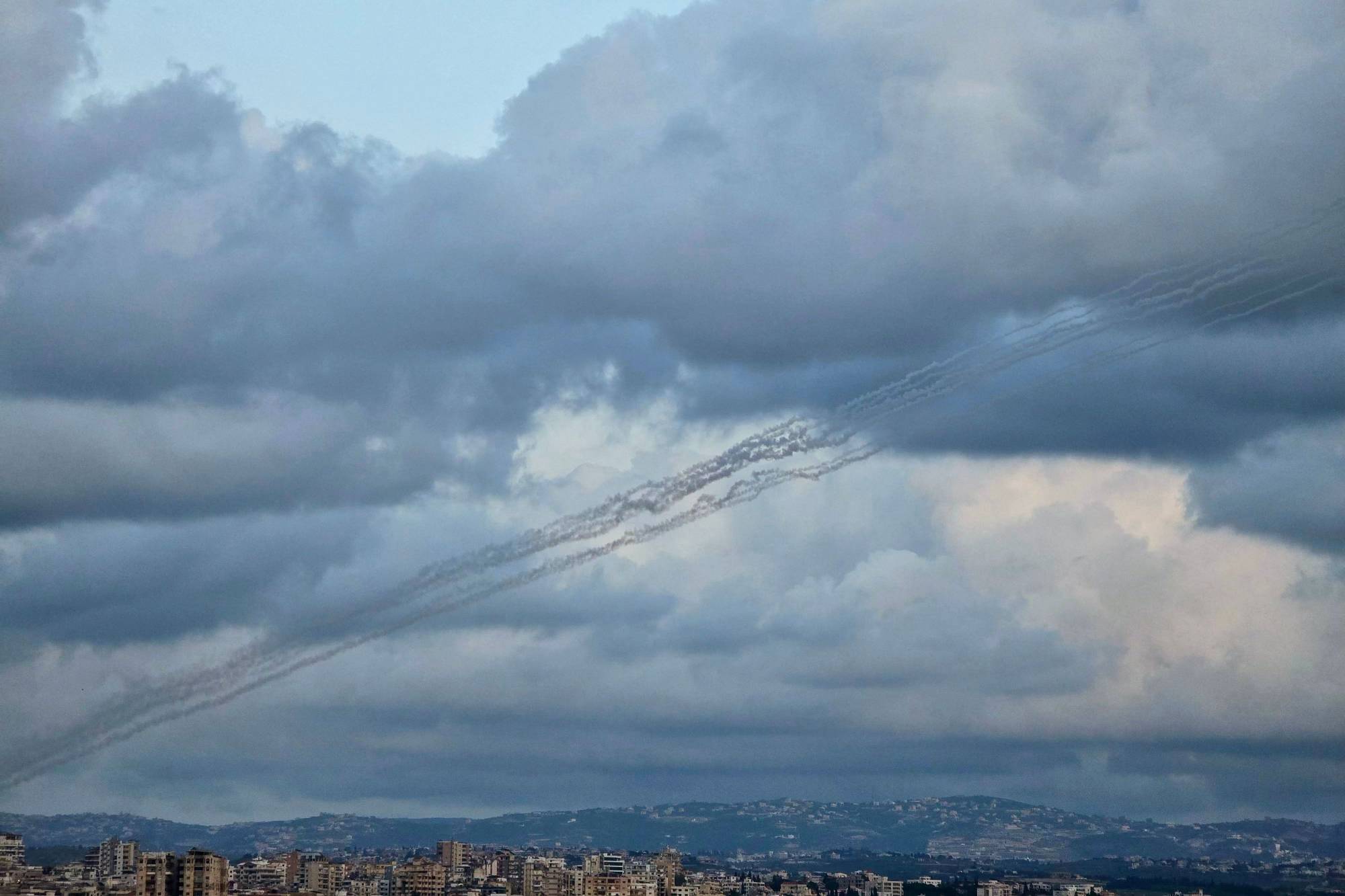
Smoke rises from the site of an Israeli airstrike that targeted the southern Lebanese village of Deik Qanoun al-Nahr on April 12, 2026. (Photo by Kawnat HAJU / AFP)
TT

Lebanon War Toll Rises to 2,055 Dead as Israel Pounds Country's South

Smoke rises from the site of an Israeli airstrike that targeted the southern Lebanese village of Deik Qanoun al-Nahr on April 12, 2026. (Photo by Kawnat HAJU / AFP)

Lebanese official media reported extensive Israeli strikes across the country's south on Sunday as the health ministry said at least five people were killed and the war's overall toll rose to 2,055 dead.

The state-run National News Agency (NNA) reported Israeli attacks on around 30 locations in the country's south on Sunday, with additional strikes on the adjacent West Bekaa area.

The health ministry said an Israeli strike on Qana killed five people, including three women, and wounded 25 others, while the NNA said the raid targeted "homes and infrastructure.”

A photograph taken from the southern Lebanese area of Tyre shows rocket trails fired from Lebanon toward neighbouring Israel on April 12, 2026. (Photo by Kawnat HAJU / AFP)

An AFP photographer in the southern town saw huge destruction as an excavator worked to clear debris and first responders carried a body out from under the rubble.

The ministry raised the overall toll in Lebanon to 2,055 dead, including 165 children and 87 health workers, since war erupted on March 2.

In south Lebanon's Bazuriyeh, Hassan Berro, a rescue worker from the Risala Scout association -- which is affiliated with the Hezbollah-allied Amal movement -- said: "Our emergency center was hit and completely destroyed, along with all its contents, including beds and medical equipment."

The AFP photographer saw windows shattered and debris covering several hospital beds in the building, where walls and ceilings were also damaged.

Hezbollah said it launched attacks on Israeli targets across the border and inside Lebanon, including against troops in the southern town of Bint Jbeil, where the NNA reported heavy fighting.

Israel's army on Sunday accused Hezbollah of using the town's hospital compound "for military purposes.”

Officials from Lebanon, Israel and the United States are due to hold direct talks in Washington on Tuesday, a move Hezbollah has rejected.

Commenting on the planned talks, Israeli Prime Minister Benjamin Netanyahu said on Saturday that "we want the dismantling of Hezbollah's weapons, and we want a real peace agreement that will last for generations.”


Israeli Strike Kills Infant Girl in South Lebanon during Father's Funeral

A member of civil defense personnel holds the body of Taleen Saeed, 1.5 years old, killed in an Israeli strike in the village of Srifa, at the Al Kharab mosque in Tyre, Lebanon, April 12, 2026. REUTERS
TT

Israeli Strike Kills Infant Girl in South Lebanon during Father's Funeral

A member of civil defense personnel holds the body of Taleen Saeed, 1.5 years old, killed in an Israeli strike in the village of Srifa, at the Al Kharab mosque in Tyre, Lebanon, April 12, 2026. REUTERS

Wrapped in bloodied bandages, Aline Saeed, seven, barely survived the Israeli strike on her home in south Lebanon last week. She was there to bury her father as hopes of a truce spread across the region, but a new strike killed her infant sister and other relatives.

The strike on the Saeed family home in the village of Srifa took place on Wednesday, the first day of a US-Iran ceasefire that many in Lebanon hoped would apply to their country, too. Instead, Israeli strikes killed more than 350 across Lebanon and left the Saeed family with four more relatives to bury.

"They said it was a ceasefire. Like all these people, we went up to the village. We went to the casket to read the prayers and walk home... suddenly we felt like a storm was landing right on us," said Nasser Saeed, Aline's 64-year-old grandfather, who also survived, Reuters reported.

On Sunday, he joined other relatives in the southern port city of Tyre to pick up the bodies wrapped in green cloth. One of them, a fraction the size of the rest, contained his granddaughter Taleen, Aline's sister.

She had not yet turned two.

With bandages to his head and right hand and scratches on his face, Saeed mourned in silence as the women around him turned their faces up to the sky and screamed in agony.

The Israeli military said that it did not have enough details to look into the incident, adding that it takes measures to reduce harm to civilians in its strikes against Hezbollah militants.

TALEEN 'BORN IN WAR AND DIED IN WAR'

"This isn't humanity. This is a war crime," Saeed told Reuters at the hospital where Aline's mother, Ghinwa, was still being treated.

"Where are the human rights? If a child - a child! - is wounded in Israel, the whole world jumps up. Are we not people? Are we not humans? We're like them!" he said.

Taleen was born in 2024, in the last round of fierce clashes between Hezbollah and Israel.

"She was born in the war and died in the war," said Mohammed Nazzal, Ghinwa's father.

FIERCE BOMBARDMENT CONTINUES

Iran wants a ceasefire for Lebanon as part of talks with the United States, which concluded on Sunday without a breakthrough. But Israel wants to pursue talks with Lebanese officials through a separate track.

Heavy bombardment on Lebanon has continued, with nearly 100 people killed on Saturday.

Dr. Abbas Attiyeh, head of emergency operations at Tyre's Jabal Amel hospital, said last week's bombardment was one of the heaviest in recent years and many of the patients arriving at his hospital were children.

"The challenges we're facing now are the numbers of wounded that come at the same time, within the same 30 minutes or hour," Attiyeh told Reuters.


Ben Gvir, Settlers Storm Al-Aqsa Mosque

Israeli National Security Minister Itamar Ben-Gvir - REUTERS/Amir Cohen/File Photo
TT

Ben Gvir, Settlers Storm Al-Aqsa Mosque

Israeli National Security Minister Itamar Ben-Gvir - REUTERS/Amir Cohen/File Photo

Israeli National Security Minister Itamar Ben Gvir stormed the Al-Aqsa Mosque compound on Sunday morning with a group of settlers, under the protection of Israeli police.

The Palestinian News Agency (WAFA) reported that “during the incursion, settlers performed Talmudic prayers in the courtyards of Al-Aqsa Mosque, in a new provocative step aimed at imposing a new religious reality at the site and entrenching temporal and spatial division.”

The Jerusalem Governorate said the move comes amid escalating violations against Islamic and Christian holy sites in occupied Jerusalem, and continued restrictions on worshippers’ access.

In a video filmed at the site and published by his office, Ben Gvir said: “Today, I feel that I am the owner of this place,” according to Reuters.

He added: “There is still more to be done, and more that needs to be improved. I continue to press Prime Minister Benjamin Netanyahu to do more. We must continue to move forward step by step.”

Jordan’s Ministry of Foreign Affairs condemned the visit in a statement, describing it as “a flagrant violation of the historical and legal status quo at the Noble Sanctuary, a desecration of its sanctity, an escalation that is condemned, and an unacceptable provocation.”

A spokesperson for Ben Gvir said the minister is seeking to secure more entry permits for Jewish visitors and to allow prayers at the site.

The spokesperson added that Ben Gvir prayed at the site. Netanyahu’s office has not yet commented. Previous visits and statements by Ben Gvir had prompted Netanyahu to issue statements affirming that there is no change in Israel’s policy of maintaining the status quo.
