


UN Official: Yemenis Need Lasting Peace More than Ever

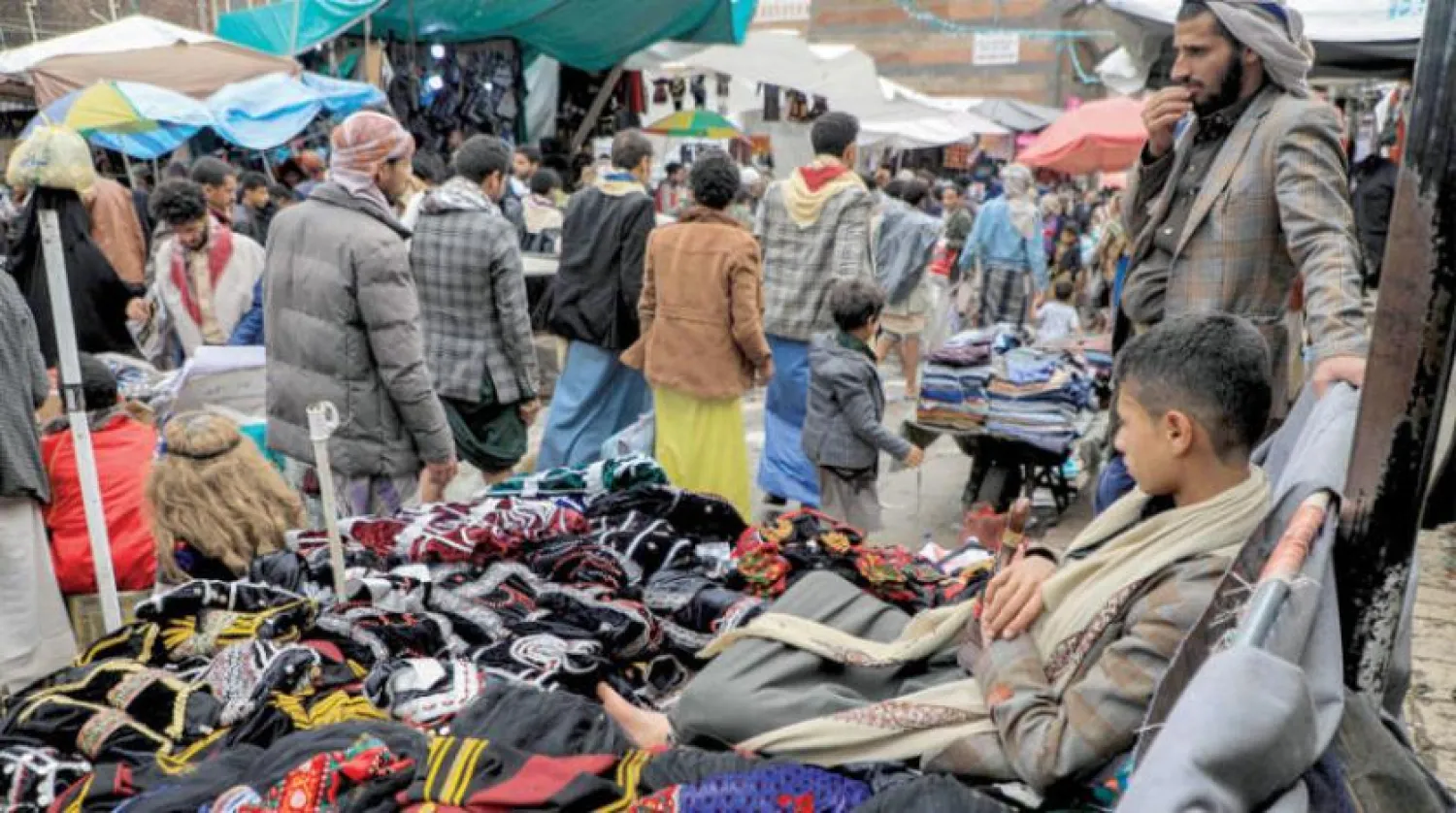
A child sits next to a merchant selling clothes in a market in central Sanaa. (AFP)
TT

UN Official: Yemenis Need Lasting Peace More than Ever

A child sits next to a merchant selling clothes in a market in central Sanaa. (AFP)

Torrential rains have affected over 100,000 people in Yemen in recent weeks, a UN official revealed, warning that the worst is yet to come.

“But more than anything, Yemenis need lasting peace. Now is the time to deliver it,” said Ghada Eltahir Mudawi, Deputy Director, Operations and Advocacy Division, Office for the Coordination of Humanitarian Affairs.

The humanitarian impact has so far been relatively limited, but forecasts indicate worse weather is yet to come, said the official.

She added that the over the past month, the humanitarian community has continued to make progress in reaching underserved areas and that the UN agencies are opening an office in Taiz and conducting missions to remote locations across the country.

Yet, humanitarian work still faces many restrictions in areas controlled by the Iran-backed Houthi militias, said Eltahir.

Last year’s truce provided precious relief for civilians after many grim years of war and ignited hope that an end to the conflict could be closer on the horizon, she continued.

Speaking about the progress made by the meetings of mediators from Saudi Arabia and Oman with Houthi leaders in Sanaa last week, Eltahir stated that there is an unprecedented opportunity to make more progress towards peace.

“If seized, this could help to dramatically improve people’s lives and reduce their suffering.”

“Over recent weeks, we have seen the continued easing of import restrictions. This has allowed more commercial goods into the country, which Yemenis rely on to survive.

“In March, the UN Verification and Inspection Mechanism cleared 41 ships bound for the Red Sea ports, carrying 825,000 tons of commercial food, fuel, and other goods – double the amounts recorded in January,” the UN official said.

“Across the country, more than 21 million people need emergency assistance. Events in recent weeks have added to this already massive humanitarian caseload. Torrential rains have affected over 100,000 people countrywide. The humanitarian impact has so far been relatively limited, but forecasts indicate worse weather is yet to come,” she added.

The official further stated that “preventable diseases like measles and polio are spreading at a dangerous pace, putting Yemen’s youngest at even higher risk. We fear these outbreaks could deteriorate fast, especially in Houthi-controlled areas where we are seeing increasing impediments to immunization.”

Donors have concerns about growing restrictions and interference, especially in Houthi-controlled areas, Eltahir added.

“So far in 2023, aid agencies have reported 628 access constraints. Most of these are in Houthi-controlled areas, and they include movement restrictions and interference in needs assessments and contracting. Incidents have also been reported in government-held areas, including those related to the issuance of work permits,” according to Eltahir.

“I regret to say that one area where little progress has been made is on the issue of movement restrictions for Yemeni female aid workers in Houthi-controlled areas.”

Eltahir went on to say that the “restrictions continue to hinder Yemeni female staff from participating in vital humanitarian activities.”

“And this in turn severely impedes the provision of critical services that can only be delivered by women, while also undercutting our ability to reach the most vulnerable communities.”

“We reiterate our call to the parties to the conflict, especially the Houthi de facto authorities, to uphold their obligations under international humanitarian law, including by facilitating the rapid and unimpeded passage of humanitarian relief and ensuring freedom of movement for humanitarian personnel so they can execute their essential functions.”

The official added that she remains concerned “about continued obstructions, particularly to the overland transport of commercial goods from government- to Houthi-controlled areas.”

“Beyond commercial imports, much more must be done to stabilize Yemen’s economy, such as strengthening people’s incomes, scaling up demining efforts, and restoring basic services. The resumption of oil exports from government-held areas is also critical, including for strengthening foreign currency reserves.”




EU Condemns Israel's West Bank Control Measures

The Israeli settlement of Har Homa, seen from the West Bank city of Bethlehem, Tuesday, Dec. 17, 2024. (AP)
TT

EU Condemns Israel's West Bank Control Measures

The Israeli settlement of Har Homa, seen from the West Bank city of Bethlehem, Tuesday, Dec. 17, 2024. (AP)

The European Union on Monday condemned new Israeli measures to tighten control of the West Bank and pave the way for more settlements in the occupied Palestinian territory, AFP reported.

"The European Union condemns recent decisions by Israel's security cabinet to expand Israeli control in the West Bank. This move is another step in the wrong direction," EU spokesman Anouar El Anouni told journalists.


Atrocities in Sudan's El-Fasher Were 'Preventable Human Rights Catastrophe'

Sudanese displaced people who left El Fasher after its fall, sit in the shade in Tawila at the Rwanda camp reception point on December 17, 2025. (Photo by AFP)
TT

Atrocities in Sudan's El-Fasher Were 'Preventable Human Rights Catastrophe'

Sudanese displaced people who left El Fasher after its fall, sit in the shade in Tawila at the Rwanda camp reception point on December 17, 2025. (Photo by AFP)

The atrocities unleashed on El-Fasher in Sudan's Darfur region last October were a "preventable human rights catastrophe", the United Nations said Monday, warning they now risked being repeated in the neighbouring Kordofan region.


"My office sounded the alarm about the risk of mass atrocities in the besieged city of El-Fasher for more than a year ... but our warnings were ignored," UN rights chief Volker Turk told the Human Rights Council in Geneva.


He added that he was now "extremely concerned that these violations and abuses may be repeated in the Kordofan region".


Arab League Condemns Israel's Decisions to Alter Legal, Administrative Status of West Bank

A general view shows the opening session of the meeting of Arab foreign ministers at the Arab League Headquarters (Reuters)
TT

Arab League Condemns Israel's Decisions to Alter Legal, Administrative Status of West Bank

A general view shows the opening session of the meeting of Arab foreign ministers at the Arab League Headquarters (Reuters)

The General Secretariat of the Arab League strongly condemned decisions by Israeli occupation authorities to impose fundamental changes on the legal and administrative status of the occupied Palestinian territories, particularly in the West Bank, describing them as a dangerous escalation and a flagrant violation of international law, international legitimacy resolutions, and signed agreements, SPA reported.

In a statement, the Arab League said the measures include facilitating the confiscation of private Palestinian property and transferring planning and licensing authorities in the city of Hebron and the area surrounding the Ibrahimi Mosque to occupation authorities.

It warned of the serious repercussions of these actions on the rights of the Palestinian people and on Islamic and Christian holy sites.

The statement reaffirmed the Arab League’s firm support for the legitimate rights of the Palestinian people, foremost among them the establishment of their independent state on the June 4, 1967 borders, with East Jerusalem as its capital.