


Off-grid Solar Brings Light, Time and Income to Remotest Villages

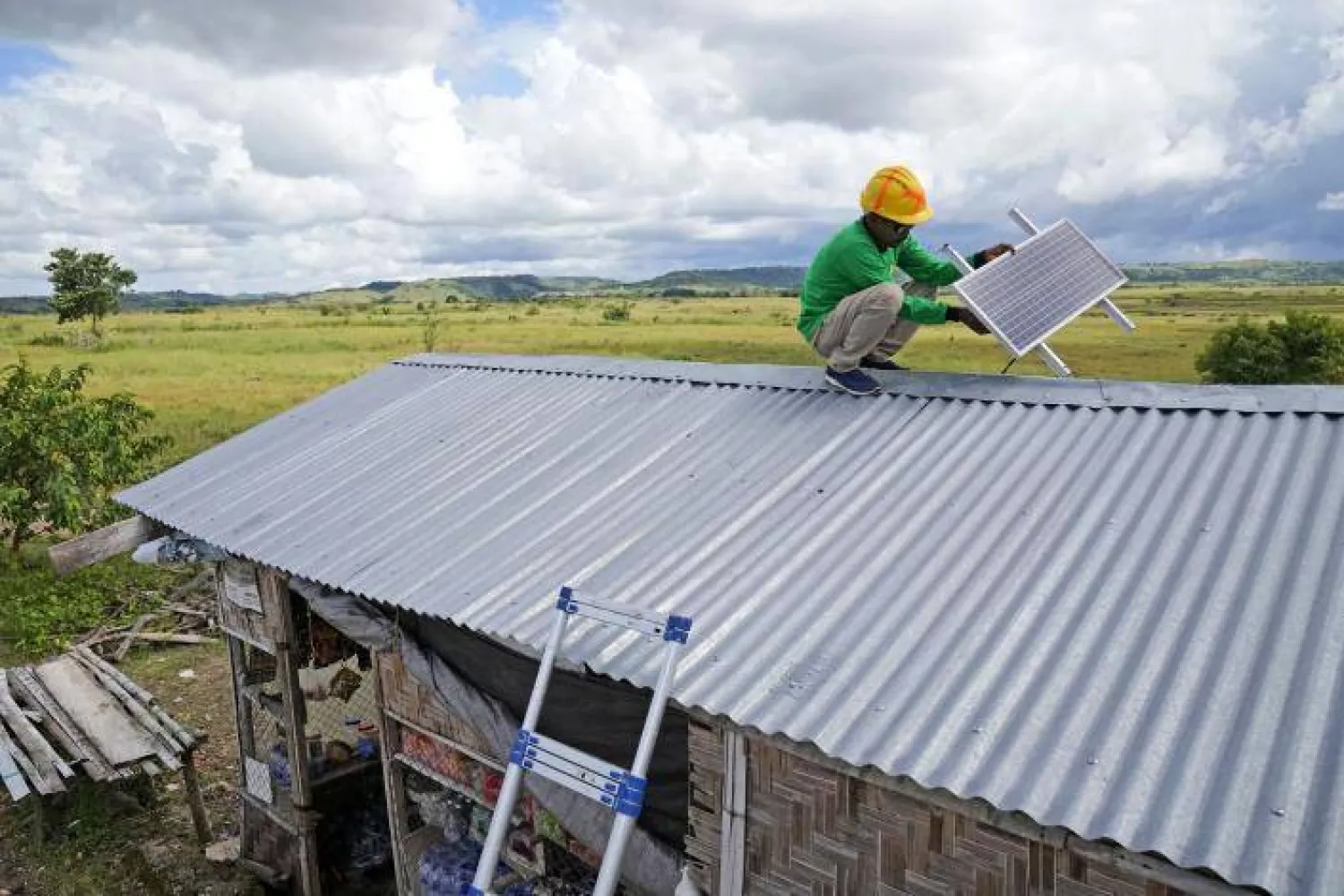
Antonius Makambombu, a worker of Sumba Sustainable Solutions performs maintenance work on a solar panel on the roof of a customer's shop in Laindeha village on Sumba Island, Indonesia, Wednesday, March 22, 2023. (AP Photo/Dita Alangkara)ASSOCIATED PRESSLess
TT

Off-grid Solar Brings Light, Time and Income to Remotest Villages

Antonius Makambombu, a worker of Sumba Sustainable Solutions performs maintenance work on a solar panel on the roof of a customer's shop in Laindeha village on Sumba Island, Indonesia, Wednesday, March 22, 2023. (AP Photo/Dita Alangkara)ASSOCIATED PRESSLess

As Tamar Ana Jawa wove a red sarong in the fading sunlight, her neighbor switched on a light bulb dangling from the sloping tin roof. It was just one bulb powered by a small solar panel, but in this remote village that means a lot. In some of the world's most remote places, off-grid solar systems are bringing villagers like Jawa more hours in the day, more money and more social gatherings.

Before electricity came to the village a bit less than two years ago, the day ended when the sun went down. Villagers in Laindeha, on the island of Sumba in eastern Indonesia, would set aside the mats they were weaving or coffee they were sorting to sell at the market as the light faded, The Associated Press said.

A few families who could afford them would start noisy generators that rumbled into the night, emitting plumes of smoke. Some people wired lightbulbs to old car batteries, which would quickly die or burn out appliances, as they had no regulator. Children sometimes studied by makeshift oil lamps, but these occasionally burned down homes when knocked over by the wind.

That's changed since grassroots social enterprise projects have brought small, individual solar panel systems to Laindeha and villages like it across the island.

For Jawa, it means much-needed extra income. When her husband died of a stroke in December 2022, Jawa wasn’t sure how she would pay for her children’s schooling. But when a neighbor got electric lighting shortly after, she realized she could continue weaving clothes for the market late into the evening.

“It used to be dark at night, now it’s bright until morning,” the 30-year-old mother of two said, carefully arranging and pushing red threads at the loom. “So tonight I work ... to pay for the children.”

Around the world, hundreds of millions of people live in communities without regular access to power, and off-grid solar systems like these are bringing limited access to electricity to places like these years before power grids reach them.

Some 775 million people globally lacked access to electricity in 2022, according to the International Energy Agency. Sub-Saharan Africa and South Asia are home to some of the largest populations without access to electricity. Not having electricity at home keeps people in poverty, the UN and World Bank wrote in a 2021 report. It’s hard for very poor people to get electricity, according to the report, and it’s hard for people who don’t have it to participate in the modern economy.

Indonesia has brought electricity to millions of people in recent years, going from 85% to nearly 97% coverage between 2005 and 2020, according to World Bank data. But there are still more than half a million people in Indonesia living in places the grid doesn’t reach.

While barriers still remain, experts say off-grid solar programs on the island could be replicated across the vast archipelago nation, bringing renewable energy to remote communities.

“Off-grid solar there plays an important role in that it will deliver clean electricity directly to those who are unelectrified,” said Daniel Kurniawan, a solar policy analyst at the Institute for Essential Services Reform.

Now, villagers frequently gather in the evening to continue the day’s work, gather to watch television shows on cell phones charged by the panels and help children do homework in light bright enough to read.

“I couldn’t really study at night before,” said Antonius Pekambani, a 17-year old student in Ndapaymi village, east Sumba. “But now I can.”

Solar power is still fairly rare in Indonesia. While the country has targeted more solar as part of its climate goals, there has been limited progress due to regulations that don't allow households to sell power back to the grid, ruling out a way of defraying the cost that has helped people afford solar in other parts of the world.

That's where grassroots organizations like Sumba Sustainable Solutions, based in eastern Sumba since 2019, saw potential to help.

Working with international donors to help subsidize the cost, it provides imported home solar systems, which can power light bulbs and charge cell phones, for monthly payments equivalent to $3.50 over three years.

The organization also offers solar-powered appliances such as wireless lamps and grinding machines. It said it has distributed over 3,020 solar light systems and 62 mills across the island, reaching more than 3,000 homes.

Imelda Pindi Mbitu, a 46-year-old mother of five living in Walatungga, said she used to spend whole days grinding corn kernels and coffee beans between two rocks to sell at the local market; now, she takes it to a solar-powered mill shared by the village.

“With manual milling, if I start in the morning I can only finish in the afternoon. I can’t do anything else," she said sitting in her wooden home. "If you use the machine, it’s faster. So now I can do other things.”

Similar schemes in other places, including Bangladesh and sub-Saharan Africa, have helped provide electricity for millions, according to the World Bank.

But some smaller off-grid solar systems like these don’t provide the same amount of power as grid access. While cell phones, light bulbs and mills remain charged, the systems don't generate enough power for a large sound system or a church.

Off-grid solar projects face hurdles too, said Jetty Arlenda, an engineer with Sumba Sustainable Solutions .

The organization's scheme is heavily reliant upon donors to subsidize the cost of solar equipment, which many rural residents would be unable to afford at their market cost. Villagers without off-grid solar panels are stuck on waitlists while Sumba Sustainable Solutions looks for more funding. They're hoping for support from Indonesia’s $20 billion Just Energy Transition Partnership deal, which is being negotiated by numerous developed nations and international financial institutions.

There's also been issues with recipients failing to make payments, especially as the island deals with locust outbreaks diminishing crops and livelihoods of villagers. And when solar systems break, they need imported parts that can be hard to come by.

But for now, villagers like Jawa said the solar systems are making a big difference.

“I'm grateful for this lamp," she said, sitting at the loom and nodding towards the hanging bulb. “It will be bright all night.”




Hearing Aids Can Seem Like a Big Step. This NYC Ballet Principal Dancer Doesn't Regret Taking It

 Sara Mearns, principal dancer at New York City Ballet, wearing hearing aids on March 17, 2026, in New York. (AP Photo/Shelby Lum)
Sara Mearns, principal dancer at New York City Ballet, wearing hearing aids on March 17, 2026, in New York. (AP Photo/Shelby Lum)
TT

Hearing Aids Can Seem Like a Big Step. This NYC Ballet Principal Dancer Doesn't Regret Taking It

 Sara Mearns, principal dancer at New York City Ballet, wearing hearing aids on March 17, 2026, in New York. (AP Photo/Shelby Lum)
Sara Mearns, principal dancer at New York City Ballet, wearing hearing aids on March 17, 2026, in New York. (AP Photo/Shelby Lum)

Sara Mearns was missing her cues. She couldn't hear what her dance partner was saying from across the studio. She was late for her entrances because the music sounded too soft.

Without telling anyone, she finally made an appointment to get her hearing checked.

Mearns learned that she had hearing loss. After years of isolation, she got the tools to make sense of a world that had gotten muffled.

Now, she's one of the first dancers with the New York City Ballet to wear hearing aids during performances.

“I feel like it's a whole new chapter of my life,” Mearns, 40, said in an interview with the AP.

While hearing loss is common in older adults, it can happen at any age and can be caused by things like nerve damage, infection or head trauma. For Mearns, it may have been a blend of factors including genetics, medical conditions and exposure to loud noise.

Signs and symptoms of hearing loss According to the National Institutes of Health, less than a fifth of American adults aged 20 to 69 who could benefit from wearing hearing aids have ever used them. That's due to lack of access, shame or embarrassment and just not knowing the symptoms.

“Hearing loss is often not detected by the person because what they can't hear, they don't know,” said Dr. Anil Lalwani, a hearing expert with Columbia University Irving Medical Center.

Still, “there are a lot of symptoms of hearing loss that are not hearing less,” said Dr. Maura Cosetti with Mount Sinai’s New York Eye and Ear Infirmary.

One thing to look out for is saying “what” more often, and not being able to hear friends and family in noisy settings like restaurants. Other symptoms include ringing, a sensation like something is stuck in the ears or conversations sounding muffled.

During the COVID-19 pandemic, Mearns couldn't hear conversations when people were wearing masks.

“I realized that I was reading everybody’s lips to understand what they were saying,” she said.

If experiencing hearing loss, you have options Experts say to let a doctor know if you think you may be experiencing symptoms of hearing loss. They can help you connect with an audiologist or an ear, nose and throat specialist to get a hearing test.

Cosetti with Mount Sinai said the Mimi Hearing Test app can be useful resource to get a sense of your hearing. Seeing a professional is the best way to figure out what's actually going on — like whether your ears are just plugged up with wax or fluid.

Hearing aids fine-tune the sound signal that enters the brain, enhancing speech while lowering background noise. They can be expensive, but many are now available over the counter. Some Apple AirPods also can be used as hearing aids.

For more severe forms of hearing loss, doctors may recommend a device called a cochlear implant, which converts sounds into electrical signals that are sent to the brain. These include a surgically inserted component and can take months to get used to.

Hearing aids are an adjustment, but can be worth it Mearns initially felt embarrassed to step into the booth for her hearing test, knowing she wouldn't be able to hear all the words. Her audiologist, Marta Gielarowiec, helped her understand what she was missing and guided her to appropriate hearing aids.

“It's definitely not a one size fits all. There is a lot of adjustment, tuning and calibration involved,” said Gielarowiec, who runs a practice in New York. “Overall, the goal is to maximize the hearing that’s left.”

Addressing hearing loss can help boost mental health, improve communication and slow cognitive decline for people at high risk of dementia.

When Mearns walked out of her audiologist's office wearing her aids for the first time, she felt overwhelmed. She could hear the pattering of shoes on the ground, the chirping of birds across the street and the billowing of a flag a block behind her. Returning to her dressing room, she cried.

She can now hear the full might of the orchestra when she performs — and take phone calls in her ears.

The life she was living before, she said, was exhausting. At the end of every day she was spent from the strain of asking people to repeat themselves and missing out on conversations and the punch lines of jokes.

“I don’t want people to feel what I felt, where I was embarrassed and I was quiet about it,” she said. “Because now that I’m on the other side, I’m so happy.”


What Effect do Painkillers Have on Blood Pressure?

A man measures his blood pressure using a wrist device (Pixabay)
TT

What Effect do Painkillers Have on Blood Pressure?

A man measures his blood pressure using a wrist device (Pixabay)

People with high blood pressure should exercise caution when using over-the-counter painkillers. No medication is entirely risk-free.

Anti-inflammatory painkillers such as ibuprofen can raise blood pressure, increasing the risk of heart attack or stroke.

Patients with hypertension are advised to avoid them. Paracetamol is considered an alternative, but it may also raise blood pressure. It is important to understand this, as continued use could increase the risk of heart attack or stroke.

Blood pressure, heart attacks and painkillers

In 2004, Merck & Co. withdrew rofecoxib (Vioxx) from the market after it was found to increase the risk of heart attacks and strokes. This prompted a broader review of similar drugs known as nonsteroidal anti-inflammatory drugs (NSAIDs).

These widely used medications relieve pain, reduce inflammation and lower fever. They include over-the-counter drugs such as aspirin, ibuprofen (Advil, Motrin) and naproxen (Aleve), as well as prescription drugs such as celecoxib (Celebrex), according to Harvard Medical School.

It soon became suspected that all NSAIDs, except aspirin, increase the risk of heart attack. This led the US Food and Drug Administration to require warning labels about this side effect on all NSAIDs. Earlier this year, the agency reviewed whether to ease the warning on naproxen after analysis suggested a lower heart risk compared with other NSAIDs. However, an advisory panel voted against changing the label, so the warning remains in place for all NSAIDs.

Tips for using painkillers

- Use the safest option

Unless advised by a doctor, avoid over-the-counter painkillers such as ibuprofen, naproxen sodium or ketoprofen. Instead, use options less likely to raise blood pressure, such as aspirin or paracetamol.

- Follow directions

Use medication as instructed and follow recommended dosages. Most painkillers should not be used for more than 10 days. If pain persists, consult a doctor, according to WebMD.

- Monitor blood pressure regularly

This is important for anyone with hypertension, especially when using medications that may raise blood pressure.

- Be aware of drug interactions

Many medications used to treat common conditions can interact with over-the-counter painkillers. NSAIDs, for example, may interfere with commonly used blood pressure medications.

Dr Nieca Goldberg, a cardiologist and spokesperson for the American Heart Association, said taking aspirin with prescribed blood thinners such as Eliquis, Coumadin, Plavix and Xarelto may be risky. Patients taking prescription medications for blood pressure or other conditions should consult a doctor about which over-the-counter drugs to avoid.

- Read the medication leaflet

Review side effects and potential drug interactions listed with the medication.

- Check all ingredients

Painkillers such as aspirin, paracetamol and ibuprofen may be present in unexpected products, including cold or heartburn medications.

- Inform your doctor of all medications and supplements

Drug interactions are a real risk. Healthcare providers need to know all medications being taken, including over-the-counter drugs, herbal remedies and vitamins.

Goldberg added that patients should bring a list of all medications and supplements they take to their doctor, as this could be life-saving.


How Does Mental Health Affect Diabetes Patients?

Depression causes fatigue and lack of motivation for self-care (File- Reuters)
TT

How Does Mental Health Affect Diabetes Patients?

Depression causes fatigue and lack of motivation for self-care (File- Reuters)

Mental health has a direct and bidirectional impact on people with diabetes. Psychological stress such as loneliness, anxiety and depression can raise blood sugar levels through hormonal effects, while also reducing motivation for self-care.

According to Healthline, estimates suggest that about 10% of patients experience depression and 25% experience mood fluctuations, negatively affecting adherence to treatment and glucose monitoring.

Diabetes and loneliness

Loneliness is closely linked to an increased risk of developing type 2 diabetes and to worsening health outcomes in those who already have the condition.

Chronic loneliness triggers stress hormones such as cortisol, increasing insulin resistance and raising blood sugar levels. It may also lead to neglect of self-care and unhealthy lifestyle habits.

Relationship between loneliness and diabetes:

Studies suggest loneliness and social isolation may increase the risk of developing type 2 diabetes by up to 32%.

Higher levels of loneliness have been observed among patients with chronic complications such as retinopathy or neuropathy.

Loneliness activates the body’s stress response on a daily basis, increasing cortisol and disrupting blood sugar regulation.

Studies indicate loneliness may raise the risk of heart disease in people with diabetes by up to 26%.

People experiencing loneliness are more likely to be physically inactive, smoke, and follow unhealthy diets.

Diabetes, anxiety and depression

Anxiety and depression have a two-way relationship with diabetes. Depression increases the risk of developing type 2 diabetes, and people with diabetes are more likely to experience depression, which negatively affects blood sugar control.

Relationship between diabetes, depression and anxiety:

People with diabetes are two to three times more likely to develop depression.

Depression risk increases in both type 1 and type 2 diabetes, reducing quality of life.

Depression leads to fatigue and low motivation for self-care, raising blood sugar levels.

The daily burden of managing diabetes may lead to “diabetes distress,” a mix of frustration and anxiety.

Managing stress to control diabetes

Psychological support: speaking with a doctor or mental health specialist is essential.

Integrated care: combining mental health care with diabetes management.

Lifestyle measures: regular exercise, healthy eating, and adherence to medication schedules.

Physical activity: helps reduce stress hormones and improve insulin sensitivity.

Relaxation techniques: yoga, meditation and deep breathing.

Adequate sleep: sleep deprivation increases cortisol levels.

Continuous monitoring: use of continuous glucose monitoring devices.