
Cairo, Prague to Boost Water Cooperation

A fisherman uses his boat to collect plastic garbage from the Nile River in Giza, Egypt May 20, 2021. REUTERS/Mohamed Abd El Ghany
TT

Cairo, Prague to Boost Water Cooperation

A fisherman uses his boat to collect plastic garbage from the Nile River in Giza, Egypt May 20, 2021. REUTERS/Mohamed Abd El Ghany

Egypt's Minister of Water Resources and Irrigation Hani Sweilam has met the Czech ambassador to Egypt, Ivan Gokl, to discuss bilateral cooperation in water resources.

The Egyptian minister hailed the “constructive cooperation between Egypt and Czechia in the past years”, according to an Egyptian cabinet statement on Thursday.

He further affirmed the “country’s wish for this cooperation to continue and be reinforced in the coming period”.

For his part, the ambassador noted that his country is keen to cooperate with Cairo in all fields, including water resources.

Egypt suffers a deficit in water resources with an estimated need of 114 billion cubic meters, while the resources total 74 billion cubic meters, according to official data.

The Egyptian government seeks to diversify water resources through seawater desalination and consumption rationalization to fight the water scarcity risks.

The Egyptian minister and the Czech ambassador discussed the transfer of Czech expertise to the Egyptians in manufacturing pump units’ spare parts as well as the construction of a maintenance center to carry out urgent maintenance of the pump units in cooperation with the Czech side.

They also touched on the coordination in the research field through the National Water Research Center (affiliated with the Ministry of Water Resources and Irrigation) and the Czech universities and research centers.

The aspects of coordination include water treatment, desalination, modern and smart irrigation, and studies to enhance the efficiency of pumps and cooling systems, in addition to the Czech offering training courses for the experts at the Ministry of Water Resources and Irrigation and the National Water Research Center.

For his part, Sweilam showcased on Thursday his country’s efforts to put the water issue at the core of international climate action through the fifth edition of Cairo Water Week and COP27.

He further called on Czechia to support the Action on Water, Adaptation, and Resilience (AWARe) international initiative, which was launched by Egypt during COP27 in Sharm Sheikh.

Egypt relies on the Nile River in securing 97 percent of its water resources. The country’s annual share of the Nile River is 55.5 billion cubic meters.

There is an ongoing dispute between Egypt and Ethiopia because of the Renaissance Dam which Ethiopia built on the main tributary of the Nile River. Egypt fears that the GERD will have a negative impact on the country's water supply.


Syrian Govt Accuses ‘Outlaw Groups’ of Blocking Sweida-Damascus Highway

Part of the halted traffic on the Sweida-Damascus road on Saturday (circulated online)
TT

Syrian Govt Accuses ‘Outlaw Groups’ of Blocking Sweida-Damascus Highway

Part of the halted traffic on the Sweida-Damascus road on Saturday (circulated online)

The Syrian government on Saturday accused “outlaw groups” of completely blocking the Sweida-Damascus highway, while websites affiliated with Sheikh Hikmat al-Hijri reported that relatives of detainees from Sweida had blocked the road to demand the immediate release of their family members.

Qutaiba Azzam, director of media relations at the Sweida Media Department, said the groups had closed both directions of the highway at the Um al-Zaytun checkpoint, which they control. He added that internal security forces continued to facilitate passage at the al-Matouna checkpoint.

The "outlaw groups", affiliated with Druze spiritual leader Sheikh Hikmat al-Hijri reportedly blocked around 100 employees from reaching their workplaces in northern Sweida on Wednesday and had previously prevented students from travelling to sit for general certificate examinations.

Tensions persist in southern Syria amid Israeli incursions and attacks, with the risk of escalation growing between government forces and the groups controlling Sweida.

Remarks by US envoy to Syria, Tom Barrack, criticizing al-Hijri sparked anger among his supporters, whose media office said in a statement published on its official accounts late Friday that the comments amounted to “systematic and unacceptable targeting.”

The statement rejected describing Sweida’s Jabal al-Arab region as a “center for captagon production,” claiming that captagon production networks were controlled and protected by transnational forces, security agencies, and sectarian and regional militias, which it accused of using drugs to destabilize the region and finance chaos.

Al-Hijri’s office rejected Barrack’s claims that the Druze leader was exploiting perceived Israeli support and US backing, saying the leadership had never sought support from Washington or elsewhere.

Barrack also accused al-Hijri of persecuting fellow Druze and described the Sweida-Daraa area as a major hub for captagon production and trafficking. He defended Israeli operations in southern Syria on security grounds and praised Damascus for exercising restraint to avoid wider escalation.

Barrack said an understanding between Syria and Israel remained possible.

Meanwhile, Sweida Governor Mustafa al-Bakour said residents of the province were struggling with deteriorating living conditions and lawlessness under the control of “outlaw groups.” He cited threats and kidnappings and accused the groups of obstructing solutions to protect their own interests.


Baghdad Suspects Israel Targeted Chinese Air Defense Systems Held by Iraqi Factions

An image taken from a video released by Iraqi factions showing a drone they used in an attack on a US base.
TT

Baghdad Suspects Israel Targeted Chinese Air Defense Systems Held by Iraqi Factions

An image taken from a video released by Iraqi factions showing a drone they used in an attack on a US base.

Sources said Baghdad suspects that two sites storing Chinese-made man-portable air defense systems were targeted in airstrikes last week, as officials examine an intelligence assessment suggesting that the US-Israeli war against Iran may have already resumed, even before the official start of hostilities, but on Iraqi soil.

On October 17, the Popular Mobilization Forces (PMF) announced that it had contained a fire caused by an explosion at a stockpile of damaged ammunition inside one of its facilities in the East Canal area of Baghdad. It said five people sustained minor injuries and that an investigation was underway to determine the circumstances of the incident.

More than a week has passed without the findings of the investigation being announced. However, an Iraqi government official who was not authorized to speak publicly said the relevant authorities were still examining the circumstances of the explosion.

Chinese Air Defense Systems

Sources told Asharq Al-Awsat that the two sites were suspected of having come under attack, destroying a large shipment of Chinese-made air defense systems that had recently arrived from Iran and been transferred to Iraqi factions loyal to Tehran.

One source explained that "the armed faction that selected the site to store the air defense systems believed it would be extremely difficult to access or detect."

The source added that "the suspected attack occurred shortly after the shipments arrived at the two storage sites."

Another source revealed that the explosion followed a series of blasts that began on October 1 and targeted warehouses belonging to armed factions in various areas around Baghdad, including facilities storing drones designed for suicide attacks and reconnaissance.

According to the sources, several armed factions have been actively transferring advanced air defense systems and drones from Iran to Iraq over the past few weeks and storing them at facilities under their control.

Unconfirmed reports had suggested that secret shipments from China to Iran included heat-seeking man-portable air defense systems designed to counter low-flying aircraft, including helicopters and drones.

On July 28, China's Foreign Ministry categorically denied reports of deals involving the sale or shipment of Chinese-made missiles and air defense systems to Iran.

Repositioning

The factions' activities coincided with the participation of several of them in the government led by Ali al-Zaidi, following reports that US approval had enabled their inclusion after they were granted an extension until June 30, 2027, to comply with a deadline for bringing weapons under state control.

Two people close to the leader of an armed faction told Asharq Al-Awsat that "Iran-aligned groups were exploiting the declared truce with the Americans to reposition themselves and transfer strategic weapons."

Israel May Be Behind the Attack

It remains unclear how the strikes were carried out, whether by fighter jets or drones.

Conflicting reports have described sorties by Israeli fighter jets, supported by aerial refueling aircraft, through Iraqi airspace near the Iranian border. However, this information has not been independently confirmed.

A security official told Asharq Al-Awsat that authorities in Baghdad had sufficient grounds to believe Israel was behind the strikes on the warehouses, although they had yet to determine how the attacks were conducted.

An Iraqi official said the government was focused on investigating the incident because of the extensive damage inflicted on the two sites and surrounding areas.

The official confirmed that the government did not yet possess conclusive information identifying those responsible for the attack.

He added that Prime Minister Ali al-Zaidi and senior military commanders were working to gather further information about the strikes and determine whether they were linked to reports of Israeli violations of Iraqi airspace that began after the withdrawal of coalition forces on September 30, 2026.

The information, including reports that the air defense systems had reached Iraq, could not be independently verified.

Asharq Al-Awsat sought comment from the Iraqi government spokesperson and security media officials regarding the strikes, the extent of the damage and whether investigators had uncovered evidence identifying those responsible. No response had been received by the time this report was prepared.

The War May Have Already Begun

A senior political adviser said the attack reflected an assessment within Iraqi intelligence circles that the resumption of the US-Israeli war against Iran may already have begun, albeit quietly and without an official announcement, on Iraqi territory.

According to this assessment, the operation involves targeting the supply lines of armed factions and disrupting weapons shipments to prevent them from participating in any renewed regional confrontation.

A senior figure in the Coordination Framework said leaders of ruling political parties had believed for weeks that a renewed war between Washington and Tehran would begin with the complete destruction of the military capabilities of Iraqi armed factions.

Iraqi factions placed particular emphasis on violations of Iraqi airspace when a truce was announced in conjunction with the withdrawal of US forces.

On September 30, the secretary-general of Kataib Hezbollah announced the group's commitment to suspending military operations but excluded what he described as "attacks involving aircraft and hostile violations of airspace" until government air defenses were fully established.

On Saturday, the group calling itself the Islamic Resistance in Iraq said it had "documented 171 violations of Iraqi airspace by combat and reconnaissance aircraft since the beginning of October 2026."

The Coordination Framework official told Asharq Al-Awsat that Iranian Revolutionary Guard Corps officials had instructed leaders of Iraqi armed factions to step up preparations to establish a defensive line "against hostile combat aircraft."


Israeli Forces Displace Hebron Families after Deadly Attack

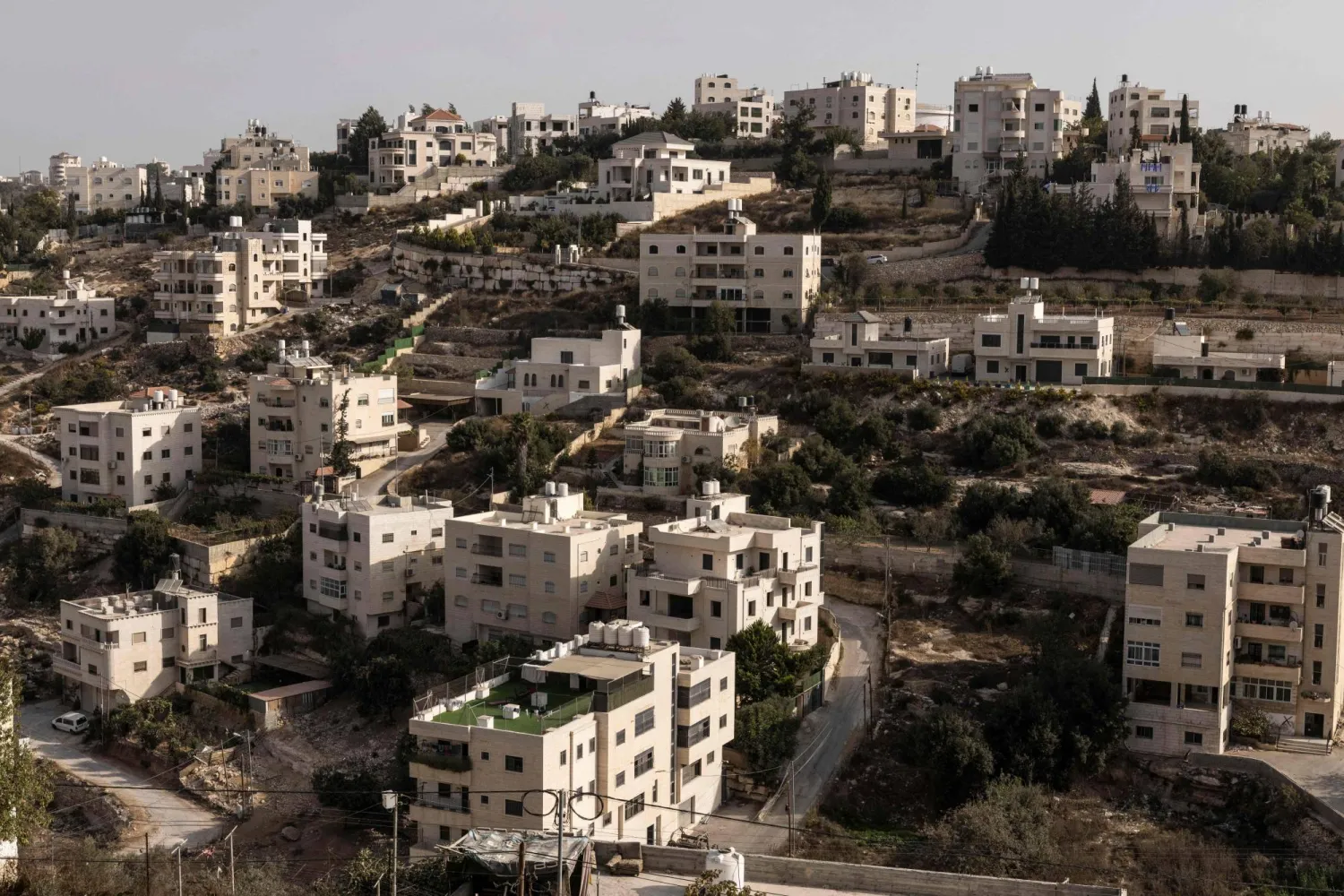
This picture shows empty residential buildings after the Israeli army forced Palestinians to evacuate the Ein Deir Baha neighborhood in occupied West Bank city of Hebron on October 24, 2026. (Photo by JOHN WESSELS / AFP)
TT

Israeli Forces Displace Hebron Families after Deadly Attack

This picture shows empty residential buildings after the Israeli army forced Palestinians to evacuate the Ein Deir Baha neighborhood in occupied West Bank city of Hebron on October 24, 2026. (Photo by JOHN WESSELS / AFP)

Israeli forces pushed into the occupied West Bank city of Hebron on Saturday and displaced around 250 families, some in the middle of the night, vowing to exact a heavy price for a deadly attack on soldiers.

The Palestinian Authority called for international pressure on Israel to protect residents, who said soldiers announced the evacuations over loudspeakers late at night as they packed what they could and left.

Days before tight elections, Prime Minister Benjamin Netanyahu said he was planning an operation on a scale not seen since Israel first occupied the West Bank in 1967, after Palestinian militants killed two Israeli soldiers on Friday at a checkpoint.

In the Hebron neighbourhood of Ein Deir Baha, nestled between two hills, vacated buildings were marked by X's and the streets were deserted, save a pair of Israeli military vehicles. Israeli flags were draped on a house on the slope apparently taken over by troops.

Higazi Shawer al-Tamimi, 70, a shopkeeper who sells live chickens and feed and plays a leadership role in the neighbourhood, said he was awakened at 1:00 am by soldiers and a senior officer who said he had to leave.

"I asked them how long the evacuation would last. They said: 'Until further notice.'"

He told AFP he had only short time to pack, adding that for some residents, getting out of the neighbourhood was an ordeal.

"For example, my wife's mother, who is 90 years old and lives in the area, had to be carried out because she is ill," he said.

- 'Why should I be displaced?' -

To Tamimi, this is only happening because Netanyahu wants to win the election on "the blood of the Palestinian people".

He said people were not going anywhere. "I have lived through all the stages of the occupation, and I will die here."

The Palestinian Authority said it was mobilising its diplomats to seek "urgent international action that goes beyond condemnation" to prevent forced displacement.

Tamimi's brother, Khaled Shawer al-Tamimi, 68, was staying with his son after the evacuation order.

"The army was announcing through loudspeakers: 'Leave the area.' So we left."

He told AFP he was surprised to hear Friday's assailants came from the neighbourhood, which he described as middle-class and law-abiding.

"We have never seen or even heard a single gunshot being fired," he said from his son's sitting room as children flitted about.

"Why should I be displaced from my house?" he continued. The attackers "are the ones who carried out the act, and if the Israeli government wants to punish them, it can punish them."

Israeli forces have already demolished some buildings in the immediate vicinity of where the attack took place, and the Tamimis said they did not know if their homes would meet the same fate.

Hebron governor Khaled Dudin told AFP the army started in the attackers' neighbourhood "but there is no guarantee that the operation will not expand", calling it a form of "collective punishment".

The governor said 150 families had been affected, while Hebron mayor Youssef al-Jaabari and local activist Issa Amro put the figure at 250.

- Netanyahu promises PA 'surprise' -

The Israeli military said it was "conducting precise, targeted and thorough searches" focused on the area of the two gunmen, who were both killed in a firefight. It added that the operation would last several days.

But Netanyahu suggested that bigger action was coming.

Asked if he agreed with the idea of dismantling the Palestinian Authority, as has been suggested by his far-right national security minister Itamar Ben Gvir, Netanyahu referred to Israeli military operations in Gaza, Lebanon, Syria and Iran.

"We transformed the Middle East," he said, repeating a common campaign refrain, in an interview with i24News.

"There is a very big surprise for the Palestinian Authority as well."

There is no evidence that the Palestinian Authority had any involvement in Friday's attack.

Netanyahu has linked the assailants to Hamas, the militant group in Gaza that carried out the October 7, 2023 attack, the deadliest in Israel's history.

Hamas, while not claiming credit, hailed Friday's attack on soldiers and called on Palestinians to carry out more.

The attack came amid rising tensions in the West Bank as Israeli settlers, who enjoy strong support from Netanyahu's far-right allies, ramp up seizures of Palestinian land and attacks.

Rights group Yesh Din reported 672 incidents of settler violence over the past 26 days, nearly half related to the annual olive harvest.

Polls show Netanyahu is neck and neck with an opposition bloc led by Gadi Eisenkot, a centre-right former military chief who also opposes a Palestinian state but has promised to crack down on settler violence.