Italy's Luxury Groups Set Aside Rivalries to Keep it Local

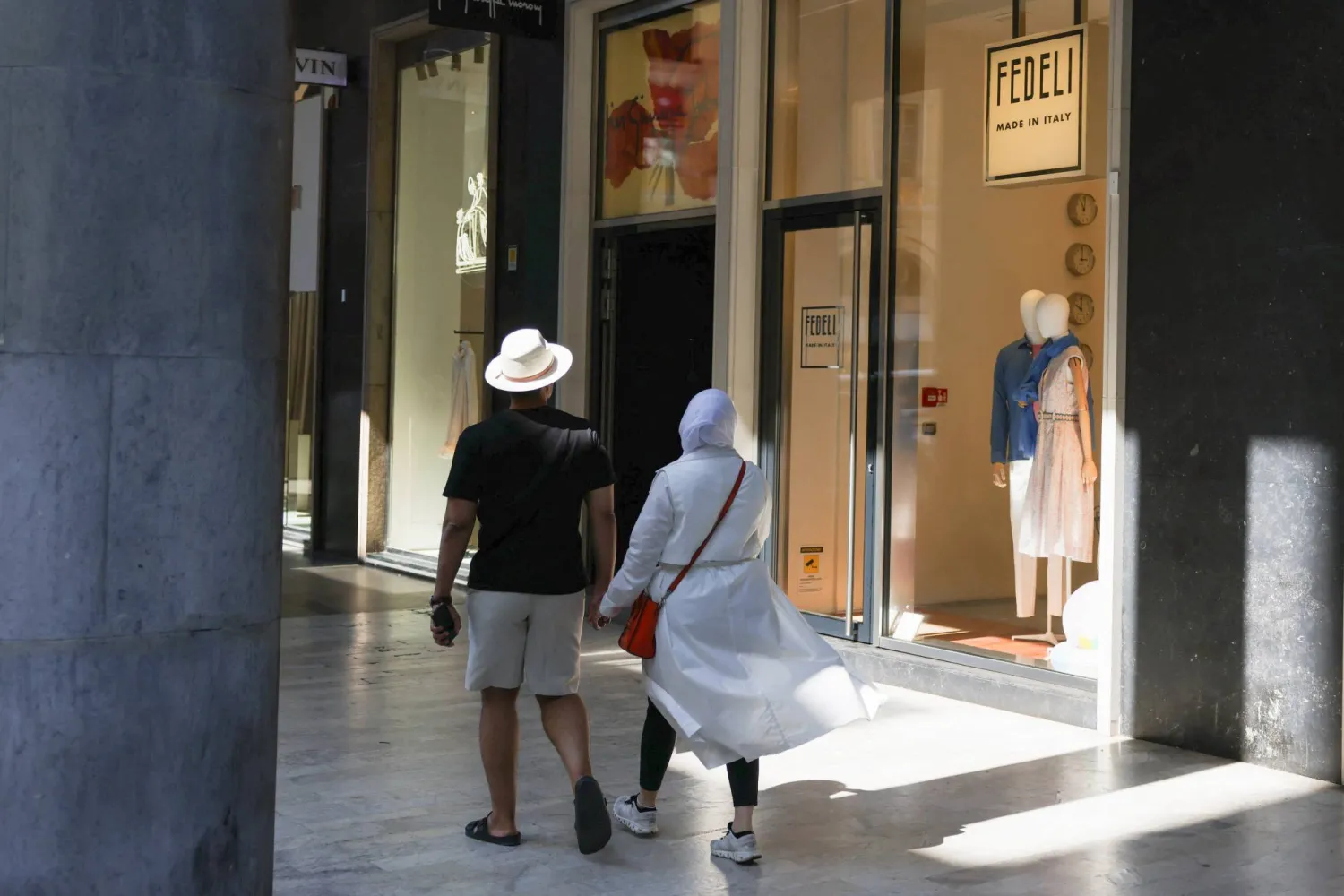
A couple walks by an Italian knitwear brand Fedeli shop in Milan, Italy, June 23, 2023. REUTERS/Claudia Greco
TT

Italy's Luxury Groups Set Aside Rivalries to Keep it Local

A couple walks by an Italian knitwear brand Fedeli shop in Milan, Italy, June 23, 2023. REUTERS/Claudia Greco

Italy's luxury fashion groups, which for decades jealously guarded their independence, have started teaming up to protect their supply chains and the Italian roots of smaller companies, showing a new spirit of collaboration.
Control of the supply chain has become increasingly important for luxury brands, ensuring products get to shops on time and avoiding reputational risks linked to sourcing of raw materials or labor conditions.
Italy's patchwork of specialist artisan workshops and family-owned labels offer particularly rich pickings for larger companies with the cash to cement relationships through investment.
In this spirit, Prada and fellow Italian fashion brand Ermenegildo Zegna in June acquired a minority stake in knitwear company Luigi Fedeli e Figlio, based in Monza, just north of Milan.
The family-owned company, which has a focus on cashmere and jumpers, was founded in 1934 and is distributed in 13 own-brand boutiques and around 400 multi-brand stores worldwide.
Prada and Zegna had previously invested jointly in Filati Biagioli Modesto S.p.A. in 2021, acquiring a majority stake in one of their suppliers, specialized in the production of cashmere and other luxury yarns.
"We invested in Biagioli to relaunch a company that was in crisis, while for Fedeli it's a case of helping the company to grow," Patrizio Bertelli, leading shareholder and chairman of Prada Group, told Reuters.
Bertelli, 77, added that smaller Italian companies have in the last two decades had to juggle the handover from one generation of the family to the next with more complex issues such as expanding in new markets.
"Italian brands have wanted to go it alone for too long, and then suddenly they realize you can't always go it alone and you start to look around," he added.
SMALL MANUFACTURERS APLENTY
Italy is home to thousands of small manufacturers that cover 50-55% of the global production of luxury clothing and leather goods, consultancy Bain calculates.
"Biagioli and Fedeli are two different examples of caring about 'made in Italy' and helping to strengthen the Italian supply chain either directly or indirectly," said Gildo Zegna, 67, chairman and CEO of Ermenegildo Zegna.
"Bertelli and I want to preserve the 'made in Italy' jewels and keep the know-how in the country," Zegna added.
The Italian groups are facing competition from French luxury giants such as LVMH or Gucci-owner Kering, which have also bought suppliers in Italy over the years, especially in the leather industry.
LVMH announced in May it had taken a majority stake in Nuti Ivo Group, an Italian company that has specialized in making leather products since 1955.
Private equity firms have also sensed an investment opportunity and started combining suppliers into larger entities.
Kering managing director Jean-Francois Palus said the luxury group is increasingly looking to bring production in house.
It's an issue of traceability but also of quality, sourcing of materials, shorter lead times to produce goods and get them to the market and competition for specialist artisans among brands, he said.
FORGING CLOSER RELATIONS
There have also been other examples of Franco-Italian cooperation such as a deal whereby Chanel bought a stake in cashmere yarn company Cariaggi Lanificio in partnership with Brunello Cucinelli.
"Italy has not created a (major) luxury hub, but we have entrepreneurs who have the ability to activate the right relationships at the right time," said Stefania Lazzaroni, general manager at Italian luxury industry association Altagamma.
"The approach has changed, (it is) much more collaborative - to face more complex challenges," she said.
Indeed, Prada and Zegna's decision to invest together was born out of a friendship strengthened by recent hard times.
"We got to know each other better during the COVID pandemic, in a difficult moment for the industry, when we needed to support each other," Zegna said, adding that a fundamental role was played by the meetings held at industry body Camera Nazionale della Moda.
Roberto Costa, head of Global Luxury Investment Banking for Citigroup, said closer working ties reflected a more confident and outward approach from Italian brands.
"Italian groups are now more managerialized, more organized and also stronger, which makes them more open to thinking together," he said. But he did not necessarily see big deals in the offing.
"There is a greater ability to talk to each other, but this does not mean that there will necessarily be mergers," he added.
Zegna and Bertelli now sit together on the board of Fedeli and Biagioli, leaving scope for more investments lower down the supply chain.
"If new opportunities arise we will grab them. Whether we do it together or not remains to be seen," Zegna said.



Ralph Lauren’s Fall 2026 Collection a Mix of Romantic Adventure with Metallic Flair 

A model walks the runway during the Ralph Lauren Fall 2026 Collection fashion show in New York, on February 10, 2026. (AFP)
TT

Ralph Lauren’s Fall 2026 Collection a Mix of Romantic Adventure with Metallic Flair 

A model walks the runway during the Ralph Lauren Fall 2026 Collection fashion show in New York, on February 10, 2026. (AFP)

With more than 50 years in fashion, Ralph Lauren is still looking for adventure. Lauren took his celebrity guests on an adventure into the English countryside Tuesday for his fall 2026 runway show.

Set amid the beaux arts architecture of the Clock Tower building in Manhattan, Lauren delivered a stylish take on softness and strength, pairing luxurious earth-toned rich fabrics with metallic detailing for his latest collection.

Lauren’s ethereal models with their hair flowing behind them strutted on opulent rugs as celebrity guests including actor Anne Hathaway, singer Lana Del Rey and actor Lili Reinhart looked on from antique style chairs; a romantic painted landscape canvas filled the walls surrounding them.

In his show notes, Lauren described his muse as a woman whose style is not defined by time.

“I love the adventure of fashion,” Ralph Lauren wrote, adding his fall collection “is inspired by that kind of renegade spirit and the confidence of the woman who will wear it in her own personal way — to tell her own story.”

The 86-year-old designer has never been one to follow trends but drive them. At Tuesday’s show, accessories added a modern flair from leather gloves paired with a knit off-the-shoulder dress to shimmering silver detailing.

Supermodel Gigi Hadid opened the show in a wool corseted top and maxi skirt accentuated with a silver waist chain. Other models walked the runway with silver belt chains and metallic brooches that stood in an edgy contrast to Lauren’s romantic Victorian tops and tailored jackets. Lauren pinned metallic glimmering brooches to lush wool cloaks that were elegantly draped over models’ shoulders in a show of strength.

In a modern twist on Joan of Arc, Lauren designed a chain mail top that delicately peeked out from underneath one model’s tweed jacket. Lauren complemented the look with a printed scarf and leather pants.

“There were several looks that had this beautiful chain mail kind of detailing,” actor Ariana DeBose told The Associated Press. “What a way to give a woman beautiful armor.”

Even with his contemporary additions, Lauren’s collection still included his signature touches from his riding boots, exquisite tailoring and elegant high neck blouses.

Lauren’s brand is an American staple that continues to prevail in an ever-changing industry. As part of his enduring legacy, Lauren was once again tapped to design the uniforms for Team USA at the Olympic Winter Games in Milan, marking his sixth time designing for the games.

“From being in Italy with the greatest athletes in the world and then coming here to New York City to put on a fashion show that’s so elegant, it’s two different sides of Ralph Lauren and two different sides of what an American company can do to reach the world,” David Lauren, the company's chief branding and innovation officer, said.


Kering’s Fourth-Quarter Sales Fall Less Than Expected as Gucci Slide Continues

The logo of French luxury group Kering is seen at Kering headquarters in Paris, France, February 13, 2023. (Reuters)
TT

Kering’s Fourth-Quarter Sales Fall Less Than Expected as Gucci Slide Continues

The logo of French luxury group Kering is seen at Kering headquarters in Paris, France, February 13, 2023. (Reuters)

Kering reported on Tuesday a slightly smaller-than-expected drop in fourth-quarter sales, as investors await details of CEO Luca de Meo's plans ​to revive the Gucci owner's flagging fortunes.

Sales reached 3.9 billion euros ($4.64 billion), down 3% from the previous year when adjusted for currency swings. That beat analysts' consensus forecast for a 5% drop, according to Visible Alpha.

The revenue drop was 10% at Italian flagship label Gucci, which accounts for most of Kering's profits, versus analyst expectations of a 12% decline.

It ‌was the brand's ‌10th straight quarter of revenue ‌decline.

Finance ⁠Chief ​Armelle ‌Poulou told journalists Gucci saw some improvement at the end of last year in "almost all regions", helped by newly introduced products and handbag sales.

Grappling with weak sales since the maximalist styles of Gucci's former star designer Alessandro Michele fell out of fashion in 2022, Kering has faced heightened investor scrutiny over its high ⁠debt and declining profitability.

Free cash from operations fell by 35% last year ‌when excluding one-off payments from real estate ‍sales, reaching 2.3 billion euros, Kering ‍said.

"For Kering, it's really about (restoring) the broad desirability globally," said ‍JPMorgan analyst Chiara Battistini.

Facing an uncertain business outlook, the group, which also owns Gucci Balenciaga, Bottega Veneta and Yves Saint Laurent, further reduced its store network by 75 boutiques with further closures planned, Poulou said.

The ​earnings underscored the steep challenges Kering faces to catch up with peers even though its shares have ⁠risen around 50% since de Meo's appointment was announced last June.

"2025 did not reflect Kering's true potential or the strength of our brands, but it enabled us to lay the foundations for our future recovery," said Poulou.

Kering's annual operating income reached 1.63 billion euros, less than a third of its 2022 level. Kering's operating profit margin fell to 11% group-wide and 16% at Gucci, down from 28% and 36% three years earlier.

By contrast, LVMH delivered a 22% margin last year amid ‌a broader luxury slowdown, with its leather and fashion division - home to Louis Vuitton and Dior - hitting 35%.


Pieter Mulier Named Creative Director of Versace

(FILES) Pieter Mulier attends the 2025 CFDA Awards at The American Museum of Natural History on November 03, 2025 in New York City. (Photo by Dimitrios Kambouris / GETTY IMAGES NORTH AMERICA / AFP)
TT

Pieter Mulier Named Creative Director of Versace

(FILES) Pieter Mulier attends the 2025 CFDA Awards at The American Museum of Natural History on November 03, 2025 in New York City. (Photo by Dimitrios Kambouris / GETTY IMAGES NORTH AMERICA / AFP)

Belgian fashion designer Pieter Mulier has been named the new creative director of the Milan fashion house Versace starting July 1, according to an announcement on Thursday from the Prada Group, which owns Versace.

Mulier is currently creative director of the French fashion house Alaïa, and was previously the right-hand man of fellow Belgian designer and Prada co-creative director Raf Simons at Calvin Klein, Jil Sander and Dior.

In his new role, Mulier will report to Versace executive chairman Lorenzo Bertelli, the designated successor to manage the family-run Prada Group. Bertelli is the son of Miuccia Prada and Prada Group chairman Patrizio Bertelli.

“We believe that he can truly unlock Versace’s full potential and that he will be able to engage in a fruitful dialogue,’’ The Associated Press quoted Lorenzo Bertelli as saying of Mulier in a statement.

Mulier takes over from Dario Vitale, who departed in December after previewing just one collection during his short-lived Versace stint.

Mulier was honored last fall by supermodel and longtime Alaïa muse Naomi Campbell at the Council of Fashion Designers of America for his work paying tribute to brand founder Azzedine Alaïa. Mulier took the creative helm in 2021, after Alaïa’s death.