


Severe Cooking Gas Shortage Hit Yemenis’ Kitchens

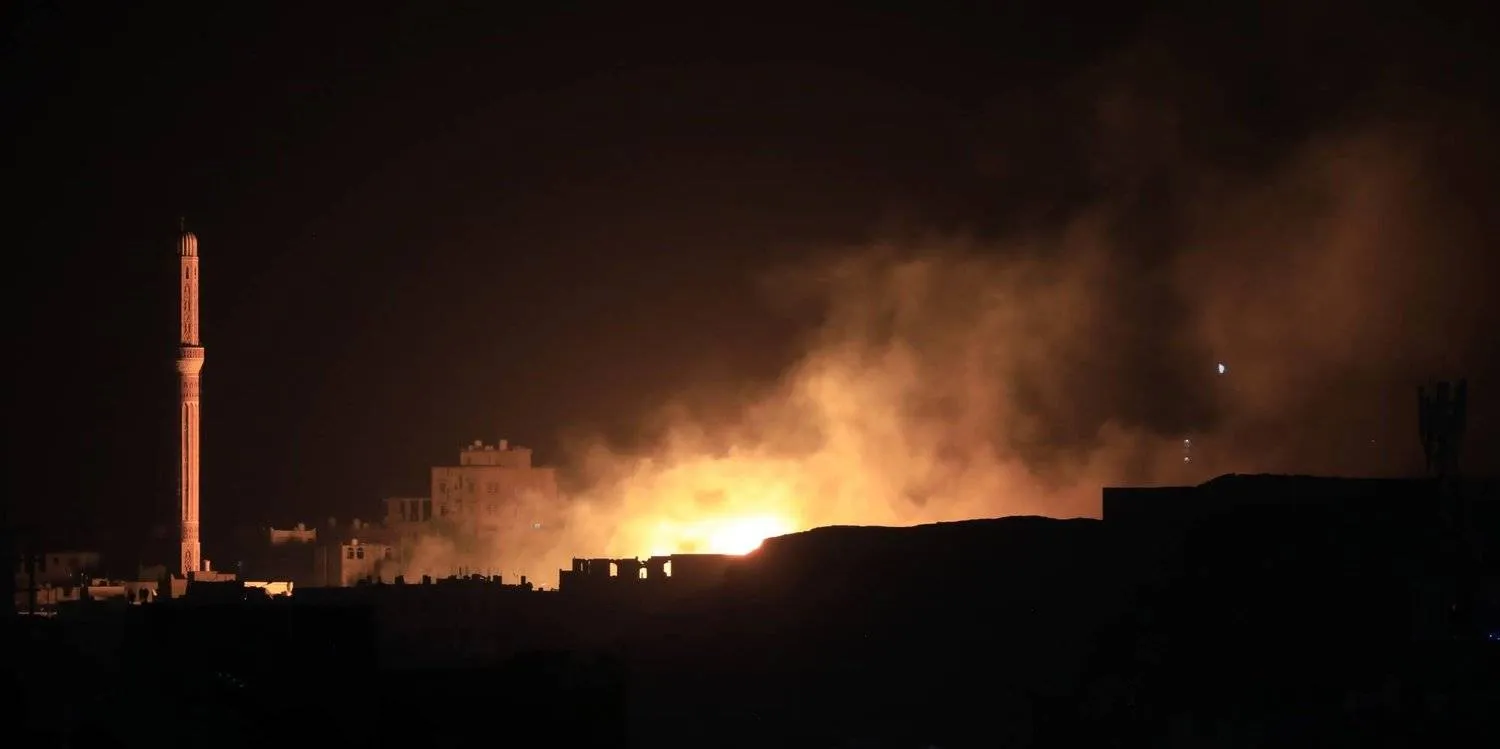
A massive fire that followed the explosion of an LPG bottling plant in Sanaa (EPA)
TT

Severe Cooking Gas Shortage Hit Yemenis’ Kitchens

A massive fire that followed the explosion of an LPG bottling plant in Sanaa (EPA)

The recent explosion of a cooking gas tank in north Sanaa revealed the worsening of the risks facing the lives and safety of residents of cities controlled by the Houthi coup militia, who already suffer from a severe gas shortage.

The militias deal with the residents' protests recklessly.

A few days ago, a resident of the al-Khaniq neighborhood received death threats after demanding that a gas station be moved outside the area.

The incident was preceded by Houthi gunmen attacking a protest demanding the transfer of the gas storage and filling station outside the neighborhood after the explosion at the station, which damaged nearby homes and displaced the residents.

A gas tank in a warehouse belonging to the Houthi loyalist businessman Ali al-Mafzar exploded nearly two weeks ago, destroying two homes and a mosque.

The explosion was heard throughout Sanaa, causing great panic, and flames were seen in distant areas inside and outside the capital.

Houthi supporters who ran the gas trade sector claimed the fire was likely caused by an electrical short circuit at the station, which triggered the blast of a gas trailer in the station's yard.

Yemeni activists accuse the Houthi militias of orchestrating the incident to blackmail the Mafzar family as part of their practice of bankrupting the private sector.

They believe that they are using the sit-ins to pressure the family.

In Hodeidah, a massive fire broke out in a station belonging to a Houthi supervisor in the commercial district late last August.

The fire did not cause damage to the surrounding buildings or the people. It caused great panic and forced the neighborhood’s residents to escape.

Back then, the Houthi militias prevented the publication of pictures about the incident.

- Stations everywhere

Social media activists circulated dozens of videos of explosions and fires at the gas black market and stations used by the Houthis to increase their revenues.

The group accuses the legitimate government and the coalition supporting it of creating these crises.

Ahmed al-Ansi said he had to flee from the vicinity of gas storage and stations twice when explosions occurred in a neighborhood west of the capital.

At the time, Ansi lived on the same street where the station exploded, causing several casualties and destroying residences and shops.

Ansi, who owns a mobile phone shop, explained that they were surprised that the station was rebuilt a few days after the incident, which prompted him to move his residence, fearing it might happen again.

However, a station was built near his new residence after settling in there for weeks.

Ansi also had to close his mobile phone shop on Sixtieth Street, near his residence, and moved to another store nearby. However, he later discovered a station behind the building of his new store.

Hardly a week goes by without one or more explosions or fires erupting at Houthi gas stations and points of sale in several governorates and regions under Houthi control.

- Boycott in Ibb

The Houthi militia usually refrains from commenting on such incidents and never sought to move these stations outside residential neighborhoods. However, they may, at times, make promises to solve the issue.

Six years ago, a black-market gas station exploded, and a huge fire broke out, prompting residents to flee the area.

Activist and engineer Fouad Shaher said that due to the residents’ complaints, Houthi leader Abdul Wahed Salah vowed to relocate the stations outside the neighborhoods, and in response the people ended their protest.

They discovered months later that these stations had doubled and spread throughout all areas, threatening everyone.

The residents implicitly agreed to boycott any station whose owner or supervisor did not respond to their demands to move it away from the homes, which forced them to react and reduced the number of incidents.



Israeli Military Says Detained Suspected ISIS Militant in Syria

FILE PHOTO: Israeli military vehicles manoeuvre along the Israel-Lebanon border, as seen from northern Israel, November 24, 2025. REUTERS/Shir Torem/File Photo
TT

Israeli Military Says Detained Suspected ISIS Militant in Syria

FILE PHOTO: Israeli military vehicles manoeuvre along the Israel-Lebanon border, as seen from northern Israel, November 24, 2025. REUTERS/Shir Torem/File Photo

The Israeli military said on Saturday its forces had arrested a suspected ISIS militant in Syria earlier this week and taken him back to Israel.

In a statement, the military said that on Wednesday "soldiers completed an operation in the area of Rafid in southern Syria to apprehend a suspected terrorist affiliated with ISIS.”

"The suspect was transferred for further processing in Israeli territory," the statement said.


Report: Colombian Mercenaries in Sudan ‘Recruited by UK-registered Firms’

(COMBO) This combination of satellite images released by Planet Labs PBC on December 19, 2025, shows from top left to bottom right:- the graves near the United Nations Children's Fund (UNICEF) headquarters in El-Fasher, taken on the following dates: on October 8, 2025, on October 27, 2025, on January 15, 2025, and on December 14, 2025. (Photo by Handout / Planet Labs / AFP)
TT

Report: Colombian Mercenaries in Sudan ‘Recruited by UK-registered Firms’

(COMBO) This combination of satellite images released by Planet Labs PBC on December 19, 2025, shows from top left to bottom right:- the graves near the United Nations Children's Fund (UNICEF) headquarters in El-Fasher, taken on the following dates: on October 8, 2025, on October 27, 2025, on January 15, 2025, and on December 14, 2025. (Photo by Handout / Planet Labs / AFP)

An exclusive investigation by UK’s The Guardian has found companies hiring hundreds of Colombian fighters for Sudan’s Rapid Support Forces.

A one-bedroom flat off north London’s Creighton Road in Tottenham is, according to UK government records, tied to a transnational network of companies involved in the mass recruitment of mercenaries to fight in Sudan alongside the RSF, said the report.

Colombian mercenaries were directly involved in the RSF’s seizure of the southwestern Sudanese city of El Fasher in late October, which prompted a killing frenzy that analysts say has cost at least 60,000 lives.

“The flat in Tottenham is registered to a company called Zeuz Global, set up by two individuals named and sanctioned last week by the US treasury for hiring Colombian mercenaries to fight for the RSF,” said The Guardian.

“Both figures – Colombian nationals in their 50s – are described in documents at Companies House, the government register of firms operating in the UK, as living in Britain,” it said.

“The day after the US treasury announced sanctions on those behind the Colombian mercenary operation –December 9 – Zeuz Global abruptly moved its operation to the very heart of London. On 10 December the firm shared “new address details” Its new postcode matches One Aldwych, a five-star hotel in Covent Garden,” the report added.

Yet the first line of Zeuz Global’s new address is, confusingly, “4dd Aldwych,” which corresponds to the Waldorf Hilton hotel 100 meters away, according to The Guardian.

Both hotels said they had no link to Zeuz Global and had no idea why the firm had used their postcodes.

“It is of major concern that the key individuals the US government claims are directing this mercenary supply have been able to set up a UK company operating from a flat in north London, and even to claim that they’re resident in the UK,” said Mike Lewis, a researcher and former member of the UN panel of experts on Sudan.

When Companies House was asked if it had any knowledge of what Zeuz Global actually did, or is doing, it did not respond. The government agency would also not confirm whether the sanctioned individuals were, in fact, resident in the UK.

Contacting Zeuz proved fruitless; its website, set up in May, was labelled as “under construction” with no contact details provided.


Egyptian President Urges UN Security Council Reforms for Africa's Larger Role

In this photo, provided by Egypt's presidency media office, Egyptian President Abdel-Fattah el-Sisi, front right, greets Russian Foreign Minister Sergei Lavrov, left, before their meeting at the Presidential Palace in Cairo, Egypt, Saturday, Dec. 20, 2025. (Egyptian Presidency Media Office via AP)
TT

Egyptian President Urges UN Security Council Reforms for Africa's Larger Role

In this photo, provided by Egypt's presidency media office, Egyptian President Abdel-Fattah el-Sisi, front right, greets Russian Foreign Minister Sergei Lavrov, left, before their meeting at the Presidential Palace in Cairo, Egypt, Saturday, Dec. 20, 2025. (Egyptian Presidency Media Office via AP)

Egypt’s President Abdel-Fattah el-Sisi on Saturday reiterated calls for structural changes in the UN Security Council to grant Africa a larger role in shaping global decisions.

El-Sisi made the plea for a “more pluralistic” world order at a conference of the Russia-Africa partnership held in Cairo, which was attended by Russian Foreign Minister Sergei Lavrov and ministers from more than 50 African countries along with representatives from several African and regional organizations.

“The voice of Africa should be present and influential in making global decisions given the continent’s human, economic, political and demographic weight,” el-Sisi said in a statement read out by his foreign minister at the plenary session of the conference.

According to The Associated Press, he added that international financial institutions need to undergo similar reforms to ensure Africa an equitable representation.

Since 2005, the African Union has been demanding that Africa be granted two permanent seats with veto powers in the Security Council, arguing that such reforms would contribute to achieving peace and stability on the continent, which has been struggling with wars for decades.

The Security Council, which is charged with maintaining international peace and security, has not changed from its 1945 configuration: 10 non-permanent members from all regions of the world elected for two-year terms without veto power, and five countries that were dominant powers at the end of World War II are permanent members with veto power: The United States, Russia, China, Britain and France.

In his statement, el-Sisi said that the Russia-Africa ministerial conference will develop a plan to consolidate the partnership ahead of next year’s summit of heads of state.

“We remain a reliable partner for African states in strengthening their national sovereignty, both politically and in matters of security, as well as in other dimensions,” Lavrov said at the plenary session. “We’re committed to further unlocking the existing enormous potential of our practical cooperation.”