


Sudan's Displaced Forced to Flee Again as Safe Zones Shrink

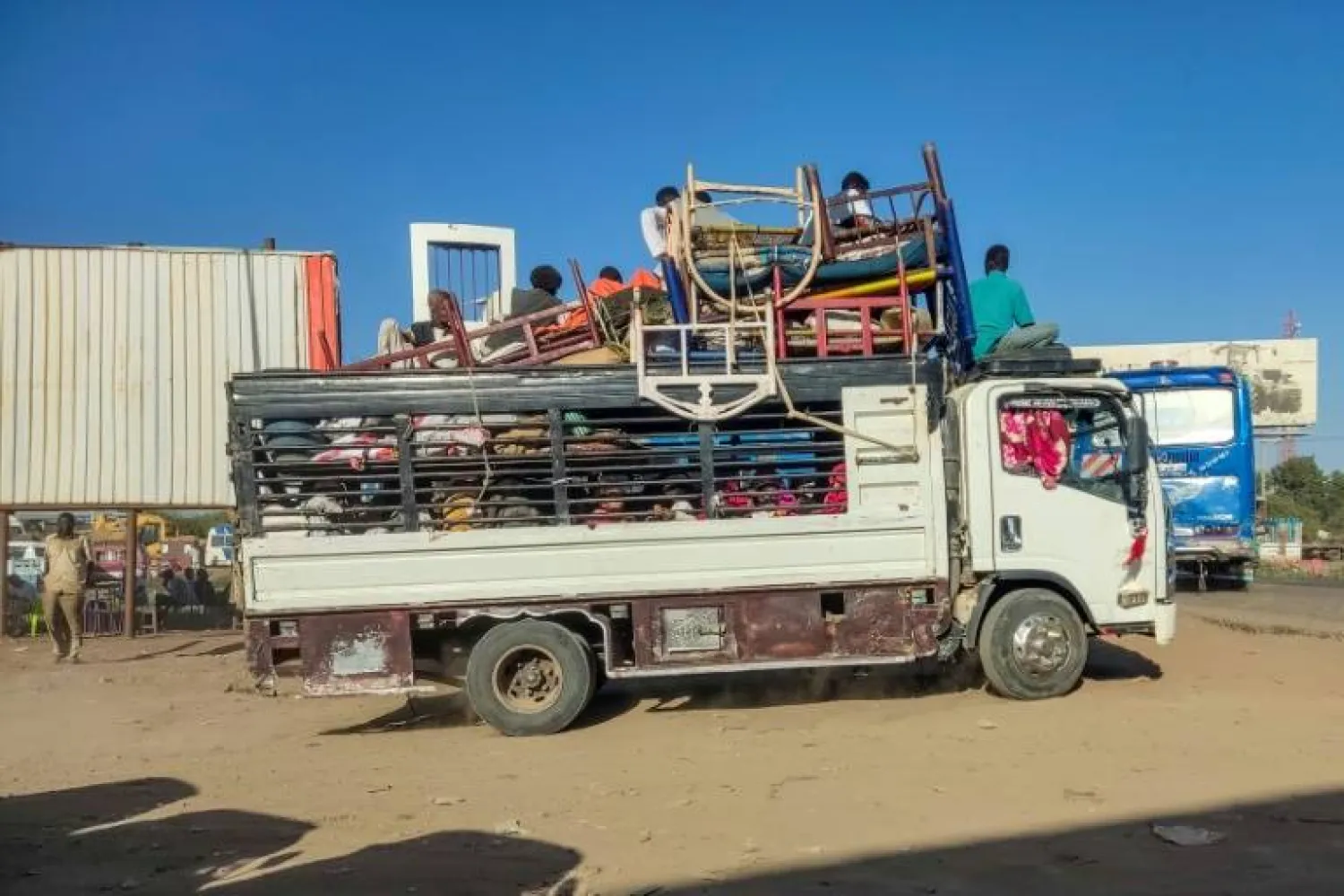
Over half a million people had sought shelter in Al-Jazirah state - AFP
TT

Sudan's Displaced Forced to Flee Again as Safe Zones Shrink

Over half a million people had sought shelter in Al-Jazirah state - AFP

Mohamed Ibrahim had barely settled into life in Sudan's second city, months after he fled fighting in the capital Khartoum, only to discover the war had again reached his doorstep.

"Seven months ago, when the battles intensified in Khartoum, I was displaced with my family to Wad Madani" 180 kilometres (110 miles) south, the 53-year-old said.

Thousands of families had made the same move, and Wad Madani, the capital of Al-Jazirah state, quickly became a haven and a crucial hub for aid operations.

Now with the city under attack, Ibrahim is on the move yet again, with his family in tow.

Over half a million people had sought shelter in Al-Jazirah state before the paramilitary Rapid Support Forces began advancing on the villages lining the highway between Khartoum and Wad Madani.

By Tuesday, the fourth day of fierce battles in the state capital, at least 250,000 people had fled Al-Jazirah, "many in panic and with no other option than fleeing on foot," according to the United Nations.

But with the country's already-fragile infrastructure destroyed by eight months of war between Sudan's army chief Abdel Fattah al-Burhan and his former deputy, RSF commander Mohamed Hamdan Daglo, many were running with nowhere left to go.

On Wednesday, the UN's World Food Program said the spread of fighting southwards had forced it to suspend food assistance in parts of Al-Jazirah, calling it a "major setback".

In Sennar, 100 kilometres (62 miles) south of Wad Madani, Ibrahim's family can't find housing.

"It's the same thing we went through in our first days in Wad Madani," he said.

Others, like 44-year-old Abdel Rahim Mohamed Imam, headed east to Al-Faw, 120 kilometres (75 miles) away, where his family "is now staying at a friend's house," he told AFP.

By early December, the war between the army and the RSF had killed 12,190 people, according to a conservative estimate by the Armed Conflict Locations and Event Data project.

It has also displaced 5.4 million people inside the country, according to the UN, and sent over 1.4 million fleeing abroad.

In a bitter reminder of the first days of war in Khartoum, those who had tried to make a home in Wad Madani watched the city devolve over the week into the same violence they hoped they had left behind.

As both forces battled, fighter jets flew overhead, shops were boarded shut for fear of looting and families grew desperate to protect women and girls from sexual violence.

Paramilitary fighters pressed deeper into the city, and transportation quickly became near impossible to find.

Those already displaced were reliving the days they spent queueing in Khartoum, begging for bus tickets that multiplied in price as they waited.

At a loss, 65-year old Omar Hussein took to Wad Madani's streets with his family and what little they could carry, walking 10 kilometres on foot until they found a driver willing to take them along.

"We're just trying to get to Gedaref," 240 kilometres (150 miles) east, Hussein told AFP.

"We have family there we can stay with."

But in both Gedaref and Sennar, "the humanitarian situation is dire," the UN refugee agency's spokesman William Spindler said Tuesday, warning of a "deepening forced displacement crisis".

With over 70 percent of hospitals in conflict-affected areas out of service and "facilities in non-conflict-affected states overwhelmed by the influx of displaced people," the UN has said the country's "health care is already stretched to the limit".

Gedaref is already facing multiple disease outbreaks, including cholera and dengue fever.

On Tuesday, Daglo released a statement celebrating the "liberation" of Wad Madani "from the remnants of the old regime," on the fifth anniversary of "the glorious December Revolution".

Mass pro-democracy protests which began on December 19, 2018, led to the ouster of longtime autocrat Omar al-Bashir the following April.

A painstakingly negotiated transition to democratic rule was then derailed in October 2021, when Daglo and Burhan orchestrated a coup, installing themselves in power and ousting civilians.

The two later fell out in a bitter power struggle, with Daglo accusing Burhan and his entourage of trying to return Bashir's regime to power.

Five years after they first took to the streets in what American ambassador John Godfrey called "a clarion call for freedom, peace and justice", civilians have once again paid the heaviest price.

Yet "the conflict has not diminished (civilians') aspirations to restore Sudan's democratic transition under a civilian government," Godfrey said in a statement.

While thousands scramble to find safety once again, the RSF on Tuesday "invited citizens who have been displaced to return to their homes".

Amid mounting accusations of violations against civilians by both the army and the paramilitaries, the RSF promised support and protection -- both largely nonexistent for the past eight months.


Sisi-Abbas Cairo Summit: Palestinian Reconciliation a Priority in Coming Period

Egyptian President Abdel Fattah al-Sisi assured his Palestinian counterpart on Wednesday of Egypt’s support for the Palestinian Authority (Egyptian Presidency)
TT

Sisi-Abbas Cairo Summit: Palestinian Reconciliation a Priority in Coming Period

Egyptian President Abdel Fattah al-Sisi assured his Palestinian counterpart on Wednesday of Egypt’s support for the Palestinian Authority (Egyptian Presidency)

Palestinian reconciliation featured prominently in talks between Egyptian President Abdel Fattah al-Sisi and Palestinian President Mahmoud Abbas, with Cairo reaffirming its support for “efforts to achieve consensus among Palestinian factions.”

A Palestinian official told Asharq Al-Awsat on Wednesday that the summit was part of longstanding Egyptian efforts to heal internal Palestinian divisions ahead of elections scheduled for November and could pave the way for an intra-Palestinian dialogue in Egypt.

The official expected reconciliation to become a priority in the coming period as Palestinians prepare for the phase following Israel’s elections in October.

During the summit, Cairo affirmed that it would continue working with mediators to implement the agreement to end the war in Gaza reached at the Sharm El-Sheikh Peace Summit in October 2025. It stressed the need for all parties to abide by its terms, including halting escalation, ensuring the flow of humanitarian aid and creating conditions for early recovery and reconstruction.

Al-Sisi affirmed “Egypt’s support for the Palestinian National Authority and for efforts to achieve consensus among the various Palestinian factions in a way that serves the interests of the Palestinian people,” according to a statement from the Egyptian presidency.

The two sides also agreed to intensify political coordination at all levels in the coming period.

According to the Palestinian news agency WAFA, Abbas told al-Sisi during their meeting at Cairo’s Al-Ittihadiya Palace on Wednesday that efforts would continue to renew national legitimacy through upcoming elections. He reiterated his rejection of any infringement on the unity of Palestinian territory or the sovereign institutions of the State of Palestine.

“Gaza is an integral part of our state, there is no alternative to Palestinian legitimacy, and we will not allow the separation of the Gaza Strip from the West Bank and East Jerusalem,” Abbas stressed.

PLO Executive Committee member Wasel Abu Youssef told Asharq Al-Awsat that the Abbas-Sisi summit was important given the circumstances facing the Palestinian cause, particularly because part of the talks concerned internal Palestinian arrangements, including national dialogue.

He noted that Egypt had consistently sought to ensure the success of such talks and had hosted numerous rounds aimed at healing divisions, ending internal rifts and achieving national unity before elections.

“National dialogue and ending the division are particularly important at this time,” Abu Youssef explained, noting that talks were underway among several factions with the aim of expanding them into a comprehensive national dialogue involving all factions.

He suggested this could take the form of a meeting of faction leaders, as held previously, or a broader call for dialogue, adding that “the most appropriate venue is Egypt.”

Abu Youssef expressed hope that a comprehensive national dialogue involving all sides could produce practical mechanisms to reorganize Palestinian internal affairs and end the division.

Such a process, he added, should affirm the unity of the Palestinian people in the West Bank, Gaza Strip and occupied East Jerusalem, as well as the responsibility of the Palestinian legitimate authority for all those territories, as preparations continue for upcoming elections.

He cited legislative elections scheduled for Nov. 28, provided the Israeli government does not obstruct them, particularly in Gaza.

Abu Youssef further maintained that it was in everyone’s interest to respond to Cairo’s efforts to heal the rift and for national dialogue to convene before the elections.

More importantly, he argued, the talks should produce results commensurate with current challenges and risks, reorganize Palestinian internal affairs on the basis of comprehensive national unity, uphold Palestinian rights and principles, and preserve representation through the Palestine Liberation Organization as the sole legitimate representative of the Palestinian people.

Over the years, numerous attempts have been made to unify the Palestinian ranks. Cairo has sponsored several rounds of talks, but none has produced a final agreement.


Guterres Backs Libya’s Endorsement of ‘4+4’ Agreement Despite High Council of State Objection

UN Special Representative of the Secretary-General for Libya, Hanna Tetteh and her deputy, Stephanie Koury meet members of the Political Dialogue and Reconciliation Team in Tripoli on Tuesday (UNSMIL) 
TT

Guterres Backs Libya’s Endorsement of ‘4+4’ Agreement Despite High Council of State Objection

UN Special Representative of the Secretary-General for Libya, Hanna Tetteh and her deputy, Stephanie Koury meet members of the Political Dialogue and Reconciliation Team in Tripoli on Tuesday (UNSMIL) 

UN Secretary-General Antonio Guterres on Wednesday welcomed the Libyan House of Representatives’ endorsement of the “4+4” Smaller Convening Agreement signed between Libyan conflict parties on August 30 to pave the way for long-awaited national election.

In a press briefing by the UN Support Mission in Libya (UNSMIL), spokesperson for the Secretary-General, Stephane Dujarric, said the House of Representatives' approval of the agreement represents “an important step to move things forward,” contributing to efforts to resolve the ongoing political deadlock in Libya.

Libya’s House of Representatives approved the agreement unanimously on Monday during a session in Benghazi chaired by Speaker Aguila Saleh.

In return, head of the High Council of State, Mohamed Takala sent a letter to Guterres objecting to the recent move by the UN mission in Tripoli concerning the political process and bodies related to elections.

He said the mission gathered a limited number of people who do not legitimately represent sovereign institutions.

Takala also said those people prepared a document about the structure of the political process and the formation of bodies involved in elections, a move he described as “an overstep of the UN’s facilitating role and an interference in Libya’s internal affairs and sovereignty.”

The head of the High Council of State urged building on the consensus achieved by the “6+6” committee instead of pursuing parallel processes that could deepen divisions.

Takala then asked Guterres to ensure the UN mission adheres to its mandate and respects Libya’s political agreement and state sovereignty.

He requested that the mission not legitimize bodies with limited representation and to reverse its recent action.

On August 30, the 4+4 Committee signed the final agreement during an official ceremony at the UNSMIL headquarters in Tripoli to restructure the board of Libya’s High National Elections Commission, address disputed issues related to the legal framework for presidential and parliamentary elections, and hold the votes under a single executive authority and unified national institutions within a maximum of 24 months.

Earlier this month, UNSMIL said it had formally referred the agreement to the House of Representatives and the High Council of State, giving the two bodies one month from the date of its signing to approve it.

Dr Saleh Al-Makhzoum, a law professor at the University of Tripoli accused some members of the High Council of State of objecting to the UN-sponsored agreement only to “buy time,” as happened during the Skhirat Agreement, signed in Morocco in 2015 to end Libya's civil war and political split.

“Those members ignore the changing motives of the international community towards the Libyan crisis,” he wrote on his Facebook account.

Al-Makhzoum warned that Libya is currently facing a “more complicated” situation due to the overlap of security, economy, oil and international race. He warned that disrupting the 4+4 agreement, or reigniting disputes through the 6+6 committee may narrow Libya’s options.

Meanwhile, the UN mission in Libya continues to intensify contacts with political forces, officials and youth from different regions, to broaden support for the 4+4 agreement.

In this regard, UN Deputy Special Representative for Political Affairs Stephanie Koury met on Tuesday a delegation of young people from Zawiya, Sorman, Sabratha, Ajileat and Tripoli to discuss the political process, including the Smaller Convening agreement and the outcomes of the Structured Dialogue.

Participants shared their views on youth inclusion and the challenges facing Libya’s path to national elections. The group welcomed the Smaller Convening agreement as a positive step, while expressing concern about the challenges of its implementation. They also stressed the need for broader inclusion, particularly of young people, in political and decision-making processes.

In another meeting, Koury and UN Special Representative of the Secretary-General for Libya, Hanna Tetteh discussed the latest political and economic developments with members of the Political Dialogue and Reconciliation Team.

The UN mission stated that the two sides exchanged views on recent economic and political developments, including the agreement reached during the “mini-meeting,” the outcomes of the structured dialogue, and the next steps in the political process facilitated by the UNSMIL.

The delegation shared its initiative aimed at overcoming the political stalemate and building broad-based support to advance the political process, emphasizing the importance of accelerating efforts to address the challenges facing the Libyan people.


School Year Delay Sparks Widespread Debate in Iraq

Iraqi students sing the national anthem at a school in western Baghdad in October 2023 (AFP) 
TT

School Year Delay Sparks Widespread Debate in Iraq

Iraqi students sing the national anthem at a school in western Baghdad in October 2023 (AFP) 

The Iraqi Education Ministry’s decision to postpone the start of the 2026-27 academic year has sparked widespread debate over the real reasons behind the move, which coincides with the scheduled withdrawal of US-led coalition forces and the start of a process intended to bring armed factions’ weapons under state control.

The ministry announced Tuesday that the school year, originally scheduled to begin Sept. 20, would instead start Oct. 11.

The postponement could cost students nearly a month of the academic year and prevent them from completing the curriculum, particularly those in final grades at the primary, intermediate, and secondary levels.

Education observers say the nine-month school year is already increasingly vulnerable to being shortened by numerous official holidays and breaks associated with religious occasions.

Speculation has linked the postponement to Sept. 30, the date set for the withdrawal of international coalition forces from Iraq and a deadline for bringing weapons under state control, amid widespread talk among activists and bloggers of possible clashes.

The Education Ministry, however, cited four main reasons for the postponement, none involving the foreign troop withdrawal or disarmament.

In a statement, Education Minister Abdul Karim Abtan al-Jubouri explained that the delay would allow time to complete second-round examinations for students in non-graduating classes and prepare schools for the new academic year.

The ministry added that the decision also took into account high temperatures during this period and the need to complete educational, technical and administrative requirements before students return to schools across Iraq.

Amid public criticism of the postponement, ministry spokesman Karim al-Sayed provided further reasons, explaining that the previously announced Sept. 20 start date had proved too early and had been based on circumstances that subsequently changed.

These included the introduction of comprehensive admission and a special examination round scheduled from Sept. 26 to Oct. 10, as well as second-round examinations that began Sept. 15 and continue through Sept. 24.

Al-Sayed added that the decision followed appeals from teaching staff over the lack of electricity in some schools and high temperatures, as well as a proposal by parliament’s Education Committee to postpone classes.

The committee had previously called for the academic year to be postponed, but its proposal was for October 1 rather than October 11.

Sept. 30 concerns

A senior Education Ministry source believes the coincidence between the postponement and the government’s Sept. 30 deadline for bringing factions’ weapons under state control — also the scheduled date for the coalition withdrawal — fueled speculation that the two were linked, something the ministry denies.

“Fluctuations in the start date of the school year are nothing new. Classes were delayed by about a month during the COVID-19 pandemic, in addition to delays related to special-round examinations,” the source, who requested anonymity, told Asharq Al-Awsat.

Education specialist Mustafa Abada argued that the ministry’s reasons for postponing the school year “need further clarification, particularly as other educational issues remain unresolved, including delays in the delivery of some textbooks, changes to several curricula, problems with school buildings and infrastructure, as well as the continuation of special-round examinations.”

Asked about speculation linking the postponement to political and security circumstances, Abada told Asharq Al-Awsat: “The timing raises questions about whether there are concerns that potential security developments could affect regular school attendance. But that does not necessarily mean there is a connection between the two.”