

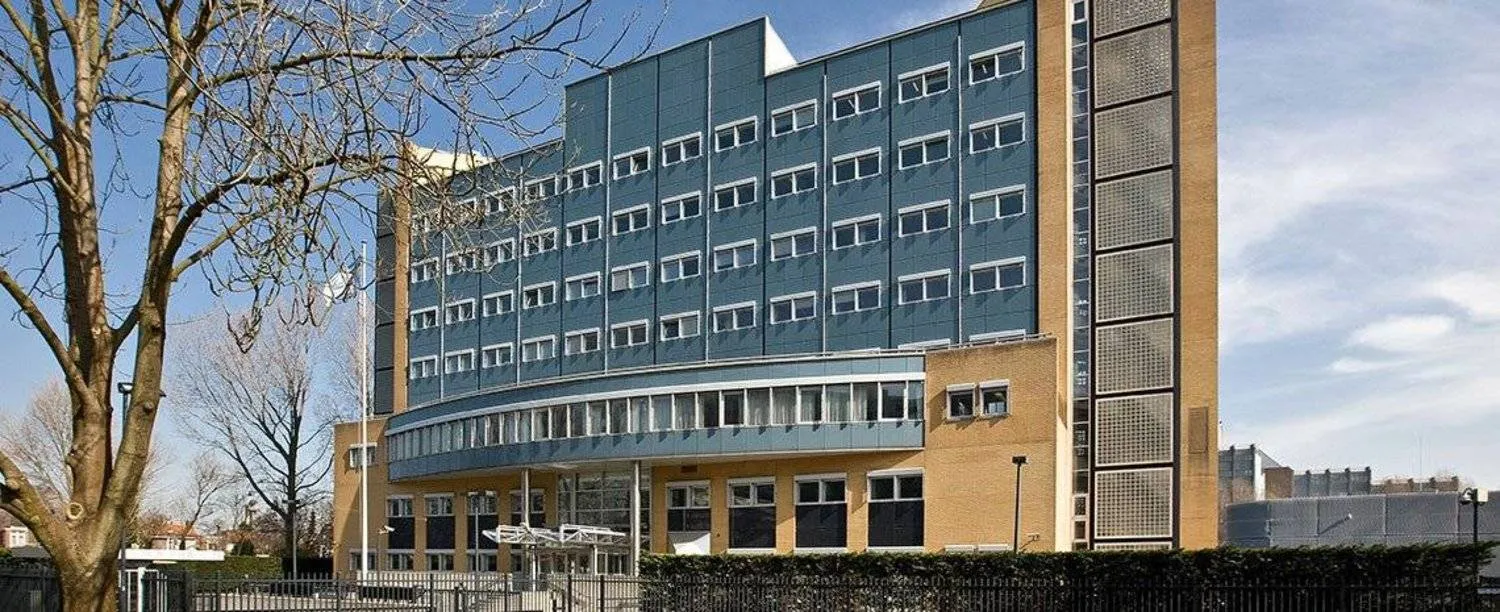

Lebanon's Hariri Tribunal Officially Closes, Leaving 3 Cases Unresolved

The Special Tribunal for Lebanon officially closed on Sunday. (STL)
TT

Lebanon's Hariri Tribunal Officially Closes, Leaving 3 Cases Unresolved

The Special Tribunal for Lebanon officially closed on Sunday. (STL)

UN Secretary-General Antonio Guterres has closed an international tribunal that was created to investigate the 2005 assassination of former Lebanese Prime Minister Rafik Hariri, the UN chief's spokesperson said Sunday.

Over the years, the Special Tribunal for Lebanon held in absentia proceedings and found three members of the Hezbollah party guilty in connection with Hariri's death in a massive Feb. 14, 2005 truck bombing.

The tribunal based in The Hague, Netherlands, sentenced the three — Salim Jamil Ayyash, Hassan Habib Merhi and Hussein Hassan Oneissi - to five concurrent sentences of life imprisonment.

Judges said evidence linked phones to the alleged mastermind of the bombing, Hezbollah commander Mustafa Badreddine, who was indicted by the court but is believed to have been killed in the Damascus area in May 2016.

The STL, however, leaves behind three unresolved cases: The assassination of former Secretary General of the Lebanese Communist Party George Hawi and the attempted assassinations for former minister Elias al-Murr and current MP Marwan Hamadeh.

At the beginning of 2023, Guterres extended the panel's mandate until Dec. 31 “for the limited purpose of completion of the non-judicial residual functions” and “for the orderly closure of the Special Tribunal.” The secretary-general noted Sunday that those tasks had been accomplished and the tribunal shut down, Guterres said.

Guterres had tasked Mohammed Ali al-Lajmeh, aide to the former STL prosecutor, to manage a team tasked with organizing the archive of the tribunal at the UN headquarters in New York.

Al-Lajmeh told Asharq Al-Awsat that the process of transferring the files was completed successfully. The team has completed its duties in full.

He added, however, that the cases for which the STL was formed will be closed. Should Lebanon arrest anyone convicted by the tribunal, the case will be reopened at the UN and its concerned agencies after holding consultations with the relevant Lebanese authorities.

Riachi

Judge Ralph Riachi, former Vice-President of the Tribunal, told Asharq Al-Awsat that the STL had “accomplished much in serving justice and the case for which it was established.”

He lamented the closure of the STL, but noted that it completed the most important aspect of its work and that is the designation of the crime and “pointing to” the culprits.

The arrest of the convicts is not part of its jurisdiction, he clarified.

He noted the criticism against the STL for failing to name the main culprit in Hariri’s assassination. “This tribunal and no other international courts have the jurisdiction to name sides and organizations. It did, however, flatly name the party to which the suspects belong to in its appeal decision.”

Riachi stressed that it was now up to the Lebanese state and all its agencies to complete the work started by the STL. It must reclaim millions of pieces of evidence and files and fulfill its duties towards the people affected by these crimes.

Failure to do so will “harm the principle of justice,” he warned.

Hamadeh

Hamadeh revealed to Asharq Al-Awsat that he had sent Guterres a message months ago, hoping for the STL archive to be preserved at the UN General Secretariat or a dedicated institution “so that it wouldn’t fall into hostile hands that would exploit it to justify the crimes that have happened.”

“We have taken steps to preserve the confidentiality of the probe. There are millions of documents that must remain confidential,” he stated.

Moreover, he revealed that “very prominent” people were named in the indictment, but they haven’t been revealed yet because it is “forbidden”. They must be identified one day in history, he added.

Furthermore, the MP refused to have his case return to Lebanon. “I prefer to see my case remain in the UN drawers rather than see it killed and buried in Lebanon,” he said.

Hamadeh still holds a “small hope that the case may be one day revived, and the culprits brought to justice.”

Verdicts

Hezbollah officials have repeatedly denied that members of the group were involved in the suicide attack that killed Hariri and refused to deal with the tribunal. The bombing killed Hariri and 21 others, and wounded 226.

The trial judges had said there was no evidence Hezbollah’s leadership or Syria were involved in the attack but noted the assassination happened as Hariri and his political allies were discussing whether to call for Syria to withdraw its forces from Lebanon.

UN spokesman Stephane Dujarric said in a statement Sunday that the Special Tribunal was established to try those responsible for the attack following the adoption of a 2007 Security Council resolution. The tribunal's jurisdiction also extended to other attacks that were judicially determined to be “connected” to Hariri's assassination.

“The secretary-general expresses his deep appreciation for the dedication and hard work of the judges and staff at the Special Tribunal throughout the years,” Dujarric said.

He added that Guterres also appreciated the support provided by the Lebanese government, the government of the Netherlands as the host state, and member states that participated in the tribunal's management committee.

The trial centered on the alleged roles of four Hezbollah members in the suicide truck bombing that killed Hariri. Prosecutors based their case largely on data from mobile phones allegedly used by the plotters to plan and execute the bombing.

The four men, who were charged with offences including conspiracy to commit a terrorist act, were tried in absentia.

The judges said they were "satisfied beyond reasonable doubt" that main suspect Ayyash was most likely the user of mobile phones used to scope out Hariri ahead of the attack, the key argument of the prosecution case.

They were also satisfied that the 56-year-old Ayyash "had associations with Hezbollah".

During the trial, which spanned 415 days of hearings, the tribunal heard evidence from 297 witnesses.



Egypt and Russia Discuss Developments in Sudan, Syria, Lebanon, Gaza

Egyptian President Abdel Fattah al-Sisi and Russian President Vladimir Putin during the launch of the installation of the pressure vessel for the first reactor at the El-Dabaa nuclear plant last month (Egyptian presidency)
TT

Egypt and Russia Discuss Developments in Sudan, Syria, Lebanon, Gaza

Egyptian President Abdel Fattah al-Sisi and Russian President Vladimir Putin during the launch of the installation of the pressure vessel for the first reactor at the El-Dabaa nuclear plant last month (Egyptian presidency)

Egypt and Russia discussed developments in Sudan, Syria, Lebanon and Gaza on Friday during a phone call between Egyptian Foreign Minister Badr Abdelatty and his Russian counterpart Sergei Lavrov, in the latest round of ongoing coordination and consultations between the two countries on bilateral ties and regional and international issues of mutual concern.

The Egyptian Foreign Ministry said the call covered the close relationship between Egypt and Russia, which it said has gained growing momentum across various areas of cooperation, particularly economic and trade fields.

Abdelatty expressed Egypt’s pride in the strategic partnership binding the two countries, describing it as the governing framework for bilateral cooperation across multiple sectors.

He stressed the need to continue joint work to advance ongoing projects, notably the Dabaa nuclear plant, in order to boost Russian investment in Egypt and expand cooperation between both sides.

Last month, Egyptian President Abdel Fattah al-Sisi and Russian President Vladimir Putin witnessed via video conference the installation of the pressure vessel for the first reactor unit at the nuclear plant, as well as the signing of the nuclear fuel procurement order.

Experts described the step as the first milestone toward nuclear energy production.

El-Dabaa plant is Egypt’s first nuclear power facility, located in the town of Dabaa in Marsa Matrouh governorate on the Mediterranean coast. Russia and Egypt signed a cooperation agreement in November 2015 to build the plant, with the contracts entering into force in December 2017.

Abdelatty underscored during Friday’s call the importance of implementing UN Security Council Resolution 2803 and moving ahead with the second phase of the US president’s peace plan for Gaza, noting the need to enable the international stabilization force to carry out its mandate and consolidate the ceasefire.

According to the Foreign Ministry, Abdelatty outlined Egypt’s efforts within the Quad mechanism to stop the conflict and preserve the unity and integrity of the Sudanese state. He also reiterated Egypt’s longstanding position supporting the unity, sovereignty, security and stability of Lebanon.

He renewed Cairo’s call for respecting the unity and sovereignty of Syrian territory and rejecting any actions or interventions that could undermine the country’s stability, urging the activation of a comprehensive political process that meets the aspirations of the Syrian people.

Egypt said in late November that it hoped to see the start of a political process in Sudan without exclusion and reaffirmed its respect for Sudanese sovereignty.

The Quad, which groups Saudi Arabia, Egypt, the United Arab Emirates and the United States, has been working to secure a ceasefire in Sudan.

It held a ministerial meeting in Washington in September and stressed the need to exert every effort to resolve the conflict. In August, it proposed a roadmap calling for a three-month humanitarian truce, followed by a permanent ceasefire, paving the way for a political process and the formation of an independent civilian government within nine months.

The call also touched on developments related to Iran’s nuclear program.

Abdelatty stressed the importance of continued efforts to de-escalate tensions, build confidence and create conditions that offer a real opportunity for diplomatic solutions and the resumption of talks aimed at reaching a comprehensive agreement that accommodates the interests of all parties and contributes to regional security and stability.

Separately, Abdelatty and Lavrov discussed the war in Ukraine.

The Egyptian foreign minister reiterated Cairo’s consistent position that efforts must continue to pursue peaceful settlements to crises through dialogue and diplomatic means in a way that preserves security and stability.


Yemen Leader Warns against Unilateral Actions Undermining Unity, State Sovereignty

Yemeni armed forces flash the V-sign for victory as they ride in the back of a lorry as they celebrate the 58th anniversary of National Independence Day, in the port city of Aden, November 30, 2025. (Photo by Saleh Al-OBEIDI / AFP)
TT

Yemen Leader Warns against Unilateral Actions Undermining Unity, State Sovereignty

Yemeni armed forces flash the V-sign for victory as they ride in the back of a lorry as they celebrate the 58th anniversary of National Independence Day, in the port city of Aden, November 30, 2025. (Photo by Saleh Al-OBEIDI / AFP)

Yemeni Presidential Leadership Council chief Rashad al-Alimi warned on Friday that unilateral actions and internal disputes within government-controlled areas risk undermining state sovereignty and strengthening the Iran-backed Houthi group.

Al-Alimi made the remarks before leaving the interim capital Aden for Saudi Arabia, where he is set to hold high-level consultations with regional and international partners amid sensitive developments in eastern Yemen, particularly Hadramout.

He reaffirmed the government’s commitment to national partnership and collective responsibility to complete the transitional phase in line with the 2022 power-transfer declaration and the Riyadh Agreement.

“The state alone bears responsibility for protecting its national institutions and safeguarding citizens’ interests,” Al-Alimi said, warning against any measures that would challenge the government’s or local authorities’ exclusive powers, harm security and stability, deepen humanitarian suffering, or undermine economic recovery and international confidence.

The council chief said restoring state institutions, ending Houthi militia control, and pursuing economic reforms would remain top national priorities. He cautioned that any distraction by side conflicts “only serves the Iranian project and its destructive tools,” according to the state-run Saba news agency.

Al-Alimi praised Saudi Arabia for mediating the latest truce agreement in Hadramout and urged full adherence to its terms. He said the deal should serve as a foundation for stability in Hadramout and the wider region, describing the province as “a cornerstone of Yemen’s and the region’s stability.”

He voiced full support for local authorities and tribal leaders seeking to restore calm and enable Hadramout residents to manage their own local affairs in line with the PLC’s pledges and plan to normalize conditions in the province.

Al-Alimi also instructed the local authorities and relevant ministries to form a committee to investigate alleged human rights and humanitarian law violations and damages to public and private property in the province’s Wadi and desert districts, and to ensure victims receive redress.

The Yemeni leader urged all political and social groups to put aside differences, act responsibly, and unite in facing common challenges. He called for rallying behind the government to fulfill its obligations and place citizens’ welfare and dignity above all else.


Lebanon’s Leaders Unite on Technical, Security Track in Talks with Israel

Parliament Speaker Nabih Berri meets with UN Security Council Delegation in Beirut (Lebanese Parliament)
TT

Lebanon’s Leaders Unite on Technical, Security Track in Talks with Israel

Parliament Speaker Nabih Berri meets with UN Security Council Delegation in Beirut (Lebanese Parliament)

Cabinet sources said Lebanon’s three top leaders remain aligned as negotiations with Israel move into a new phase, marked by the appointment of a civilian envoy, former ambassador to Washington and lawyer Simon Karam, to lead Lebanon’s delegation to the Mechanism Committee.

The move is intended to jolt the committee out of months of stagnation and push it toward a security agreement anchored in enforcing a cessation of hostilities, after earlier rounds were dominated by routine tallies of Israeli violations conducted with United Nations peacekeepers.

The sources said the leaders’ agreement to pull the Mechanism out of its deadlock coincided with drawing political boundaries for the talks.

These boundaries are strictly limited to ending Israeli violations and attacks, securing a withdrawal from the south, releasing Lebanese detainees, and revisiting and correcting border demarcation in response to Lebanon’s reservations over disputed points along the Blue Line that it considers part of its sovereign territory.

The sources told Asharq Al-Awsat that Lebanon insists on restricting the negotiations to non-negotiable security issues. It will not allow the talks to drift into discussions on normalizing relations with Israel or striking a peace agreement.

This position is shared by President Joseph Aoun, Prime Minister Nawaf Salam, and Parliament Speaker Nabih Berri, who was the first to propose adding civilians to the Mechanism.

The three leaders reiterated their stance ahead of the first round of talks, attended by US envoy Morgan Ortagus and joined by Karam, in defiance of the agenda set by Israeli Prime Minister Benjamin Netanyahu.

They said Netanyahu is trying to raise the stakes to provoke Hezbollah against the state and sow confusion, even as the Israeli army continues its violations to turn the group’s base against it.

This became evident in the targeting of several homes between the banks of the Litani River, despite containing no weapons depots.

The sources said Netanyahu is escalating militarily to force Lebanon to accept Israeli terms, although he knows the negotiations will not deviate from their technical and security framework.

Lebanon, they said, remains committed to ensuring that only the state holds weapons.

The sources noted Berri’s insistence that he was the first to propose adding civilians to the Mechanism and asked where Hezbollah Secretary-General Sheikh Naim Qassem stands on this proposal.

They asked whether he ever objected to his “older brother’s” suggestion, given that Qassem had declared in an open letter to the three leaders that he rejects negotiations with Israel.

Qassem later walked back parts of that letter by having a senior Hezbollah official convey a message that Berri was not its intended target, in an effort to prevent a rupture within the Shiite political camp.

The sources also questioned why Hezbollah objects to the talks if its “older brother” is the one negotiating on its behalf and was behind the United States mediated ceasefire agreement brokered by Amos Hochstein.

They said the only card Hezbollah has left is raising the ceiling of its objections, since it no longer has the ability to reset the negotiating table at a time when the balance of power has tilted in Israel’s favor, particularly after the group’s unilateral support for Gaza cost it its previous deterrence and rules of engagement.

The sources said Hezbollah lacks alternatives that would allow it to reverse the balance of power and is limiting itself to loud political objections that it cannot translate into military action.

This comes despite its insistence on keeping its weapons and its accusation that the Salam government committed a mistake by agreeing to the principle that arms must be exclusively in the hands of the state, beginning from north of the Litani to Lebanon’s international border with Syria, in parallel with progress in the negotiations.

They said Hezbollah is forced to calibrate its position, since it cannot afford to break with Aoun or jeopardize its alliance with Berri, a rupture that would leave the group exposed at a moment when it seeks internal protection.

Any strain in these relationships would also create negative repercussions for the Shiite community. The sources asked why the group does not place its cards in Berri’s hands, as he is better positioned to navigate Shiite public sentiment that seeks the liberation of the south and the return of its residents to their villages.

Berri is viewed, even by rivals, as the essential gatekeeper to any settlement that could restore international attention to Lebanon and open a path for reconstruction. He enjoys Arab and international ties that Hezbollah lacks, as the group remains reliant solely on Iran.

The sources said the negotiations’ entry into a new phase prompted United States pressure on Israel to prevent the war from expanding, after Lebanon agreed to Washington’s request to add a civilian to the Mechanism and task him with leading the delegation.

They urged Hezbollah to stand behind the state’s diplomatic choice and said the group’s fears that the talks could lead to a peace treaty with Israel are unfounded.

They noted that Berri himself was the first to support bringing civilians into the process, which should reassure Hezbollah and encourage it to give diplomacy a chance.

They added that Salam is not acting unilaterally and is coordinating with Aoun. Both leaders are working together to implement the government’s commitment to ensuring that only the state holds weapons.

They also revealed that communication between Aoun and Berri has not stopped. The two men reviewed the atmosphere surrounding the Mechanism’s meeting in Naqoura before the latest cabinet session.

According to the sources, Berri instructed his parliamentary bloc and senior Amal Movement members not to comment on the negotiations, positively or negatively.

The directive came because he wants to centralize the political message and avoid dragging party members on both sides into disputes that could spill into the streets.

Hezbollah, they said, also wants to protect its relationship with its sole remaining ally in Lebanon after its former partners in the so-called Axis of Resistance endorsed the principle of exclusive state authority over weapons.

The sources said Hezbollah knows that avenues for repairing its Arab and international relations remain closed, unlike Berri who maintains wide ties.

They questioned what Hezbollah is counting on after its leadership rejected Egypt’s initiative, insisting, according to Western diplomatic sources cited by Asharq Al-Awsat, on linking its position to US-Iran negotiations in hopes of safeguarding Iran’s leverage in Lebanon after regional setbacks for the Axis.

They said the government will take note of Hezbollah’s objection, although it will have no impact on the course of the talks.

Hezbollah will not mobilize its supporters in the streets to avoid friction with Amal, particularly since Berri does not oppose the launch of negotiations, which remain tied to liberating the south and implementing Resolution 1701.

Any attempt by Hezbollah to outbid Berri for populist gain would backfire and weaken the group’s standing within its own community.