Israel Deploys Expansive Facial Recognition Program in Gaza

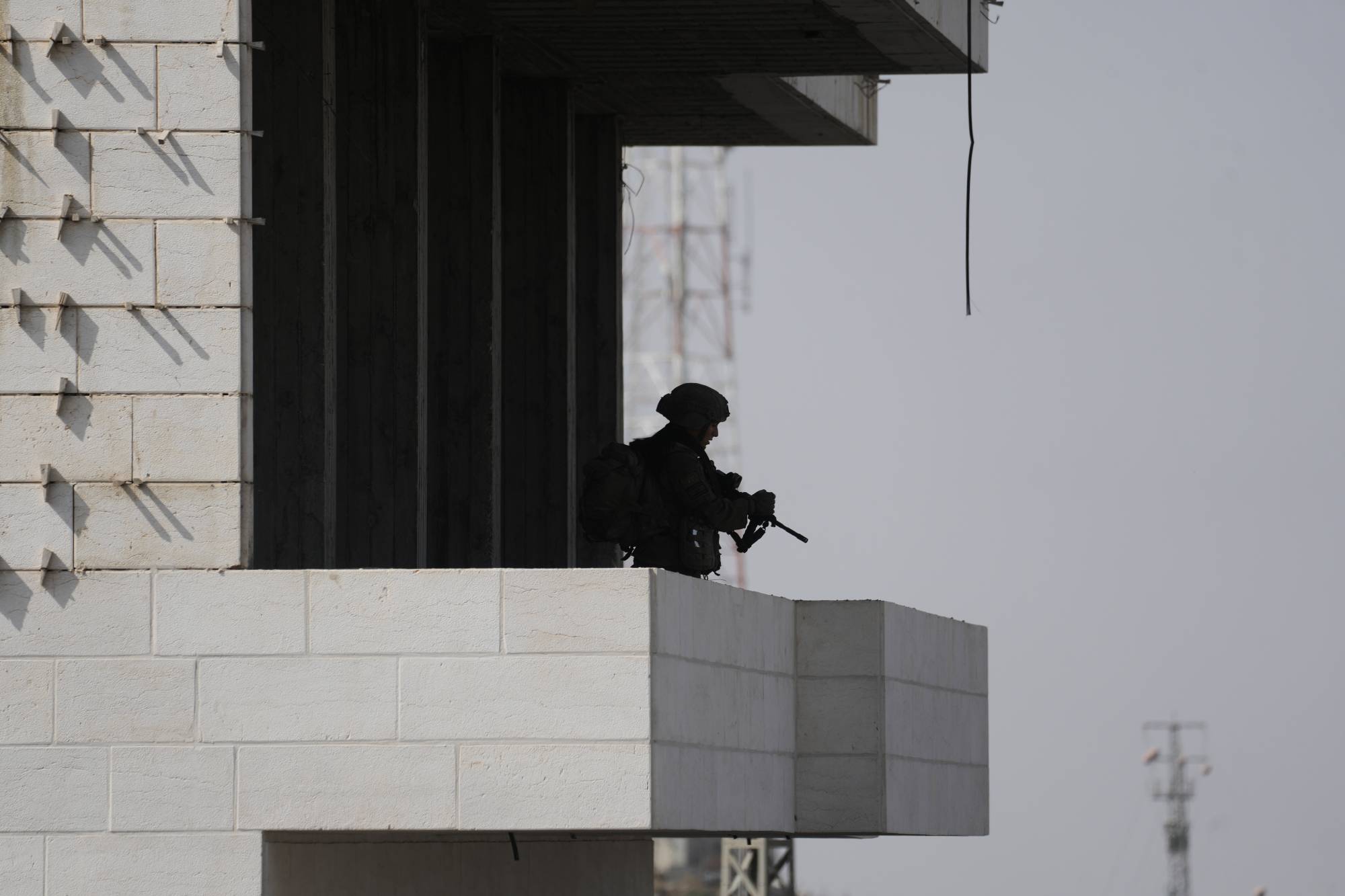
Israeli soldiers operate in the Gaza Strip amid the ongoing conflict between Israel and the Palestinian group Hamas, in this handout picture released on March 27, 2024. Israeli army/Handout via REUTERS.
TT

Israel Deploys Expansive Facial Recognition Program in Gaza

Israeli soldiers operate in the Gaza Strip amid the ongoing conflict between Israel and the Palestinian group Hamas, in this handout picture released on March 27, 2024. Israeli army/Handout via REUTERS.

By Sheera Frenkel


Within minutes of walking through an Israeli military checkpoint along Gaza’s central highway on Nov. 19, the Palestinian poet Mosab Abu Toha was asked to step out of the crowd. He put down his 3-year-old son, whom he was carrying, and sat in front of a military jeep.
Half an hour later, Abu Toha heard his name called. Then he was blindfolded and led away for interrogation.
“I had no idea what was happening or how they could suddenly know my full legal name,” said the 31-year-old, who added that he had no ties to the militant group Hamas and had been trying to leave Gaza for Egypt.
It turned out Abu Toha had walked into the range of cameras embedded with facial recognition technology, according to three Israeli intelligence officials who spoke on the condition of anonymity. After his face was scanned and he was identified, an artificial intelligence program found that the poet was on an Israeli list of wanted persons, they said.
Abu Toha is one of hundreds of Palestinians who have been picked out by a previously undisclosed Israeli facial recognition program that was started in Gaza late last year. The expansive and experimental effort is being used to conduct mass surveillance there, collecting and cataloging the faces of Palestinians without their knowledge or consent, according to Israeli intelligence officers, military officials and soldiers.
The technology was initially used in Gaza to search for Israelis who were taken hostage by Hamas during the Oct. 7 cross-border raids, the intelligence officials said. After Israel embarked on a ground offensive in Gaza, it increasingly turned to the program to root out anyone with ties to Hamas or other militant groups. At times, the technology wrongly flagged civilians as wanted Hamas militants, one officer said.
The facial recognition program, which is run by Israel’s military intelligence unit, including the cyber-intelligence division Unit 8200, relies on technology from Corsight, a private Israeli company, four intelligence officers said. It also uses Google Photos, they said. Combined, the technologies enable Israel to pick faces out of crowds and grainy drone footage.
Three of the people with knowledge of the program said they were speaking out because of concerns that it was a misuse of time and resources by Israel.
An Israeli army spokesman declined to comment on activity in Gaza, but said the military “carries out necessary security and intelligence operations, while making significant efforts to minimize harm to the uninvolved population.” He added, “Naturally, we cannot refer to operational and intelligence capabilities in this context.”
Facial recognition technology has spread across the globe in recent years, fueled by increasingly sophisticated A.I. systems. While some countries use the technology to make air travel easier, China and Russia have deployed the technology against minority groups and to suppress dissent. Israel’s use of facial recognition in Gaza stands out as an application of the technology in a war.
Complete Dehumanization of the Palestinians
Matt Mahmoudi, a researcher with Amnesty International, said Israel’s use of facial recognition was a concern because it could lead to “a complete dehumanization of Palestinians” where they were not seen as individuals. He added that Israeli soldiers were unlikely to question the technology when it identified a person as being part of a militant group, even though the technology makes mistakes.
Israel previously used facial recognition in the West Bank and East Jerusalem, according to an Amnesty report last year, but the effort in Gaza goes further.
In the West Bank and East Jerusalem, Israelis have a homegrown facial recognition system called Blue Wolf, according to the Amnesty report. At checkpoints in West Bank cities such as Hebron, Palestinians are scanned by high-resolution cameras before being permitted to pass. Soldiers also use smartphone apps to scan the faces of Palestinians and add them to a database, the report said.
In Gaza, which Israel withdrew from in 2005, no facial recognition technology was present. Surveillance of Hamas in Gaza was instead conducted by tapping phone lines, interrogating Palestinian prisoners, harvesting drone footage, getting access to private social media accounts and hacking into telecommunications systems, Israeli intelligence officers said.
After Oct. 7, Israeli intelligence officers in Unit 8200 turned to that surveillance for information on the Hamas gunmen who breached Israel’s borders. The unit also combed through footage of the attacks from security cameras, as well as videos uploaded by Hamas on social media, one officer said. He said the unit had been told to create a “hit list” of Hamas members who participated in the attack.
Corsight was then brought in to create a facial recognition program in Gaza, three Israeli intelligence officers said.
The company, with headquarters in Tel Aviv, says on its website that its technology requires less than 50 percent of a face to be visible for accurate recognition. Robert Watts, Corsight’s president, posted this month on LinkedIn that the facial recognition technology could work with “extreme angles, (even from drones,) darkness, poor quality.”
Unit 8200 personnel soon found that Corsight’s technology struggled if footage was grainy and faces were obscured, one officer said. When the military tried identifying the bodies of Israelis killed on Oct. 7, the technology could not always work for people whose faces had been injured. There were also false positives, or cases when a person was mistakenly identified as being connected to Hamas, the officer said.
To supplement Corsight’s technology, Israeli officers used Google Photos, the free photo sharing and storage service from Google, three intelligence officers said. By uploading a database of known persons to Google Photos, Israeli officers could use the service’s photo search function to identify people.
Google’s ability to match faces and identify people even with only a small portion of their face visible was superior to other technology, one officer said. The military continued to use Corsight because it was customizable, the officers said.
A Google spokesman said Google Photos was a free consumer product that “does not provide identities for unknown people in photographs.”
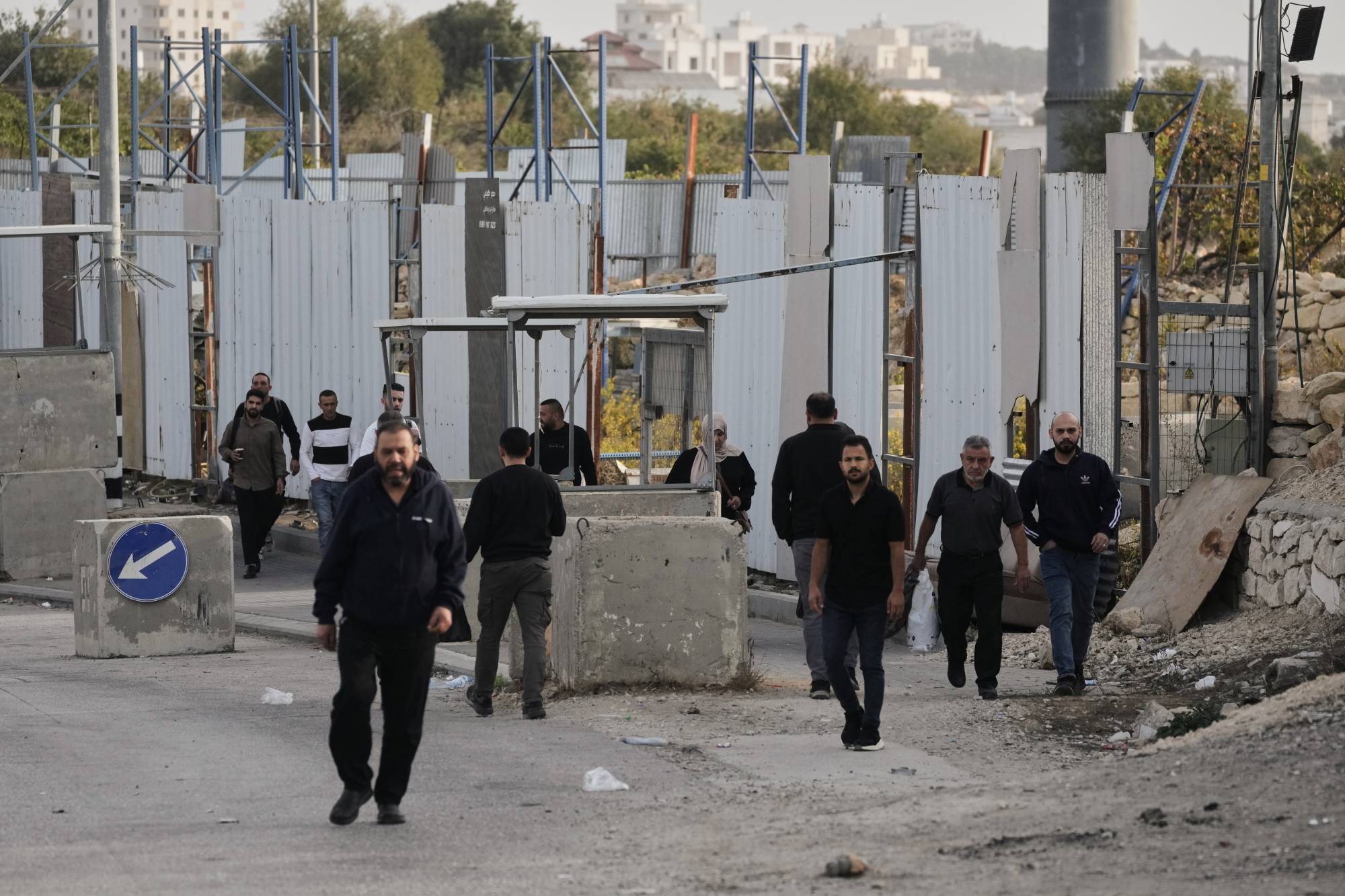
The facial recognition program in Gaza grew as Israel expanded its military offensive there. Israeli soldiers entering Gaza were given cameras equipped with the technology. Soldiers also set up checkpoints along major roads that Palestinians were using to flee areas of heavy fighting, with cameras that scanned faces.
The program’s goals were to search for Israeli hostages, as well as Hamas fighters who could be detained for questioning, the Israeli intelligence officers said.
The guidelines of whom to stop were intentionally broad, one said. Palestinian prisoners were asked to name people from their communities who they believed were part of Hamas. Israel would then search for those people, hoping they would yield more intelligence.
Abu Toha, the Palestinian poet, was named as a Hamas operative by someone in the northern Gaza town of Beit Lahia, where he lived with his family, the Israeli intelligence officers said. The officers said there was no specific intelligence attached to his file explaining a connection to Hamas.
In an interview, Abu Toha, who wrote “Things You May Find Hidden in My Ear: Poems From Gaza,” said he has no connection to Hamas.
When he and his family were stopped at the military checkpoint on Nov. 19 as they tried leaving for Egypt, he said he had not shown any identification when he was asked to step out of the crowd.
After he was handcuffed and taken to sit under a tent with several dozen men, he heard someone say the Israeli army had used a “new technology” on the group. Within 30 minutes, Israeli soldiers called him by his full legal name.
Abu Toha said he was beaten and interrogated in an Israeli detention center for two days before being returned to Gaza with no explanation. He wrote about his experience in The New Yorker, where he is a contributor. He credited his release to a campaign led by journalists at The New Yorker and other publications.
Upon his release, Israeli soldiers told him his interrogation had been a “mistake,” he said.
In a statement at the time, the Israeli military said Abu Toha was taken for questioning because of “intelligence indicating a number of interactions between several civilians and terror organizations inside the Gaza Strip.”
Abu Toha, who is now in Cairo with his family, said he was not aware of any facial recognition program in Gaza.
“I did not know Israel was capturing or recording my face,” he said. But Israel has “been watching us for years from the sky with their drones. They have been watching us gardening and going to schools and kissing our wives. I feel like I have been watched for so long.”

The New York Times


Israel Calls Countries Condemning New West Bank Settlements ‘Morally Wrong’

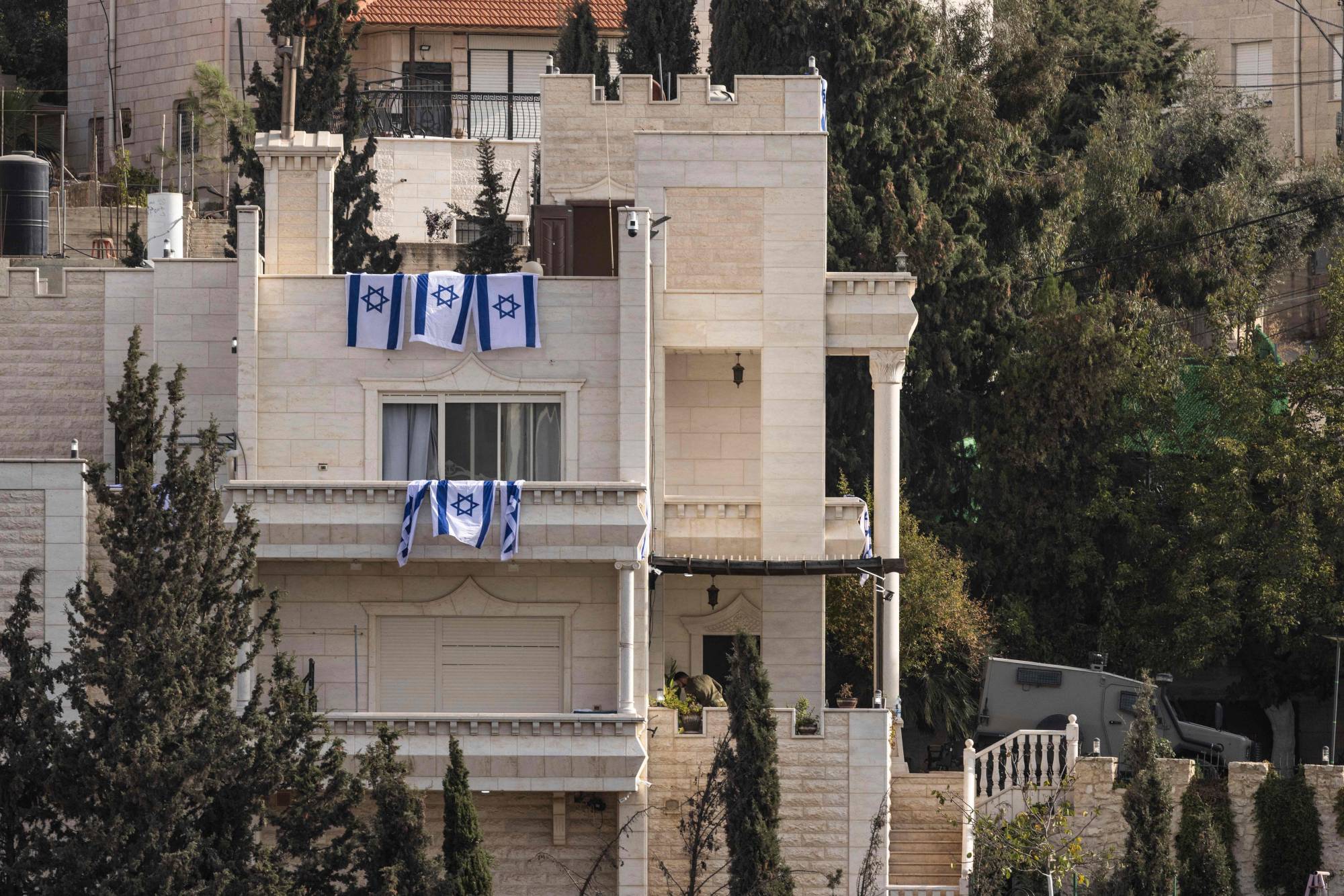
Newly constructed buildings are pictured in the Israeli settlement of Givat Zeev near the Palestinian city of Ramallah in the occupied West Bank on October 24, 2025. (AFP)
TT

Israel Calls Countries Condemning New West Bank Settlements ‘Morally Wrong’

Newly constructed buildings are pictured in the Israeli settlement of Givat Zeev near the Palestinian city of Ramallah in the occupied West Bank on October 24, 2025. (AFP)

Israel reacted furiously on Thursday to a condemnation by 14 countries including France and Britain of its approval of new settlements in the occupied West Bank, calling the criticism discriminatory against Jews.

"Foreign governments will not restrict the right of Jews to live in the Land of Israel, and any such call is morally wrong and discriminatory against Jews," Foreign Minister Gideon Saar said.

"The cabinet decision to establish 11 new settlements and to formalize eight additional settlements is intended, among other things, to help address the security threats Israel is facing."

On Sunday, Israel's far-right Finance Minister Bezalel Smotrich announced that authorities had greenlit the settlements, saying the move was aimed at preventing the establishment of a Palestinian state.

Fourteen countries, including Britain, France, Germany, Spain and Canada, then issued a statement urging Israel to reverse its decision, "as well as the expansion of settlements".

Such unilateral actions, they said, "violate international law", and risk undermining a fragile ceasefire in Gaza in force since October 10.

They also reaffirmed their "unwavering commitment to a comprehensive, just and lasting peace based on the two-state solution... where two democratic states, Israel and Palestine, live side-by-side in peace and security".

Israel has occupied the West Bank following the 1967 Arab-Israeli war.

Excluding east Jerusalem, which was occupied and annexed by Israel in 1967, more than 500,000 Israelis live in the West Bank, along with about three million Palestinian residents.

Earlier this month, the United Nations said the expansion of Israeli settlements in the West Bank, all of which are illegal under international law, had reached its highest level since at least 2017.


Iraq Criminalizes Volunteering in Russia-Ukraine War

A photo circulated on social media shows a 24-year-old Iraqi who traveled to Russia to join its armed forces. (AFP)
TT

Iraq Criminalizes Volunteering in Russia-Ukraine War

A photo circulated on social media shows a 24-year-old Iraqi who traveled to Russia to join its armed forces. (AFP)

The Iraqi judiciary warned on Wednesday that people involved in the war between Russia and Ukraine will face jail as it attempts to crack down on the recruitment of Iraqis joining the conflict.

Faiq Zidan, the head of Iraq's Supreme Judicial Council, received on Wednesday National Security Advisor Qasim Al-Araji and members of a committee tasked with combating the recruitment of Iraqis.

Zaidan stressed that Iraq criminalizes any Iraqi who joins the armed forces of another nation without the approval of the government.

The judiciary does not have a fixed prison term for anyone accused of the crime, but a court in Najaf last week sentenced to life an Iraqi accused of human trafficking.

He was convicted of belonging to an international criminal gang that recruits Iraqis to fight for Russia in its war against Ukraine.

In November, Prime Minister Mohammed Shia al-Sudani ordered the formation of a committee, headed by Araji, to crack down on the recruitment of Iraqis to fight for the Russian and Ukrainian militaries.

Iraq does not have official figures detailing how many of its citizens have joined the war. Media reports said some 50,000 Iraqis have joined Russian ranks, while unofficial figures put the number at around 5,000, with 3,000 fighting for Russia and 2,000 for Ukraine.

The debate over the recruitment played out over the media between the Russian and Ukrainian ambassadors to Iraq.

Ukrainian Ambassador Ivan Dovhanych accused Russia of recruiting Iraqis. Last week, the Ukrainian government sent a letter to the Iraqi government about the recruitment.

It hailed Baghdad’s criminalization of such activity. The letter also revealed that Ukrainian authorities had arrested an Iraqi who was fighting for Russia.

Ukraine has denied that it has recruited Iraqis to join the conflict, but reports indicate otherwise.

Meanwhile, Russian Ambassador to Baghdad Elbrus Kutrashev acknowledged that Iraqi fighters had joined the Russian army.

Speaking to the media, he declined to give exact figures, but dismissed claims that they reached 50,000 or even 5,000, saying instead they number no more than a few hundred.

He confirmed that Iraqis had joined the Russian army and “that some four to five had lost their lives”.

He revealed that the Russian embassy in Baghdad had granted visas to Russia to the families of the deceased on humanitarian grounds.

Russian law allows any foreign national residing in Russia and who speaks Russian to join its army with a salary of around 2,500 to 3,000 dollars.

There have been mounting calls in Iraq for the authorities to crack down on human trafficking gangs.

Would-be recruits are often lured by the monthly salary and the possibility of gaining the Russian or Ukrainian nationality.

Critics of the authorities have said Iraqi youths are lured to join foreign wars given the lack of job opportunities in Iraq.


Somalia's Capital Votes in First Step toward Restoring Universal Suffrage

Members of the Justice and Solidarity Party (JSP) campaign in the streets as they share their political aims with voters in Mogadishu, Somalia, 22 December 2025. EPA/SAID YUSUF WARSAME
TT

Somalia's Capital Votes in First Step toward Restoring Universal Suffrage

Members of the Justice and Solidarity Party (JSP) campaign in the streets as they share their political aims with voters in Mogadishu, Somalia, 22 December 2025. EPA/SAID YUSUF WARSAME

Residents of Somalia's capital Mogadishu will vote on Thursday in municipal elections meant to pave the way for the East African country's first direct national polls in more than half a century.

With the exception of votes in the semi-autonomous region of Puntland and the breakaway region of Somaliland, Somalia last held direct elections in 1969, months before military general, Mohamed Siad Barre, took power in a coup, Reuters said.

After years of civil ‌war that ‌followed Barre's fall in 1991, indirect elections ‌were ⁠introduced in ‌2004. The idea was to promote consensus among rival clans in the face of an armed insurgency, although some Somalis say politicians prefer indirect elections because they create opportunities for corruption.

Under the system, clan representatives elect lawmakers, who then choose the president. The president, in turn, has been responsible for appointing Mogadishu's mayor.

The vote in Mogadishu, a ⁠city of some 3 million people where security conditions have improved in recent years ‌despite continuing attacks by al Qaeda-linked al ‍Shabaab militants, is seen as ‍a test run for direct elections at the national level.

Around ‍1,605 candidates are running on Thursday for 390 posts in Mogadishu's district councils, said Abdishakur Abib Hayir, a member of the National Electoral Commission. Council members will then choose a mayor.

"It shows Somalia is standing on its feet and moving forward," Hayir told Reuters. "After the local election, elections can and will take place in ⁠the entire country."

A 2024 law restored universal suffrage ahead of federal elections expected next year. However, President Hassan Sheikh Mohamud reached a deal in August with some opposition leaders stipulating that while lawmakers would be directly elected in 2026, the president would still be chosen by parliament.

Opposition parties have argued the rapid introduction of a new electoral system would benefit Mohamud's re-election prospects.

They also question whether the country is safe enough for mass voting given al Shabaab's control over vast areas of the countryside and regular strikes ‌on major population centers.