

An international team of doctors visiting a hospital in central Gaza was prepared for the worst. But the gruesome impact Israel’s war against Hamas is having on Palestinian children still left them stunned.
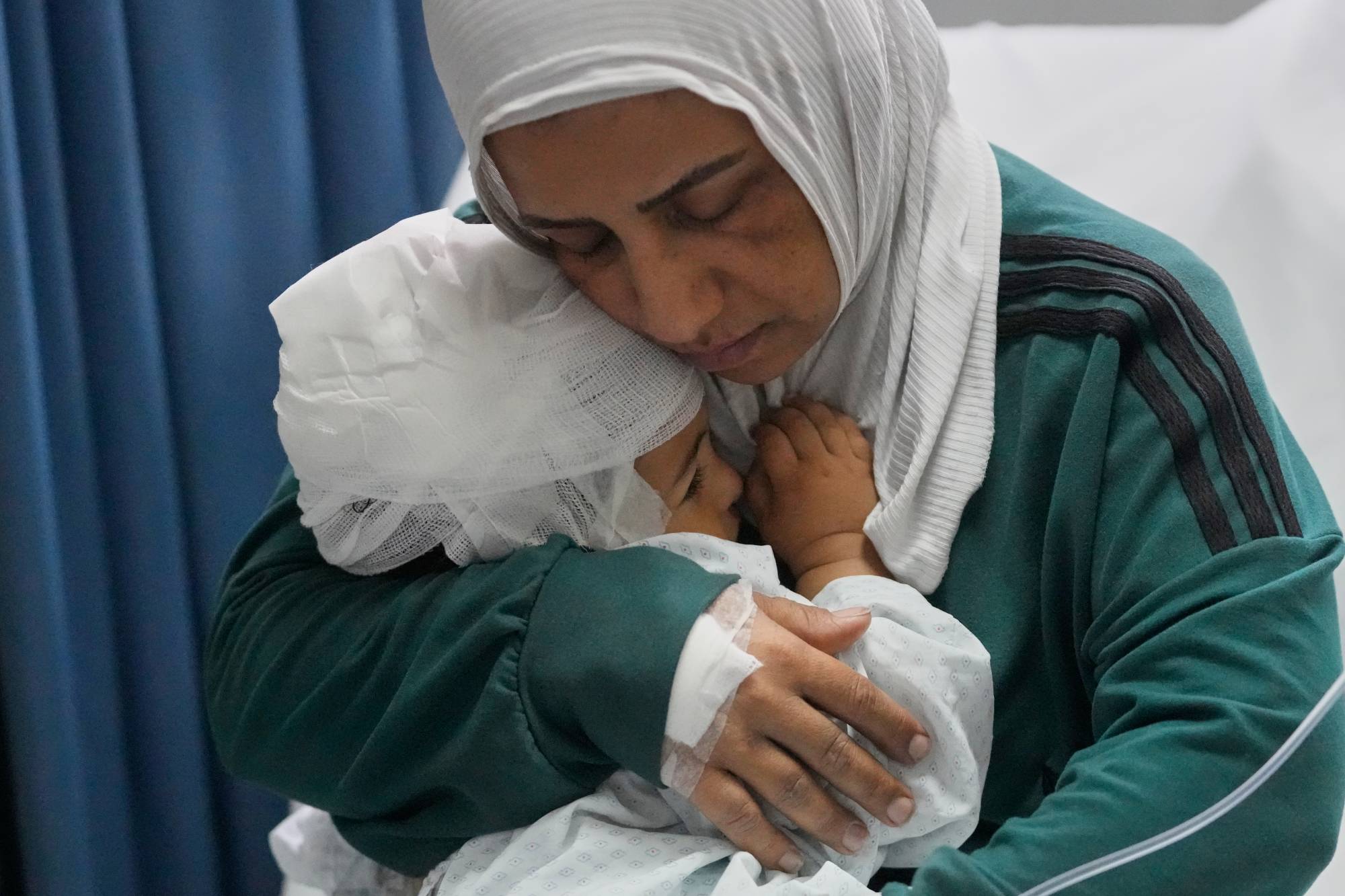
One toddler died from a brain injury caused by an Israeli strike that fractured his skull. His cousin, an infant, is still fighting for her life with part of her face blown off by the same strike.
An unrelated 10-year-old boy screamed out in pain for his parents, not knowing that they were killed in the strike. Beside him was his sister, but he didn’t recognize her because burns covered almost her entire body.
These gut-wrenching casualties were described to The Associated Press by Tanya Haj-Hassan, a pediatric intensive-care doctor from Jordan, following a 10-hour overnight shift at Al-Aqsa Martyrs Hospital in the town of Deir al-Balah.
Haj-Hassan, who has extensive experience in Gaza and regularly speaks out about the war’s devastating effects, was part of a team that recently finished a two-week stint there.
After nearly six months of war, Gaza’s health sector has been decimated. Roughly a dozen of Gaza’s 36 hospitals are only partially functioning. The rest have either shut down or are barely functioning after they ran out of fuel and medicine, were surrounded and raided by Israeli troops, or were damaged in fighting.
That leaves hospitals such as Al-Aqsa Martyrs caring for an overwhelming number of patients with limited supplies and staff. The majority of its intensive care unit beds are occupied by children, including infants wrapped in bandages and wearing oxygen masks.
“I spend most of my time here resuscitating children,” Haj-Hassan said after a recent shift. “What does that tell you about every other hospital in the Gaza Strip?”
A different team of international doctors working at Al-Aqsa Martyrs in January stayed at a nearby guesthouse. But because of a recent surge of Israeli Israel strikes nearby, Haj-Hassan and her co-workers stayed in the hospital itself.
That gave them a painfully vivid look at the strain the hospital has come under as the number of patients keeps rising, said Arvind Das, the team leader in Gaza for the International Rescue Committee. His organization and Medical Aid for Palestinians organized the visit by Haj-Hassan and others.
Mustafa Abu Qassim, a nurse from Jordan who was part of the visiting team, said he was shocked by the overcrowding.
“When we look for patients, there are no rooms,” he said. “They are in the corridors on a bed, a mattress, or on a blanket on the floor.”
Before the war, the hospital had a capacity of around 160 beds, according to the World Health Organization. Now there are some 800 patients, yet many of the hospital's 120 staff members are no longer able to come to work.
Health care workers face the same daily struggle as others in Gaza in finding food for their families and trying to ensure some safety for them. Many bring their children with them to the hospital to keep them close, Abu Qassim said.
“It’s just miserable,” he said.
Thousands of people driven from their homes by the war are also living in the hospital grounds, hoping it will be safe. Hospitals have special protections under international law, though those protections can be removed if combatants use them for military purposes.
Israel has alleged that hospitals serve as command centers, weapons storage facilities and hideouts for Hamas, but has presented little visual evidence. Hamas has denied the allegations. Israel has been carrying out a large-scale operation in Gaza's largest hospital, Shifa, for the past week.
Israeli troops have not raided or besieged Al-Aqsa Martyrs but have attacked surrounding areas, sometimes striking close to the hospital. In January, many doctors, patients, and displaced Palestinians fled the hospital after a flurry of strikes.
Israel’s bombardment and offensive in Gaza have killed more than 32,000 Palestinians and wounded nearly 75,000 more in the territory of 2.3 million people, according to Gaza’s Health Ministry. The count does not differentiate between combatants and civilians, but the ministry says about two-thirds of those killed have been women and children.
Roughly half of Gaza's 2.3 million people are 17 or younger, the UN’s agency for children estimates.
Israel holds Hamas responsible for non-combatants' deaths and injuries because the group in Gaza operates from within civilian areas. It says over one-third of the dead are Hamas, though it has not backed up the claim with evidence.
The war was triggered on Oct. 7 by Hamas and other militants who attacked southern Israel, killing around 1,200 people and taking some 250 hostages. The Israeli government believes around 100 hostages being held in Gaza are still alive.
In the early stages of the war, Israel severely limited the entry of food, fuel and medical supplies into Gaza. While the flow of aid has increased — and Israel says there are no longer any limits — the international community has called on Israel to let in more.
Aid groups say complicated inspection procedures at the border, continued fighting, and a breakdown in public order have caused massive slowdowns in convoys. Israel accuses the UN of disorganization.
The result has been catastrophic, with hospital staff struggling to cope with a shortage of spare parts to maintain medical equipment. Al-Aqsa Martyrs has also been short on anesthetics, meaning surgeries and other procedures are frequently performed without painkillers.
Haj-Hassan says there is only one way to end Gaza’s health care crisis.
“They need the war to stop,” she said.


Doctors Visiting a Gaza Hospital are Stunned by the War's Toll on Palestinian Children
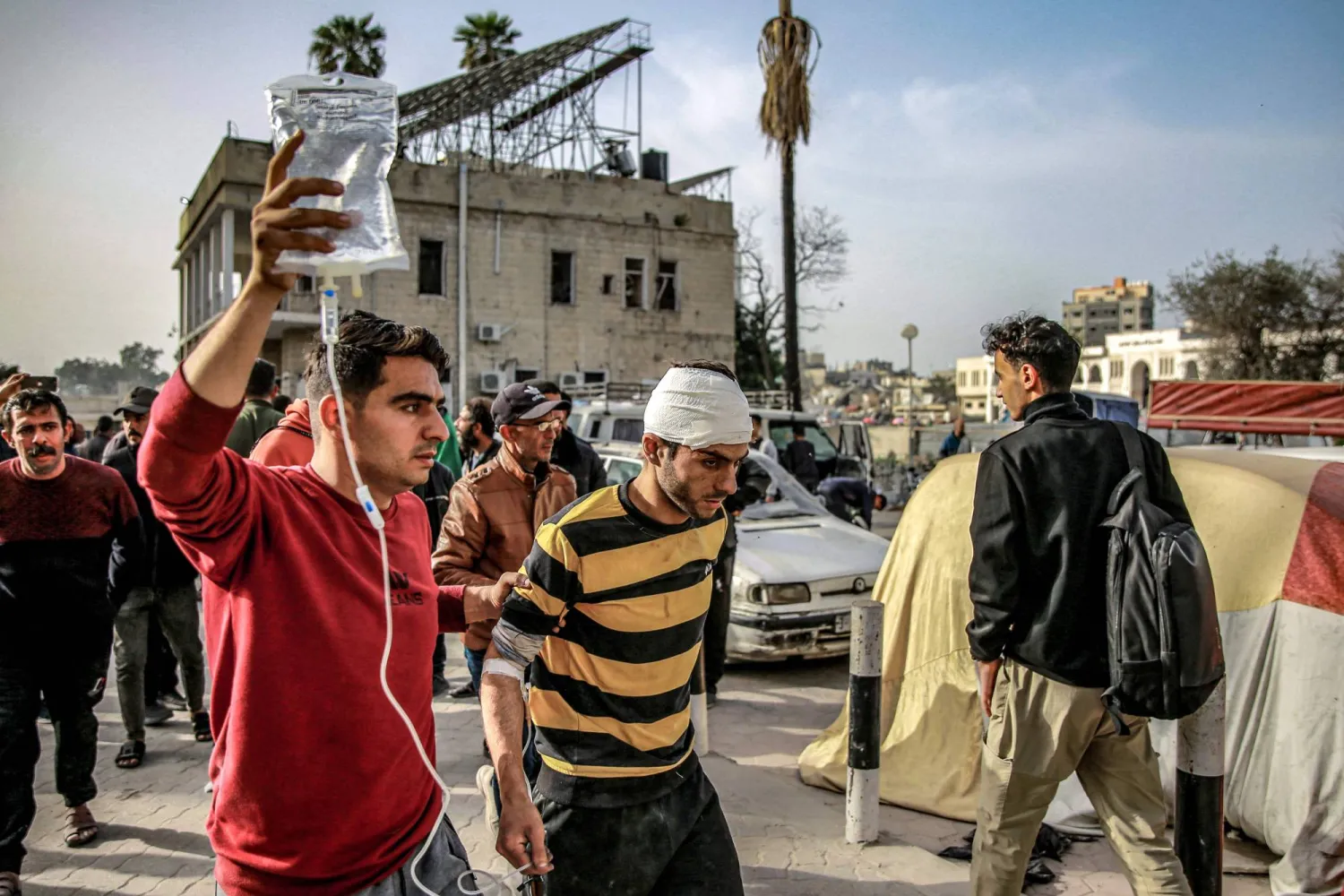
A man assists another to carry an intravenous solution bag for him as they walk outside the Ahli Arab hospital in Gaza City on March 27, 2024 amid the ongoing conflict in the Gaza Strip between Israel and the Palestinian group Hamas. (Photo by AFP)

Doctors Visiting a Gaza Hospital are Stunned by the War's Toll on Palestinian Children
A man assists another to carry an intravenous solution bag for him as they walk outside the Ahli Arab hospital in Gaza City on March 27, 2024 amid the ongoing conflict in the Gaza Strip between Israel and the Palestinian group Hamas. (Photo by AFP)



لم تشترك بعد
انشئ حساباً خاصاً بك لتحصل على أخبار مخصصة لك ولتتمتع بخاصية حفظ المقالات وتتلقى نشراتنا البريدية المتنوعة
