


Pakistani President Receives Saudi Foreign Minister, High-Level Delegation in Islamabad

President of Pakistan Asif Ali Zardari receives Saudi Foreign Minister Prince Faisal bin Farhan bin Abdullah and his accompanying delegation in Islamabad. (SPA)
TT

Pakistani President Receives Saudi Foreign Minister, High-Level Delegation in Islamabad

President of Pakistan Asif Ali Zardari receives Saudi Foreign Minister Prince Faisal bin Farhan bin Abdullah and his accompanying delegation in Islamabad. (SPA)

President of Pakistan Asif Ali Zardari received on Tuesday Saudi Foreign Minister Prince Faisal bin Farhan bin Abdullah, who is on an official visit to the country.

Meeting at the Pakistani Presidential Palace in Islamabad, Prince Faisal conveyed the greetings of Custodian of the Two Holy Mosques King Salman bin Abdulaziz Al-Saud and Prince Mohammed bin Salman bin Abdulaziz Al-Saud, Crown Prince and Prime Minister, to the Pakistani president and their wishes for the Pakistani people further development and prosperity.

The officials reviewed the strong brotherly relations between Saudi Arabia and Pakistan and ways to boost them in various fields.

They also discussed means to improve economic and development cooperation and push it towards broader horizons to achieve aspirations of more prosperity and development.

Prince Faisal was accompanied by a high-level delegation that includes Minister of Environment, Water, and Agriculture Abdulrahman Al-Fadley, Minister of Industry and Mineral Resources Bandar Al-Khorayef, Advisor to the Royal Court Mohammad Al-Tuwaijri, Assistant Minister of Investment Ibrahim Al-Mubarak, Saudi Ambassador to Pakistan Nawaf bin Saeed Al-Maliki, as well as a number of senior officials from the ministries of foreign affairs and energy, Public Investment Fund, and the Saudi Fund for Development.

Pakistan’s Prime Minister Muhammad Shehbaz Sharif later received Prince Faisal and the accompanying delegation.

They held talks on bilateral relations and joint cooperation and ways to boost them in all fields. They underlined the need to intensify bilateral and multilateral coordination on issues of common concern.

The officials also discussed economic and development cooperation, as well as international developments.

Prince Faisal also met with his Pakistani counterpart Mohammad Ishaq Dar at the Foreign Ministry headquarters in Islamabad.

They reviewed the brotherly relations between the two countries and ways to bolster them.  

They discussed the development in the Middle East, especially in the Gaza Strip and its neighboring areas, efforts to reach a ceasefire, and the provision of more urgent humanitarian aid.

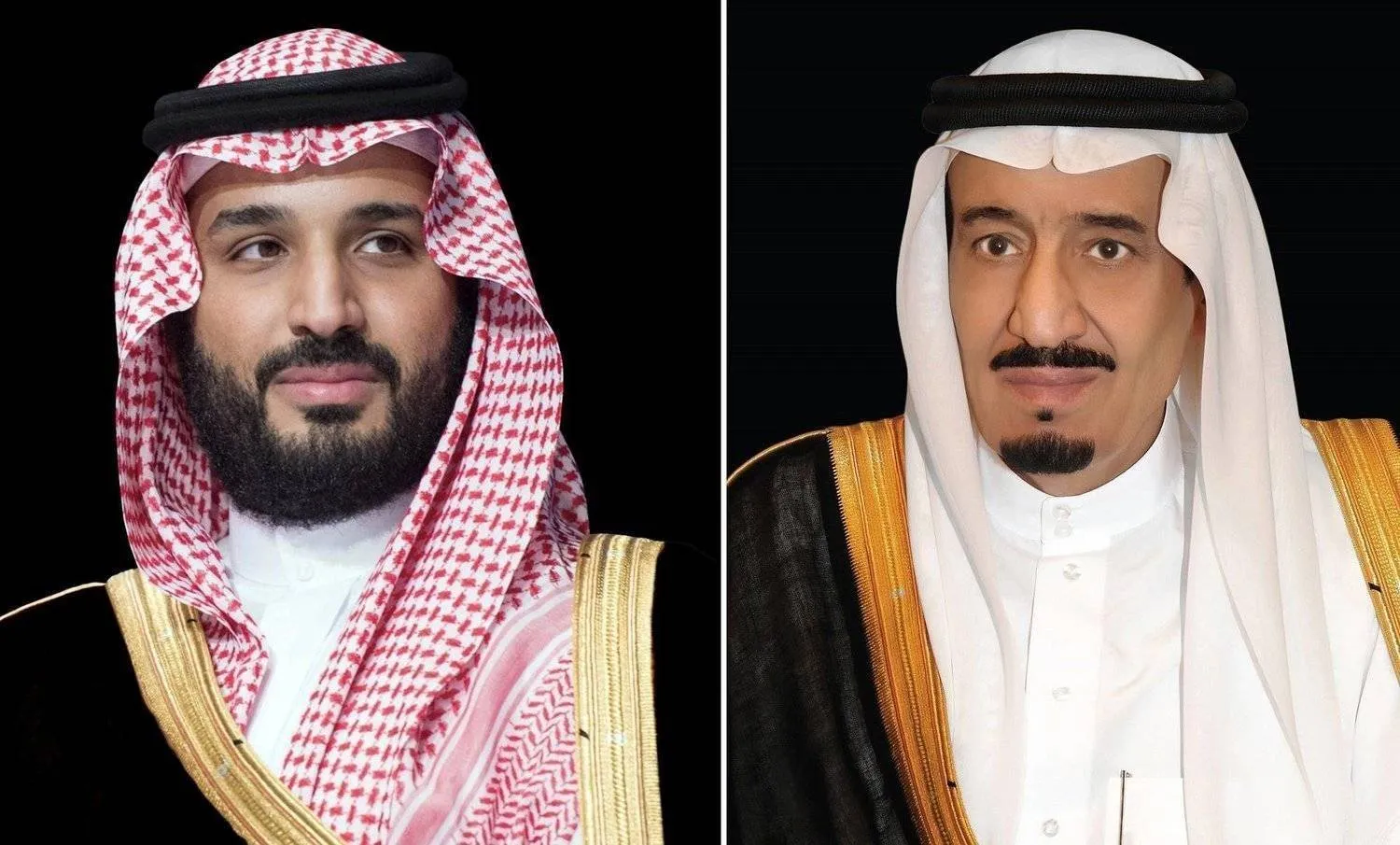


Saudi FM Discusses Regional Developments with Palestinian Counterpart

Saudi Minister of Foreign Affairs Prince Faisal bin Farhan bin Abdullah. (AFP)
TT

Saudi FM Discusses Regional Developments with Palestinian Counterpart

Saudi Minister of Foreign Affairs Prince Faisal bin Farhan bin Abdullah. (AFP)

Saudi Minister of Foreign Affairs Prince Faisal bin Farhan bin Abdullah held separate telephone talks on Saturday with Palestinian Prime Minister and FM Dr. Mohammad Mustafa and Brunei’s FM Dato Erywan Pehin Yusof.

They discussed the latest developments in the region and efforts being exerted in this regard.


UAE, Qatar, Bahrain Repel Iran Rocket Attacks

 Boats are docked at Dubai Creek Harbor as the Dubai skyline, including the Burj Khalifa, is seen in the background amid the U.S.-Israel conflict with Iran, in Dubai, United Arab Emirates, March 6, 2026. (Reuters)
Boats are docked at Dubai Creek Harbor as the Dubai skyline, including the Burj Khalifa, is seen in the background amid the U.S.-Israel conflict with Iran, in Dubai, United Arab Emirates, March 6, 2026. (Reuters)
TT

UAE, Qatar, Bahrain Repel Iran Rocket Attacks

 Boats are docked at Dubai Creek Harbor as the Dubai skyline, including the Burj Khalifa, is seen in the background amid the U.S.-Israel conflict with Iran, in Dubai, United Arab Emirates, March 6, 2026. (Reuters)
Boats are docked at Dubai Creek Harbor as the Dubai skyline, including the Burj Khalifa, is seen in the background amid the U.S.-Israel conflict with Iran, in Dubai, United Arab Emirates, March 6, 2026. (Reuters)

Dubai airport, the world's busiest for international traffic, suspended operations Saturday before partially resuming services, after an air defense interception in the area during attacks from Iran.

"We have partially resumed operations from today, 7 March, with some flights operating out of DXB and DWC," it said, referring to Dubai's main airport as well as the city's Dubai World Central - Al Maktoum International.

"Please do not travel to the airport unless you have been contacted by your airline that your flight is confirmed, as schedules continue to change," it told passengers.

Earlier, the government had said operations had been suspended after the aerial interception of an object near the airport, with a witness telling AFP of a loud explosion followed by a cloud of smoke.

"For the safety of passengers, airport staff, and airline crew, operations at Dubai International (DXB) have been temporarily suspended," the government's Dubai Media Office said in a social media post.

The government said in a separate post that there had been "a minor incident resulting from the fall of debris after an interception", which caused no injuries.

"The air defenses of the United Arab Emirates are currently responding to missile and drone threats coming from Iran," the Emirati Ministry of Defense had said.

The Flightradar24 tracking website earlier showed planes circling above the airport in an apparent holding pattern.

Flights from Dubai's main airport had partially resumed on Monday despite daily drone attacks targeting sites in the United Arab Emirates.

Last Saturday, four employees were injured and a terminal was damaged as war broke out in the Middle East following US-Israeli strikes on Iran.

Iranian attacks have also hit Abu Dhabi airport, the upmarket Palm Jumeirah development and the Burj Al Arab luxury hotel, while drone debris caused a fire at the US consulate in Dubai on Tuesday.

Meanwhile, Qatar’s Defense Ministry said it repelled a rocket attack against the state.

Bahrain’s Defense Force said it had intercepted and destroyed 86 rockets and 148 drones since the attacks from Iran started.


Bahrain, US, and UK Hold Emergency Consultations on Regional Security

The consultations brought together Sheikh Nasser bin Hamad, Brad Cooper, and Richard Knighton (BNA). 
TT

Bahrain, US, and UK Hold Emergency Consultations on Regional Security

The consultations brought together Sheikh Nasser bin Hamad, Brad Cooper, and Richard Knighton (BNA). 

Bahrain, the United States, and the United Kingdom held emergency consultations under Article Two of the Comprehensive Security Integration and Prosperity Agreement (C-SIPA) to review the region’s current security situation, with a focus on Iranian actions aimed at destabilizing regional security and stability.

According to a statement from Bahrain’s National Communication Center, Manama activated Article Two of the agreement, triggering exceptional consultations on Thursday within the framework of the pact’s Defense Working Group.

The move came in response to Iranian missile and drone attacks that Bahraini authorities said deliberately targeted civilian and residential areas in the kingdom.

The Bahrain News Agency reported late Friday that Lt. Gen. Sheikh Nasser bin Hamad Al Khalifa, Bahrain’s national security adviser and secretary-general of the Supreme Defense Council, held the consultations with US Central Command (CENTCOM) Commander, Admiral Brad Cooper and the United Kingdom’s Air Chief Marshal Richard Knighton, chief of the defense staff.

Participants discussed the urgent need for a coordinated allied response to what they described as a direct threat to Bahrain’s sovereignty and territorial integrity. They emphasized the strength of the partnership among the member states and reaffirmed their commitment to collectively addressing threats to regional security and stability.

The meeting also underscored the strategic partnership established under the agreement, which includes commitments to strengthen security cooperation and collective deterrence against external threats. Officials reaffirmed their determination to work jointly to counter any external aggression targeting the sovereignty or territorial integrity of member states.

Separately, Cooper condemned the Iranian attacks in a post on the official CENTCOM account on the social media platform X, describing them as unacceptable.

He added that the United States would continue working with regional partners to counter threats endangering civilians in the region.

In a phone call Thursday with Bahrain’s King Hamad bin Isa Al Khalifa, British Prime Minister Keir Starmer said the United Kingdom would deploy four additional Typhoon fighter jets to the region, to be stationed in Qatar, to provide defensive air cover for Bahrain and help strengthen the protection of its airspace.

Bahrain reiterated its commitment to regional stability, the protection of its citizens, and the defense of its sovereignty. It also urged the international community to recognize the seriousness of what it described as Iran’s deliberate targeting of civilian areas and the importance of a unified allied response, which it said reflects the strength of its security partnerships.