Spain's Fashion and Beauty Group Puig Poised for IPO

Puig Group owns the Paco Rabanne, Nina Ricci, Charlotte Tilbury and Carolina Herrera labels and also holds a majority stake in Jean Paul Gaultier. FRANCOIS GUILLOT / AFP/File
TT

Spain's Fashion and Beauty Group Puig Poised for IPO

Puig Group owns the Paco Rabanne, Nina Ricci, Charlotte Tilbury and Carolina Herrera labels and also holds a majority stake in Jean Paul Gaultier. FRANCOIS GUILLOT / AFP/File

The iconic Nina Ricci, Paco Rabanne and Jean-Paul Gaultier labels make their market debut Friday as Spanish fashion and beauty group Puig begins trading on the Madrid stock exchange.
For the family-owned Puig Group, which has expanded rapidly into luxury goods, going public is a big step which will allow it to compete with the giants of the sector such as Estee Lauder, Hermes, Kering and LVMH.
The move "is a decisive step in Puig's 110-year history," chairman and CEO Marc Puig said last month, emphasizing the firm's "long-term approach".
Founded in Barcelona in 1914 by businessman Antonio Puig Castello, the group has grown over the years to become a heavyweight in the cosmetics, fragrance and fashion industries, bolstering its stance in recent years with a string of prestigious acquisitions.
Among its brands are Paco Rabanne, Nina Ricci, Charlotte Tilbury, Carolina Herrera and Dries Van Noten. It also holds a majority stake in the Jean Paul Gaultier label and has licensing agreements with Prada, Christian Louboutin and Comme des Garçons.
A family firm
The Barcelona-based group, which specializes in perfumes and cosmetics, enters the market on Friday with an opening guidance price of 24.50 euros (about $26) per share.
Analysts said it was Spain's biggest IPO this year and one of the largest in Europe.
The price gives the group an estimated market capitalization of nearly 14 billion euros, which will allow it to enter Madrid's Ibex 35 exchange, which groups Spain's 35 largest companies.
The flotation will take place in two stages, the first of which would seek to raise an initial 1.25 billion euros through newly issued shares.
It would then make a "larger secondary offering" of existing shares held by its holding company Exea to raise nearly 1.36 billion euros.
That could then be complemented with the sale of shares reserved for specific investors for another 390 million euros, which would allow the group to raise around 3.0 billion euros.
Despite the move, the Puig family said it would retain a controlling interest in the company with 71.7 percent of the shares, along with "the vast majority of voting rights" -- 92.5 percent -- within the board of directors.
'Greater financial clout'
The idea of an IPO had first been raised by Puig himself in an interview with the Financial Times in October 2023, in which he said being accountable to the market would bring "a discipline" that would head off any issues when passing the baton from one generation to the next.
"Sometimes family businesses can lose their position in the market. They can start to die slowly and nobody inside the company is aware of it," he told the paper. "If you’re accountable (to investors), those things can be noticed."
According to Javier Cabrera, an analyst at XTB, the IPO would allow the group to build "greater financial clout" by taking advantage of "the positive stock market dynamics" in the luxury goods and fashion sector.
Luxury goods are enjoying a buoyant moment with sector heavyweights posting record sales in 2023, despite a slowdown following two years of double-digit growth.
Last year, Puig posted sales of 4.3 billion euros, a 19 percent increase on 2022, logging net profits of 465 million euros, up 16 percent year-on-year.
And that growth could gather pace thanks to Puig's strategy of acquisitions, which in recent years has led to "a high level of growth" and "a good diversification of revenues, both geographically and in terms of business lines", Cabrera said.
He also pointed to the group's strong showing in China, a major consumer of luxury goods.


L'Oréal-led Group Reportedly Eyes Up to 15% Stake in Armani

A Giorgio Armani ad hangs behind broken glass during a demonstration organised by labor unions as part of nationwide protests called by the "Yellow Vests" movement joined by French high school and university students against the cost of living and rising fuel prices, in Paris, France, October 31, 2026. REUTERS/Pedro Nunes
TT

L'Oréal-led Group Reportedly Eyes Up to 15% Stake in Armani

A Giorgio Armani ad hangs behind broken glass during a demonstration organised by labor unions as part of nationwide protests called by the "Yellow Vests" movement joined by French high school and university students against the cost of living and rising fuel prices, in Paris, France, October 31, 2026. REUTERS/Pedro Nunes

French cosmetics group L'Oréal is set to lead a consortium of investors interested in buying a combined 15% in Italian fashion house Armani, with EssilorLuxottica set to join, the Corriere della Sera said on Thursday.

Citing sources, the Italian daily said L'Oréal aims to acquire around 10% of Armani, while EssilorLuxottica could take a stake of up to 5%.

According to Reuters, it added that luxury ⁠giant LVMH was ⁠no longer involved in the discussions.

Negotiations are well under way but no deal has been reached as discussions over valuation and other terms are continuing, the paper said.

Reuters reported this month ⁠that heirs of late designer Giorgio Armani, who now control the eponymous fashion empire, favor an eventual stock market listing over a sale to a large industry player, as they pursue an initial minority stake deal.

Armani, who died at 91 last year, said in his will his heirs should sell about 15% of ⁠the ⁠company between 12 and 18 months after his death, followed by the disposal of a further stake of 30% to 54.9% or a bourse listing.

In his will, he explicitly mentioned long-standing licensing partners L'Oréal, EssilorLuxottica and LVMH as preferred buyers, though without ruling out other industry players of "equal standing.”

Armani, L'Oreal, EssilorLuxottica and LVMH were not immediately available for comment.


JD Sports Cuts Profit Outlook Again as Third-quarter Sales Fall

A logo is seen outside the newly renovated JD Sports store at Westfield Stratford City in London, Britain, July 30, 2024. REUTERS/Hollie Adams/File Photo
TT

JD Sports Cuts Profit Outlook Again as Third-quarter Sales Fall

A logo is seen outside the newly renovated JD Sports store at Westfield Stratford City in London, Britain, July 30, 2024. REUTERS/Hollie Adams/File Photo

British sports and fashion retailer JD Sports cut its profit outlook for the second time in four months on Thursday after a 2.6% fall in third-quarter like-for-like sales, though trading did improve in its key North American market.

JD Sports forecast a year to end-January 2027 profit before tax and adjusting items of £700 million to £750 million ($919-$985 million). Its previous guidance was £700 million to £800 million.

Prior to Thursday's update, ⁠analysts were on ⁠average forecasting £723 million. It made £852 million in 2025/26.

Group organic sales for the 13 weeks to October 31 fell 1.1%while like-for-like sales fell 2.6%, having been down 3.1% in its second quarter, Reuters reported.

Like-for-like sales in the ⁠key North America market, where the group makes over a third of total sales, fell 2.2%, having been down 6.8% in the second quarter.

Like-for-like sales fell 2.7% in Europe, 2.6% in the UK and 5.3% in Asia Pacific.

Saw resilient sales trends in apparel and accessories, despite unseasonably warm weather delaying autumn/winter demand.

Footwear remained soft given ongoing ⁠product ⁠cycle evolution, amidst a continued promotional market.

Trading in Europe was affected by civil unrest, it said.

The outcome also reflects cost-of-living pressures on JD's core young and less affluent customer base and a lack of innovation from Nike - JD's most important brand partner which is struggling to overhaul its business.

Shares in JD are up 12% so far this year but down on a two-year basis.


Nike Aims to Design Half of Its China Sportswear Products Locally

A woman walks past a Nike store in Beijing, China April 9, 2025. (Reuters)
TT

Nike Aims to Design Half of Its China Sportswear Products Locally

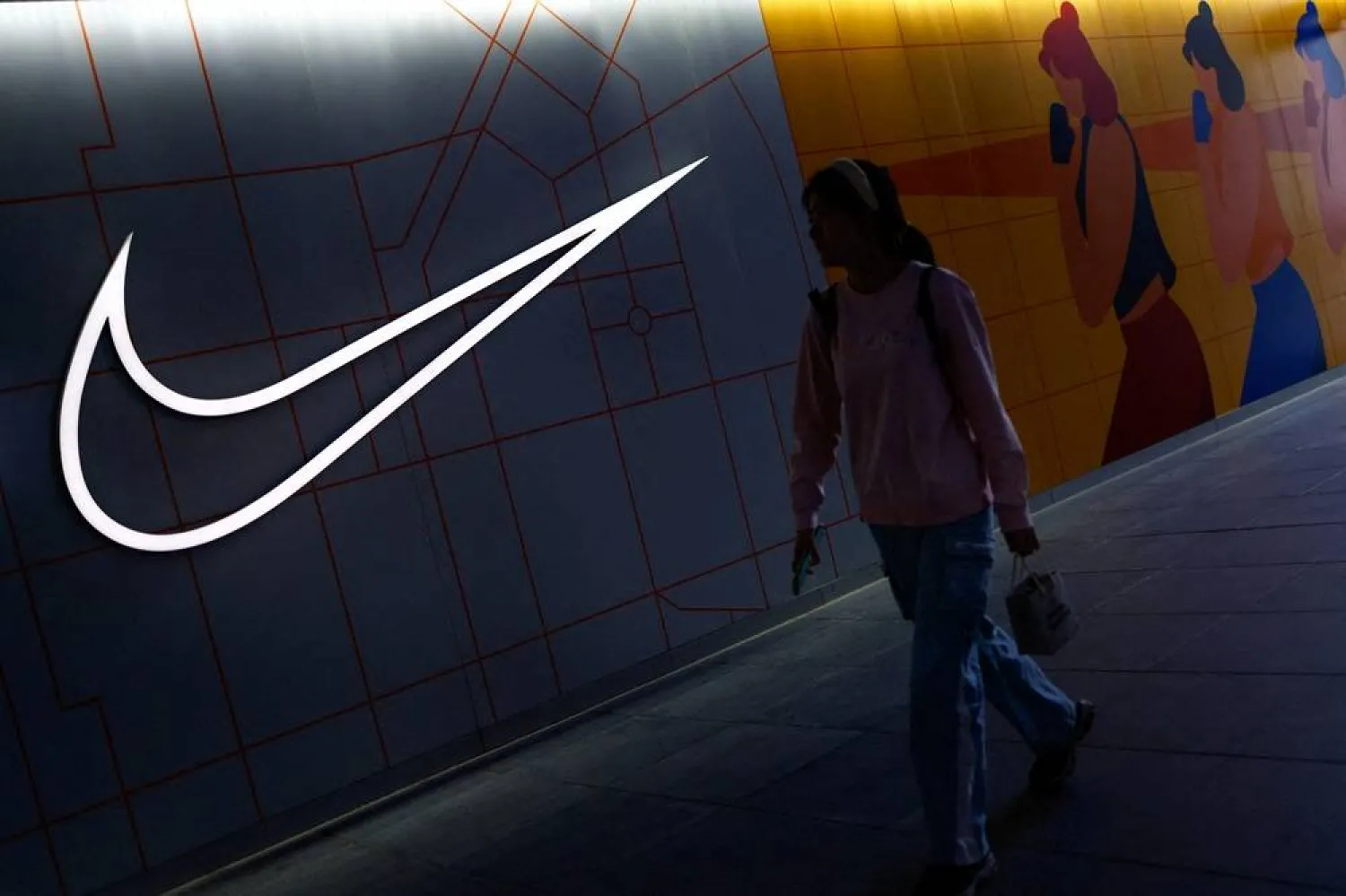
A woman walks past a Nike store in Beijing, China April 9, 2025. (Reuters)

Nike is working ‌toward designing and creating half of the sportswear products it sells in China within the country, as part of a push to reverse a sales slump in its third-biggest market.

The world's biggest sportswear company aims to reach 50% local creation across its Nike sportswear and Jordan lines by fiscal 2030, Cathy Sparks, Nike's Greater China general manager, told Reuters.

The target, announced on Tuesday as Nike laid out its five-year financial roadmap at its Oregon headquarters, reflects a broader push by top executives to boost local relevance in key global regions.

"The ‌country level ‌ultimately has the decision-right on the design," CEO Elliott ‌Hill ⁠told Reuters, referring ⁠to empowering local teams.

China has emerged as a particularly acute pain point for Nike. Sales in Greater China have fallen for nine consecutive quarters, turning a region that was once a profit engine into a drag on the company's overall business.

Nike has struggled to convince Chinese consumers to buy its products as domestic sportswear groups Anta ⁠and Li Ning take share.

Employees in China will work "in ‌close partnership with our global team ‌as we look to respond to what really is some of the unique ‌styling that we see in China," said Sparks, who ‌was appointed to lead Nike's China business earlier this year.

By comparison, rival Adidas, which has managed to return to growth in China in the past two years, said at the beginning of 2026 that locally designed products ‌make up about 60% of its China range.

Nike expects revenue in China to ⁠be roughly ⁠flat from fiscal 2027 to 2031, executives said on Tuesday, intensifying investor unease about its growth prospects.

The company appointed its first-ever Greater China vice president of local product creation this year, acknowledging criticism that the company had fallen behind rivals in developing products that resonate with Chinese consumers.

Sparks said the new role ensures "full autonomy to work within the Nike playbook for what we expect to deliver as far as product quality, styling."

Starting in January, Nike is also pulling online sales rights from some of its biggest retail partners in China in a high-stakes bet that tighter control over pricing and distribution can revive its fortunes.