


Violence Shuts Crucial Aid Corridor into Sudan's Darfur

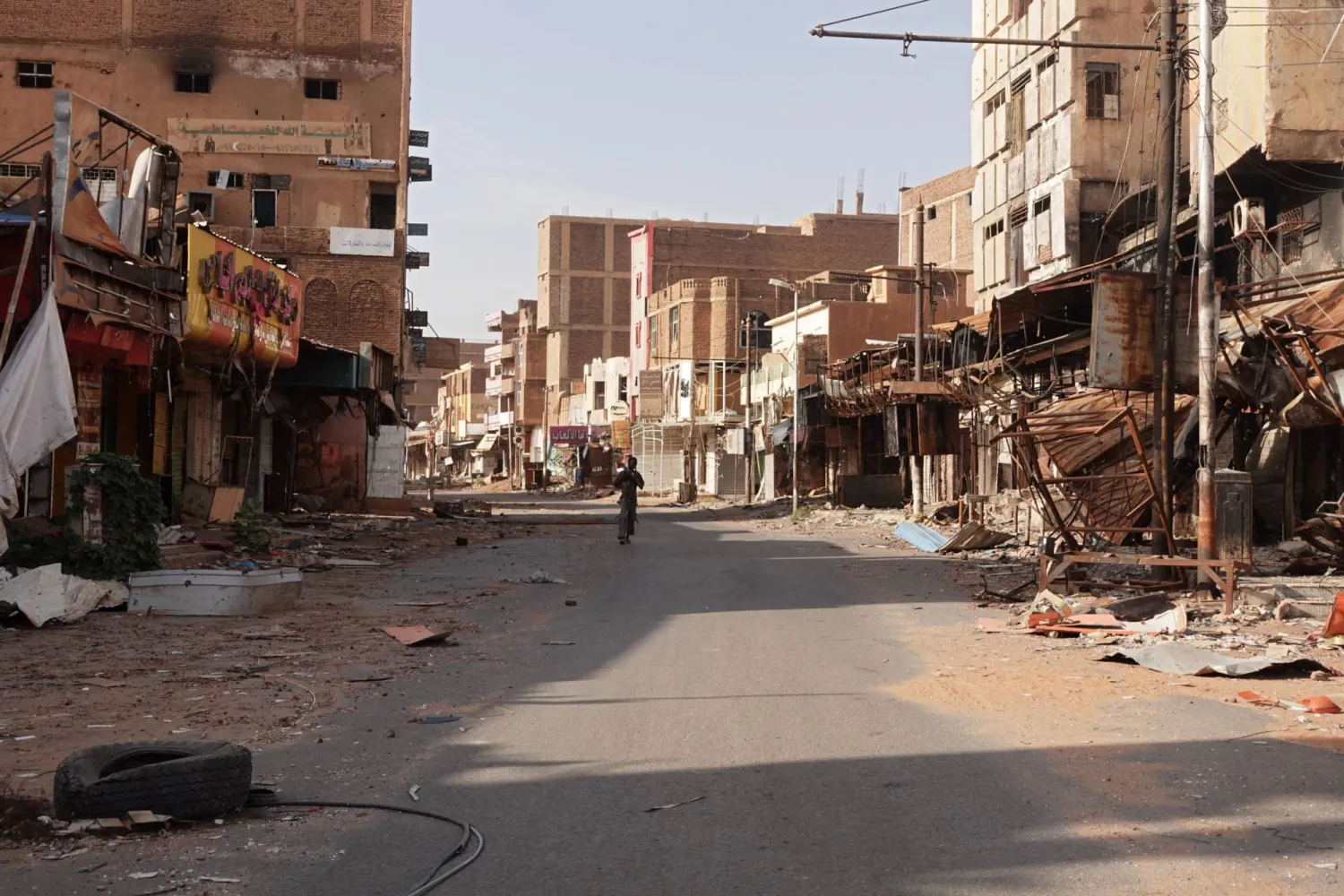
A view of a street in the city of Omdurman damaged in the year-long civil war in Sudan, April 7, 2024. REUTERS/El Tayeb Siddig
TT

Violence Shuts Crucial Aid Corridor into Sudan's Darfur

A view of a street in the city of Omdurman damaged in the year-long civil war in Sudan, April 7, 2024. REUTERS/El Tayeb Siddig

Violence around the city of al-Fashir in Darfur, Sudan, has blocked a recently opened humanitarian corridor from Chad and time is running out to prevent starvation in the vast region, the UN World Food Program said on Friday, according to Reuters.

Attacks around al-Fashir, the Sudanese army's last holdout in Darfur and home to some 1.6 million residents, have led to dire warnings of a new wave of mass displacement and inter-communal conflict in Sudan's year-old war.

The conflict between the army and the paramilitary Rapid Support Forces (RSF) has also led to worsening hunger, with some people eating soil or leaves as famine looms.

Aid officials say both sides have been looting aid or blocking it from reaching areas where starvation is taking hold, contributing to a humanitarian crisis.

The latest violence around al-Fashir halted aid convoys coming through Chad's Tine border crossing, while restrictions by authorities aligned with the army were preventing deliveries of assistance through the only other aid corridor from Chad at Adre, WFP said.

Only small quantities of aid have entered al-Fashir during the war, the sole army-approved conduit for shipments to other parts of Darfur.

Since the end of March, 23 villages near al-Fashir have been razed, potentially by the RSF, according to a study of satellite imagery by the Yale Humanitarian Research Lab published on Thursday.

In the city itself, more than 600 buildings have been damaged by burning during the same period, including in areas where the army is reportedly carrying out bombardments, the study said.

Analysis of whether the RSF was responsible for widespread damage inflicted on a single area on April 28-29 was ongoing, it added.

In the Zamzam refugee camp in North Darfur, where there have been no official food distributions since May 2023, 30% of at least 46,000 children are suffering from acute malnutrition "revealing a massive crisis in the making", medical charity MSF said on Thursday.

"Despite being aware of the severity of the situation, and despite famine alerts coming from UN agencies themselves, the UN are doing far too little to prevent the malnutrition crisis in Zamzam from falling further into catastrophe," MSF said in a statement.

At least 1,000 Sudanese refugees have fled a camp run by the United Nations in northern Ethiopia following a series of shootings and robberies, three of the refugees and the United Nations said.
The refugees said about 7,000 of the 8,000 residents of the Kumer camp left on foot early on Wednesday morning after they were attacked and robbed by local militiamen.
They said they were detained by the police shortly after leaving the camp, which is 70 km (43 miles) from the Sudanese border in Ethiopia's Amhara region. They asked not to be named for fear of reprisals.
The United Nations refugee agency UNHCR said it was aware that 1,000 people had left Kumer on Wednesday because they felt unsafe after a series of security incidents.
Spokespeople for the Ethiopian government, the Amhara regional administration, the federal police and the national refugee agency did not respond to requests for comment.
More than 1.6 million Sudanese people have fled their country since civil war broke out in April 2023 between the army and the RSF. About 33,000 have crossed into Ethiopia, according to UNHCR.




Lebanese Judiciary Widens Probe into Hezbollah Explosives Shipment

Hezbollah supporters wave the group’s flags in Beirut’s southern suburbs (AFP).
TT

Lebanese Judiciary Widens Probe into Hezbollah Explosives Shipment

Hezbollah supporters wave the group’s flags in Beirut’s southern suburbs (AFP).

Lebanese judicial authorities have expanded their investigation into a shipment of explosives seized in Dahr al-Baydar, on the Bekaa-Beirut highway, seeking to establish its origin, intended recipients and purpose amid renewed fears of political assassinations.

The investigation is being overseen by Prosecutor General Ahmad Rami al-Hajj and Military Court Government Commissioner Judge Claude Ghanem.

Ghanem returned the preliminary investigation files of two detainees, identified as Ali K. and Haitham A., to military police investigators, requesting further questioning about the explosives and their intended destination.

He also ordered security agencies to identify two individuals known as Sajed and Zulfiqar, described by the detainees as Hezbollah officials.

A senior judicial source told Asharq Al-Awsat that preliminary confessions indicated Sajed had handed over the shipment in the Bekaa Valley, while Zulfiqar was awaiting its delivery in Beirut’s southern suburbs.

The source, speaking on condition of anonymity, identified Ali K. as the son of a Resistance Brigades official in central Bekaa. Both detainees admitted belonging to Hezbollah, the source added.

Investigators were instructed to identify other suspects, amid suspicions that a larger group trained in handling explosives was involved.

“The quantity and dangerous nature of the shipment suggest the operation involved more than those responsible for handing over, receiving and transporting it,” the source explained.

Fears of Renewed Assassinations

Identifying the two alleged Hezbollah officials could help determine whether the seized explosives were part of a broader weapons trafficking operation.

According to the judicial source, the shipment is believed to have contained more than 500 kilograms of explosives, packed in cardboard boxes alongside small metal balls and nails designed to penetrate vehicle bodywork when propelled by an explosion.

The discovery has revived fears of a return to the wave of assassinations Lebanon experienced between 2005 and 2012, the source warned.

However, the official cautioned that establishing the existence of a security plot would require evidence beyond the seizure itself.

Calls to Disband Hezbollah’s Military Structure

The case has prompted political demands for the dismantling of Hezbollah’s military and security apparatus.

Lebanese Kataeb Party leader MP Sami Gemayel urged the state to dismantle Hezbollah’s military and security infrastructure immediately, warning against a recurrence of the assassinations that struck Lebanon between 2004 and 2008.

Gemayel recalled the 2005 explosives truck case, arguing that the failure to intercept it had led to the assassination of former Prime Minister Rafik Hariri.

MP Ashraf Rifi, a former senior security official, described the seizure as an extremely serious development and a test of state authority and institutional credibility.

He demanded that investigators uncover the entire network, prosecute everyone involved, including any implicated leaders, and examine possible links to previous assassinations without political interference or compromise.

Rifi also called for eliminating Hezbollah’s military and security structures operating outside state authority.

Justice Minister Adel Nassar, meanwhile, pledged that the investigation and all related inquiries would continue to their conclusion.

In a post on X, he stressed that disarming unauthorized groups and combating terrorism were non-negotiable objectives, adding that efforts to achieve them would be stepped up.


‘Dawn of Yemen’ Offensive Intensifies Pressure on Houthis by Land and Air

Fighters from the Yemeni government’s Southern Giants Brigades near the Bab al-Mandab Strait (AP) 
TT

‘Dawn of Yemen’ Offensive Intensifies Pressure on Houthis by Land and Air

Fighters from the Yemeni government’s Southern Giants Brigades near the Bab al-Mandab Strait (AP) 

The Dawn of Yemen military offensive entered its seventh day on Sunday, with intensified airstrikes targeting Houthi positions and reinforcements in Taiz and along the western coast, as government forces pressed their ground assault and surrounded Houthi groups near the Bab al-Mandab Strait.

Military estimates put Houthi casualties at around 12,000 killed and wounded during the operation’s first six days.

Airstrikes extended beyond the Taiz frontlines to military targets in Houthi-held areas of Sanaa, Saada, Hajjah and Ibb, while government forces received air support as the Houthis attempted to recapture positions along the western coast.

On the western coast, the Southern Giants Brigades announced the destruction of five Houthi armored vehicles, killing their occupants, during an attempted advance toward Dhubab Airport. The brigades also reported repelling an attack north of the airport as airstrikes targeted Houthi reinforcements.

Government forces are seeking to consolidate control over recaptured areas around Bab al-Mandab, Mayyun Island and the Kahbub Mountains, preventing the Houthis from retaking strategic positions overlooking the strait.

More Than 1,900 Strikes in 24 Hours

The armed forces announced more than 1,900 direct precision strikes over 24 hours across the eastern, western and southwestern fronts.

Military spokesman Col. Majed al-Nuzaili explained that the strikes targeted weapons and ammunition depots, fortifications, military camps, strategic hilltop positions, troop concentrations, artillery emplacements and supply vehicles.

He added that high-value military targets deep inside Houthi-held territory were also struck.

Preliminary field estimates indicated that more than 1,150 Houthi fighters had been neutralized and over 180 combat, transport and supply vehicles destroyed or disabled during the same period, according to Nuzaili. Ground forces also advanced, recapturing additional positions and securing strategic heights.

In Taiz, military sources reported continued clashes southeast and west of the city, with government troops and Popular Resistance fighters repelling Houthi attacks and striking their positions and movements.

Government Vows to Restore State Authority

Presidential Leadership Council Chairman Rashad al-Alimi reaffirmed the leadership’s determination to continue the offensive until the Houthi threat is eliminated and state institutions restored, regardless of the sacrifices required.

Prime Minister Shaya Mohsen al-Zindani maintained that the operation was steadily achieving its objectives, with the Southern Giants Brigades and Nation’s Shield Forces advancing with support from the Saudi-led coalition to secure Bab al-Mandab, Dhubab and the Kahbub Mountains.

He described the gains as reflecting Yemenis’ determination to end the Houthi takeover and restore state authority.

Zindani accused the Houthis of targeting civilians and civilian infrastructure, citing the recent attack on Aden International Airport and violations in Taiz. He also praised Saudi support as crucial to restoring state institutions and protecting national security.

Meanwhile, the cabinet warned that the Houthis’ expanding siege of Taiz threatened the lives, security and livelihoods of more than six million residents.

It instructed civilian, security and military authorities to coordinate efforts to protect residents, maintain essential services, ensure humanitarian aid deliveries and address security threats while respecting international humanitarian law.

The cabinet urged the United Nations and international community to pressure the Houthis to halt their attacks and lift the siege, reaffirming its commitment to restoring state authority and achieving the offensive’s objectives.


Egypt’s Consul to Asharq Al-Awsat: Repatriation of Azza’s Body to Cairo Nears Completion

Egyptian flight attendant Azza Ramzy
TT

Egypt’s Consul to Asharq Al-Awsat: Repatriation of Azza’s Body to Cairo Nears Completion

Egyptian flight attendant Azza Ramzy

The formal procedures for repatriating the body of Egyptian flight attendant Azza Ramzy to Cairo is expected to arrive on Monday, pending the completion of the necessary permits and shipping arrangements, a senior official at the Egyptian Embassy in Saudi Arabia revealed on Sunday.

Meanwhile, the health condition of seven Egyptian nationals injured in the attack on Riyadh's King Khalid International Airport, have stabilized. Two have been discharged from the hospital after receiving treatment, while the remaining five continue to receive medical care.

“The relevant authorities are working to complete the procedures for repatriating the body of Azza Ramzy after obtaining the transfer permit and finalizing the police report and death-related documents,” the consul general of the Egyptian embassy in Riyadh, Yasser Hashem, told Asharq Al-Awsat in a phone interview.

He said the procedures were progressing well and were expected to be completed on Sunday.

“The airline company for which Azza worked as a flight attendant would handle arrangements to transport her body to Cairo,” Hashem said.

He noted that a flight would be scheduled after preparing the coffin and coordinating with the shipping company and the relevant authorities.

According to Hashem, Azza’s body would be repatriated from Riyadh, depending on operational conditions at King Khalid International Airport and flight availability.

He affirmed that seven Egyptians were injured in the attack. Two of them received medical care and were discharged from the hospital, while the remaining five continue their treatment.

According to information obtained by Asharq Al-Awsat, Azza Ramzy spent three years working in Saudi Arabia. During that time, she left a positive impression on those who knew her, earning respect for her good character, dedication to her work and ambition.

One of Azza’s friends told Asharq Al-Awsat that she was the youngest of her siblings and was known for her exemplary character, good manners and respect for others.