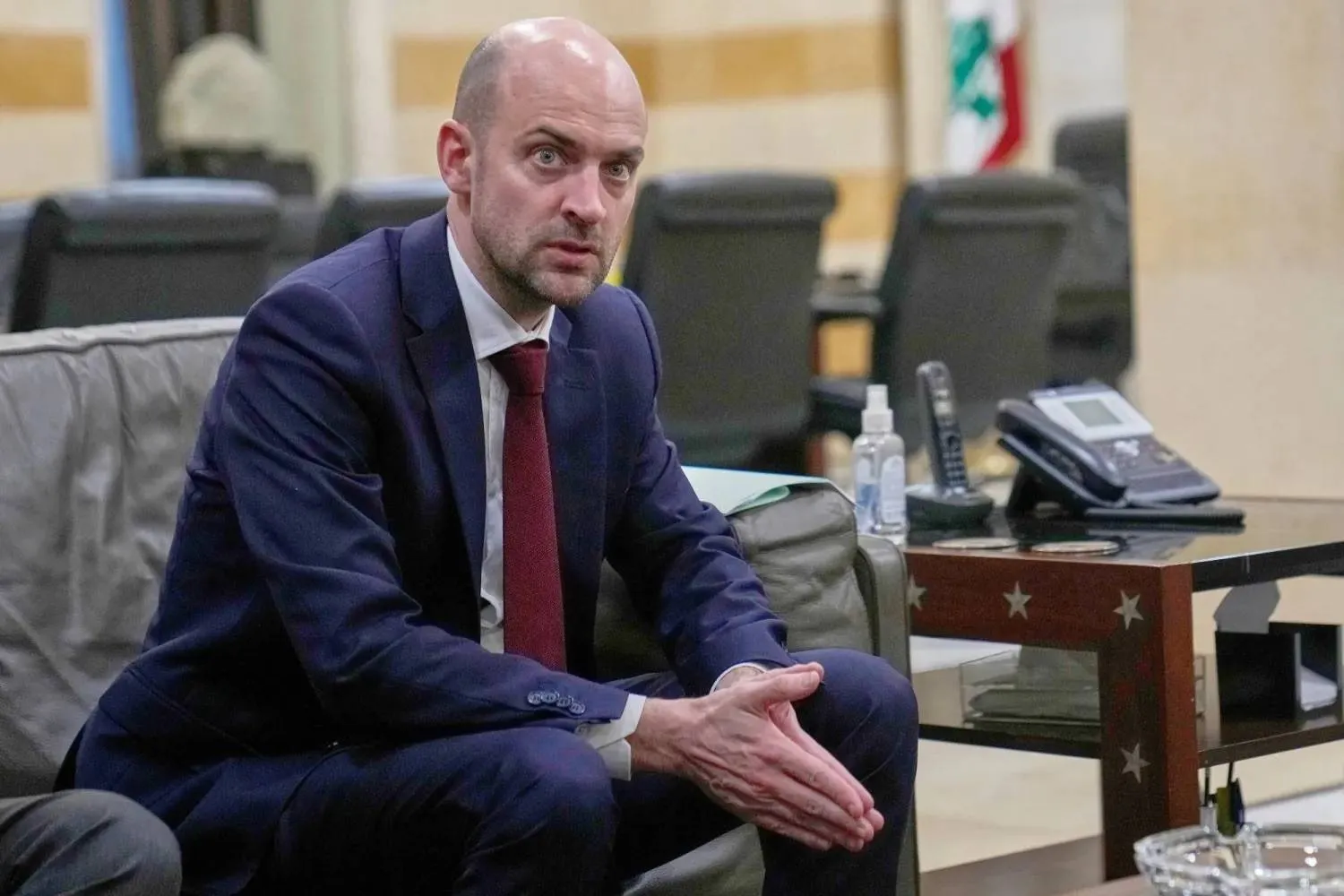
French Foreign Minister Jean-Noël Barrot on Friday expressed solidarity with Lebanon and pledged to press ahead with diplomatic efforts to halt escalating violence between Israel and Hezbollah.
Barrot’s visit came as Lebanon faces mounting security and humanitarian problems resulting from ongoing hostilities.
Lebanese officials said the French minister stressed Paris’s determination to find “common ground” to launch serious negotiations, reaffirming full support for an initiative by President Joseph Aoun to open direct talks with Israel.
France “will continue its efforts despite the difficulties,” Barrot told Lebanese leaders, according to official sources.
He added that he had spoken ahead of his trip with his US counterpart as well as Israel’s Ron Dermer, who has been tasked with representing his government in any negotiations with Lebanon.
Barrot also underscored the “vital role” of UN peacekeepers in southern Lebanon, stressing that France intends to maintain its presence even after the current mandate of the United Nations Interim Force in Lebanon (UNIFIL) expires at the end of the year.
In a statement, Lebanon’s presidency said Barrot briefed Aoun on ongoing diplomatic contacts aimed at halting Israeli strikes.
The French minister voiced readiness to work towards ending the escalation through proposals under discussion with relevant parties, describing Aoun’s initiative as “courageous” and backed by the international community.
He also highlighted the central role of the Lebanese army in any future settlement, including in the event of a UNIFIL withdrawal, and discussed coordination with neighboring Syria following a recent call involving Aoun, French President Emmanuel Macron and Syrian leader Ahmad al-Sharaa.
Aoun, for his part, reiterated the urgent need for a ceasefire and guarantees to ensure its durability, warning that continued escalation was blocking the launch of negotiations.
He said a halt to hostilities was essential to create the conditions for talks, pointing to widespread destruction in southern Lebanon, hundreds of casualties and more than one million displaced.
“Once the fire stops, negotiations can take place anywhere,” Aoun said, according to the statement, stressing that de-escalation remains the priority.
He also reaffirmed Lebanon’s desire for international forces to remain in the south to oversee any future agreement, or for European contingents to continue peacekeeping duties under any framework.
On the domestic front, Aoun said the government remains committed to enforcing the state’s monopoly on arms, including plans to disarm Hezbollah, though implementation has been hindered by the ongoing conflict.
He added that key infrastructure — including Beirut’s airport, seaport and border crossings — remains under state control, with the army conducting patrols nationwide to curb armed activity. Decisions on war and peace, he stressed, rest solely with the state.
Lebanese divisions, US role
Barrot also met Parliament Speaker Nabih Berri, who reiterated his refusal to name a Shiite representative to a negotiating delegation before “an end to Israeli aggression and the return of displaced persons.”
Prime Minister Nawaf Salam, for his part, told CNN Lebanon was ready to “immediately” enter direct negotiations with Israel.
“This war was imposed on us,” Salam said, noting that around 20 percent of the population has been displaced.
He described the United States as a strategic partner and said Donald Trump was “the most capable of playing a decisive role in ending the war.”
EU warns of ‘catastrophic’ situation
The European Union meanwhile voiced “grave concern” over the Israeli offensive in Lebanon, warning of severe humanitarian consequences and the risk of a prolonged conflict.
In a statement, the EU called on Israel to halt its operations, saying the humanitarian situation in Lebanon was already “catastrophic.”
It also criticized Hezbollah for drawing Lebanon into the conflict, refusing to disarm and continuing attacks on Israel.
Attacks on civilians, infrastructure, healthcare workers and UN peacekeepers are “unjustifiable and unacceptable and must stop immediately,” the statement said.