
Harris, Endorsed by Biden, Could Become First Woman, Second Black Person to Be President

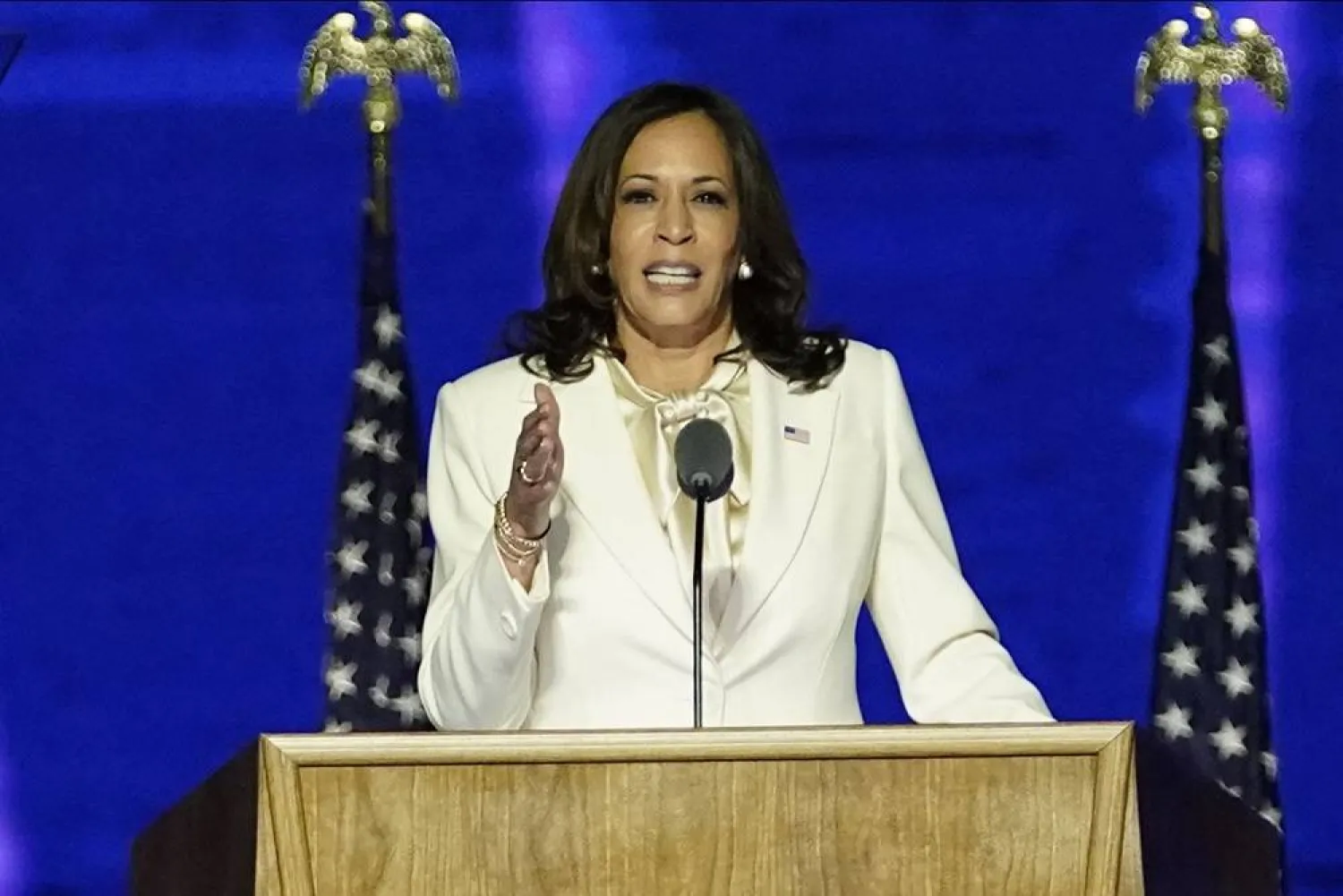
Vice President-elect Kamala Harris delivers remarks in Wilmington, Delaware, on November 7, 2020, after being declared the winners of the presidential election. (AFP)
TT

Harris, Endorsed by Biden, Could Become First Woman, Second Black Person to Be President

Vice President-elect Kamala Harris delivers remarks in Wilmington, Delaware, on November 7, 2020, after being declared the winners of the presidential election. (AFP)

She's already broken barriers, and now Kamala Harris could shatter several more after President Joe Biden abruptly ended his reelection bid and endorsed her.

Biden announced Sunday that he was stepping aside after a disastrous debate performance catalyzed fears that the 81-year-old was too frail for a second term.

Harris is the first woman, Black person or person of South Asian descent to serve as vice president. If she becomes the Democratic nominee and defeats Republican candidate Donald Trump in November, she would be the first woman to serve as president.

Biden said Sunday that choosing Harris as his running mate was “the best decision I've made" and endorsed her as his successor.

“Democrats — it’s time to come together and beat Trump,” he wrote on X, the social media platform formerly known as Twitter. “Let’s do this.”

Harris described Biden's decision to step aside as a “selfless and patriotic act,” saying he was “putting the American people and our country above everything else.”

“I am honored to have the President’s endorsement and my intention is to earn and win this nomination," Harris said. “Over the past year, I have traveled across the country, talking with Americans about the clear choice in this momentous election.”

Prominent Democrats followed Biden's lead by swiftly coalescing around Harris on Sunday. However, her nomination is not a foregone conclusion, and there have been suggestions that the party should hold a lightning-fast “mini primary” to consider other candidates before its convention in Chicago next month.

A recent poll from the AP-NORC Center for Public Affairs Research found that about 6 in 10 Democrats believe Harris would do a good job in the top slot. About 2 in 10 Democrats don’t believe she would, and another 2 in 10 say they don’t know enough to say.

The poll showed that about 4 in 10 US adults have a favorable opinion of Harris, whose name is pronounced “COMM-a-la,” while about half have an unfavorable opinion.

A former prosecutor and US senator from California, Harris' own bid for the 2020 Democratic presidential nomination imploded before a single primary vote was cast. She later became Biden's running mate, but she struggled to find her footing after taking office as vice president. Assigned to work on issues involving migration from Central America, she was repeatedly blamed by Republicans for problems with illegal border crossings.

However, Harris found more prominence as the White House's most outspoken advocate for abortion rights after the US Supreme Court overturned Roe v. Wade in 2022. She has also played a key role in reaching out to young people and voters of color.

In addition, Harris' steady performance after Biden's debate debacle solidified her standing among Democrats in recent weeks.

Even before Biden's endorsement, Harris was widely viewed as the favorite to replace him on the ticket. With her foreign policy experience and national name recognition, she has a head start over potential challengers, including California Gov. Gavin Newsom, Michigan Gov. Gretchen Whitmer and Pennsylvania Gov. Josh Shapiro.

Harris will seek to avoid the fate of Hubert Humphrey, who as vice president won the Democratic nomination in 1968 after President Lyndon Johnson declined to run for reelection amid national dissatisfaction over the Vietnam War. Humphrey lost that year to Republican Richard Nixon.

Nixon resigned in 1974 during the Watergate scandal and was replaced by Vice President Gerald Ford. Ford never won a term of his own.

Vice presidents are always in line to step into the top job if the president dies or is incapacitated. However, Harris has faced an unusual level of scrutiny because of Biden’s age. He was the oldest president in history, taking office at 78 and announcing his reelection bid at 80. Harris is 59.

She addressed the question of succession in an interview with The Associated Press during a trip to Jakarta in September 2023.

“Joe Biden is going to be fine, so that is not going to come to fruition,” she stated. “But let us also understand that every vice president — every vice president — understands that when they take the oath they must be very clear about the responsibility they may have to take over the job of being president.”

“I’m no different.”

Harris was born Oct. 20, 1964, in Oakland, California, to parents who met as civil rights activists. Her hometown and nearby Berkeley were at the heart of the racial and social justice movements of the time, and Harris was both a product and a beneficiary.

She spoke often about attending demonstrations in a stroller and growing up around adults “who spent full time marching and shouting about this thing called justice.” In first grade, she was bused to school as part of the second class to integrate Berkeley public education.

Harris’ parents divorced when she was young, and she was raised by her mother alongside her younger sister, Maya. She attended Howard University, a historically Black school in Washington, and joined the Alpha Kappa Alpha sorority, which became a source of sisterhood and political support over the years.

After graduating, Harris returned to the San Francisco Bay Area for law school and chose a career as a prosecutor, a move that surprised her activist family.

She said she believed that working for change inside the system was just as important as agitating from outside. By 2003, she was running for her first political office, taking on the longtime San Francisco district attorney.

Few city residents knew her name, and Harris set up an ironing board as a table outside grocery stores to meet people. She won and quickly showed a willingness to chart her own path. Months into her tenure, Harris declined to seek the death penalty for the killer of a young police officer slain in the line of duty, fraying her relationship with city cops.

The episode did not stop her political ascent. In late 2007, while still serving as district attorney, she was knocking on doors in Iowa for then-candidate Barack Obama. After he became president, Obama endorsed her in her 2010 race for California attorney general.

Once elected to statewide office, she pledged to uphold the death penalty despite her moral opposition to it. Harris also played a key role in a $25 billion settlement with the nation’s mortgage lenders following the foreclosure crisis.

As killings of young Black men by police received more attention, Harris implemented some changes, including tracking racial data in police stops, but didn’t pursue more aggressive measures such as requiring independent prosecutors to investigate police shootings.

Harris’ record as a prosecutor would eventually dog her when she launched a presidential bid in 2019, as some progressives and younger voters demanded swifter change. But during her time on the job, she also forged a fortuitous relationship with Beau Biden, Joe Biden’s son who was then Delaware’s attorney general. Beau Biden died of brain cancer in 2015, and his friendship with Harris figured heavily years later as his father chose Harris to be his running mate.

Harris married entertainment lawyer Douglas Emhoff in 2014, and she became stepmother to Emhoff’s two children, Ella and Cole, who referred to her as “Momala.”

Harris had a rare opportunity to advance politically when Sen. Barbara Boxer, who had served more than two decades, announced she would not run again in 2016.

In office, Harris quickly became part of the Democratic resistance to Trump and gained recognition for her pointed questioning of his nominees. In one memorable moment, she pressed now-Supreme Court Justice Brett Kavanaugh on whether he knew any laws that gave government the power to regulate a man’s body. He did not, and the line of questioning galvanized women and abortion rights activists.

A little more than two years after becoming a senator, Harris announced her campaign for the 2020 Democratic presidential nomination. But her campaign was marred by infighting and she failed to gain traction, ultimately dropping out before the Iowa caucuses.

Eight months later, Biden selected Harris as his running mate. As he introduced her to the nation, Biden reflected on what her nomination meant for “little Black and brown girls who so often feel overlooked and undervalued in their communities.”

“Today, just maybe, they’re seeing themselves for the first time in a new way, as the stuff of presidents and vice presidents,” he said.
Ethiopia Builds Secret Camp to Train Sudan RSF Fighters 

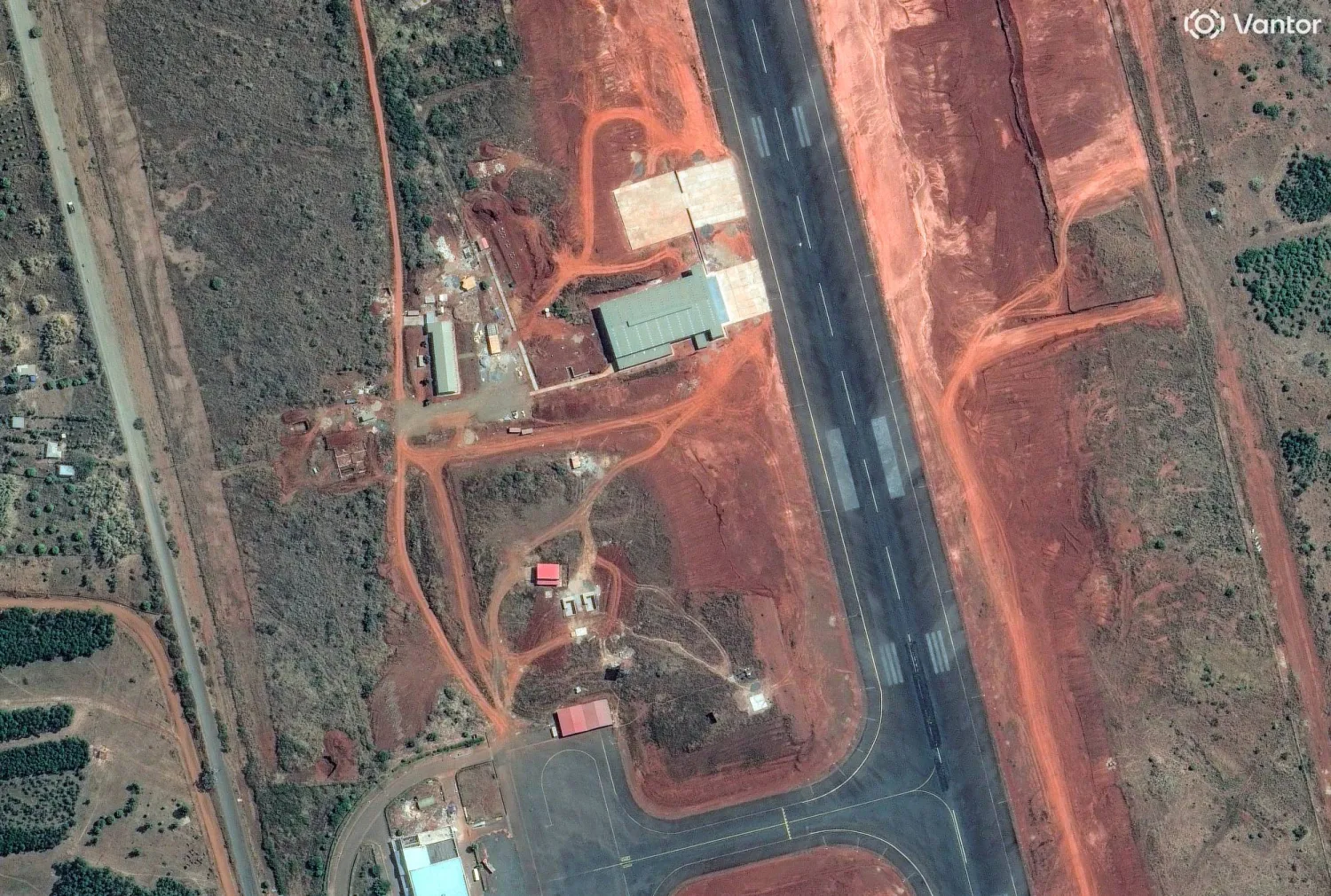
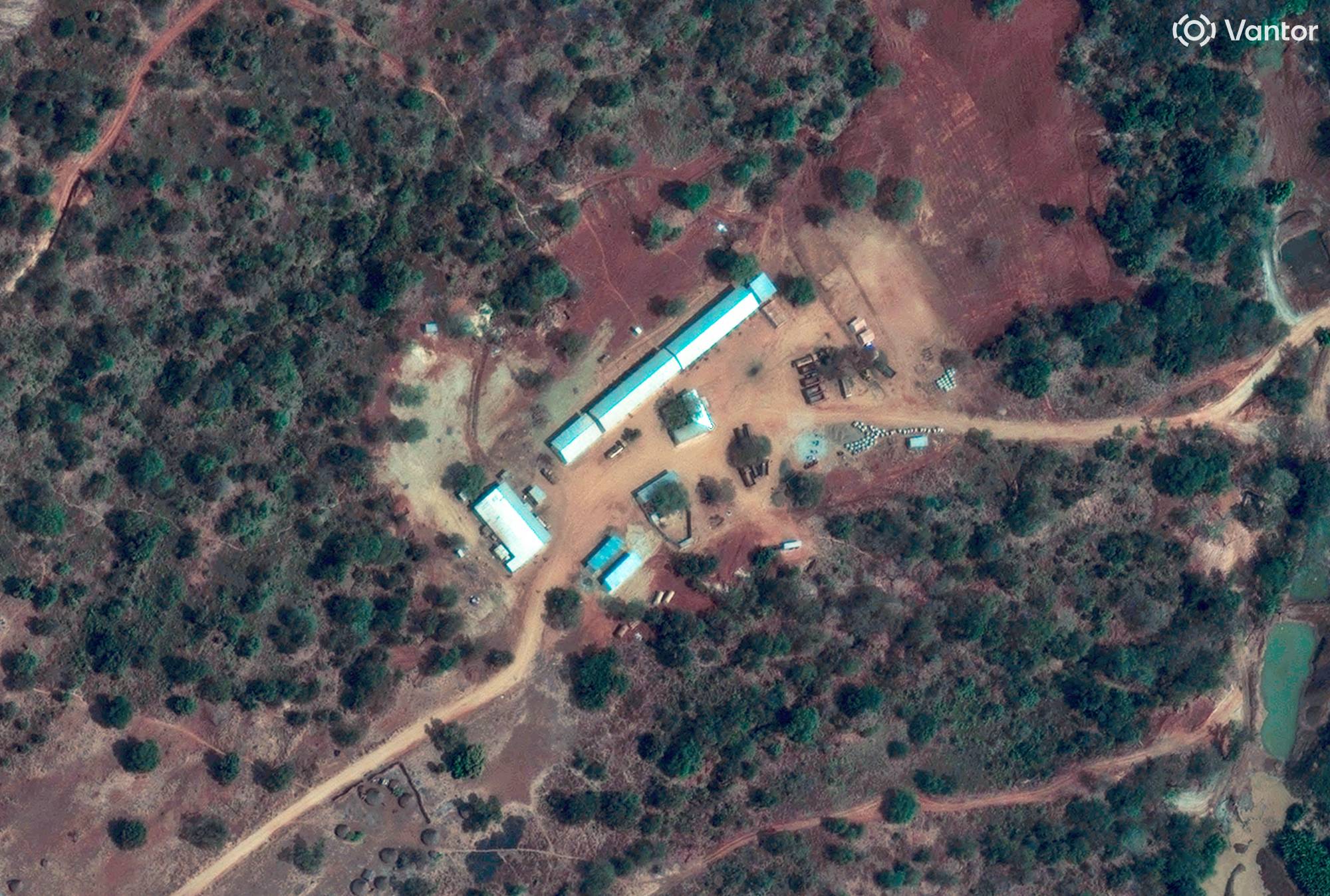
Satellite imagery shows new construction and drone support infrastructure at Asosa airport in Benishangul-Gumuz, Ethiopia, January 28, 2026. (Vantor/Handout via Reuters)
TT

Ethiopia Builds Secret Camp to Train Sudan RSF Fighters 

Satellite imagery shows new construction and drone support infrastructure at Asosa airport in Benishangul-Gumuz, Ethiopia, January 28, 2026. (Vantor/Handout via Reuters)

Ethiopia is hosting a secret camp to train thousands of fighters for the paramilitary Rapid Support Forces in neighboring Sudan, Reuters reporting has found, in the latest sign that one of the world’s deadliest conflicts is sucking in regional powers from Africa and the Middle East.

The camp is the first direct evidence of Ethiopia’s involvement in Sudan’s civil war, marking a potentially dangerous development that provides the RSF a substantial supply of fresh soldiers as fighting escalates in Sudan’s south.

Eight sources, including a senior Ethiopian government official, said the United Arab Emirates financed the camp’s construction and provided military trainers and logistical support to the site, a view also shared in an internal note by Ethiopia’s security services and in a diplomatic cable, reviewed by Reuters.

The news agency could not independently verify UAE involvement in the project or the purpose of the camp. In response to a request for comment, the UAE foreign ministry said it was not a party to the conflict or “in any way” involved in the hostilities.

Reuters spoke to 15 sources familiar with the camp's construction and operations, including Ethiopian officials and diplomats, and analyzed satellite imagery of the area. Two Ethiopian intelligence officials and the satellite images provided information that corroborated details contained in the security memo and cable.

The location and scale of the camp and the detailed allegations of the UAE’s involvement have not been previously reported. The images show the extent of the new development, as recently as in the past few weeks, along with construction for a drone ground control station at a nearby airport.

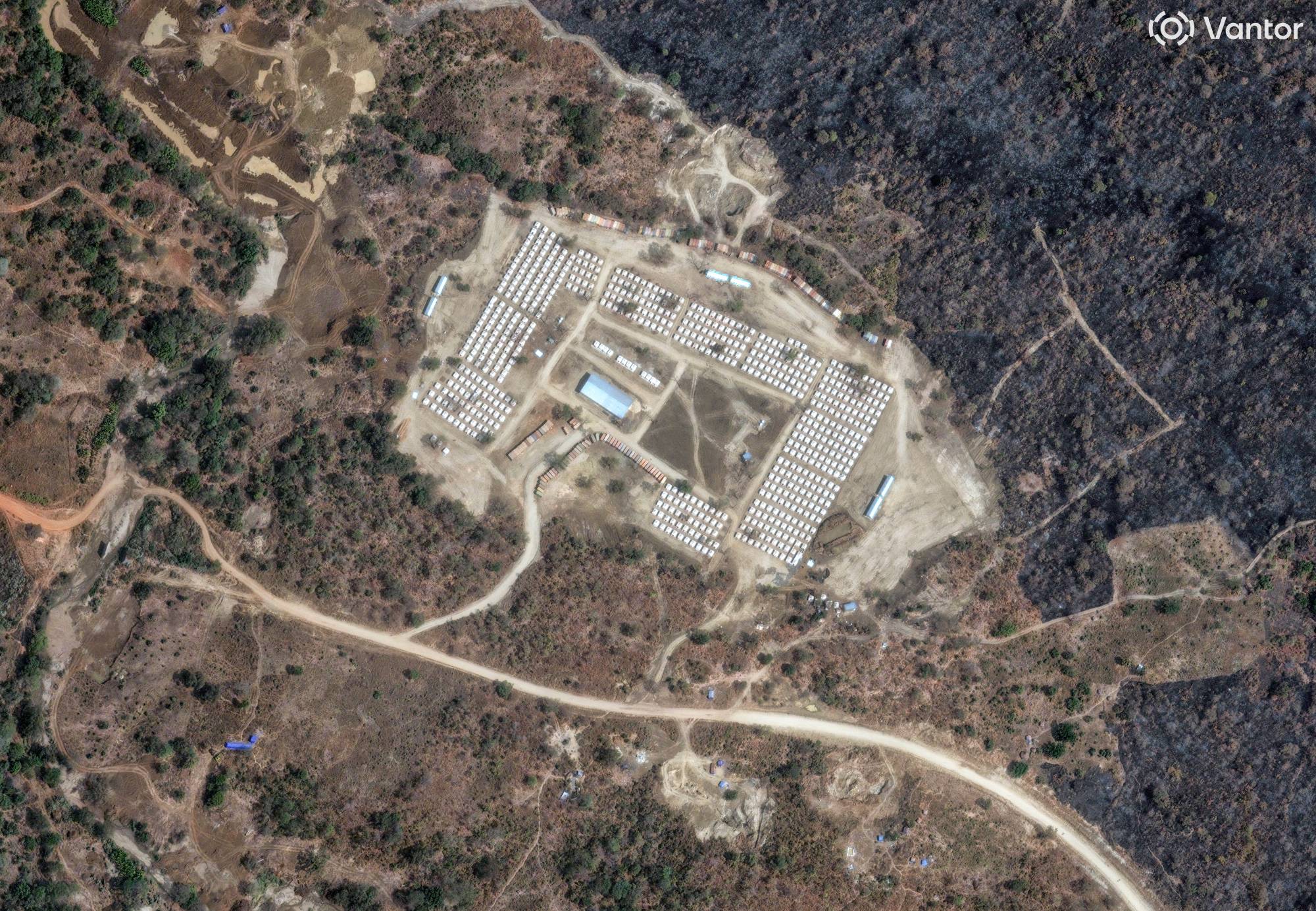
Satellite imagery shows a camp with hundreds of tents in Benishangul-Gumuz, Ethiopia, January 22, 2026. (Vantor/Handout via Reuters)

Activity picked up in October at the camp, which is located in the remote western region of Benishangul-Gumuz, near the border with Sudan, satellite images show.

Ethiopia’s government spokesperson, its army and the RSF did not respond to detailed requests for comment about the findings of this story.

On January 6, UAE and Ethiopia issued a joint statement that included a call for a ceasefire in Sudan, as well as celebrating ties they said served the defense of each other’s security.

The Sudanese Armed Forces did not respond to a request for comment.

As of early January, 4,300 RSF fighters were undergoing military training at the site and “their logistical and military supplies are being provided by the UAE,” the note by Ethiopia’s security services seen by Reuters read.

Sudan's army has previously accused the UAE of supplying the RSF with weapons, a claim UN experts and US lawmakers have found credible.

The camp’s recruits are mainly Ethiopians, but citizens from South Sudan and Sudan, including from the SPLM-N, a Sudanese rebel group that controls territory in Sudan’s neighboring Blue Nile state, are also present, six officials said.

Reuters was unable to independently establish who was at the camp or the terms or conditions of recruitment.

A senior leader of the SPLM-N, who declined to be named, denied his forces had a presence in Ethiopia.

The six officials said the recruits are expected to join the RSF battling Sudanese soldiers in Blue Nile, which has emerged as a front in the struggle for control of Sudan. Two of the officials said hundreds had already crossed in recent weeks to support the paramilitaries in Blue Nile.

The internal security note said General Getachew Gudina, the Chief of the Defense Intelligence Department of the Ethiopian National Defense Force, was responsible for setting up the camp. A senior Ethiopian government official as well as four diplomatic and security sources confirmed Getachew’s role in launching the project.

Getachew did not respond to a request for comment.

The camp was carved out of forested land in a district called Menge, about 32 km from the border and strategically located at the intersection of the two countries and South Sudan, according to the satellite imagery and the diplomatic cable.

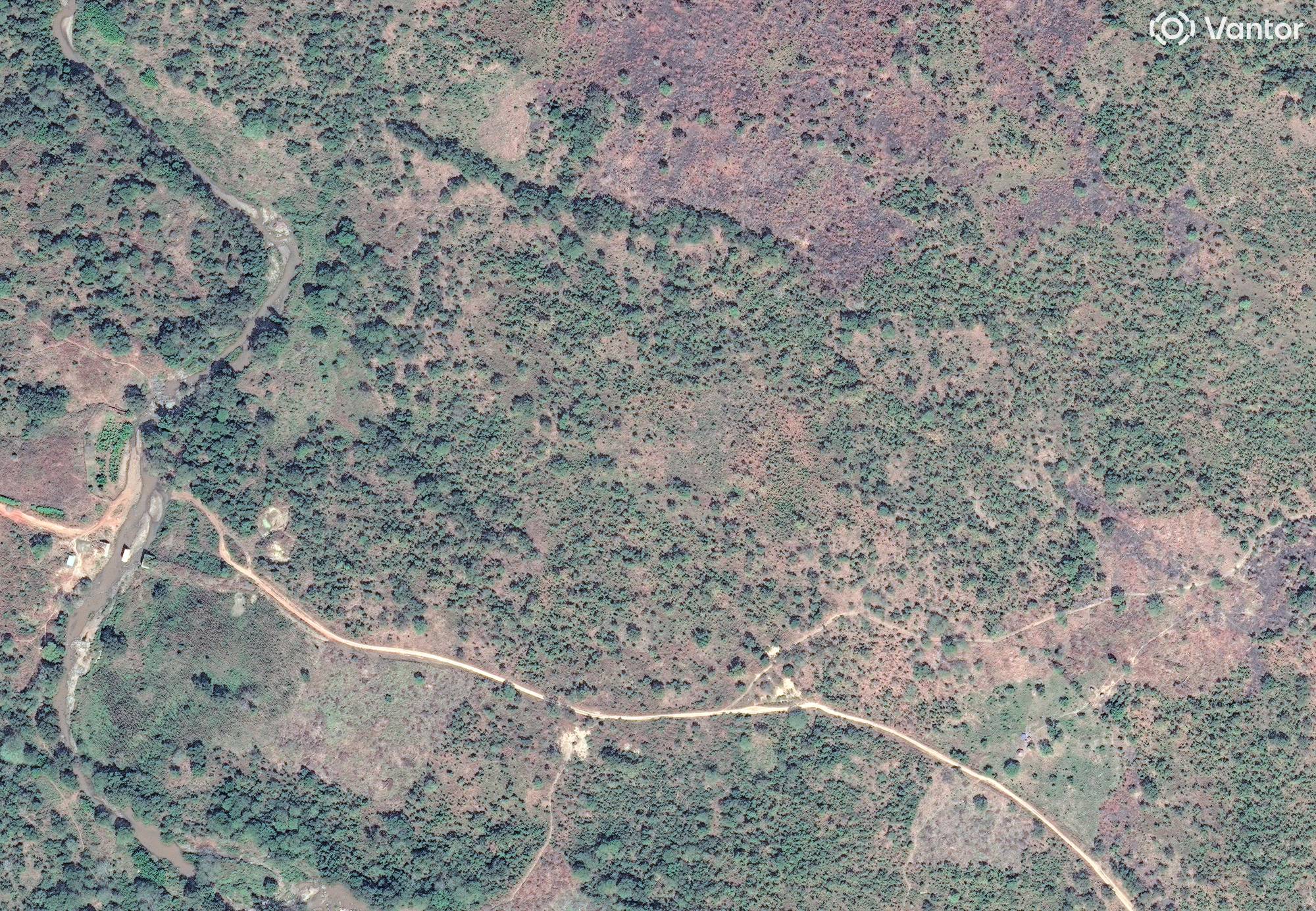
The first sign of activity in the area began in April, with forest clearing and the construction of metal-roofed buildings in a small area to the north of what is now the area of the camp with tents, where work began in the second half of October.

Satellite imagery shows a forested area where, ten months later, a camp with hundreds of tents was built in Benishangul-Gumuz, Ethiopia, December 15, 2024. (Vantor/Handout via Reuters)

The diplomatic cable, dated November, described the camp as having a capacity of up to 10,000 fighters, saying activity began in October with the arrival of dozens of Land Cruisers, heavy trucks, RSF units and UAE trainers. Reuters is not revealing the country that wrote the cable, to protect the source.

Two of the officials described seeing trucks with the logo of the Emirati logistics company Gorica Group heading through the town of Asosa and towards the camp in October. Gorica did not respond to a request for comment.

The news agency was able to match elements of the timeframe specified in the diplomatic cable with satellite imagery. Images from Airbus Defense and Space show that after the initial clearing work, tents began filling the area from early November. Multiple diggers are visible in the imagery.

An image taken by US space technology firm Vantor on November 24 shows more than 640 tents at the camp, approximately four meters square. Each tent could comfortably house four people with some individual equipment, so the camp could accommodate at least 2,500 people, according to an analysis of the satellite imagery by defense intelligence company Janes.

Janes said it could not confirm the site was military based on their analysis of the imagery.

New recruits were spotted travelling to the camp in mid-November, two senior military officials said.

Satellite imagery shows an area where trucks come and go at a camp in Benishangul-Gumuz, Ethiopia, January 22, 2026. (Vantor/Handout via Reuters)

On November 17, a column of 56 trucks packed with trainees rumbled through dirt roads of the remote region, the officials, who witnessed the convoys, told Reuters, with each truck holding between 50 and 60 fighters, the officials estimated.

Two days later, both officials saw another convoy of 70 trucks carrying soldiers driving in the same direction, they said.

The November 24 image shows at least 18 large trucks at the site. The vehicles’ size, shape and design match those of models frequently used by the Ethiopian military and its allies to transport soldiers, according to Reuters analysis.

Development continued in late January, the Vantor images show, including new clearing and digging in the riverbed just north of the main camp and dozens of shipping containers lined around the camp visible in a January 22 image. A senior Ethiopian government official said construction on the camp was ongoing but did not elaborate on future building plans.

Sudan’s civil war erupted in 2023 after a power struggle between the Sudanese army and the RSF ahead of a planned transition to civilian rule.


Gaza Girls Take Up Boxing to Heal War’s Scars

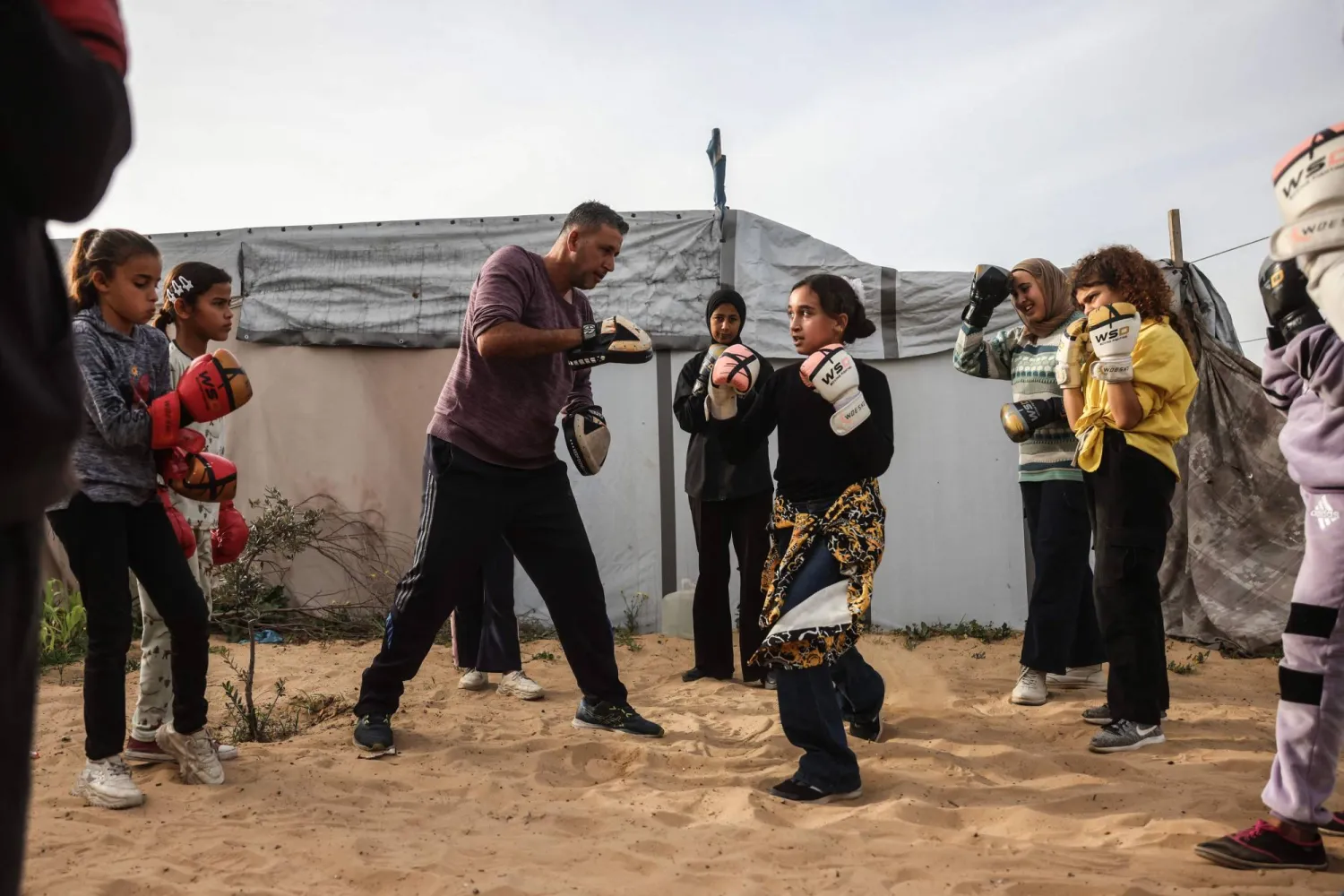
Palestinian girls and young women attend a boxing training session between displacement tents in Khan Younis, in the southern Gaza Strip, on February 9, 2026. (AFP)
TT

Gaza Girls Take Up Boxing to Heal War’s Scars

Palestinian girls and young women attend a boxing training session between displacement tents in Khan Younis, in the southern Gaza Strip, on February 9, 2026. (AFP)

In a makeshift boxing ring etched into the sand between the tens of displaced Palestinians in southern Gaza, a dozen young girls warmed up before delivering fierce blows at their coach's command.

Osama Ayub once ran a boxing club in Gaza City, in the north of the Palestinian territory, until it was destroyed in a strike along with his home during the war between Israel and Hamas.

After finding shelter in the southern city of Khan Younis, he opted to put his sporting skills at the service of displaced Gazans, crammed by the tens of thousands in tents and makeshift shelters.

"We decided to work inside the camp to offer the girls some psychological relief from the war", Ayub told AFP.

Behind him, some of the young athletes faced each other in the ring surrounded by cheering gymmates, while others trained on a punching bag.

"The girls have been affected by the war and the bombardments; some have lost their families or loved ones. They feel pain and want to release it, so they have found in boxing a way to express their emotions," said Ayub.

Ayub now runs these free training sessions for 45 boxers aged between 8 and 19 three times a week, with positive feedback from his students as well as from the community.

One of the youngsters, Ghazal Radwan, aged 14, hopes to become a champion and represent her country.

"I practice boxing to develop my character, release pent-up energy and to become a champion in the future, compete against world champions in other countries, and raise the Palestinian flag around the world", she told AFP.

- Call for aid -

One after the other, the girls trained with Ayub, shifting from right to left jabs, hooks and uppercuts at his command.

In war-devastated Gaza, where construction materials are scarce, Ayub had to improvise to build his small training facility.

"We brought wood and built a square boxing ring, but there are no mats or safety measures," he said.

He called on the international community to support the boxers and help them travel abroad to train, "to strengthen their confidence and offer them psychological support".

The strict blockade that Israel imposed on the Gaza Strip makes the reconstruction of sports facilities particularly complicated, as building materials are routinely rejected by Israeli officials.

The official Palestinian news agency Wafa reported in January that a shipment of artificial turf donated by China to Gaza's youth and sports council was not allowed in by Israel.

With medicine, food and fuel all in short supply, sports equipment comes much lower on the list of items entering the Palestinian territory.

Rimas, a 16-year-old boxer, said she and her friends continued "to practice boxing despite the war, the bombardments and the destruction".

"We, the girls who box, hope for your support, that you will bring us gloves and shoes. We train on sand and need mats and punching bags," she said in comments addressed to the international community.


Is Iran Pushing Houthis Toward Military Action Against Washington?

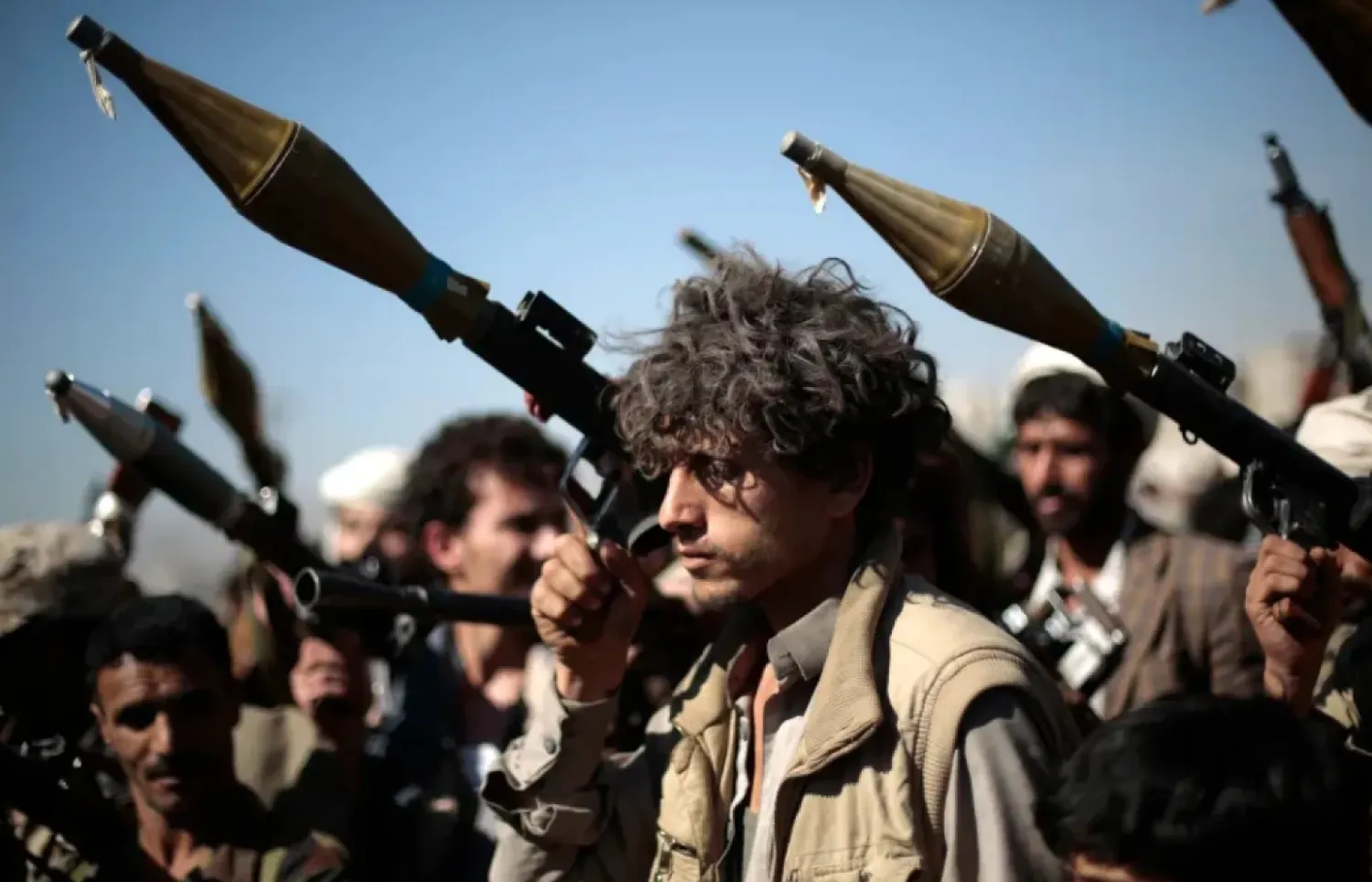
Houthis continue mobilization, fundraising, and declare combat readiness (AP) 
TT

Is Iran Pushing Houthis Toward Military Action Against Washington?

Houthis continue mobilization, fundraising, and declare combat readiness (AP) 

As US military movements intensify in the Middle East and the possibility of strikes on Iran looms, Yemen’s Houthi group has continued military preparations, mobilizing fighters and establishing new weapons sites.

The Houthi mobilization comes at a time when the group is widely viewed as one of Iran’s most important regional arms for retaliation.

Although the Iran-backed group has not issued any official statement declaring its position on a potential US attack on Iran, its leaders have warned Washington against any military action and against bearing full responsibility for any escalation and its consequences.

They have hinted that any response would be handled in accordance with the group’s senior leadership's assessment, after evaluating developments and potential repercussions.

Despite these signals, some interpret the Houthis’ stance as an attempt to avoid drawing the attention of the current US administration, led by President Donald Trump, to the need for preemptive action in anticipation of a potential Houthi response.

The Trump administration previously launched a military campaign against the group in the spring of last year, inflicting heavy losses.

Islam al-Mansi, an Egyptian researcher specializing in Iranian affairs, said Iran may avoid burning all its cards unless absolutely necessary, particularly given US threats to raise the level of escalation should any Iranian military proxies intervene or take part in a confrontation.

Iran did not resort to using its military proxies during its confrontation with Israel or during a limited US strike last summer because it did not perceive an existential threat, al-Mansi said.

That calculation could change in the anticipated confrontation, potentially prompting Houthi intervention, including targeting US allies, interests, and military forces, he told Asharq Al-Awsat.

Al-Mansi added that although Iran previously offered, within a negotiating framework, to abandon its regional proxies, including the Houthis, this makes it more likely that Tehran would use them in retaliation, noting that Iran created these groups to defend its territory from afar.

Many intelligence reports suggest that Iran’s Revolutionary Guard has discussed with the Houthis the activation of alternative support arenas in a potential US-Iran confrontation, including the use of cells and weapons not previously deployed.

Visible readiness

In recent days, Chinese media outlets cited an unnamed Houthi military commander as saying the group had raised its alert level and carried out inspections of missile launch platforms in several areas across Yemen, including the strategically important Red Sea region.

In this context, Yemeni political researcher Salah Ali Salah said the Houthis would participate in defending Iran against any US attacks, citing the group’s media rhetoric accompanying mass rallies, which openly supports Iran’s right to defend itself.

While this rhetoric maintains some ambiguity regarding Iran, it repeatedly invokes the war in Gaza and renews Houthi pledges to resume military escalation in defense of the besieged enclave’s population, Salah told Asharq Al-Awsat.

He noted that Iran would not have shared advanced and sophisticated military technologies with the Houthis without a high degree of trust in their ability to use them in Iran’s interest.

In recent months, following Israeli strikes on the unrecognized Houthi government and several of its leaders, hardline Houthi figures demonstrating strong loyalty to Iran have become more prominent.

On the ground, the group has established new military sites and moved equipment and weapons to new locations along and near the coast, alongside the potential use of security cells beyond Yemen’s borders.

Salah said that if the threat of a military strike on Iran escalates, the Iranian response could take a more advanced form, potentially including efforts to close strategic waterways, placing the Bab al-Mandab Strait within the Houthis’ target range.

Many observers have expressed concern that the Houthis may have transferred fighters and intelligence cells outside Yemen over recent years to target US and Western interests in the region.

Open options

After a ceasefire was declared in Gaza, the Houthis lost one of their key justifications for mobilizing fighters and collecting funds. The group has since faced growing public anger over its practices and worsening humanitarian conditions, responding with media messaging aimed at convincing audiences that the battle is not over and that further rounds lie ahead.

Alongside weekly rallies in areas under their control in support of Gaza, the Houthis have carried out attacks on front lines with Yemen’s internationally recognized government, particularly in Taiz province.

Some military experts describe these incidents as probing attacks, while others see them as attempts to divert attention from other activities.

In this context, Walid al-Abara, head of the Yemen and Gulf Studies Center, said the Houthis entered a critical phase after the Gaza war ended, having lost one of the main justifications for their attacks on Red Sea shipping.

As a result, they may seek to manufacture new pretexts, including claims of sanctions imposed against them, to maintain media momentum and their regional role.

Al-Abara told Asharq Al-Awsat that the group has two other options. The first is redirecting its activity inward to strengthen its military and economic leverage, either to impose its conditions in any future settlement or to consolidate power.

The second is yielding to international and regional pressure and entering a negotiation track, particularly if sanctions intensify or its economic and military capacity declines.

According to an assessment by the Yemen and Gulf Studies Center, widespread protests in Iran are increasingly pressuring the regime’s ability to manage its regional influence at the same pace as before, without dismantling its network of proxies.

This reality is pushing Tehran toward a more cautious approach, governed by domestic priorities and cost-benefit calculations, while maintaining a minimum level of external influence without broad escalation.

Within this framework, al-Abara said Iran is likely to maintain a controlled continuity in its relationship with the Houthis through selective support that ensures the group remains effective.

However, an expansion of protests or a direct military strike on Iran could open the door to a deeper Houthi repositioning, including broader political and security concessions in exchange for regional guarantees.