


US Warns Sudan Famine on Pace to be Deadliest in Decades

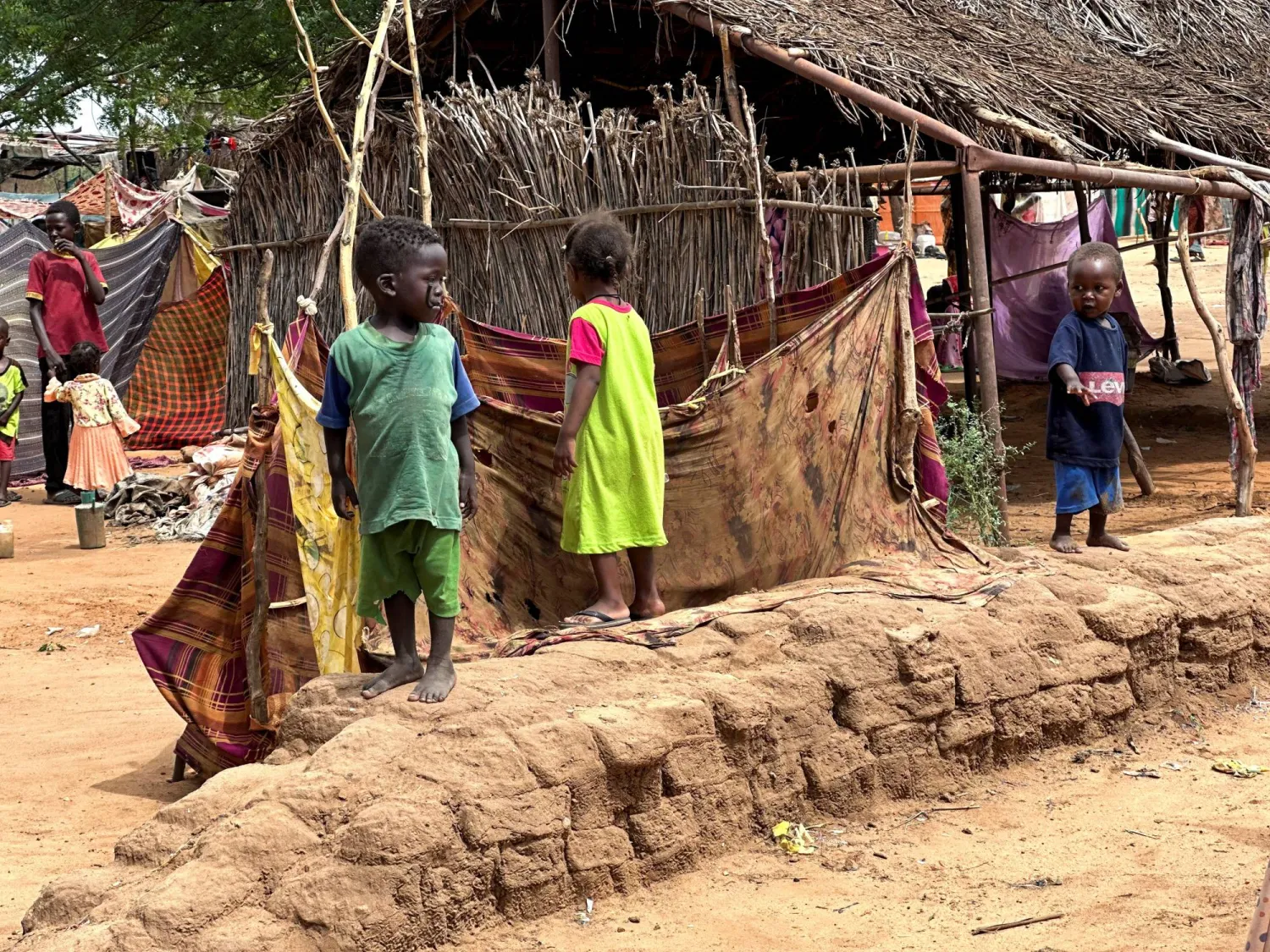
Displaced Sudanese children stand at Zamzam camp, in North Darfur, Sudan, August 1, 2024. REUTERS/Mohamed Jamal Jebrel
TT

US Warns Sudan Famine on Pace to be Deadliest in Decades

Displaced Sudanese children stand at Zamzam camp, in North Darfur, Sudan, August 1, 2024. REUTERS/Mohamed Jamal Jebrel

The newly confirmed famine at one of the sprawling camps for war-displaced people in Sudan’s Darfur region is growing uncontrolled as the country's combatants block aid, and it threatens to grow bigger and deadlier than the world’s last major famine 13 years ago, US officials warned on Friday.

The US Agency for International Development, the UN World Food Program and other independent and government humanitarian agencies were intensifying calls for a cease-fire and aid access across Sudan. That's after international experts in the Famine Review Committee formally confirmed Thursday that the starvation in at least one of three giant makeshift camps, holding up to 600,000 people displaced by Sudan's more than yearlong war, had grown into a full famine, The Associated Press reported.

Two US officials briefed reporters on their analysis of the crisis on Friday following the famine finding, which is only the third in the 20-year history of the Famine Review Committee. The US officials spoke on the condition of anonymity as the ground rules for their general briefing.

The last major famine, in Somalia, was estimated to have killed a quarter of a million people in 2011, half of them children under 5 years old.

The blocks that Sudan’s warring sides are putting on food and other aid for the civilians trapped in the Zamzam camp are realizing “the worst fears of the humanitarian community,” one of the US officials said.

War in the northern African country erupted in April 2023.

As most of the world paid attention to conflicts in Ukraine and Gaza and the larger Middle East, the Sudanese war quickly grew into the world's largest humanitarian crisis, with 11 million displaced. Unlike the earlier war, acute hunger is almost countrywide.

Aid workers were last able to get humanitarian relief to the trapped civilians at the camps in Darfur in April. The Rapid Support Forces have the area under siege and is accused of attacking hospitals, camps and other civilian targets.

World Food Program director Cindy McCain urged the international community in a statement after the famine declaration to work for a cease-fire. “It is the only way we will reverse a humanitarian catastrophe that is destabilizing this entire region of Africa,” she said.
USAID Director Samantha Power stressed the famine was entirely man-made. Both sides, “enabled by external patrons, are using starvation as a weapon of war,” she said in a statement.
The US officials Friday pointed to Washington as the largest source of aid — the little that gets through — for Sudan. They countered questions about why the Biden administration was not using air drops or any of the other direct interventions by the US military to get food to people in Darfur that they were in Gaza, saying the terrain in Sudan was different.



Islamic Jihad Denies Withholding Body of Last Israeli Hostage

An Islamic Jihad member looks on as workers dig in search of the corpses of hostages in northern Gaza. (AP file)
TT

Islamic Jihad Denies Withholding Body of Last Israeli Hostage

An Islamic Jihad member looks on as workers dig in search of the corpses of hostages in northern Gaza. (AP file)

Palestinian sources dismissed Israeli claims circulating over the past two days that the Islamic Jihad movement is refusing to cooperate with Hamas by handing over what Israel says is the last body of an Israeli hostage in Gaza, a step Israel has linked to moving into the second phase of the ceasefire.

Israel’s Maariv newspaper reported on Friday, citing Israeli security sources, that tensions had emerged between Hamas and Islamic Jihad over the latter’s alleged refusal to hand over the body of the last hostage, Ran Gvili.

Israel believes Islamic Jihad fighters were directly involved in abducting Gvili and holding him in Gaza.

The Al-Quds Brigades, the armed wing of Islamic Jihad, said days ago it had handed over all hostages in its possession and had fully complied with the ceasefire agreement, a claim confirmed by sources in the movement speaking to Asharq Al-Awsat.

According to those sources, Gvili’s body was not among the Israeli hostages held by Islamic Jihad and was instead in Hamas’ custody. They said coordination with Hamas was excellent and denied any disagreements or tensions, dismissing Israeli media reports as unfounded.

Sources from Hamas told Asharq Al-Awsat the body was believed to be located in three or four sites in the Shujaiya and Zeitoun neighborhoods east of Gaza City. Search operations were carried out at those locations but failed to locate it.

They said all field commanders and activists involved in the abduction and in guarding the body had been killed in a series of airstrikes and other operations, making it difficult to determine the exact location with certainty.

They added that the difficulty was compounded by heavy bombardment, widespread destruction and land leveling in those areas during Israeli ground incursions.

According to Israel’s Yedioth Ahronoth newspaper, Israel provided Hamas, via mediators, with information about individuals who might help identify the body’s location, as well as details on potential sites, accompanied by aerial photographs.

Hamas sources said there was ongoing communication with mediators on this issue and others.

New video raises doubts

These developments coincided with the Israeli Hostages and Missing Families Forum publishing video footage of six hostages whose bodies were found inside a tunnel in Rafah in August 2024.

The footage shows them sharing daily life, marking the Jewish holiday of Hanukkah, celebrating the start of 2024, talking among themselves, shaving and moving from one place to another inside the tunnel.

The videos raised questions about the Israeli army’s claim that they were killed two days before being found, allegedly shot by Hamas fighters. Hamas has denied that account, saying they were killed in an Israeli strike that hit the site.

Israeli journalist Miki Levin wrote in a report on Maariv’s website that the six could have returned home alive had an agreement been reached earlier, in April last year, as senior members of the negotiating team had said.

She criticized Israeli Prime Minister Benjamin Netanyahu and ministers Bezalel Smotrich and Itamar Ben-Gvir for insisting on the notion of “total victory,” which she described as empty and unattainable.

She said the six would have been freed under a deal rejected by the Israeli government, which ignored warnings that an incursion into Rafah would lead to the hostages’ deaths.

According to the Israeli Public Broadcasting Corporation, negotiations with mediators days before their deaths were on the verge of collapse due to the Israeli government’s insistence on controlling the Philadelphi corridor. Five of the hostages were due to be released had an agreement been signed at that time.

These circumstances, Hamas sources said, likely prompted Israel to claim they were killed by Hamas gunfire.

The sources again denied that version, saying the hostages were killed in artillery and air strikes that hit the area and also killed several of their captors. They noted that captors had instructions at the time to kill any hostage if Israeli forces approached and posed a direct threat.

The tunnel was located in the Tel al-Sultan neighborhood west of Rafah in southern Gaza. The Israeli army later acknowledged that investigations indicated the hostages were killed as a result of military pressure in the area.

In October 2024, Israel killed Yahya Sinwar, the former head of Hamas’ political bureau, in a house near the tunnel site in Tel al-Sultan, in what Israeli accounts described as a surprise encounter while he was with an armed group spotted moving inside the building.

Asharq Al-Awsat reported in November 2024, citing Hamas sources, that Ibrahim Sinwar, the son of Qassam Brigades commander Mohammed Sinwar, who was later killed in an Israeli strike, had been killed alongside his uncle in one of the Rafah tunnels.

The sources said Ibrahim Mohammed Sinwar was killed in an Israeli strike as he emerged from a tunnel opening to monitor Israeli troop movements, while accompanied by his uncle, in August that year in Rafah.

Assessments cited by Asharq Al-Awsat suggest the tunnel in question was the same one where the six hostages were held. Subsequent Israeli investigations said DNA evidence indicated Sinwar had been present there.

The hostages may in fact have been killed in the same strike that killed Ibrahim Sinwar, who had accompanied his uncle Yahya throughout the war, along with other armed fighters.

Hamas sources stressed that strict instructions had been in place regarding the treatment of Israeli hostages, including providing all necessary means to keep them alive and safeguard their lives.


Gaza Civil Defense Says 13 Dead as Heavy Rains Batter Territory

Heavy machinery operates as Palestinians gather amid a search for victims in a destroyed house that collapsed due to heavy rains, in Beit Lahia, in the northern Gaza Strip, December 12, 2025. (Reuters)
TT

Gaza Civil Defense Says 13 Dead as Heavy Rains Batter Territory

Heavy machinery operates as Palestinians gather amid a search for victims in a destroyed house that collapsed due to heavy rains, in Beit Lahia, in the northern Gaza Strip, December 12, 2025. (Reuters)

Gaza's civil defense agency on Friday said at least 13 people had died in the last 24 hours, including three children who died from exposure to the cold, as a winter storm batters the territory.

Heavy rain from Storm Byron has flooded tents and temporary shelters across the Gaza Strip since late Wednesday, compounding the suffering of the territory's residents, nearly all of whom were displaced during more than two years of war.

Gaza's civil defense agency, which operates as a rescue force under Hamas authority, told AFP three children had died from exposure to the cold -- two in Gaza City and one in Khan Younis in the south.

Al-Shifa Hospital in Gaza City confirmed the deaths of Hadeel al-Masri, aged nine, and Taim al-Khawaja, who it said was just several months old.

Nasser Hospital in Khan Yunis on Thursday said eight-month-old Rahaf Abu Jazar had died in the nearby tented encampment of Al-Mawasi due to the cold.

With most of Gaza's buildings destroyed or damaged, thousands of tents and homemade shelters now line areas cleared of rubble.

Civil defense spokesman Mahmud Bassal said six people died when a house collapsed in the Bir al-Naja area of the northern Gaza Strip.

Four others died when walls collapsed in multiple separate incidents, he said.

In a statement, the civil defense said its teams had responded to calls from "13 houses that collapsed due to heavy rains and strong winds, mostly in Gaza City and the north".

- No dry clothes -

Under gloomy skies in Nuseirat in the central Gaza Strip, Palestinians used bowls, buckets and hoes to try and remove the water that had pooled around their tents made of plastic sheeting.

Young children, some barefoot and others wearing open sandals, trudged and hopped through ponds of muddy water as the rain continued to fall.

"The mattress has been soaked since this morning, and the children slept in wet bedding last night," Umm Muhammad Joudah told AFP.

"We don't have any dry clothes to change into."

Saif Ayman, a 17-year-old who was on crutches due to a leg injury, said his tent had also been submerged.

"In this tent we have no blankets. There are six of us sleeping on one mattress, and we cover ourselves with our clothes," he said.

The Hamas-run interior and national security ministry gave a preliminary toll of 14 dead due to the effects of the winter rains since Wednesday.

A ceasefire between Israel and group Hamas that took effect in October has partially eased restrictions on goods and aid entering into the Gaza Strip.

But supplies have entered in insufficient quantities, according to the United Nations, and the humanitarian needs are still immense.

The UN's World Health Organization warned on Friday that thousands of families were "sheltering in low-lying or debris-filled coastal areas with no drainage or protective barriers".

"Winter conditions, combined with poor water and sanitation, are expected to drive a surge in acute respiratory infections," it added.


Israel Gives Legal Status to 19 West Bank Settlements, Media Reports

Israeli settlements seen from Bethlehem in the West Bank. (AFP file)
TT

Israel Gives Legal Status to 19 West Bank Settlements, Media Reports

Israeli settlements seen from Bethlehem in the West Bank. (AFP file)

Israel's cabinet has decided to give legal status to 19 settlements in the occupied West Bank, including two that were vacated 20 years ago under a pullout aimed at boosting the country's security and the economy, Israeli media reported.

The Palestinian Authority on Friday condemned the move, announced late on Thursday.

Some of the settlements are newly established, while others are older, Israeli media said.

The move to legalize the settlements in the West Bank -- territory Palestinians seek for a future state -- was proposed by far-right Finance Minister Bezalel Smotrich and Israeli Defense Minister Israel Katz.

Most world powers deem Israel's settlements, on land it captured in a 1967 war, illegal. Numerous UN Security Council resolutions have called on Israel to halt all settlement activity.

Israel disputes this, saying it has historical and biblical ties to the land.

Construction of settlements -- including some built without official Israeli authorization -- has increased under Israel's far-right governing coalition, fragmenting the West Bank and cutting off Palestinian towns and cities from each other.

The 19 settlements include two that Israel withdrew from in 2005, evacuated under a disengagement plan overseen by former Prime Minister Ariel Sharon that focused mainly on Gaza.

Under the plan, which was opposed by the settler movement at the time, all 21 Israeli settlements in Gaza were ordered to be evacuated. Most settlements in the West Bank were unaffected.

In a statement on Friday, Palestinian Authority minister Mu’ayyad Sha’ban called the announcement another step to erase Palestinian geography.

Sha'ban, of the Palestinian Authority's Colonization and Wall Resistance Commission, said the decision raised serious alarms over the future of the West Bank.

Home to 2.7 million Palestinians, the Israeli-occupied West Bank has long been at the heart of plans for a future Palestinian nation existing alongside Israel.

Israeli settler attacks on Palestinians reached their highest recorded levels in October with settlers carrying out at least 264 attacks, according to the United Nations.