


What Are Israel’s Iron Dome and Arrow Missile Defenses?

An Iron Dome launcher fires an interceptor missile as rockets are fired from Gaza, in Sderot, Israel, May 10, 2023. (Reuters)
TT

What Are Israel’s Iron Dome and Arrow Missile Defenses?

An Iron Dome launcher fires an interceptor missile as rockets are fired from Gaza, in Sderot, Israel, May 10, 2023. (Reuters)

Israel has been bracing for possible retaliation for the assassination of Iran's close ally Hamas leader Ismail Haniyeh in Tehran last week.

Here are details of the multi-layered air defenses Israel has been honing since coming under Iraqi Scud salvoes in the 1991 Gulf war.

ARROW

The long-range Arrow-2 and Arrow-3 system, developed by Israel with an Iranian missile threat in mind, is designed to intercept ballistic missiles outside the earth's atmosphere, using a detachable warhead that collides with the target.

It operates at an altitude that allows for the safe dispersal of any non-conventional warheads.

State-owned Israel Aerospace Industries is the project's main contractor, while Boeing is involved in producing the interceptors.

On Oct. 31, Israel's military said it had used the Arrow aerial defense system for the first time since the Oct. 7 outbreak of the war with Hamas to intercept a surface-to-surface missile in the Red Sea fired towards its territory.

On Sept. 28, Germany signed a letter of commitment with Israel to buy the Arrow-3 missile defense system for nearly 4 billion euros ($4.2 billion).

DAVID'S SLING

The mid-range David's Sling system is designed to shoot down ballistic missiles fired from 100 km to 200 km (62 to 124 miles) away.

Developed and manufactured jointly by Israel’s state-owned Rafael Advanced Defense Systems and the US Raytheon Co, David’s Sling is also designed to intercept aircraft, drones and cruise missiles.

IRON DOME

The short-range Iron Dome air defense system was built to intercept the kind of rockets fired by the Palestinian movement Hamas in Gaza.

Developed by state-owned Rafael Advanced Defense Systems with US backing, it became operational in 2011. Each truck-towed unit fires radar-guided missiles to blow up short-range threats like rockets, mortars and drones in mid-air.

Rafael says it delivered two Iron Dome batteries to the US Army in 2020. Ukraine is seeking a supply as well in its war with Russia, though Israel has so far only provided Kyiv with humanitarian support and civil defenses.

A naval version of the Iron Dome to protect ships and sea-based assets was deployed in 2017.

The system determines whether a rocket is on course to hit a populated area; if not, the rocket is ignored and allowed to land harmlessly.

Iron Dome was originally billed as providing city-sized coverage against rockets with ranges of between 4 and 70 km (2.5 to 43 miles), but experts say this has since been expanded.

LASER-BASED SYSTEM

Israel's interception systems cost between tens of thousands and millions of dollars to shoot down incoming threats. Israel is developing a laser-based system to neutralize enemy rockets and drones at an estimated cost of just $2 per interception.

Iran Nuclear Program ‘Badly Damaged’ But Not Wiped Out

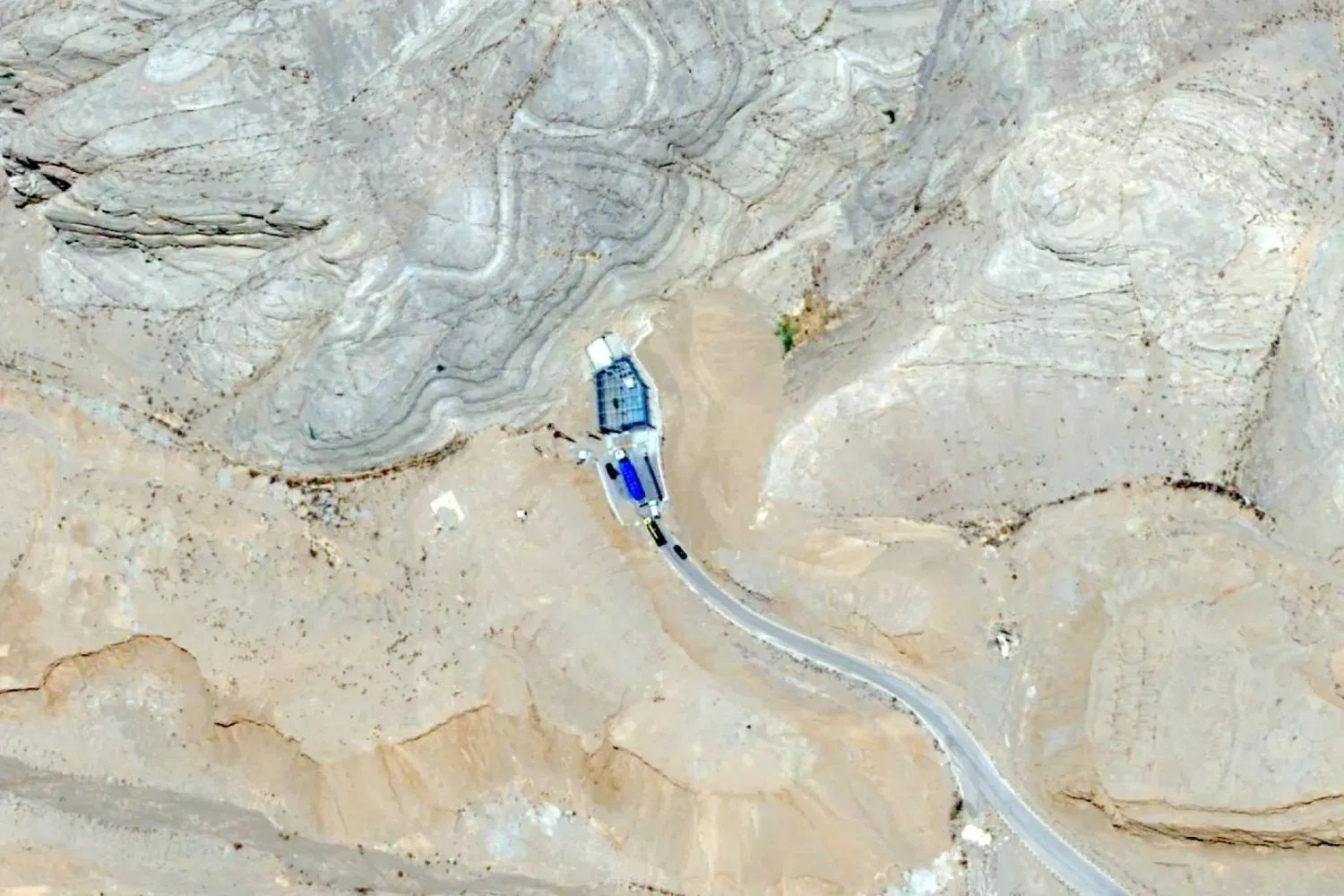
This image from an Airbus Defense and Space's Pléiades Neo satellite shows a truck that analysts believe was carrying highly enriched uranium to a tunnel in the compound of the Isfahan Nuclear Technology Center, in Isfahan, Iran, June 9, 2025. (AP)
TT

Iran Nuclear Program ‘Badly Damaged’ But Not Wiped Out

This image from an Airbus Defense and Space's Pléiades Neo satellite shows a truck that analysts believe was carrying highly enriched uranium to a tunnel in the compound of the Isfahan Nuclear Technology Center, in Isfahan, Iran, June 9, 2025. (AP)

The United States and Israel may have obstructed the path towards a future Iran-built nuclear bomb by severely damaging Tehran's nuclear and ballistic capabilities in recent attacks.

But they have not succeeded in seizing its stockpile of highly enriched uranium, key to any future negotiations between Washington and Tehran, experts and diplomatic sources told AFP.

One of US President Donald Trump's justifications for the war he launched on February 28 was an accusation -- denied by Tehran -- that Iran was developing an atomic bomb. Trump has repeatedly vowed to never allow the country to possess a nuclear weapon.

Israeli Prime Minister Benjamin Netanyahu, for his part, has stated that the previous war waged against Iran, a 12-day conflict in June 2025, as well as the current one “wiped out” Iran's nuclear program.

But two European diplomatic sources, speaking on condition of anonymity, expressed caution about the future of Iran's atomic ambitions.

Immediately following the June 2025 strikes, “we were told the program had been set back by several years, before the figure was revised to just several months,” one source noted.

“Iran is no longer a threshold power as it once was,” an Israeli diplomatic source, who requested anonymity, told AFP.

A “threshold” state has the expertise, resources and facilities needed to develop a nuclear weapon on short notice should it choose to.

The source argued that, in addition to the infrastructure damage suffered, Iran's know-how “has been seriously undermined by the elimination of the scientists and officials” and the targeting of universities “where the data centers containing Iran's expertise were located.”

Substantial setback

“Overall, this conflict has set back Iran's nuclear program substantially,” said Spencer Faragasso of the Institute for Science and International Security, a US think tank that monitors Iran's nuclear program.

“It will take a significant amount of time, investment, and resources to reconstitute all of those lost capabilities,” he said.

However, “the gains from the conflict are not permanent by any means.”

Tehran still possesses a significant quantity of uranium enriched both to 60 percent, close to the 90% level required to make an atomic bomb, as well as a stockpile of uranium enriched to 20%, another critical threshold.

Prior to the US strikes in June 2025, the International Atomic Energy Agency (IAEA) calculated that Iran possessed approximately 440 kilograms of uranium enriched to 60%, well above the 3.67% limit set by a 2015 agreement from which the United States subsequently withdrew.

Since June 2025, the fate of this stockpile has remained uncertain, with Tehran refusing access to IAEA inspectors at the sites ravaged by US and Israeli strikes.

IAEA Director General Rafael Grossi has repeatedly called for the return of international experts.

Removing enriched uranium

Part of the stockpile of highly enriched uranium (HEU) is believed to remain buried in the tunnels at the Isfahan site in central Iran.

“At least 220 kilogram – roughly half of Iran's declared stockpile of 60% HEU – is believed to be stored in the underground tunnel complex at Isfahan,” said Faragasso.

“The status of the other half is unclear, but we believe it is buried under the rubble at Fordow as large significant quantities of 60% HEU were produced prior to the June 2025 war,” he said.

Only an independent inspection would be able to dispel these doubts.

The issue is how this uranium could be removed from Iranian territory under any eventual accord.

Russia reiterated on Monday that it remained ready to accept Iranian enriched uranium on its soil as part of any potential peace agreement between Washington and Tehran.

“This proposal was put forward by President (Vladimir) Putin during contacts with the United States and with countries in the region,” said Kremlin spokesman Dmitry Peskov, in response to a question from AFP.

But that scenario is a red line for the Europeans in view of the war that Russia has been waging against Ukraine for more than four years.

Moscow and Tehran are cooperating on nuclear matters through Iran's Bushehr power plant, built and operated with Russian assistance for civilian purposes.

The Iranians “don't have an ability to enrich uranium anymore... So it means they cannot build a nuclear bomb at the moment,” said Danny Orbach of the Hebrew University of Jerusalem.

“But they still have the enriched material, which is the hardest thing to obtain,” he said.


Rare Precedents for Lebanon-Israel Talks

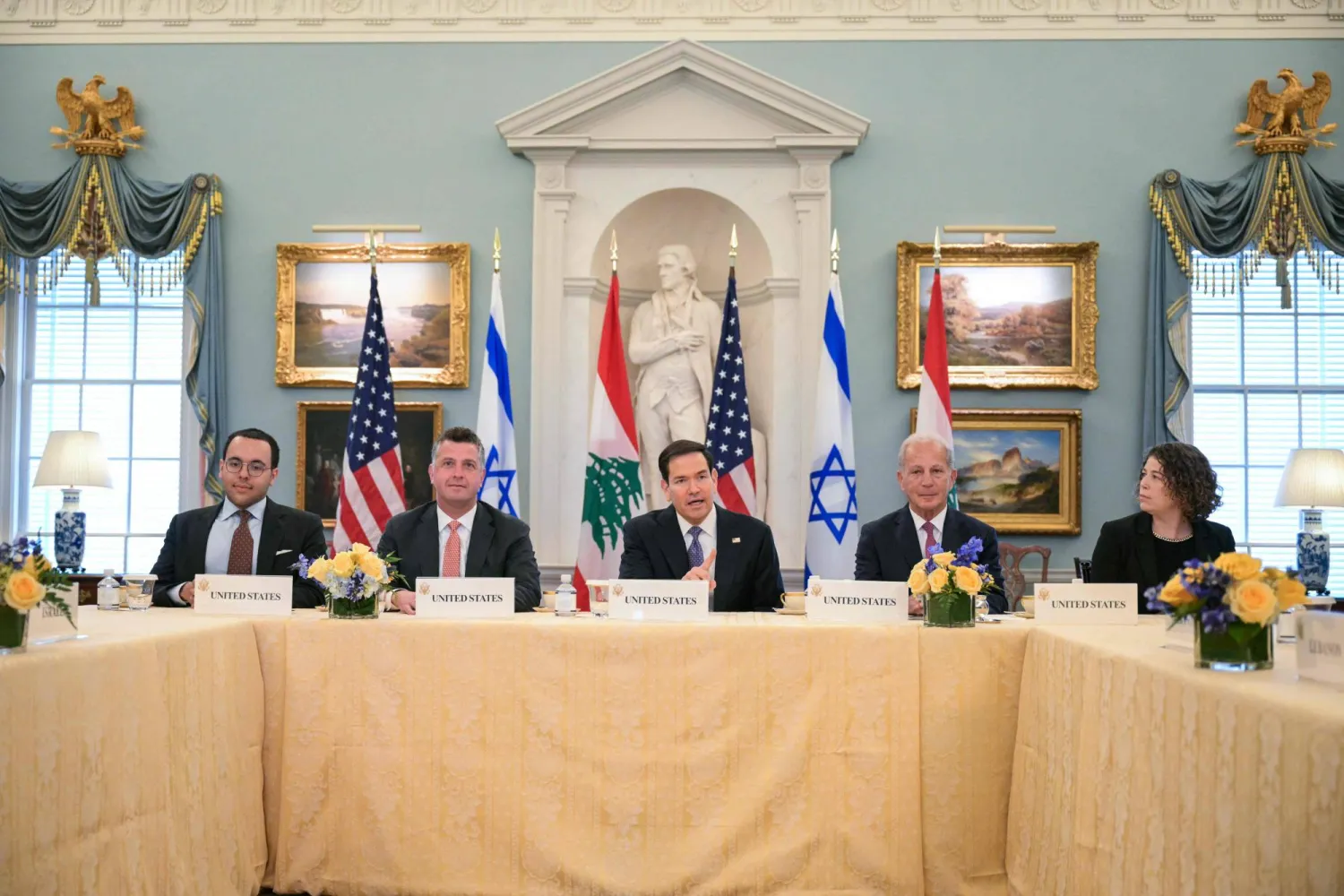
US Secretary of State Marco Rubio (C), alongside US State Department Counselor Michael Needham (2L) and US Ambassador to Lebanon Michel Issa (2R), speaks during a meeting with Lebanon's Ambassador to the US Nada Hamadeh Moawad (out of frame) and Israeli Ambassador to the US Yechiel Leiter (out of frame) at the State Department in Washington, DC, on April 14, 2026. (AFP)
TT

Rare Precedents for Lebanon-Israel Talks

US Secretary of State Marco Rubio (C), alongside US State Department Counselor Michael Needham (2L) and US Ambassador to Lebanon Michel Issa (2R), speaks during a meeting with Lebanon's Ambassador to the US Nada Hamadeh Moawad (out of frame) and Israeli Ambassador to the US Yechiel Leiter (out of frame) at the State Department in Washington, DC, on April 14, 2026. (AFP)

There are few precedents for the direct talks between Lebanese and Israeli officials that began in Washington on Tuesday.

- 1949, Fragile armistice -

The first Arab-Israeli war began on May 15, 1948, the day after the declaration of the establishment of the State of Israel.

Five countries -- Egypt, Syria, Jordan, Lebanon and Iraq -- had rejected a UN plan adopted in November 1947 to partition Palestine into Jewish and Arab states and went to war against the new state.

In 1949, Israel and neighboring countries signed armistice agreements, but they collapsed with the start of the 1967 Arab-Israeli War.

- 1983, Unimplemented agreement -

Israel invaded Lebanon on June 6, 1982, in an operation it dubbed "Peace for Galilee" that was initially aimed at expelling Palestinian fighters, but which resulted in a nearly 18-year Israeli occupation.

On May 17, 1983, Lebanon and Israel signed an agreement on the withdrawal of Israeli forces from Lebanon after four-and-a-half months of direct talks with US participation.

The deal was scrapped less than a year later, in March 1984, under pressure from Syria and its allies in Lebanon.

- 1991-93, Washington talks -

A series of bilateral negotiations between Israel and Syria, Lebanon, and a joint Jordanian-Palestinian delegation was launched in late 1991, following the Madrid conference on Middle East peace.

Ten rounds of bilateral talks were held in Washington over 20 months until 1993, but failed to produce results.

- 2022, Maritime border deal -

After years of US mediation, Lebanon and Israel reached an agreement on October 27, 2022, which demarcated their maritime border and set the terms for sharing offshore gas resources in the eastern Mediterranean.

There was no direct contact between the two sides, with the deal formalized through separate exchanges of letters with the United States.

- 2024, Fragile ceasefire -

A November 2024 ceasefire sought to end more than a year of fresh hostilities between Israel and Hezbollah, but Israeli forces kept up strikes in Lebanon, saying they aimed to prevent Hezbollah from rebuilding its capabilities.

In December 2025, civilian officials for the first time joined Lebanese and Israeli military representatives in ceasefire-monitoring meetings in southern Lebanon, led by the US and also involving France and the United Nations peacekeeping force.

The talks marked the first direct discussions between the two sides in decades.


What Does a ‘Blockade of the Blockade’ in the Strait of Hormuz Mean?

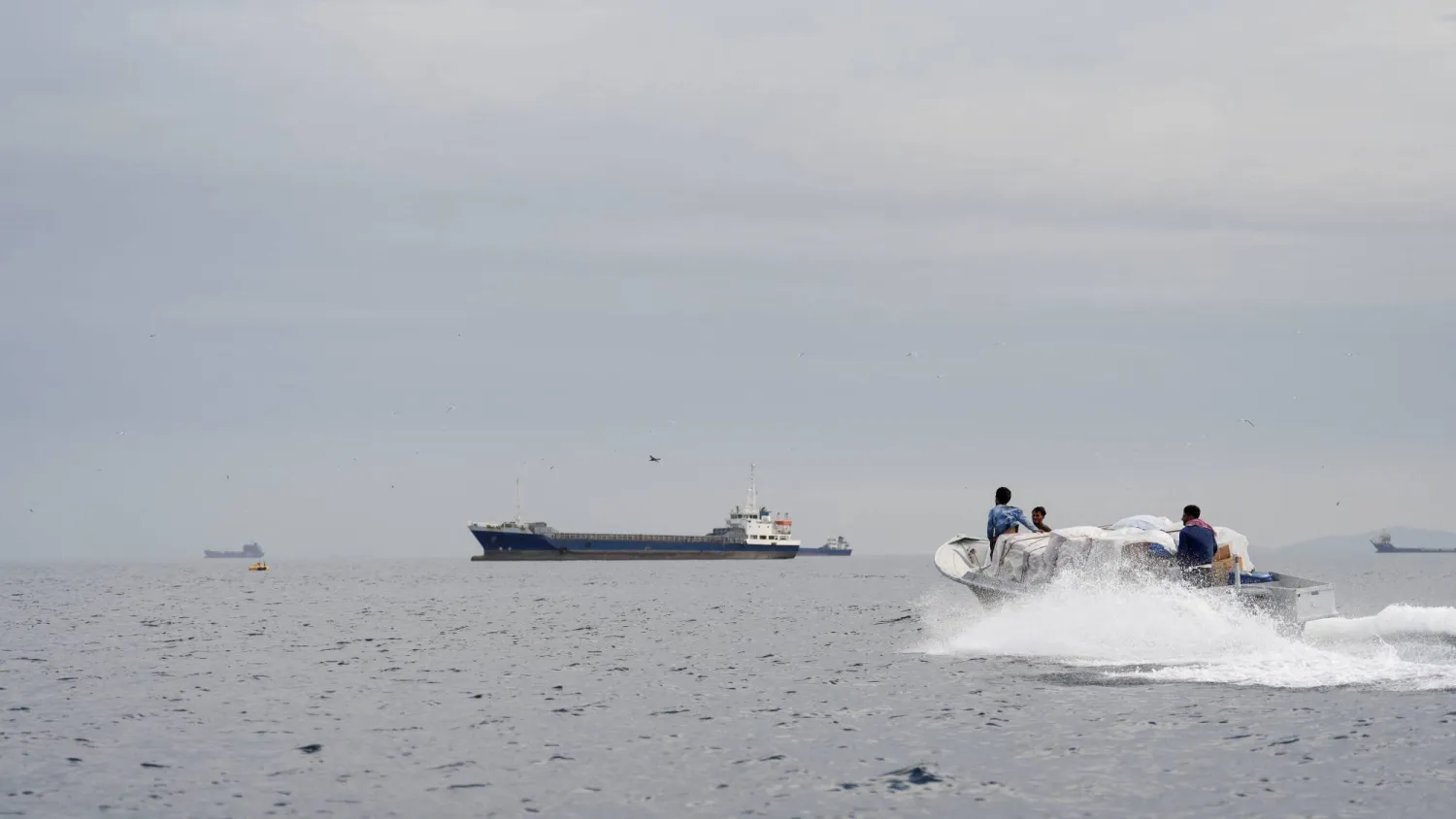
Ships and a boat in the Strait of Hormuz on April 12, 2026 (Reuters)
TT

What Does a ‘Blockade of the Blockade’ in the Strait of Hormuz Mean?

Ships and a boat in the Strait of Hormuz on April 12, 2026 (Reuters)

When Iran moved to close the Strait of Hormuz, it did not physically seal the waterway — for example, by fully mining it. Instead, it barred ships and oil tankers belonging to Gulf littoral states, as well as vessels from countries it considers adversaries, chiefly the United States and Israel, from transiting the strait.

At the same time, Tehran allowed its own tankers to pass, maintaining exports of about 1.5 million barrels per day to global markets.

In effect, Iran imposed a selective blockade on the Strait of Hormuz, closing it to much of the world while keeping it open for its own trade.

By contrast, US President Donald Trump’s proposal to impose a naval blockade on the strait and all Iranian ports would amount to a “blockade of the blockade.” Such a move would deny Iran access to the waterway altogether, halting both its oil and non-oil exports and dealing a severe blow to its economy.

Iran’s Gains and Losses

Oil prices surged after traffic through the strait was disrupted, rising from about $75–$80 a barrel before the February conflict to roughly $120–$126 at peak wartime levels.

With exports of around 1.5 million barrels per day, Iran is estimated to have earned an additional $60 million a day from higher prices. However, because about 90 percent of its crude is sold to China at discounted rates, the net additional gain is likely closer to $45 million a day.

These figures reflect incremental revenue. At an assumed average price of $100 a barrel, Iran’s total oil income would reach roughly $150 million a day, or about $4.5 billion a month, revenues that would be cut off under a full naval blockade.

Such a “blockade of the blockade” would likely push oil prices even higher. But its impact would extend beyond Iran. China, which buys the bulk of Iranian crude, would be among the most affected.

According to Pakistani diplomatic sources, Beijing played a key role in persuading Tehran at the last minute to accept a two-week truce announced on April 7 by Donald Trump. Some analysts believe that if China’s energy supplies are threatened, it could again press Iran to make concessions in talks with Washington aimed at ending the conflict.

Rerouting Shipping Traffic

Iran’s restrictions did more than limit access; they reshaped how ships moved through the strait.

Rather than formally altering internationally recognized shipping lanes, Iran imposed operational controls that effectively redirected maritime traffic. Vessels permitted to transit were steered toward routes closer to Iran’s coastline, particularly between Qeshm and Larak islands, instead of the traditional channels running between Abu Musa and the Greater and Lesser Tunb islands.

This shift created a de facto controlled corridor near Iranian shores without any formal declaration of new navigation routes.

In many cases, passage became contingent on prior coordination with Iranian authorities, permits, or even transit fees, marking a sharp departure from the previously unrestricted flow of traffic.

Iran has allowed “friendly” or neutral vessels to pass under certain conditions, while blocking those it deems hostile. It has also deployed drones, naval mines and fast attack craft to monitor and, when necessary, intercept ships that fail to comply.

The risks have forced many shipping companies to reroute vessels around the Cape of Good Hope or adopt longer, more secure paths, including routes closer to Iranian-controlled waters.

Before the conflict, roughly 130 to 150 ships transited the Strait of Hormuz each day. During the crisis, that number dropped sharply to about five vessels, or fewer, a day.