Saudi PIF's Assets under Management Exceeds SAR2.871 Trillion in 2023

Saudi PIF's Assets under Management Exceeds SAR2.871 Trillion in 2023
TT

Saudi PIF's Assets under Management Exceeds SAR2.871 Trillion in 2023

Saudi PIF's Assets under Management Exceeds SAR2.871 Trillion in 2023

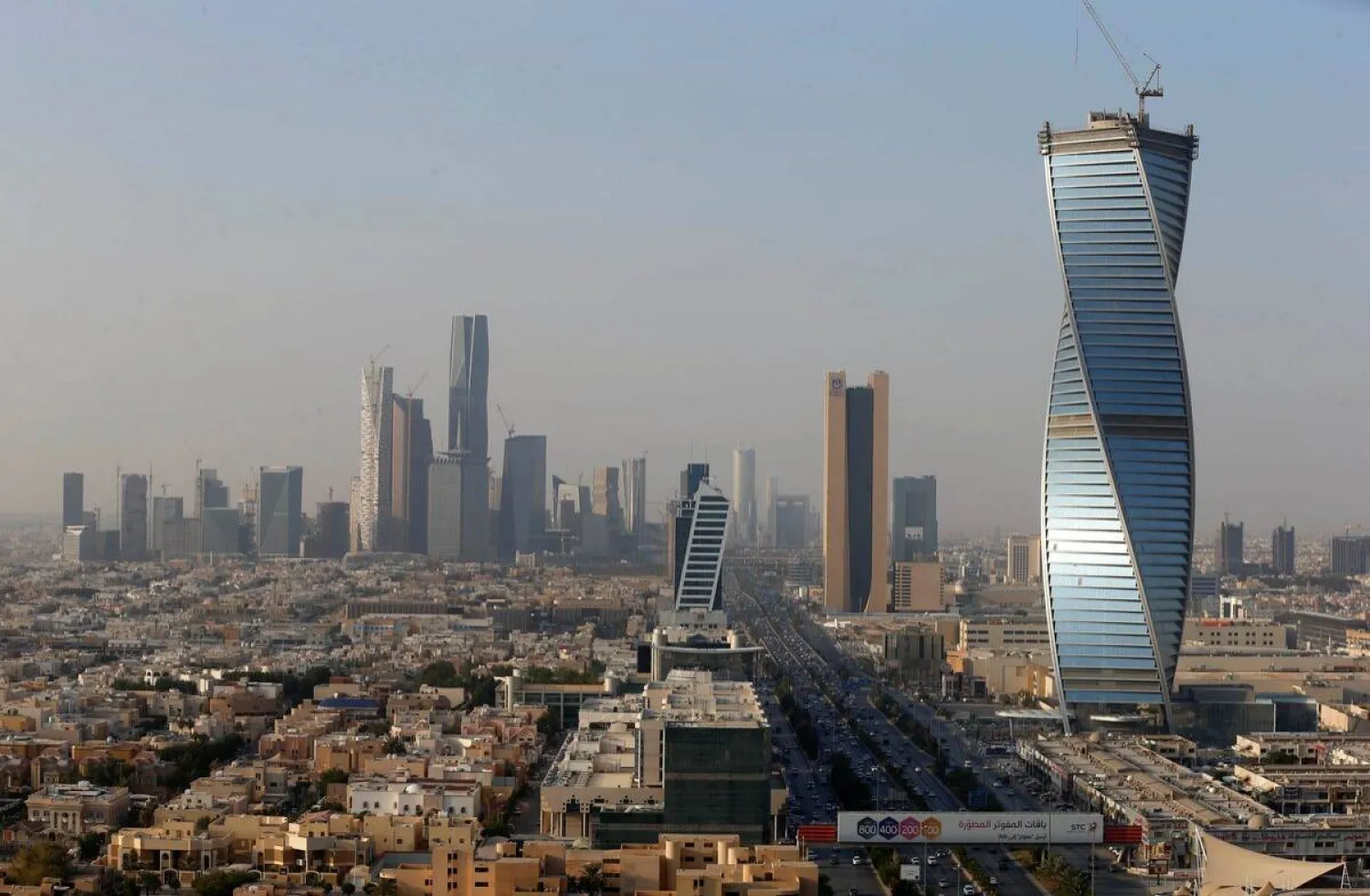
Saudi Arabia’s Public Investment Fund (PIF) released on Monday its annual report for 2023, providing an overview of its performance and financials for the year. The report has shown rapid progress across various strategic pillars and sectors in Saudi Arabia and the world, including transportation, mining, real estate, infrastructure, health, communications, technology, tourism and sports, further supporting its mandate and its strategies as a major driver of economic transformation, in line with Saudi Vision 2030, as well as its position as one of the most impactful investors in the world.

The report, which demonstrates PIF’s commitment to transparency and good governance in line with GIPS international standards, shows strong performance in 2023, with assets under management (AuM) increasing by 29% to SAR2.871 trillion (c. $765 billion) by year-end 2023.

As of July 2024, PIF AuM stands at $925 billion. PIF recorded average total shareholder return of 8.7% per year since VRP inception date, as well as significant progress against its objectives of delivering long-term, sustainable returns and economic transformation in Saudi Arabia.

Total net cash returns for both Saudi Sector Development (SSD) and Saudi Equity Holdings (SEH) pools reached $11.2 billion (SAR42 billion) for the year, substantially exceeding the $5.3 billion (SAR20 billion) target. The Saudi Real Estate and Infrastructure Development (SREID) pool increased 15% year-on-year to reach $62 billion (SAR233 billion) in AuM.

The launch of PIF’s inaugural Private Sector Forum was an important milestone in highlighting opportunities for local businesses to align with and support PIF’s mandate. At the event, several key initiatives were unveiled, including MUSAHAMA, the local content growth program, and the Suppliers Development Program. The programs promise to offer private sector companies enhanced visibility into supplier and investment opportunities within PIF and its subsidiary companies.

PIF has continued to deploy significant investment locally, which is supporting growth in key economic sectors that are of strategic importance to the domestic economy, launching Riyadh Air – Saudi Arabia’s new national carrier.

The Electric Vehicle Infrastructure Company (EVIQ) is intended to accelerate the adoption of EVs in Saudi Arabia, with PIF further supporting the car manufacturing ecosystem through Tasaru Mobility Investment.

PIF also launched Lifera, a new pharmaceutical investment company, and Al Balad Development Company as well as Ardara in the real estate sector.

PIF has now created a cumulative total of more than 730,000 direct and indirect jobs by year end 2023, bringing the total as of Q1 2024 to more than 763,000 direct and indirect jobs.

PIF has continued to increase its capital investment globally with SAR586 billion ($156 billion) invested internationally in 2023 alone, a 14% year-over-year increase of SAR74 billion ($19.98 billion).

The international investment portfolio plays a key role in enhancing PIF’s broad international portfolios and developing capital over the long term with a focus on impactful investments that generate significant returns over time by investing in the industries of the future that are shaping the global economy, helping to localize expertise, skills and technologies to Saudi Arabia.

PIF has also been active in securing foreign direct investment, including a joint venture with the Korean carmaker Hyundai to establish a new Saudi-based factory, and a partnership with the Italian tire producer Pirelli to make tires in Saudi Arabia for both domestic and export sale.

It also launched another joint venture with the Chinese firm, Baosteel, to establish an integrated steel plate manufacturing complex in Saudi Arabia.

PIF has been rated A1 by Moody’s with a positive outlook and A+ by Fitch with a stable outlook.



Chile to Restore Global Leadership in Lithium Production

Aerial view of brine ponds and processing areas of the lithium mine of the Chilean company SQM (Sociedad Quimica Minera) in the Atacama Desert, Calama, Chile, on September 12, 2022. (AFP)
TT

Chile to Restore Global Leadership in Lithium Production

Aerial view of brine ponds and processing areas of the lithium mine of the Chilean company SQM (Sociedad Quimica Minera) in the Atacama Desert, Calama, Chile, on September 12, 2022. (AFP)

Chile's state-owned copper producer, Codelco, together with Chinese-backed private miner, SQM, announced on Saturday the creation of a giant company to exploit lithium, often referred to as "white gold."

The South American country is the world’s second-largest producer of lithium, a key component of EVs and other clean technologies and has about 40% of the world’s lithium reserves.

The partnership between the firms will allow them to jointly ramp up the exploration of lithium in the Atacama region of northern Chile.

The public-private partnership will be named Nova Andino Litio SpA, said Codelco, which described the agreement as one of the most significant deals in Chilean business history.

The Chinese firm Tianqi holds 22% stake in SQM.

In a statement, Codelco said the new partnership will carry out lithium exploration, extraction, production, and commercialization activities in the Atacama salt flat until 2060.

The agreement was approved by more than 20 national and international regulatory authorities, including those in China, Brazil, Saudi Arabia, and the European Union.

Chile was the last of the countries to clear the deal. Last month, China gave the green light to the planned partnership between Codelco and SQM.

The new venture is intended to help Chile regain global leadership in lithium production, a position it lost to Australia nearly a decade ago.

The partnership aims to expand lithium output in the Atacama region, with plans to increase production by around 300,000 tons per year. In 2022, Chile produced 243,100 tons of lithium.

The partnership also aligns with Chile’s National Lithium Strategy, announced in 2023 by the leftist government of President Gabriel Boric, aimed at reclaiming Chile’s global leadership in lithium production.


China's BYD Poised to Overtake Tesla in 2025 EV Sales

The Tesla logo is seen in this illustration taken July 23, 2025. (Reuters)
TT

China's BYD Poised to Overtake Tesla in 2025 EV Sales

The Tesla logo is seen in this illustration taken July 23, 2025. (Reuters)

Growing Chinese auto giant BYD stands poised to officially surpass Tesla as the world's biggest electric vehicle company in annual sales.

The two groups are expected soon to publish their final figures for 2025, and based on sales data so far this year, there is almost no chance the American company led by Elon Musk will retain its leadership position.

At the end of November, Shenzhen-based BYD, which also produces hybrid vehicles, had sold 2.07 million EVs so far in 2025.

Tesla, for its part, had sold 1.22 million by the end of September.

Tesla's September figures included a one-time boost in sales, to nearly half-a-million vehicles in a three-month period, before the expiration of a US tax credit for buyers of electric vehicles -- which ended under legislation backed by President Donald Trump, a climate change skeptic.

But Tesla's sales in the coming quarter are expected to fall to 449,000, according to a FactSet analysis consensus. That would give Tesla about 1.65 million sales for all of 2025, a drop of 7.7 percent and well below the level BYD had attained by end November.

Deutsche Bank, which projects just 405,000 Tesla EV sales during the fourth quarter, sees the company's sales down by around one-third in both North America and Europe, and by one-tenth in China.

- Transition period -

Industry watchers say it will take time for EV demand to reach a level of equilibrium in the United States following the elimination of the $7,500 US tax credit at the end of September 2025.

Even prior to that, Tesla had seen sales struggle in key markets over CEO Musk's political support of Trump and other far-right politicians. Tesla has also faced rising EV competition from BYD and other Chinese companies and from European giants.

"We believe Tesla will see some weakness on deliveries" in the fourth quarter, said Dan Ives of Wedbush Securities.

Sales of 420,000 would be "good enough to show stable demand," with Wall Street "laser focused on the autonomous chapter kicking off in 2026," Ives added, referring to plans for self-driving vehicles.

Even as it has grown quickly, BYD has faced challenges in its home market.

With profitability in China weighed down by price-wary consumers, the company has sought to strengthen its foothold in foreign markets.

BYD is "one of the pioneers to establish overseas production capacity and supply chains for EVs," Jing Yang, Director of Asia-Pacific Corporate Ratings at Fitch Ratings, told AFP.

"Going forward, its geographical diversification is likely to help it to navigate an increasingly complicated global tariff environment," said Yang.

Overseas rivals to BYD have balked at Chinese state subsidies and other state supports that have allowed the company to sell vehicles cheaply.

Trump's predecessor Joe Biden imposed 100 percent tariffs on Chinese EV imports that could potentially go even higher under Trump. Europe has also imposed tariffs on Chinese imports, but BYD is building manufacturing capacity in Hungary.

While the chance of Tesla reclaiming its global leadership in EVs looks uncertain, the American company is also potentially positioned for growth.

Michaeli of TD Cowen sees autonomous technology playing an increasingly important role for Tesla, with breakthroughs in its "full self-driving" or "FSD" offerings potentially boosting sales.

"As Tesla really begins to roll out eyes-off features and expand FSDs capability, if they do that successfully, that should generate more demand for their vehicles," Michaeli said.

Musk has said the Cybercab, an autonomous robotaxi model, will begin production in April 2026. The company has also unveiled lower-priced versions of the Models 3 and Y that could boost sales.


China Says to Launch Digital Currency Action Plan

People walk past a shopping mall in Beijing on December 28, 2025. (AFP)
TT

China Says to Launch Digital Currency Action Plan

People walk past a shopping mall in Beijing on December 28, 2025. (AFP)

China will on January 1 launch an "action plan" for boosting management and operations of its digital currency, a deputy governor of the country's central bank said Monday.

"The future digital yuan will be a modern digital payment and circulation means issued and circulated within the financial system," People's Bank of China (PBoC) Deputy Governor Lu Lei wrote in Financial News, a media outlet under the central bank.

In the next step towards that goal, a "new generation" arrangement for digital yuan will be launched on January 1, Lu said, encompassing a "measurement framework, management system, operating mechanism and ecosystem".

The "action plan" will see banks pay interest on balances held by clients in digital yuan -- a move to incentivize broader adoption of the currency.

The plan also includes a proposal to establish an international digital yuan operations center in the eastern financial hub of Shanghai, the report said.

Monetary authorities around the world have in recent years been exploring ways to digitalize currencies, propelled by a boom in online payments during the pandemic and the increased popularity of cryptocurrencies such as bitcoin.

The PBoC has been working on a digital currency since 2014 and has been testing the use of a "digital yuan" or "e-CNY" in various pilot programs.

Consumers across the country already widely use mobile and online payments, but the digital yuan could allow the central bank -- rather than the big tech giants -- access to more data and control over payments.