Orcas Ram Sailboat off Northwestern Spain, Vessel Towed to Shore

Although known as killer whales, endangered orcas are part of the dolphin family. (AP file)
TT

Orcas Ram Sailboat off Northwestern Spain, Vessel Towed to Shore

Although known as killer whales, endangered orcas are part of the dolphin family. (AP file)

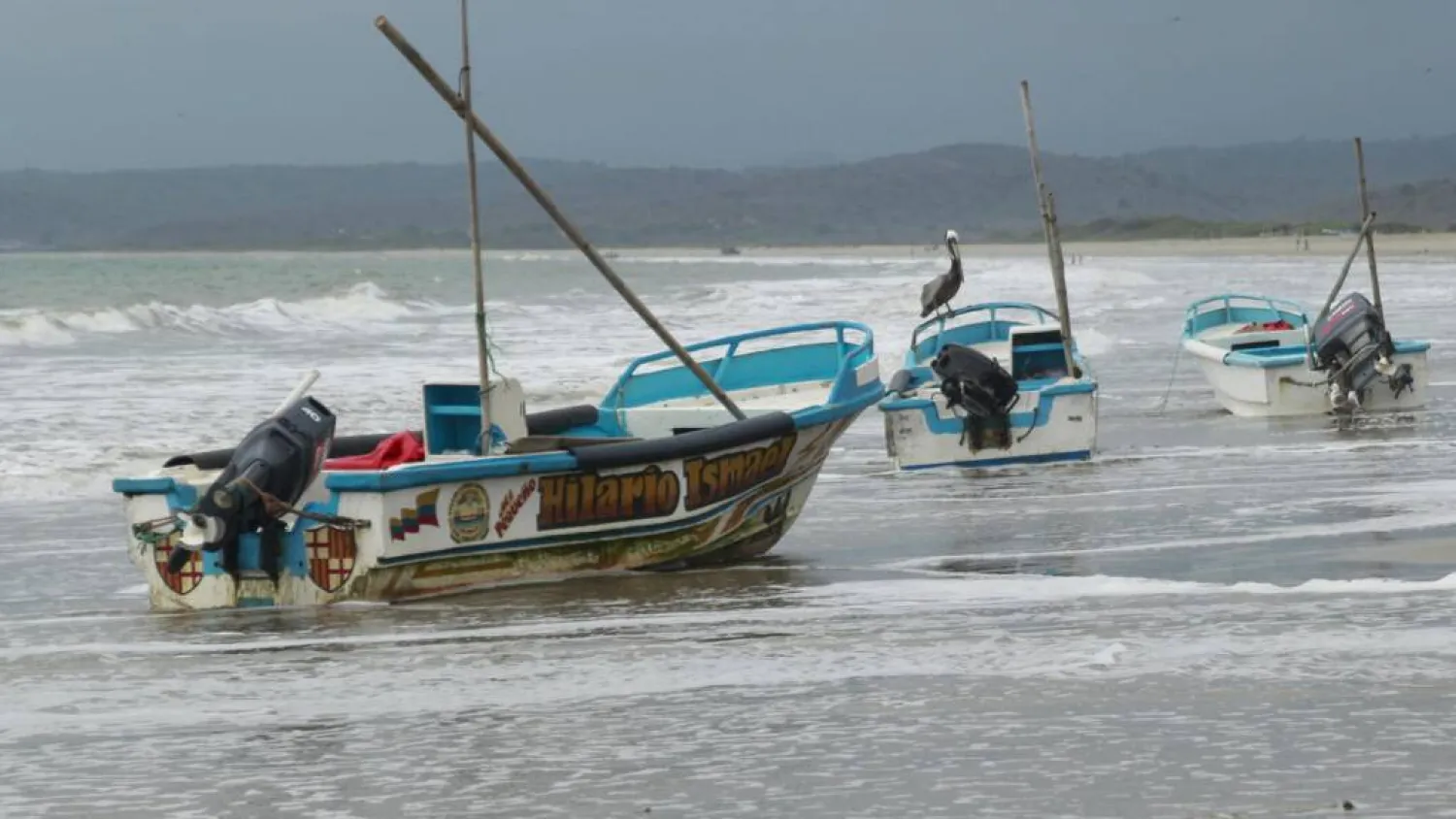
Orcas rammed a sailboat off the coast of northwestern Spain and damaged the vessel's rudder, prompting the maritime rescue service to tow the boat ashore, the service said on Monday.

The incident was the latest in a series of boat rammings by orca pods off the coasts of Spain and Portugal. Scientists have yet to reach a consensus on the reasons for this recent behavior.

One of the sailboat's two crew members seriously injured her hand during the towing maneuver amid rough sea conditions and was evacuated by helicopter to hospital, the service said.

The boat, named Amidala, alerted the maritime rescue center on the rock-bound Cape Finisterre peninsula on the coast of Galicia shortly before 4 p.m. (1400 GMT) on Sunday. The crew - a man and a woman, both Belgian nationals - reported damage to the ship's rudder after it was rammed by an unknown number of orcas.

Adverse weather, with winds of up to 35 knots (65 km/h) and waves up to 3 meters (9.8 ft) high, hampered the towing operation, the service said, which took more than five hours until reaching port.

In May, orcas sank a sailing yacht after ramming it on the Moroccan side of the Strait of Gibraltar.

Although known as killer whales, endangered orcas are part of the dolphin family. They can measure up to eight meters and weigh up to six tons as adults.


Final Talks Begin on Missing Piece for Pandemic Treaty

Tedros Adhanom Ghebreyesus, Director-General of the World Health Organization (WHO), speaks during a news conference in Geneva, Switzerland, Dec. 20, 2021. (Reuters)
TT

Final Talks Begin on Missing Piece for Pandemic Treaty

Tedros Adhanom Ghebreyesus, Director-General of the World Health Organization (WHO), speaks during a news conference in Geneva, Switzerland, Dec. 20, 2021. (Reuters)

An extra week of negotiations to complete an international agreement on handling future pandemics kicked off in Geneva on Monday, with sharp divisions holding up an accord.

Wealthy countries and developing nations are at loggerheads in the talks at the World Health Organization over how the pandemic treaty, adopted last year, will work in practice.

The agreement's Pathogen Access and Benefit-Sharing (PABS) system deals with sharing access to pathogens with pandemic potential, then sharing benefits derived from them such as vaccines, tests and treatments.

"The world cannot afford to lose this opportunity and risk being unprepared for the next pandemic," WHO chief Tedros Adhanom Ghebreyesus said at the start of the talks.

"It will not be perfect; no agreement ever is. But it can be fair; it can be functional," he told negotiators.

In May 2025, WHO members adopted a landmark agreement on tackling future health crises, after more than three years of negotiations sparked by the shock of Covid-19.

The accord aims to prevent a repeat of the disjointed international response that surrounded the coronavirus crisis, by improving global coordination, surveillance and access to vaccines.

PABS, the heart of the treaty, was left out to get the bulk of the deal over the line.

- 'Blame is shared' -

"Developing countries are voicing their mistrust, fearing they will share their viruses without any guarantees of equitable access to vaccines in the event of a crisis," WHO chief scientist Sylvie Briand told AFP.

Other countries are asking whether the pharmaceutical industry has the capacity and motivation to contribute to a pandemic agreement "without a guarantee of return on investment", she said.

Countries have until Friday to negotiate PABS so it can be approved during the World Health Assembly of WHO member states, which opens on May 18.

"Progress has been slow" and finding compromise "will be very hard", though the European Union was now "making an effort to demonstrate some flexibility", said Jean Karydakis, a diplomat at Brazil's mission in Geneva.

The pathogen sharing clauses are considered crucial by developing states, particularly in Africa, where many countries felt cut adrift in the scramble for Covid-19 vaccines.

While NGOs have criticized wealthy nations' obduracy, a western diplomat, speaking on condition of anonymity, said there were also "excessive demands from some developing countries", and thus "the blame is shared" for the deadlock.

- Anonymous access? -

The treaty already says participating pharmaceutical companies should make available 20 percent of their production of vaccines, tests and treatments to the WHO for redistribution -- with at least half as a donation and the rest "at affordable prices".

However, the terms and conditions remain to be defined, as does access to health data and tools outside pandemics.

NGOs and developing countries want to impose mandatory rules for laboratories to ensure poor countries receive vaccines.

"During the Ebola outbreaks, samples from African patients led to treatments developed without such obligations," said Olena Zarytska of the medical charity Doctors Without Borders (MSF).

The result, she said, was limited supplies in Africa and stockpiles in the United States, which under President Donald Trump has withdrawn from the WHO.

Developing countries also want a user registration and tracking system for the PABS database, while developed countries, "basically Germany, Norway and Switzerland, advocate for maintaining anonymous access", said K. M. Gopakumar, senior researcher with the Third World Network.

Anonymous access would make it "impossible" to track who is using pathogen information and whether they are sharing the benefits, 100 non-governmental organizations, including Oxfam, said in a joint letter to the WHO.

"In practice, this means that genetic resources originating in developing countries can be accessed, commercialized, and exploited with complete impunity," the letter said.


Steep Mountainside Offers Respite for Daring Afghans

An Afghan boy enjoys rolling down a steep and sandy mountainside on a weekend at the Sayad area of Reg-e-Rawan in Kapisa province on April 24, 2026. (AFP)
TT

Steep Mountainside Offers Respite for Daring Afghans

An Afghan boy enjoys rolling down a steep and sandy mountainside on a weekend at the Sayad area of Reg-e-Rawan in Kapisa province on April 24, 2026. (AFP)

Backflipping down a steep and sandy mountainside, Afghan teenager Imran Saeedi wows the crowds of men who gather each springtime to unwind beside breathtaking views.

Hundreds of visitors travel each weekend to Reg-e-Rawan -- "the moving sands" in Dari -- to practice parkour or roll down the honey-colored sand in Kapisa province.

"I feel afraid when I'm going for a flip or a jump, and of course I can get injured," said 16-year-old Saeedi, who nonetheless loves the thrill.

"When the week starts, I'm just waiting for the weekend so I can come to Reg-e-Rawan to have fun again," said the high school student.

Men and boys clapped in admiration as he ran down the hill and flipped forwards, then backwards, while his friends filmed on their phones.

Less daring onlookers sat atop rocks surrounding the mountain, picnicking together and enjoying the scenery.

Reg-e-Rawan is off limits to women and girls, who are banned by the Taliban authorities from recreational spots such as parks.

Families with women were turned away when AFP journalists visited, while officials under the Ministry for the Propagation of Virtue and the Prevention of Vice patrolled the area.

- 'Humans need nature' -

Mirwais Kamran, a 48-year-old businessman, had driven three hours north from the capital Kabul with some of his 12 children.

"I feel joy when I come here with my children and friends," said Kamran, who climbed up the slope but stopped short of rolling down.

Nusratullah Nusrat, the provincial head of tourism at the Kapisa Department of Information and Culture, said the site dates back thousands of years.

"The unique feature of this place is that the sand never decreases despite people climbing up and sliding down," he told AFP.

Some people believe rolling in the sand also helps treat rheumatism, added Nusrat.

For visitors such as Nohzatullah Ahmadzai, who travelled from Kabul with a group of friends, Reg-e-Rawan lifts his mood.

"I'm someone who gets depressed when I'm sad, so visiting such places erases that feeling," said the 22-year-old, who works for a cargo firm.

Climbing the slope takes about an hour, rewarding visitors with views over green fields dotted with villages.

"We humans need nature," said Ahmadzai. "When we feel stressed, we can visit natural places for relaxation or relief."


Tornadoes in Northern Texas Leave at Least 2 Dead and Destroy Multiple Homes

 A large uprooted tree rests on Jason Salois' fence and in his neighbor's yard after a tornado moved through the area, Sunday, April 26, 2026, in Springtown, Texas. (Elías Valverde II/The Dallas Morning News via AP)
A large uprooted tree rests on Jason Salois' fence and in his neighbor's yard after a tornado moved through the area, Sunday, April 26, 2026, in Springtown, Texas. (Elías Valverde II/The Dallas Morning News via AP)
TT

Tornadoes in Northern Texas Leave at Least 2 Dead and Destroy Multiple Homes

 A large uprooted tree rests on Jason Salois' fence and in his neighbor's yard after a tornado moved through the area, Sunday, April 26, 2026, in Springtown, Texas. (Elías Valverde II/The Dallas Morning News via AP)
A large uprooted tree rests on Jason Salois' fence and in his neighbor's yard after a tornado moved through the area, Sunday, April 26, 2026, in Springtown, Texas. (Elías Valverde II/The Dallas Morning News via AP)

A tornado-producing thunderstorm left at least two people dead in northern Texas and displaced at least 20 families, with many homes sustaining major damage, authorities said Sunday.

At least one person was killed and numerous homes were damaged Saturday night in the town of Runaway Bay, said Wise County Judge J.D. Clark, who serves as the county’s chief executive. Emergency responders worked to clear debris to reach damaged homes and provide medical care where needed, Clark said.

“Access has been difficult due to blocked roadways and downed utilities, but crews have continued pushing forward to reach those in need,” Clark said.

The storm also hit Springtown, where Parker County Assistant Fire Chief David Pruitt said in an email that a second person died south of the city limits. There was “significant damage” in the area, Pruitt said.

“One of the most significant ongoing challenges is the widespread power outage affecting many residents,” he wrote.

National Weather Service teams confirmed that an EF-2 tornado with peak winds of 135 mph (217 kph) touched down in the Runaway Bay area. An EF-1 tornado with peak winds of 105 mph (169 kph) was confirmed in the Springtown area, the weather service said.

The slow-moving supercell traveled through the area around 10 p.m. Saturday, said meteorologist Patricia Sanchez with the Fort Worth weather service office.

It moved southeast from around Wichita Falls, near the Oklahoma border, passing just west of Fort Worth. Runaway Bay is about 45 miles (72 kilometers) northwest of Fort Worth on Lake Bridgeport. Springtown is about 30 miles (48 kilometers) northwest of Fort Worth.

Weather service radar picked up a “potentially large and extremely dangerous” tornado near Azle at 10:14 p.m. Saturday. That's about another 10 miles (16 kilometers) southeast of Springtown.