


Iran FM to Visit Saudi Arabia to Avert Major Regional Military Escalation

 Iranian Foreign Minister Abbas Araghchi speaks during a press conference after his meeting with Lebanese parliament speaker Nabih Berri, in Beirut, Lebanon, Friday, Oct. 4, 2024. (AP)
Iranian Foreign Minister Abbas Araghchi speaks during a press conference after his meeting with Lebanese parliament speaker Nabih Berri, in Beirut, Lebanon, Friday, Oct. 4, 2024. (AP)
TT

Iran FM to Visit Saudi Arabia to Avert Major Regional Military Escalation

 Iranian Foreign Minister Abbas Araghchi speaks during a press conference after his meeting with Lebanese parliament speaker Nabih Berri, in Beirut, Lebanon, Friday, Oct. 4, 2024. (AP)
Iranian Foreign Minister Abbas Araghchi speaks during a press conference after his meeting with Lebanese parliament speaker Nabih Berri, in Beirut, Lebanon, Friday, Oct. 4, 2024. (AP)

Iran's Foreign Minister Abbas Araqchi will arrive in the Saudi capital Riyadh on Wednesday morning as part of a regional tour aimed at averting a major regional military escalation.

He is scheduled to meet with his Saudi counterpart Prince Faisal bin Farhan bin Abdullah.

Iran’s ISNA news agency said Araqchi’s tour will focus on regional issues and efforts to end the “Israeli crimes” in Gaza and Lebanon.

Political Science Professor Dr. Saleh al-Khathlan said the Riyadh visit aims to avert a regional escalation.

Saudi Arabia will employ its efforts with regional and world partners to prevent the region from being dragged to a dangerous military confrontation, he told Asharq Al-Awsat.

“Iran is in a very difficult position and it needs countries with political regional weight, such as Saudi Arabia, to help it out of the crisis it has found itself in,” he explained.

Iran’s Tasnim news agency quoted Araqchi as saying that after consultations in New York and Doha, and trips to Beirut and Damascus, “I will continue these visits and head to Saudi Arabia and regional countries to seek measures to stop these crimes.”

The consultations are ongoing to stop the crimes and condemn Israel, he added.

“Iran has repeatedly said it does not want war, even though we do not fear it,” he declared.

“We are prepared for any scenario and all necessary targets have been decided. Our policy aims to end the conflicts and reach an acceptable truce,” the FM said.

Al-Khathlan noted that Araqchi is carrying out his tour in wake of the latest escalation in the region and the possibility that Israel could launch destructive attacks against Iran after its ballistic missile strikes last week.

Iran is facing major dangers and so the FM will focus with Saudi officials on averting escalation, he added.

Tehran fully realizes that Riyadh, given its strong ties with regional and international players, can assume a pivotal role in restoring calm and preventing the spillover of the conflict into the region, he stressed.

Ultimately, however, the success of regional efforts lies in the hands of the Israeli government and its American backer, he noted.

At the moment, the United States is preoccupied with its presidential elections and any uncalculated action may hamper the chances of Joe Biden’s successor, Kamala Harris, in becoming president, Al-Khathlan said.


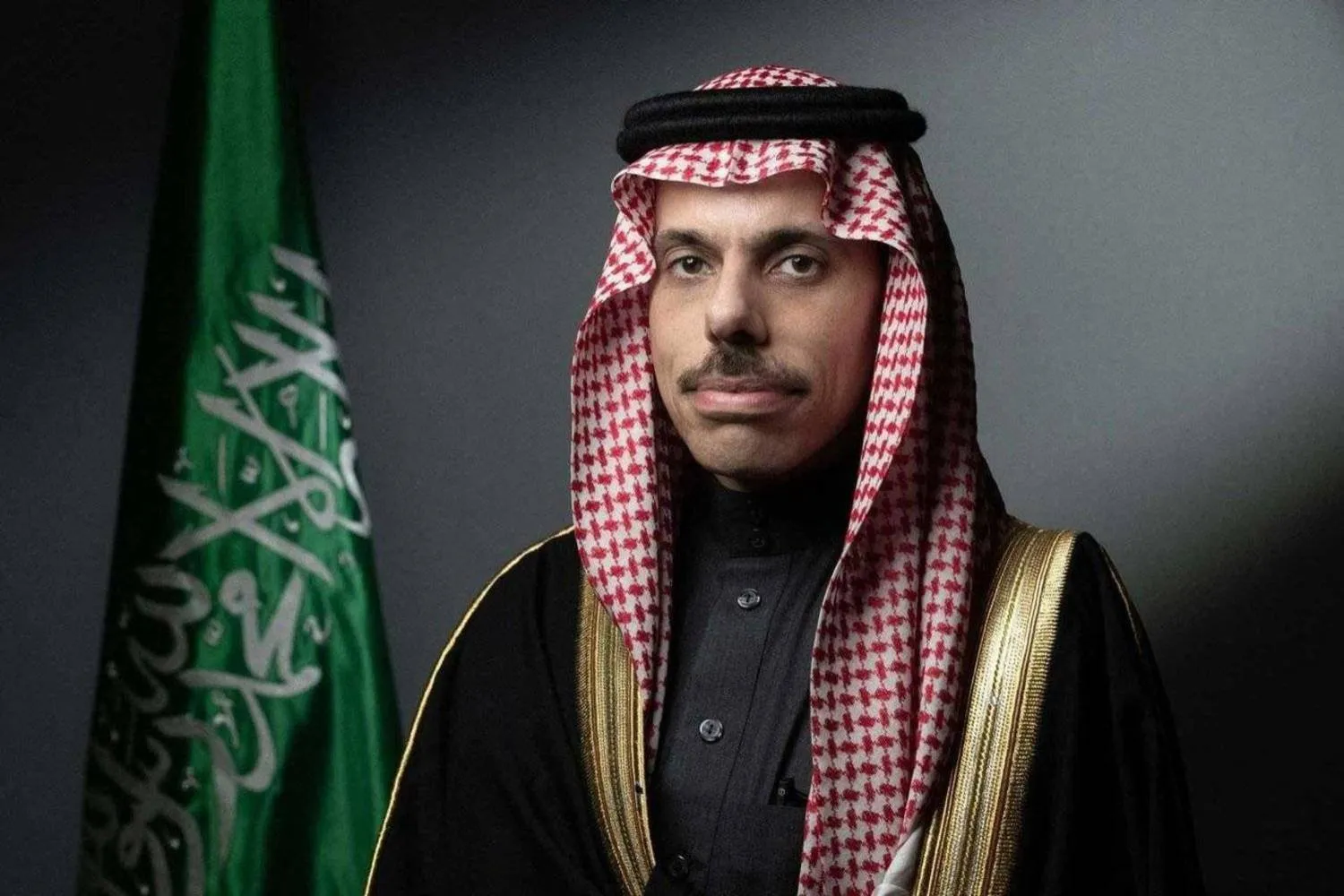

Saudi, Omani FMs Discuss Regional Developments

Saudi Minister of Foreign Affairs Prince Faisal bin Farhan bin Abdullah meets with his Omani counterpart Badr bin Hamad bin Hamood Albusaidi in Riyadh on Wednesday. (SPA)
TT

Saudi, Omani FMs Discuss Regional Developments

Saudi Minister of Foreign Affairs Prince Faisal bin Farhan bin Abdullah meets with his Omani counterpart Badr bin Hamad bin Hamood Albusaidi in Riyadh on Wednesday. (SPA)

Saudi Minister of Foreign Affairs Prince Faisal bin Farhan bin Abdullah received in Riyadh on Wednesday his Omani counterpart Badr bin Hamad bin Hamood Albusaidi.

They reviewed the strong bilateral relations between their countries and ways to boost them across various fields.

They also addressed the latest developments in the region and the importance of continuing efforts to achieve security and stability.


OIC Condemns Israeli Decision to Ban 37 Aid Groups from Operating in Gaza

 The sun sets over a tent camp sheltering Palestinians displaced by the Israeli offensive, on New Year’ Eve in Khan Younis, southern Gaza Strip, December 31, 2025. (Reuters)
The sun sets over a tent camp sheltering Palestinians displaced by the Israeli offensive, on New Year’ Eve in Khan Younis, southern Gaza Strip, December 31, 2025. (Reuters)
TT

OIC Condemns Israeli Decision to Ban 37 Aid Groups from Operating in Gaza

 The sun sets over a tent camp sheltering Palestinians displaced by the Israeli offensive, on New Year’ Eve in Khan Younis, southern Gaza Strip, December 31, 2025. (Reuters)
The sun sets over a tent camp sheltering Palestinians displaced by the Israeli offensive, on New Year’ Eve in Khan Younis, southern Gaza Strip, December 31, 2025. (Reuters)

The General Secretariat of the Organization of Islamic Cooperation (OIC) strongly condemned on Wednesday Israel’s decision to prevent 37 international non-governmental organizations operating in the humanitarian and health sectors from carrying out their activities in Gaza.

The Secretariat stressed that these organizations “play an indispensable role in alleviating humanitarian suffering in Gaza.”

The OIC General Secretariat “warned of the grave consequences of this arbitrary measure, which is likely to dangerously exacerbate the catastrophic humanitarian situation in the Gaza Strip due to Israeli restrictions that hinder the entry of sufficient humanitarian and medical aid.”

It deemed the Israeli decision as “illegal and a “blatant violation of the principles of international humanitarian law and the advisory opinion of the International Court of Justice, which obliges the Israel to facilitate the work of international and humanitarian organizations and to allow the adequate and unhindered delivery of humanitarian assistance to the Gaza Strip.”

The OIC General Secretariat called on the international community “to take the necessary measures and exert effective pressure on Israeli authorities to reverse this decision, ensure the protection of humanitarian workers, and guarantee the freedom of humanitarian organizations to operate without restriction throughout the occupied Palestinian territory.”


Gulf Countries, OIC Say Security of Saudi Arabia and GCC States Integral to Region

A general view of Kuwait City buildings, Kuwait, December 23, 2024. (Reuters)
TT

Gulf Countries, OIC Say Security of Saudi Arabia and GCC States Integral to Region

A general view of Kuwait City buildings, Kuwait, December 23, 2024. (Reuters)

Qatar announced that it is following with great interest the ongoing developments and events in Yemen, reiterating its full support for the legitimate Yemeni government and the importance of preserving Yemen’s unity and territorial integrity, safeguarding the interests of the brotherly Yemeni people, and achieving their aspirations for security, stability, and development.

In a statement, the Qatari Ministry of Foreign Affairs stressed that the security of Saudi Arabia and the Gulf Cooperation Council states is integral to the security of Qatar, stemming from the deep-rooted brotherly ties and shared destiny that unite the GCC countries.

The ministry commended the statements issued by Saudi Arabia and the United Arab Emirates, noting that they reflect a commitment to prioritizing the region’s interests, boosting the principles of good neighborliness, and adhering to the foundations and principles enshrined in the Charter of the Gulf Cooperation Council.

Qatar will remain at the forefront of countries supporting efforts to promote dialogue and diplomacy as the optimal path to achieving prosperity, security, and stability for the region and its peoples, stressed the ministry.

Kuwait's foreign ministry issued a similar statement, saying the security of Saudi Arabia and GCC states is a fundamental pillar of Gulf collective security, rooted in the bonds of brotherhood and shared destiny among them.

It expressed continued support for regional and international efforts aimed at promoting dialogue and peace, emphasizing diplomacy as the most effective path to achieving security, stability, and lasting peace in the region.

Bahrain, chair of the current session of the GCC, praised the “pivotal role played by Saudi Arabia and the United Arab Emirates in supporting the security and stability of Yemen, stemming from their brotherly responsibilities and shared commitment to the security and stability of the Gulf region within the GCC framework.” 

The Bahraini Ministry of Foreign Affairs stressed its “confidence in the wisdom of the leaderships of Saudi Arabia and the UAE, and in their ability to contain any differences within the framework of the GCC, in line with the principles of the GCC based on solidarity, mutual understanding, and unity, serving the shared aspirations to instill security, stability, peace, and prosperity for the benefit of the region and its peoples.” 

The ministry reiterated Bahrain’s “firm and supportive stance toward all regional and international initiatives and efforts aimed at reaching a comprehensive and lasting political solution in Yemen, in accordance with the GCC initiative and its executive mechanism, the outcomes of the Comprehensive National Dialogue Conference, and relevant UN Security Council resolutions.” 

Jordan also praised Saudi Arabia and the UAE's roles in supporting Yemen.

OIC

Secretary-General of the Organization of Islamic Cooperation (OIC) Hissein Brahim Taha underlined the organization’s firm stance in support of Yemen, its sovereignty, unity, and territorial integrity.  

He reiterated the OIC’s categorical rejection of any actions or attempts that would undermine Yemen’s unity or compromise its constitutional legitimacy and national institutions, in light of recent developments in the country. 

He renewed the OIC’s full support for the legitimate Yemeni government, represented by the President of the Presidential Leadership Council. He stressed the importance of preserving and strengthening state institutions in order to realize the Yemeni people’s aspirations for security, stability, and development. 

Taha condemned any actions or practices by the Southern Transitional Council that pose a direct threat to Yemen’s unity, undermine peace efforts, and prolong the conflict.  

“Any disruption to Yemen’s security and stability also threatens peace and security across the region,” he warned. 

He welcomed the announcement of the UAE’s withdrawal of forces from Yemen, describing it as a “constructive step that supports de-escalation efforts and spares the blood of the Yemeni people.” 

He further stressed that the security, sovereignty and territorial integrity of Saudi Arabia “constitute inviolable red lines.” 

“Any threat to the Kingdom’s security is a direct threat to the security of the entire region and the Islamic world,” Taha added, underscoring the OIC’s “full solidarity with Saudi Arabia in all measures taken to safeguard its national security.” 

He stressed “the need to continue supporting political and diplomatic efforts aimed at reaching a comprehensive and lasting solution to the Yemeni crisis.” 

He called on all Yemeni parties “to uphold legitimacy, renounce violence, and prioritize dialogue and the higher interests of Yemen and its people, in order to achieve security, stability, and development while preserving the country’s unity, sovereignty, and territorial integrity.”