


Conference in Kuwait Warns of Growing Influence of Extremist Groups in Conflict Zones

The High-Level International Conference on “Strengthening International Counter-Terrorism Cooperation and Building Agile Border Security Mechanisms – The Kuwait Phase of the Dushanbe Process” kicked off in Kuwait on Monday. (KUNA)
TT

Conference in Kuwait Warns of Growing Influence of Extremist Groups in Conflict Zones

The High-Level International Conference on “Strengthening International Counter-Terrorism Cooperation and Building Agile Border Security Mechanisms – The Kuwait Phase of the Dushanbe Process” kicked off in Kuwait on Monday. (KUNA)

Kuwait reiterated its commitment to working with the international community to tackle the growing threat of terrorism, highlighting the importance of strengthening global cooperation in this fight.

Meanwhile, the UN’s Counter-Terrorism Representative warned that the number of deaths from terrorist attacks is on the rise, with the latest Global Terrorism Index showing a 22% increase in fatalities in 2023.

Vladimir Voronkov, Under-Secretary-General of the UN Office of Counter-Terrorism, cautioned that conflict zones could become breeding grounds for terrorist groups like ISIS and al-Qaeda.

He spoke at the High-Level International Conference on “Strengthening International Counter-Terrorism Cooperation and Building Agile Border Security Mechanisms – The Kuwait Phase of the Dushanbe Process” that began in Kuwait on Monday.

Kuwaiti Crown Prince Sheikh Sabah Al-Khalid Al Sabah said: “We expect this phase of the Dushanbe Process to strengthen international efforts aimed at creating a secure and stable future for all.”

“Terrorism knows no borders and does not distinguish between countries or religions,” he noted.

The conference will conclude its work Tuesday, with the adoption of the “Kuwait Declaration” which will reflect the discussions and opinions of the participants and will serve as a guiding document for efforts to combat terrorism.

The Crown Prince urged collective action against terrorism and emphasized the need for unity in facing this challenge. He stressed that terrorism and violent extremism are not linked to any religion, culture, or ethnic group.

He also highlighted the critical role of the UN’s Counter-Terrorism Program and the UN Counter-Terrorism Center in boosting border security, providing member states with the necessary expertise to develop comprehensive strategies that integrate counter-terrorism measures.

This approach is vital for effectively addressing emerging threats at borders.

At the conference's opening session, Voronkov stressed that international cooperation in fighting terrorism should guide all parties toward effective coordination and collaboration to secure their countries and prevent terrorist movements across borders.

Voronkov pointed out that the global security situation is changing, with terrorists exploiting border vulnerabilities. Recent reports show that more than 40% of violent incidents and 10% of deaths from political violence occur within 100 kilometers of land borders.

He specifically noted the growing terrorist presence in coastal West African countries like Benin, Côte d'Ivoire, Ghana, and Togo, mentioning that violent incidents in border areas have surged by 250% over the past two years.

He also highlighted that the latest Global Terrorism Index indicates a 22% rise in global terrorism-related deaths in 2023, reaching 8,352—the highest number since 2017.

Voronkov cautioned that the travel routes used by groups like ISIS and al-Qaeda pose significant risks, especially in conflict-affected regions like the Sahel, where they can recruit and move individuals across poorly secured borders.
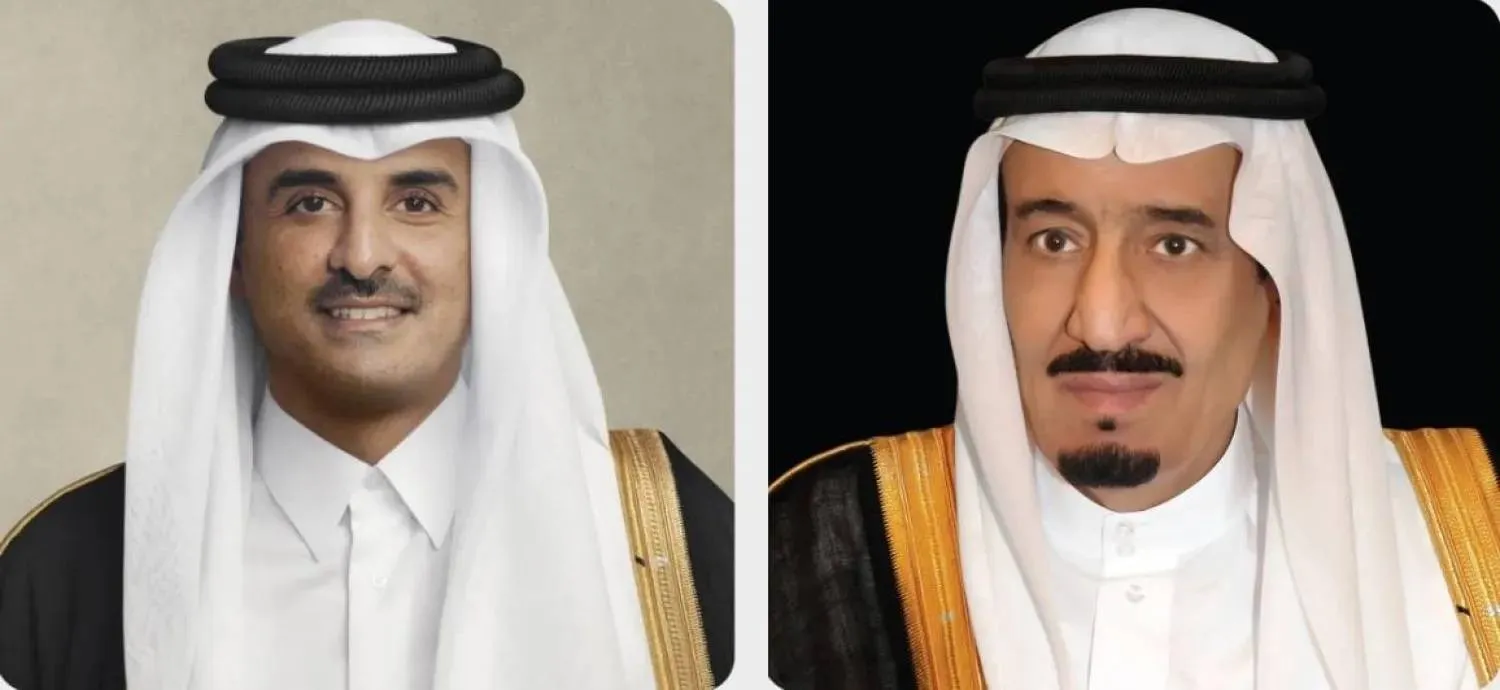
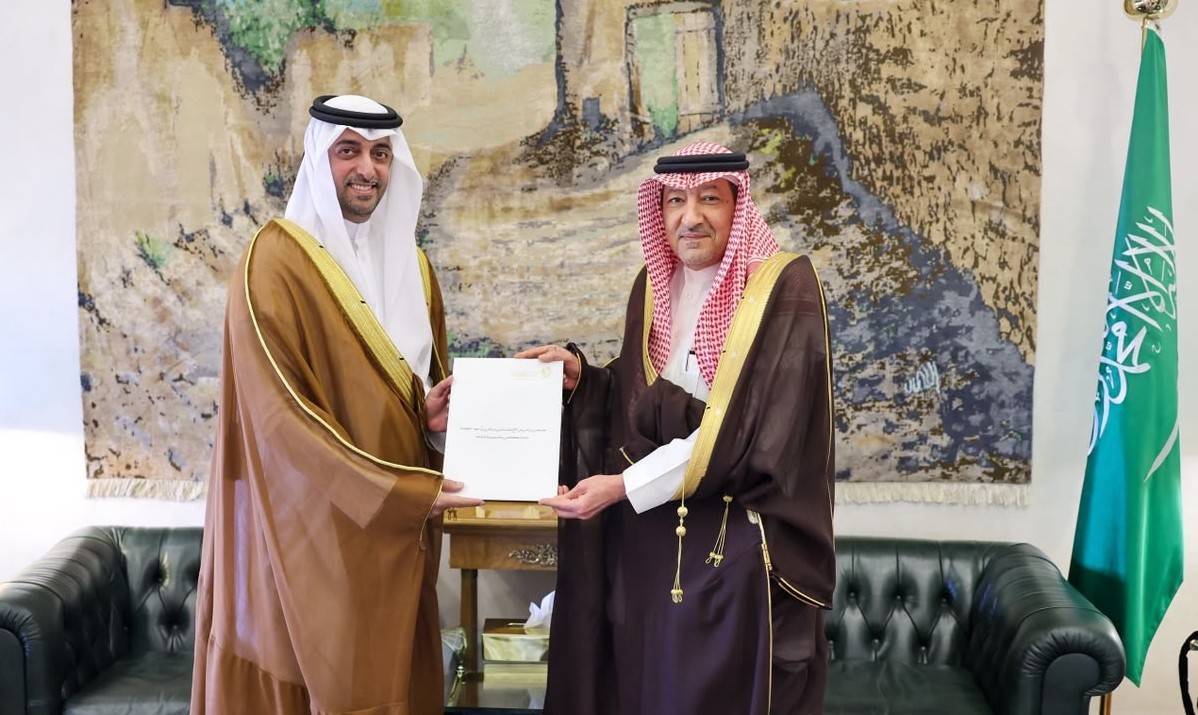

Qatari Prime Minister Arrives in Riyadh

Qatar’s Prime Minister and Minister of Foreign Affairs Sheikh Mohammed bin Abdulrahman bin Jassim Al Thani is welcomed upon his arrival in Riyadh. (SPA)
TT

Qatari Prime Minister Arrives in Riyadh

Qatar’s Prime Minister and Minister of Foreign Affairs Sheikh Mohammed bin Abdulrahman bin Jassim Al Thani is welcomed upon his arrival in Riyadh. (SPA)

Qatar’s Prime Minister and Minister of Foreign Affairs Sheikh Mohammed bin Abdulrahman bin Jassim Al Thani arrived in Riyadh on Wednesday.

He was received by Vice Minister of Foreign Affairs Waleed Elkhereiji at King Khalid International Airport.


UAE Halts All Trade, Financial Dealings with Iran after Attack

Tuesday's announcement is the latest measure against Iran by the UAE after it recalled its ambassador early in the conflict. (Asharq Al-Awsat)
TT

UAE Halts All Trade, Financial Dealings with Iran after Attack

Tuesday's announcement is the latest measure against Iran by the UAE after it recalled its ambassador early in the conflict. (Asharq Al-Awsat)

The United Arab Emirates has said it is suspending all trade and financial dealings with Iran after reporting an Iranian missile attack directed at its ships.

The announcement comes after a period of relative calm in the UAE, with no Iranian missiles aimed at the country since May after it bore the brunt of attacks in the early weeks of the Middle East war.

Abu Dhabi has however accused Tehran of repeatedly targeting its tankers at sea in recent weeks.

"In light of regional escalations... all trade, commercial exchanges, and financial transactions with Iran have been halted until further notice," said UAE foreign ministry communications director Afra Al Hameli.

The UAE is home to a sizeable Iranian community and has been a major trading partner for US-sanctioned Iran, at least before the war.

Tuesday's announcement is the latest measure against Iran by the UAE after it recalled its ambassador early in the conflict.

- Navigation -

Abu Dhabi on Tuesday accused Iran of firing two ballistic missiles towards the country, the first such attack since May.

It later said the salvo was directed at shipping, but Tehran denied firing missiles at the UAE.

"UAE air defenses detected two ballistic missiles launched from Iran towards the country, with the first falling outside the country's territorial waters, while the second fell within the territorial waters," the UAE ministry said in a statement posted to social media.

A second statement released later said the missiles "were targeting maritime navigation and fell into the sea".

Iranian foreign ministry spokesman Esmaeil Baqaei "categorically rejected the United Arab Emirates' claim that Iran had launched a missile towards that country", calling it harmful to regional trust and security efforts.

The first UAE statement came nearly two hours after a phone alert that warned residents of a "potential missile threat".

It was the first such alert since a false alarm in June and an alert in July for an attack that ultimately did not enter UAE territory.

Before that, the last missile warning came in early May.

However, tankers belonging to the UAE's state-owned oil company ADNOC have been repeatedly targeted in the past few weeks.

When the Middle East war began on February 28, the UAE bore the brunt of Iran's attacks, with nearly 3,000 missiles and drones directed at the country -- more than anywhere else in the region.

After a memorandum of understanding between Iran and the United States came into effect in June, which has since collapsed, the UAE reported no attacks, unlike other Gulf states.


MWL, GCC Condemn Israeli Airstrikes on Syria’s Abu al-Duhur Military Airbase

A man rides a motorbike in the town of Abu al-Duhur, Syria, August 18, 2026. (Reuters)
TT

MWL, GCC Condemn Israeli Airstrikes on Syria’s Abu al-Duhur Military Airbase

A man rides a motorbike in the town of Abu al-Duhur, Syria, August 18, 2026. (Reuters)

The Muslim World League (MWL) strongly condemned on Tuesday the Israeli airstrikes targeting Syria’s Abu al-Duhur Military Airbase, saying they are a violation of all international laws and norms.

In a statement, MWL Secretary-General and Chairman of the Organization of Muslim Scholars Sheikh Dr. Mohammed bin Abdulkarim Al-Issa slammed “the aggression against the sovereignty and resources of Syria”, reiterating the league's “full solidarity” with the country in confronting threats to its security, sovereignty and people.

Secretary-General of the Gulf Cooperation Council (GCC) Jasem Albudaiwi also strongly condemned the attack.

“The brutal Israeli targeting of Syrian territory is an unacceptable violation of its sovereignty and territorial sanctity, contradicting international rules and norms that prohibit infringing upon state sovereignty,” he said.

Such continued practices raise tension and escalation and undermine regional and international efforts aimed at achieving security and stability in the region, he warned.

Albudaiwi called on the international community to assume its responsibilities, take a firm stance against these violations, and work to halt Israeli attacks on Syrian territory to safeguard its security and stability.

He reiterated the GCC states' solidarity with Syria, and support for its sovereignty and territorial integrity.
