


Meta Will Face Antitrust Trial over Instagram, WhatsApp Acquisitions

Morning commute traffic streams past the Meta sign outside the headquarters of Facebook parent company Meta Platforms Inc in Mountain View, California, US, November 9, 2022. (Reuters)
TT

Meta Will Face Antitrust Trial over Instagram, WhatsApp Acquisitions

Morning commute traffic streams past the Meta sign outside the headquarters of Facebook parent company Meta Platforms Inc in Mountain View, California, US, November 9, 2022. (Reuters)

Facebook owner Meta Platforms must face trial in a US Federal Trade Commission lawsuit seeking its break-up over claims that it bought Instagram and WhatsApp to crush emerging competition in social media, a judge in Washington ruled on Wednesday.

Judge James Boasberg largely denied Meta's motion to end the case filed against Facebook in 2020, during the Trump administration, alleging that the company acted illegally to maintain its social network monopoly.

Meta, then known as Facebook, overpaid for Instagram in 2012 and WhatsApp in 2014 to eliminate nascent threats instead of competing on its own in the mobile ecosystem, the FTC claims.

Boasberg let that claim stand, but dismissed the FTC's allegation that Facebook bolstered its dominance by restricting third-party app developers' access to the platform unless they agreed not to compete with its core services.

"We are confident that the evidence at trial will show that the acquisitions of Instagram and WhatsApp have been good for competition and consumers," a Meta spokesperson said on Wednesday.

FTC spokesperson Douglas Farrar said that the case filed during the Trump administration and refined under Biden "represents a bipartisan effort to curtail Meta’s monopoly power and restore competition to ensure freedom and innovation in the social media ecosystem."

At trial, Meta will not be allowed to argue the WhatsApp acquisition boosted competition by strengthening its position against Apple and Google, Boasberg ruled.

The judge said he would release a detailed order later on Wednesday after the FTC and Meta have had a chance to redact any sensitive commercial information.

A trial date in the case has not been set.

Meta had urged the judge to dismiss the entire case, saying it depended on an overly narrow view of social media markets, and did not take into account competition from ByteDance's TikTok, Google's YouTube, X, and Microsoft's LinkedIn.

The case is one of five blockbuster lawsuits where antitrust regulators at the FTC and US Department of Justice are going after Big Tech.

Amazon.com Inc and Apple are both being sued, and Alphabet's Google is facing two lawsuits, including one where a judge recently found it unlawfully thwarted competition among online search engines.



Russia Confirms Ban on WhatsApp, Says No Plans to Block Google

Men pose with smartphones in front of displayed Whatsapp logo in this illustration September 14, 2017. REUTERS/Dado Ruvic/File Photo
TT

Russia Confirms Ban on WhatsApp, Says No Plans to Block Google

Men pose with smartphones in front of displayed Whatsapp logo in this illustration September 14, 2017. REUTERS/Dado Ruvic/File Photo

Russia has blocked the popular messaging service WhatsApp over its failure to comply with local legislation, the Kremlin said Thursday, urging its 100 million Russian users to switch to a domestic alternative.

Moscow has for months been trying to shift Russian users onto Max, a domestic messaging service that lacks end-to-end encryption and that activists have called a potential tool for surveillance.

"As for the blocking of WhatsApp ... such a decision was indeed made and implemented," Kremlin spokesman Dmitry Peskov told reporters.

Peskov said the decision was due to WhatsApp's "reluctance to comply with the norms and letter of Russian law".

"Max is an accessible alternative, a developing messenger, a national messenger. And it is an alternative available on the market for citizens," he said.

Anton Gorelkin, a member of the Russian parliament and vice chair of its IT committee, said on Thursday that there were no plans to block Google in Russia.

WhatsApp, owned by US social media giant Meta, said Wednesday that it believed Russia was attempting to fully block the service in a bid to force users onto Max.

"We continue to do everything we can to keep users connected," it said.


Samsung Starts Mass Production of Next-gen AI Memory Chip

A man walks past the logo of Samsung Electronics displayed on a glass door at the company's Seocho building in Seoul on January 29, 2026. (Photo by Jung Yeon-je / AFP)
TT

Samsung Starts Mass Production of Next-gen AI Memory Chip

A man walks past the logo of Samsung Electronics displayed on a glass door at the company's Seocho building in Seoul on January 29, 2026. (Photo by Jung Yeon-je / AFP)

Samsung Electronics has started mass production of a next-generation memory chip to power artificial intelligence, the South Korean firm announced Thursday, touting an "industry-leading" breakthrough.

The high-bandwidth "HBM4" chips are a key component for AI data centers, with US tech giant Nvidia -- now the world's most valuable company -- widely expected to be one of Samsung's main customers.

Samsung said it had "begun mass production of its industry-leading HBM4 and has shipped commercial products to customers".

"This achievement marks a first in the industry, securing an early leadership position in the HBM4 market," AFP quoted it as saying in a statement.

A global frenzy to build AI data centers has sent orders for advanced, high-bandwidth memory microchips soaring.

South Korea's two chip giants, SK hynix and Samsung, have been racing to start HBM4 production.

Taipei-based research firm TrendForce predicts that memory chip industry revenue will surge to a global peak of more than $840 billion in 2027.

The South Korean government has pledged to become one of the world's top three AI powers, alongside the United States and China.

Samsung and SK hynix are among the leading producers of high-performance memory chips.


Siemens Energy Trebles Profit as AI Boosts Power Demand

FILED - 05 August 2025, Berlin: The "Siemens Energy" logo can be seen in the entrance area of the company. Photo: Britta Pedersen/dpa
TT

Siemens Energy Trebles Profit as AI Boosts Power Demand

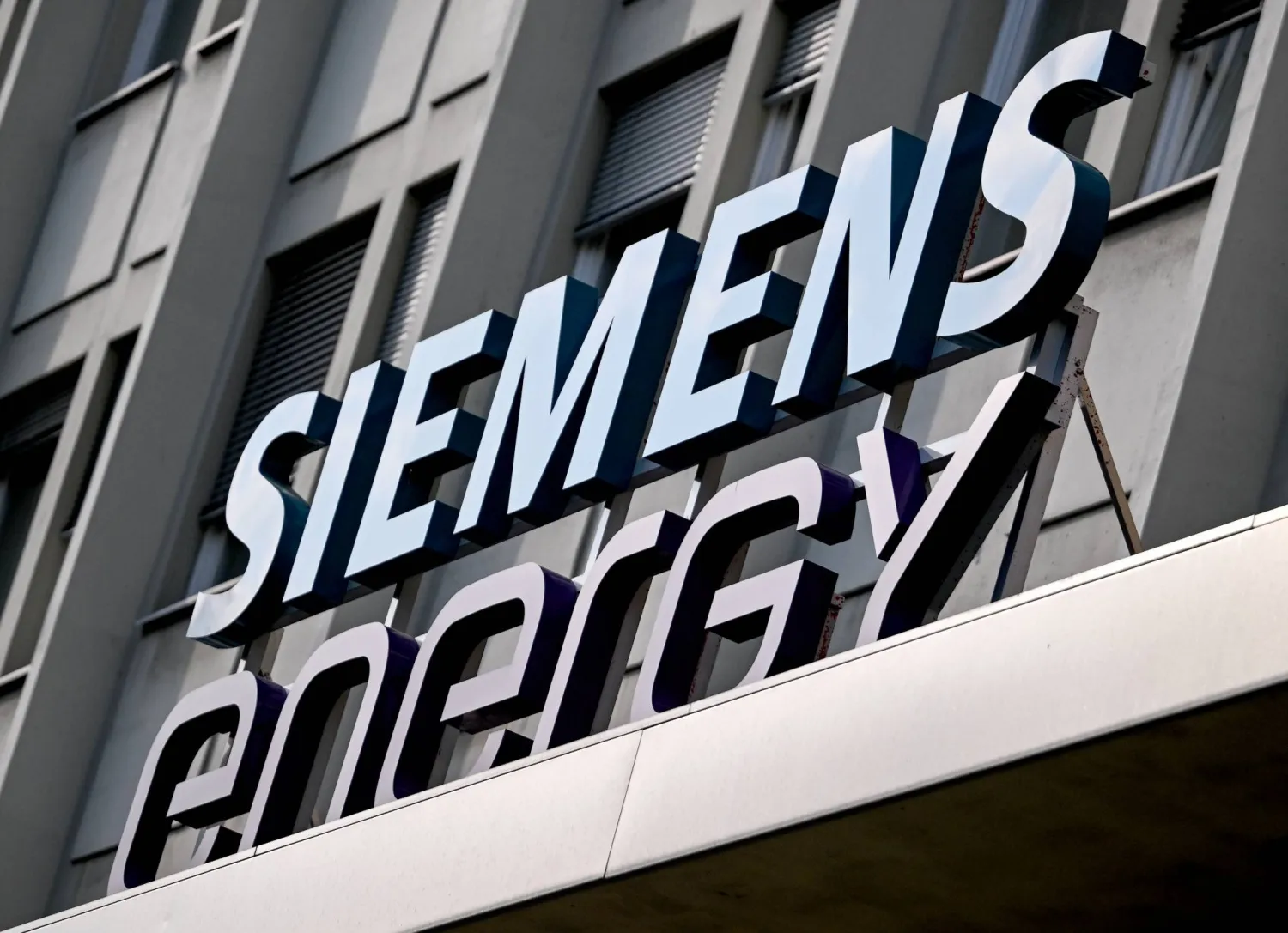
FILED - 05 August 2025, Berlin: The "Siemens Energy" logo can be seen in the entrance area of the company. Photo: Britta Pedersen/dpa

German turbine maker Siemens Energy said Wednesday that its quarterly profits had almost tripled as the firm gains from surging demand for electricity driven by the artificial intelligence boom.

The company's gas turbines are used to generate electricity for data centers that provide computing power for AI, and have been in hot demand as US tech giants like OpenAI and Meta rapidly build more of the sites.

Net profit in the group's fiscal first quarter, to end-December, climbed to 746 million euros ($889 million) from 252 million euros a year earlier.

Orders -- an indicator of future sales -- increased by a third to 17.6 billion euros.

The company's shares rose over five percent in Frankfurt trading, putting the stock up about a quarter since the start of the year and making it the best performer to date in Germany's blue-chip DAX index.

"Siemens Energy ticked all of the major boxes that investors were looking for with these results," Morgan Stanley analysts wrote in a note, adding that the company's gas turbine orders were "exceptionally strong".

US data center electricity consumption is projected to more than triple by 2035, according to the International Energy Agency, and already accounts for six to eight percent of US electricity use.

Asked about rising orders on an earnings call, Siemens Energy CEO Christian Bruch said he thought the first-quarter figures were not "particularly strong" and that further growth could be expected.

"Demand for gas turbines is extremely high," he said. "We're talking about 2029 and 2030 for delivery dates."

Siemens Energy, spun out of the broader Siemens group in 2020, said last week that it would spend $1 billion expanding its US operations, including a new equipment plant in Mississippi as part of wider plans that would create 1,500 jobs.

Its shares have increased over tenfold since 2023, when the German government had to provide the firm with credit guarantees after quality problems at its wind-turbine unit.