Saudi Ministry of Culture Celebrates Yemeni Orchestra in Riyadh

The International Alliance for the Protection of Heritage in Conflict Areas (ALIPH) further enhanced the evening with a photographic exhibition showcasing its efforts to preserve heritage. - SPA
TT

Saudi Ministry of Culture Celebrates Yemeni Orchestra in Riyadh

The International Alliance for the Protection of Heritage in Conflict Areas (ALIPH) further enhanced the evening with a photographic exhibition showcasing its efforts to preserve heritage. - SPA

The Saudi Ministry of Culture, in collaboration with the Yemeni Ministry of Information, Culture and Tourism, hosted a cultural celebration of the Yemeni Orchestra at the King Fahad Cultural Centre in Riyadh. The event was attended by Assistant Minister of Culture Rakan Altouq and Yemen's Minister of Information, Culture and Tourism Moammar Al-Eryani.
According to a press release issued by the Culture Ministry, the event showcased the Yemeni musical and cultural heritage, blending traditional melodies with contemporary compositions. Famous Yemeni artists delivered captivating performances that highlighted the abundant musical traditions of Aden, Sana'a and Hadhramaut, alongside Saudi musicians, revealing the two nations' shared cultural legacies, SPA reported.
According to the release, the orchestra, conducted by known Yemeni composer Mohamed Al-Ghoom, performed in two 45-minute sets. Captivating audiences, the first segment opened with the lively rhythms of Mizmar Al-Habish, followed by beloved songs such as Nabdh Al-Madhy and Ma Alina. The second segment began with Amwaj Alliqa, transitioning seamlessly to songs that trailed including the Yemeni Medley and Ghaddar Allayl. The celebration concluded with a medley of Saudi songs, comprising classics such as Watani AlHabeeb and Anta Malek. The show ended with a heartfelt rendition of Yemen's national anthem, Watan.
In addition to the musical performance, the event featured activities organized by the Music Commission, one of 11 sector-specific commissions under the Ministry of Culture.
Attendees visited exhibitions where traditional musical instruments such as the oud, qanun and simsimiyya were on display.
The commission also participated with the Saudi Music Memory initiative, which documents and preserves the Kingdom's musical history up to the mid-1980s and the Saudi Trouq initiative, with musical performances blending traditional instruments from Saudi Arabia and Yemen.
The International Alliance for the Protection of Heritage in Conflict Areas (ALIPH) further enhanced the evening with a photographic exhibition showcasing its efforts to preserve heritage.
The celebration underscores the Kingdom's commitment to fostering cultural exchange and collaboration. By highlighting the abundant heritage of the two nations, the event further strengthened cultural ties and offered a unique musical experience that celebrated their shared heritage and bond.



Heritage Commission Revives Al-Nasb Heritage District as Abha Cultural Tourism Destination

The district’s significance lies in its unique architectural composition - SPA
TT

Heritage Commission Revives Al-Nasb Heritage District as Abha Cultural Tourism Destination

The district’s significance lies in its unique architectural composition - SPA

Al-Nasb Heritage District in Abha is one of the most prominent living examples of traditional architecture in Aseer Region, preserving its long history and architectural details that embody people’s connection to their local environment and document the social and cultural patterns that have shaped the identity of the place across generations.

The district’s significance lies in its unique architectural composition, where mud and stone buildings stand side by side in visual harmony. They were built using local materials such as stone, clay, and juniper trunks, while the narrow alleyways and closely set buildings give the district a cohesive social character that reflects the spirit of past communities in the region and the close relationship between people and place.

The Heritage Commission has revived the district through an integrated restoration and rehabilitation project aimed at preserving its original elements and enhancing its sustainability, as part of national efforts to protect urban heritage and highlight it as a cultural and tourism asset, SPA reported.

The site is also distinguished by its natural setting, as the district overlooks the banks of Abha Valley and surrounding farms, giving it a distinctive visual and aesthetic dimension. Its narrow passageways and closely set buildings illustrate a traditional urban pattern that strengthens ties among residents and captures the nature of social life in that era.

The district is now a growing destination for culture and tourism in Abha, attracting visitors and heritage enthusiasts who come to explore the details of authentic architecture and learn about the traditional ways of life that have shaped Aseer Region’s identity across generations. The project helps raise awareness of the importance of preserving archaeological sites as a key pillar in forming national memory.

The project is part of the Kingdom’s efforts to protect and effectively manage cultural heritage, in line with the targets of Saudi Vision 2030, which gives special attention to the cultural sector. It seeks to turn heritage sites into vibrant spaces that support cultural tourism and sustainable development while reconnecting society with its historical roots.


Saudi Heritage Commission Enforces Strict Penalties Against Antiquities Violators

The fines varied according to the nature and circumstances of each violation
TT

Saudi Heritage Commission Enforces Strict Penalties Against Antiquities Violators

The fines varied according to the nature and circumstances of each violation

The Saudi Heritage Commission announced financial fines against 11 violators for dealing in portable antiquities without obtaining the required regulatory licenses, as part of its ongoing efforts to protect cultural heritage in the Kingdom and enhance compliance with regulations governing the sector.

The commission clarified that the violations involved displaying and selling antiquities on online platforms without registering or documenting them with the Heritage Commission or obtaining the necessary licenses, in explicit violation of the provisions of the Law of Antiquities, Museums and Urban Heritage.

The fines varied according to the nature and circumstances of each violation, reaching up to SAR15,000 in some cases.

The commission reaffirmed its commitment to monitoring violations related to heritage sites and collections across the Kingdom and taking the necessary legal and regulatory actions against all those proven to have contravened the regulations.

The Heritage Commission called on all citizens and residents to report any violations or non-compliant practices related to heritage sites or collections through its social media channels, by visiting its branches across the Kingdom, through the Archaeological Site Reporting platform, or by contacting the unified security operations center at 911.


Holy Quran Museum Showcases Rare 18th-Century Brass-Engraved Copy of the Quran

Among the museum’s distinctive exhibits is a copy of the Quran engraved on brass plates dating back to the 12th century AH - SPA
TT

Holy Quran Museum Showcases Rare 18th-Century Brass-Engraved Copy of the Quran

Among the museum’s distinctive exhibits is a copy of the Quran engraved on brass plates dating back to the 12th century AH - SPA

The Holy Quran Museum in the Hira Cultural District in Makkah offers a rich cultural and knowledge experience, enabling visitors to explore the history of the Holy Quran and its sciences, and view rare manuscripts and artifacts documenting the journey of its transcription through the ages, reflecting the care Muslims have given to the Holy Quran since the dawn of Islam to the present day, SPA reported.

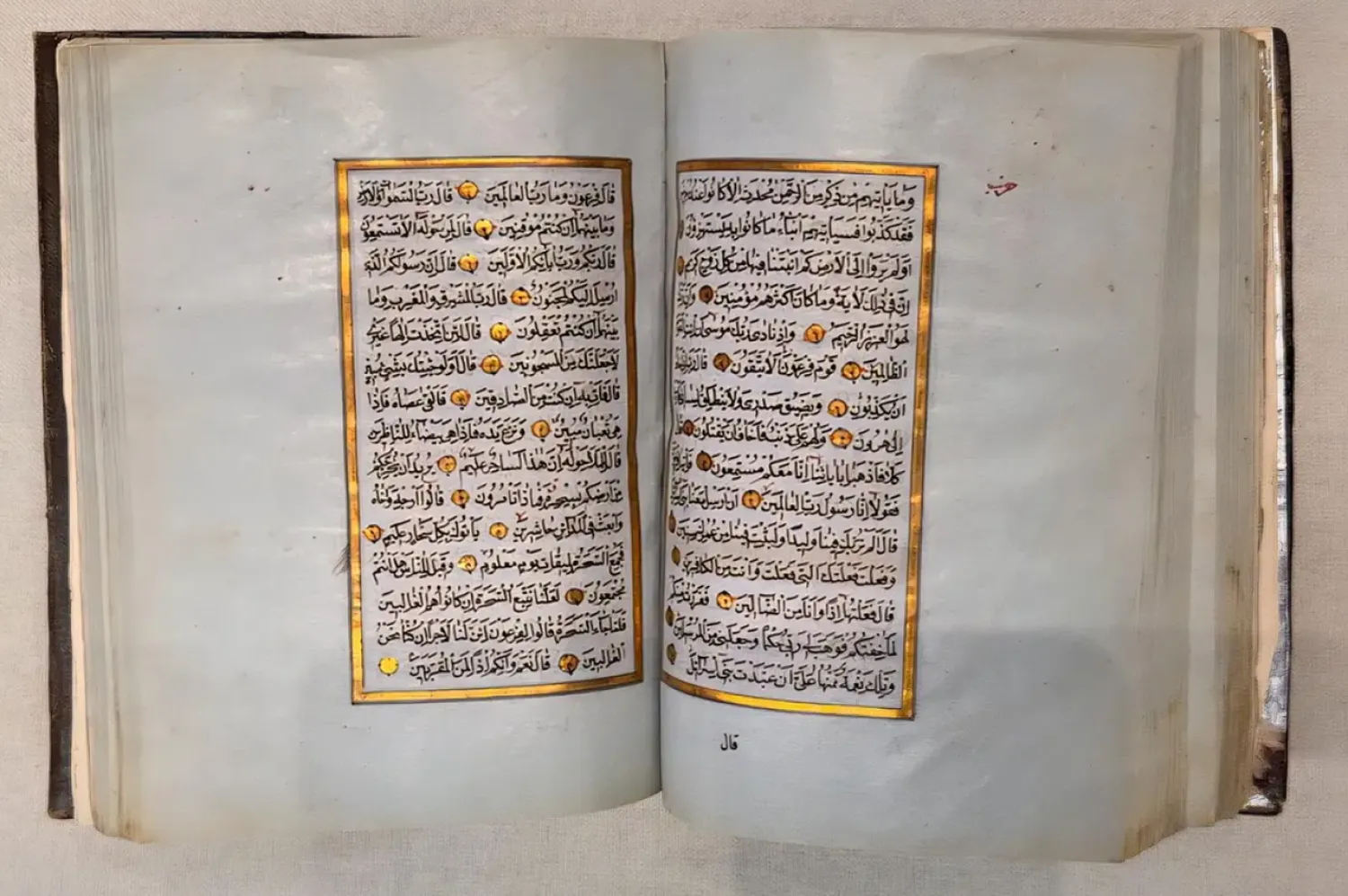
Among the museum’s distinctive exhibits is a copy of the Quran engraved on brass plates dating back to the 12th century AH (18th century CE), showcasing the precision and mastery achieved in Islamic arts and the special attention given to Quranic transcription, combining beauty and scholarly accuracy.

This artwork embodies a continuation of deep-rooted traditions in Islamic calligraphy and decorative arts, utilizing various materials and techniques from parchment and paper to metals, highlighting Muslims’ profound connection to the Holy Quran and their commitment to preserving it in artistic forms that combine creativity and reverence.