


UK Economy in October Suffers 1st Back-to-back Declines Since 2020

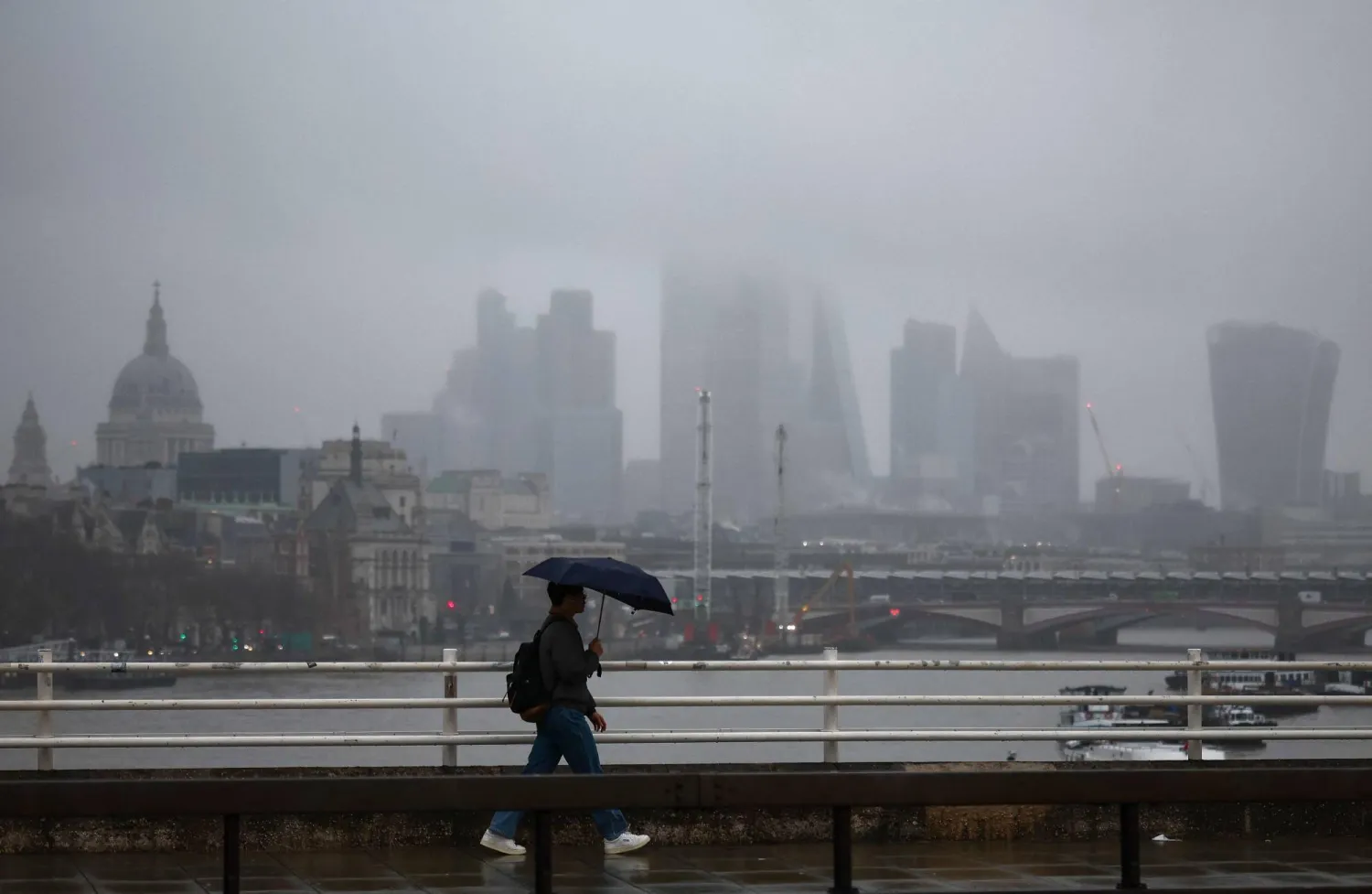
A pedestrian walks across Waterloo Bridge in the drizzle with the buildings of the City of London financial district behind, in London on December 13, 2024. (Photo by HENRY NICHOLLS / AFP)
TT

UK Economy in October Suffers 1st Back-to-back Declines Since 2020

A pedestrian walks across Waterloo Bridge in the drizzle with the buildings of the City of London financial district behind, in London on December 13, 2024. (Photo by HENRY NICHOLLS / AFP)

Britain's economy shrank for a second month in a row in October in the run-up to the government's first budget, the first back-to-back falls in output since the onset of the COVID-19 pandemic and a setback for new finance minister Rachel Reeves.

Gross domestic product contracted by 0.1% month-on-month in October, as it did in September, Reuters quoted the Office for National Statistics as saying.
It was the first consecutive drop in monthly GDP - which is volatile and prone to revision - since March and April 2020, when Britain enforced its first coronavirus lockdown.
Economists polled by Reuters had forecast a monthly expansion of 0.1%.
The ONS said there was "mixed" anecdotal evidence from companies that turnover had been affected by companies waiting for the budget statement, which imposed large tax rises on businesses. Others brought forward activity.
The services sector flatlined, while output in the manufacturing and construction industries declined in October's data, which measured the economy in the weeks before Reeves' budget statement on Oct. 30.
Reeves and Prime Minister Keir Starmer - who made stronger economic growth the centrepiece of the Labour Party's election campaign this year - had warned that the budget would include painful tax increases.
Friday's data adds to a run of worse-than-expected figures for Britain's economy, with business surveys and retail sales readings also falling flat.
"While the figures this month are disappointing, we have put in place policies to deliver long-term economic growth," Reeves said in a statement.
Most forecasters think the budget's boost to public investment and spending will yield faster economic growth in 2025, although business groups say employers will struggle with higher social security contributions.
Confidence among consumers rose modestly in December, in a survey published on Friday, offering Reeves a crumb of comfort after a torrent of glum business surveys.
The S&P Global PMI report showed the first contraction in private sector activity in November in over a year.
Sterling fell by more than a third of a cent against the US dollar after the GDP data before recovering partially. Investors continued to price in around three quarter-point cuts in Bank of England interest rates by the end of next year.
Paul Dales, chief UK economist at consultancy Capital Economics, said the BoE was unlikely to be sufficiently worried about the GDP data to cut rates at its meeting on Thursday.
"That said, we're not as confident about that as we were before this data release," he added.
Last month, the BoE trimmed its annual growth forecast for 2024 to 1% from 1.25% but predicted a stronger 2025 with 1.5% growth, reflecting a short-term boost to the economy from Reeves' budget.
Britain's economic output has grown slowly since the pandemic. Only Germany, which was also hit hard by surging energy costs after Russia's invasion of Ukraine, has done noticeably worse among the largest advanced economies.
Separate ONS trade data showed imports and exports of goods fell in October. Exports to the European Union were higher than exports to the rest of the world for the first time in nearly a year.


Georgieva: Venezuela Likely to Get IMF Loan Support after Necessary Groundwork

International Monetary Fund (IMF) Managing Director Kristalina Georgieva speaks at a news conference following the International Monetary and Financial Committee (IMFC) meeting during the World Bank and IMF spring meetings at IMF headquarters in Washington, Friday, April 17, 2026. (AP Photo/Jose Luis Magana)
TT

Georgieva: Venezuela Likely to Get IMF Loan Support after Necessary Groundwork

International Monetary Fund (IMF) Managing Director Kristalina Georgieva speaks at a news conference following the International Monetary and Financial Committee (IMFC) meeting during the World Bank and IMF spring meetings at IMF headquarters in Washington, Friday, April 17, 2026. (AP Photo/Jose Luis Magana)

The International Monetary Fund will likely provide Venezuela with a financial support program as part of its re-engagement with the South American oil exporter provided that certain conditions can be met, IMF Managing Director Kristalina Georgieva said on Friday.

Georgieva told a press conference in Washington that Venezuela faces "a very tough road" to restore macroeconomic and financial stability.

The IMF and World Bank announced their re-engagement with Venezuela on Thursday night after no dealings since March 2019 and no full economic assessment since 2004.

"After a seven-year-long pause, we are committed to actively engaging with Venezuela, to do our part to help the ⁠country achieve macroeconomic and ⁠financial stability, to help the people of Venezuela to see better days," Georgieva said.

But getting to a loan program will take a lot of effort on the part of both Venezuela and the IMF, she said, adding: "It is not going to be an easy process."

IMF Western Hemisphere director Nigel Chalk told a separate briefing that an IMF mission team for Venezuela has been formed and is engaging on a virtual basis with the government ⁠of acting President Delcy Rodriguez, who assumed power after the US ouster of former president Nicolas Maduro in January.

Georgieva said first on the IMF's list of priorities to prepare for a Venezuela program is sorting the country's data adequacy, which she said "falls very short and you can't make good decisions if you don't have good data."

The global crisis lender has reached out to the country's finance ministry, central bank and statistical agency, Reuters quoted Georgieva as saying.

Adequate data would shed light on a complex web of debt, estimated at over $150 billion that will need restructuring before any loan program can proceed. The IMF's loan approval process requires a detailed debt analysis to ensure that borrower countries' debts are sustainable.

Rodriguez, speaking on state television ⁠later in the ⁠day, said that Venezuela was "now part of the international statistical, economic, and financial system, which will allow us to share relevant information to strengthen our economy."

She added that sharing information would help strengthen the South American nation's economy, rebuild international reserves and better balance macroeconomic indicators.

The IMF also wants to work on capacity-building to strengthen Venezuela's economic institutions, Georgieva said, adding that authorities are engaging constructively and demonstrating "good faith."

Georgieva said the IMF is working closely with the World Bank and the Inter-American Development Bank to provide coordinated support for Venezuela that increases its impact.

News of the IMF's re-engagement with Venezuela sent prices of Venezuela's sovereign bonds and those of its state-owned oil company higher on Friday.

Venezuela's 2027 note rose 2 cents to 53.5 cents on the dollar, the highest price since 2017, while PDVSA's 2021 note added 2.7 cents to 46.75 cents.


Oil Falls by 13% After Iran Declares Strait of Hormuz Open

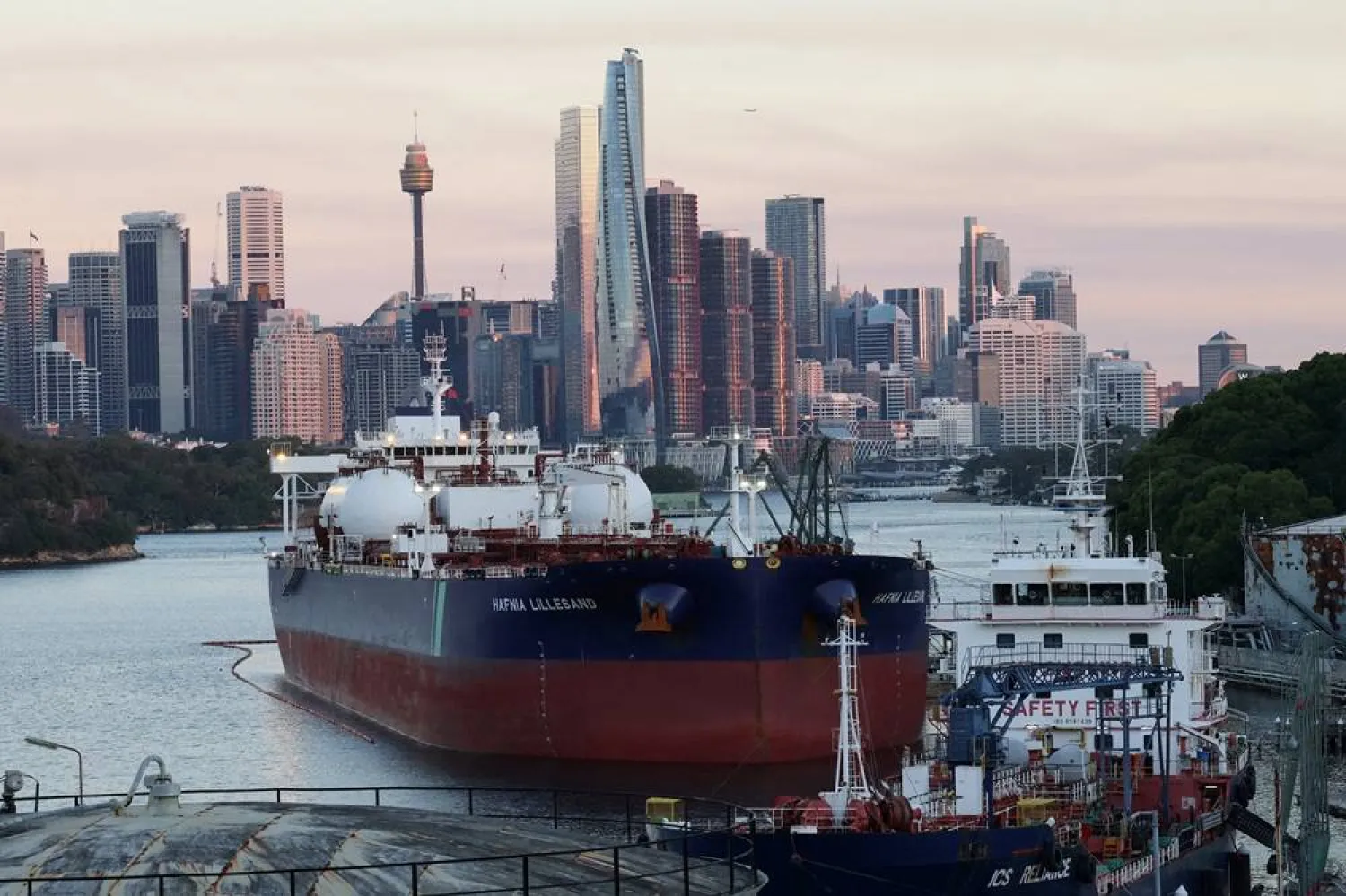
Hafnia Lillesand, a crude oil and product tanker, sits at Viva Energy Australia's Gore Bay fuel terminal overlooking the city skyline in Sydney, Australia April 14, 2026. (Reuters)
TT

Oil Falls by 13% After Iran Declares Strait of Hormuz Open

Hafnia Lillesand, a crude oil and product tanker, sits at Viva Energy Australia's Gore Bay fuel terminal overlooking the city skyline in Sydney, Australia April 14, 2026. (Reuters)

Oil prices plunged by about 13% on Friday after Iran's foreign minister said passage for all commercial vessels through the Strait of Hormuz was open for the remaining ceasefire period and US President Donald Trump said Iran has agreed to never close the strait again.

Brent crude futures fell $12.87, or 12.95%, to $86.52 a barrel by 10:50 a.m. EDT (1450 GMT), after falling to a session low of $86.09. U.S. West Texas Intermediate crude futures were down $13.50, or 14.26%, at $81.19 a barrel, after touching $80.56.

Both contracts were trading at ‌their lowest since ‌March 10, and set for their largest daily declines ‌since ⁠April 8.

Iranian Foreign ⁠Minister Abbas Araqchi said the Strait of Hormuz was open following the agreement of a ceasefire in Lebanon.

"Comments from Iran's foreign minister indicate a de-escalation as long as the ceasefire is in place, now we need to see if the number of tankers crossing the Strait increases substantially," UBS analyst Giovanni Staunovo said.

PROGRESS IN NEGOTIATIONS

The US and Iran have made progress in the negotiations over a three-page memorandum of understanding to ⁠end the war, according to an Axios reporter on X.

Prices had ‌already fallen earlier in the session as ‌possible further talks between the United States and Iran over the weekend and a 10-day ceasefire ‌between Lebanon and Israel raised investors' hopes the war in the Middle East ‌could be nearing an end.

Addressing a sticking point in talks, Trump said Tehran had offered to not possess nuclear weapons for more than 20 years.

"We're going to see what happens. But I think we're very close to making a deal with Iran," Trump told reporters ‌outside the White House on Thursday.

Trump also said on Friday that the United States has banned Israel from further bombing ⁠in Lebanon, using ⁠a harsher tone than usual with the longtime US ally.

Shortly after the announcement that the strait was open, a US official told Reuters that a military blockade of Iran involving more than 10,000 personnel remains in effect.

While the opening up of the strait was a step in the right direction, the European market would remain tight for a while, analyst Ole Hvalbye at SEB Research said, since it takes roughly 21 days for ships to move from the Gulf to Rotterdam, the main crude port in the region.

Traffic could be halted once again in the strait, if an agreement about Iran’s nuclear ambitions and lifting the US sanctions remains elusive, said Tamas Varga, an analyst at PVM Oil Associates.


Saudi CEDA Reviews Vision 2030 Progress

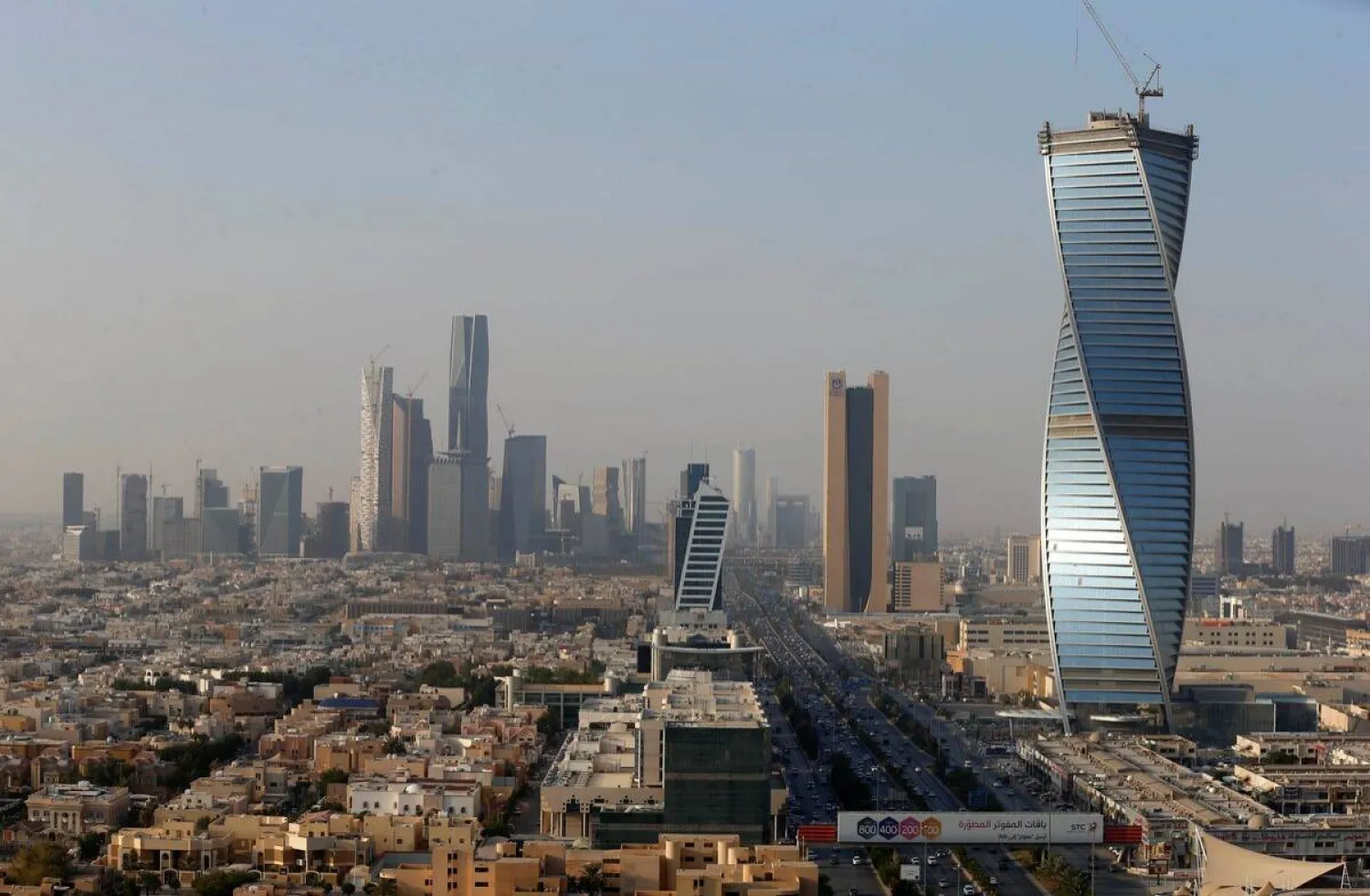
Buildings are seen in Riyadh, Saudi Arabia, December 18, 2017. REUTERS/Faisal Al Nasser 
TT

Saudi CEDA Reviews Vision 2030 Progress

Buildings are seen in Riyadh, Saudi Arabia, December 18, 2017. REUTERS/Faisal Al Nasser 

Saudi Arabia’s Council of Economic and Development Affairs (CEDA) held a virtual meeting to consider a package of strategic reports outlining the Kingdom’s economic and development trajectory.

The council issued the 2025 annual report on Saudi Vision 2030, showing clear progress across its three pillars — a vibrant society, a thriving economy and an ambitious nation — while underscoring the resilience of the national economy, supported by prudent fiscal policies and solid logistics infrastructure.

The report highlighted qualitative advances during the Vision’s second phase, reflecting its flexibility and ability to adapt to changing conditions in line with its third phase. It emphasized efforts to build on gains achieved in the first two phases and accelerate implementation by sharpening priorities and advancing national programs and strategies.

Resilience amid global developments

CEDA also discussed the monthly report from the Ministry of Economy and Planning, which covered global economic developments and growth prospects in light of current regional events and their repercussions for both major and emerging economies.

The report examined the impact of geopolitical tensions on Gulf economies and supply chains, as well as their potential implications for Saudi Arabia’s economic and financial outlook. It pointed to the Kingdom’s “exceptional resilience,” supported by strong economic and fiscal policies and robust logistics infrastructure.

Public sector performance

The council reviewed a presentation by the National Center for Performance Measurement of Public Agencies (Adaa) on its 2025 annual performance report. The findings showed continued positive performance by government entities in meeting targets, reflecting stable delivery and efficient execution.

The report also outlined the center’s work in strengthening the measurement of national strategies and reviewing strategic documents to ensure that indicators and initiatives fully cover all objectives. It included results from the latest evaluation cycle of performance management practices across public entities.

CEDA also discussed a presentation by the National Center for Privatization (NCP), highlighting key results for the second half of 2025, including the performance of supervisory committees and progress on major projects. The presentation showed improved overall performance and an increase in the number of privatization projects during the period.

Grand Mosque services and infrastructure

The council discussed a presentation by the Royal Commission for Makkah City and Holy Sites on projects in the central area of the Grand Mosque in Makkah. The briefing addressed the use of advanced technologies to monitor and manage waste, measures to facilitate the movement of vehicles and goods into the central area, and steps to enhance safety procedures and intensify oversight of expansion projects to ensure the safety of worshippers.

It also outlined a three-year plan covering systems related to health, safety, security and the environment.

Governance and policy updates

Moreover, CEDA saw a report on the updated national framework for governance, risk, compliance and internal audit functions, including its pilot application across selected government entities, proposals for broader implementation and mechanisms to measure compliance.

The council also considered a number of procedural matters, including a draft national intellectual property policy.

It was briefed on the semiannual report of the ministerial committee on social support and subsidies, as well as updates from the committee on improving the balance of payments and advancing economic diversification.

Further briefings included a monthly report on progress in implementing the executive plan to host regional headquarters of international organizations, a quarterly report from the standing committee for price monitoring, and summaries of the latest consumer price index and wholesale price index reports, along with the underlying data.