




Syria's new rulers stepped up engagement on Tuesday with countries that deemed ousted president Bashar al-Assad a pariah, with the French flag raised at the embassy for the first time in over a decade.
Assad fled Syria just over a week ago, as his forces abandoned tanks and other equipment in the face of a lightning offensive spearheaded by the Hayat Tahrir al-Sham (HTS) group.
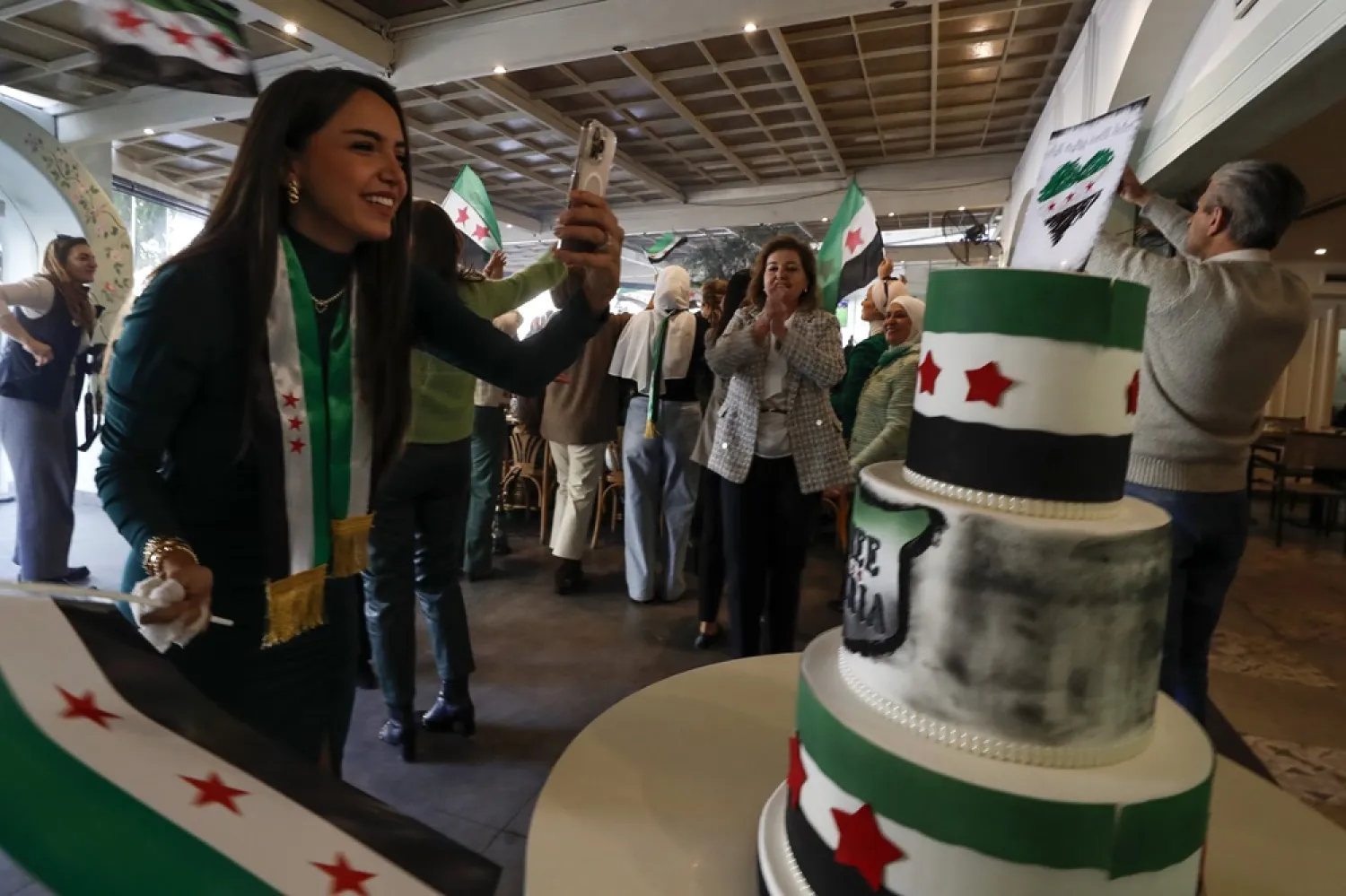
The collapse of Assad's rule on December 8 stunned the world and sparked celebrations around Syria and beyond, after his crackdown on democracy protests in 2011 led to one of the deadliest wars of the century.
Rooted in Syria's branch of Al-Qaeda, HTS is proscribed by several Western governments as a terrorist organization, though it has sought to moderate its rhetoric and pledged to protect the country's religious minorities.
The EU will reopen its mission in Syria following "constructive" talks with its new leadership, the bloc's foreign policy chief Kaja Kallas said, describing it as a "very important step".
Türkiye and Qatar, which backed the anti-Assad opposition, have reopened embassies in Damascus, while US and British officials have launched communications with Syria's new leaders.
France, an early backer of the uprising, sent a delegation to Damascus on Tuesday, with special envoy Jean-Francois Guillaume saying his country was preparing to stand with Syrians during the transitional period.
An AFP journalist saw the French flag raised in the embassy's entrance hall for the first time since the mission was shuttered in 2012.
After meeting Syria's new leaders, the United Nations humanitarian chief Tom Fletcher said on Tuesday he was "encouraged", and that there was a "basis for ambitious scaling-up of vital humanitarian support".
German diplomats were also in Damascus on Tuesday, while Italian Prime Minister Georgia Meloni said her country was ready to engage with the new leadership.
Syria came under international sanctions over Assad's crackdown on protests, which sparked a war that killed more than 500,000 people and forced half of the population to flee their homes.
Assad left behind a country scarred by decades of torture, disappearances and summary executions, as well as economic mismanagement that has left 70 percent of the population in need of aid.
Ahmed al-Sharaa, who heads HTS, stressed the need in a meeting with a delegation of British diplomats to end "all sanctions imposed on Syria so that Syrian refugees can return to their country".
He also said Syria's opposition factions will be "disbanded and the fighters trained to join the ranks of the defense ministry".
"Syria must remain united," he said, according to posts on the group's Telegram channel. "There must be a social contract between the state and all religions to guarantee social justice".
The EU's Kallas said the lifting of sanctions and removing HTS from its blacklist would depend on "when we see positive steps, not the words, but actual steps and deeds from the new leadership".
The United Nations expects one million people to return to Syria in the first half of 2025, after the war pushed six million people to seek refuge abroad.
- 'Color of peace' -
In Damascus's old souk, many shops had reopened more than a week since Assad's ouster, according to an AFP journalist.
Some shopkeepers were painting their store facades white, erasing the colors of the old Syrian flag that under Assad's rule had become ubiquitous.
"We have been working non-stop for a week to paint everything white," Omar Bashur, a 61-year-old artisan said.
"White is the color of peace," he added.
Abu Imad, another vendor, was selling vegetables from his car at a square in central Damascus.
"Everything happened at once: the regime fell, prices dropped, life got better. We hope it isn't temporary," he said.
With Assad gone, the Syrian pound started to recover against the dollar, moneychangers and traders said, as foreign currencies again became available on the local market.
Iran, which backed Assad throughout the civil war, said its embassy in Syria -- abandoned and vandalized in the wake of Assad's fall -- would reopen once the "necessary conditions" are met.
Russia was the other main backer of Assad's rule.
On Monday, the ousted president broke his silence with a statement on Telegram saying that he only left to Russia once Damascus had fallen, and denounced the country's new leaders as "terrorists".
"My departure from Syria was neither planned nor did it occur during the final hours of the battles," said the statement.
Several former officials had told AFP that Assad was already out of the country hours before the opposition seized Damascus.


