


France's Christian Lacroix Label Heads for Spanish Ownership

Christian Lacroix was created in 1987 by the eponymous designer, with the support of luxury giant LVMH, which sold it in 2005 to Falic Group. (AFP)
TT

France's Christian Lacroix Label Heads for Spanish Ownership

Christian Lacroix was created in 1987 by the eponymous designer, with the support of luxury giant LVMH, which sold it in 2005 to Falic Group. (AFP)

The Spanish fashion group Sociedad Textil Lonia (STL) announced Tuesday it had reached an agreement to buy France's Christian Lacroix label, hoping to return the once-mighty brand to its former glory.

The deal to acquire Lacroix from US-based Falic group, which specializes in duty-free retail, was for an undisclosed amount in a "private transaction", STL said.

"By acquiring Maison Lacroix, with its treasure of archives and rich history of French haute couture, STL expands its brand portfolio, strengthening its international presence in the world of high fashion," STL stated in a press release.

"We will do everything we can to ensure that the unique talent of its creator and his invaluable contribution to the world of fashion reach their full potential," the group added.

Christian Lacroix was created in 1987 by the eponymous designer, with the support of luxury giant LVMH, which sold it in 2005 to Falic Group.

In 2009, following financial difficulties, the brand implemented a court-ordered recovery plan that resulted in around 100 job cuts and the discontinuation of haute couture operations.

Lacroix, now aged 73, left the group in 2010.

Having spent decades dressing celebrities, he turned to working for ballet and opera productions, as well as collaborating with other labels such as Dries Van Noten.

"The Spanish family that owns STL had the elegance to contact me ahead of the official announcement about the acquisition of the Christian Lacroix name and archives," he told Vogue Business on Tuesday. "We will probably meet soon in an informal way."

Founded in Spain in 1997, STL is a fashion company behind Spanish ready-to-wear brand Purificacion Garcia and the label of Venezuelan-American designer Carolina Herrera, employing 2,500 people and operating 600 stores worldwide, according to its website.



France Hits Shein with 22 Mn Euros in New Fines Over Consumer Violations

FILE PHOTO: Clothes from fast-fashion brand Shein hang at their office in Sao Paulo, Brazil, December 15, 2025. REUTERS/Jorge Silva/File Photo
TT

France Hits Shein with 22 Mn Euros in New Fines Over Consumer Violations

FILE PHOTO: Clothes from fast-fashion brand Shein hang at their office in Sao Paulo, Brazil, December 15, 2025. REUTERS/Jorge Silva/File Photo

French authorities said Wednesday that they had imposed two fines on Shein totaling more than 22 million euros ($25.5 million), citing problems with product traceability, environmental labelling and delivery times.

The new penalties bring the total fines imposed by France against the Asian fashion giant to more than 210 million euros, AFP reported.

The latest fines were imposed by the government's consumer protection agency DGCCRF following a wide-ranging investigation targeting several e-commerce platforms, primarily based outside Europe, including Shein.

The first fine of 5.77 million euros targets Infinite Style Ecommerce Co Ltd (ISEL), which handles sales for Shein.

The DGCCRF accuses Shein of failing to comply with a 14-day period required for consumers to be able to reconsider certain purchases.

The watchdog also accuses the company of omitting mandatory traceability information, such as the countries where its clothing is woven, dyed and manufactured, and of failing to disclose the presence of microplastics in its fabrics.

Microplastics, primarily found in polyester, are released into the water with every machine wash, posing a serious environmental threat.

In addition, the agency imposed a fine of 16.73 million euros on Shein's subsidiary ISSL (Infinite Styles Services Limited), accusing it of violations of consumer law.

Shein has been under fire since it established operations in France.

It is widely criticized by campaign groups and politicians for generating environmental pollution, practicing unfair competition, selling goods that fail to comply with basic regulations and imposing poor working conditions in its Chinese factories.


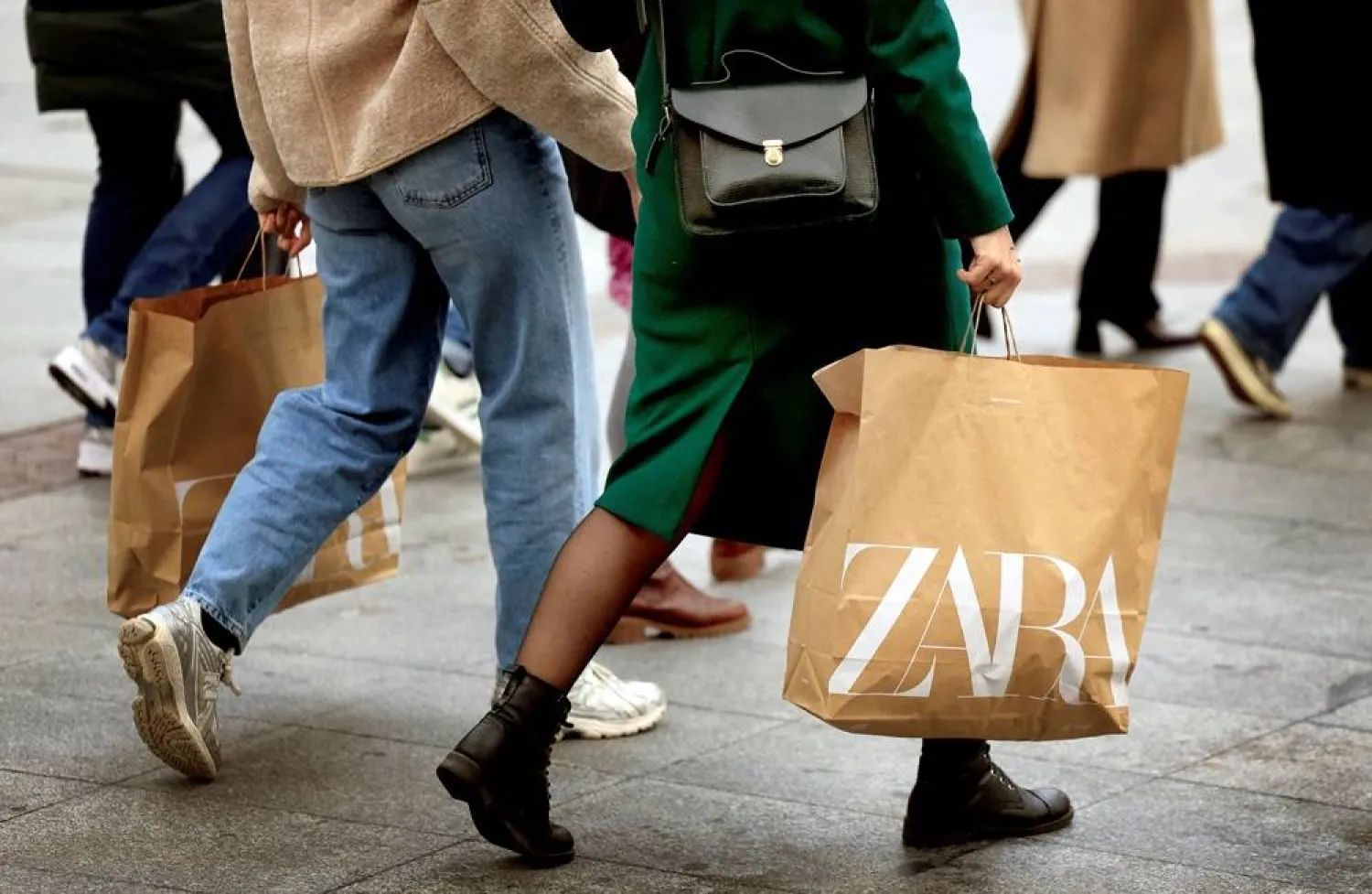
Zara Owner Inditex Defies Consumer Gloom with Strong Early Summer Sales

Women carry bags from Zara, flagship retail clothing brand of Spanish multinational clothing company Inditex, in the Gran Via of Bilbao, Spain, March 15, 2025. (Reuters)
TT

Zara Owner Inditex Defies Consumer Gloom with Strong Early Summer Sales

Women carry bags from Zara, flagship retail clothing brand of Spanish multinational clothing company Inditex, in the Gran Via of Bilbao, Spain, March 15, 2025. (Reuters)

Zara owner Inditex reported a strong start to summer trading on Wednesday as currency-adjusted sales grew 11.5% in May, handily beating analyst expectations, even as Iran war inflation worries dent consumer confidence.

Inditex shares gained 5% as the healthy sales growth reassured investors the fast fashion giant can weather the global turmoil and perhaps even benefit as some shoppers trade down from more expensive clothing brands.

Analysts had expected sales growth of 8% ‌for May, ‌the start of the company's second quarter. Inditex posted sales ‌of €8.75 billion ($10.17 ⁠billion) over its ⁠February-to-April first quarter, up 8.8% in currency-adjusted terms.

"This performance is even more noteworthy when considered against the backdrop of the wider macroeconomic and geopolitical challenges seen in recent months," Gorka Garcia-Tapia Yturriga, Inditex's investor relations director, said on a call with analysts.

Sales in the Middle East, where Inditex has stores operated by franchise partners, have been impacted, he added, without giving a specific figure.

IMPACT OF HIGH FUEL, TRANSPORTATION ⁠COSTS LIMITED SO FAR

Chief Financial Officer Andres Sanchez said ‌Inditex has rapidly adapted its supply chain to ‌ensure uninterrupted product flow to its stores globally, despite disruptions to air and sea freight ‌caused by the war, which broke out in late February.

"There is ‌a lag effect between the transportation of goods and the impact on cost of goods sold, which means that the impact of the higher transport cost and fuel prices in the first quarter has so far been limited," he said.

Inditex's profitability improved with ‌the first-quarter gross margin hitting 61.2% - up from 60.6% a year ago - in a sign the retailer has successfully protected ⁠profits despite higher raw ⁠material and freight costs.

The company, meanwhile, stuck to a full-year outlook issued in March of a stable gross margin, a 5% increase in store space, and €2.3 billion in capital expenditure.

Zara has invested in new, bigger stores and boosted marketing to draw in new customers while increasing prices.

And in May it launched a new clothing collection with Puerto Rican pop and reggaeton superstar Bad Bunny, who wore custom Zara outfits during his NFL Super Bowl halftime show in February.

The first quarter is typically Inditex's smallest in terms of sales and profits. But it has been closely watched, given the war's impact on consumer confidence. And investors have been bracing for signs of strain at the $190 billion company, which also owns smaller brands including Massimo Dutti, Oysho, Bershka, and Lefties.


Estee Lauder Still Open to Acquisitions After Failed Puig Talks, CEO Says

An Estee Lauder cosmetics counter is seen in Los Angeles, California, US, August 19, 2019. (Reuters)
TT

Estee Lauder Still Open to Acquisitions After Failed Puig Talks, CEO Says

An Estee Lauder cosmetics counter is seen in Los Angeles, California, US, August 19, 2019. (Reuters)

An Estee ‌Lauder merger with Jean Paul Gaultier-owner Puig failed to go through because of the price tag, Stephane de La Faverie, President and CEO of the US cosmetics maker said on Tuesday, but added the company was still open to acquisitions if they made financial sense.

Estee Lauder and Puig ended ‌negotiations late ‌last month that would have ‌created ⁠a premium beauty ⁠giant better positioned to compete with industry leader L'Oreal.

Leaks, disagreements between the powerful controlling families, and demands, including from make-up magnate Charlotte Tilbury, led the talks to collapse, five ⁠people with direct knowledge of the ‌deal told ‌Reuters.

Speaking at a Deutsche Bank consumer conference ‌in Paris, de La Faverie said ‌it was a matter of price.

"If we cannot reach the growth and the profitability at the right price point, then ‌that is not an option. And this is why, obviously, ⁠this ⁠deal didn't go through, because it was not at the right price," he said, adding that the company would continue to look at opportunities.

The Clinique and M.A.C owner in May said it would cut 9,000 to 10,000 jobs globally as it accelerates its "Beauty Reimagined" strategy, aiming to save as much as $1.2 billion in annual costs.