What Ignited the Deadly California Wildfires? Investigators Consider an Array of Possibilities

 A helicopter drops water on the Palisades Fire in Mandeville Canyon, Friday, Jan. 10, 2025, in Los Angeles. (AP)
A helicopter drops water on the Palisades Fire in Mandeville Canyon, Friday, Jan. 10, 2025, in Los Angeles. (AP)
TT

What Ignited the Deadly California Wildfires? Investigators Consider an Array of Possibilities

 A helicopter drops water on the Palisades Fire in Mandeville Canyon, Friday, Jan. 10, 2025, in Los Angeles. (AP)
A helicopter drops water on the Palisades Fire in Mandeville Canyon, Friday, Jan. 10, 2025, in Los Angeles. (AP)

Investigators are considering an array of possible ignition sources for the huge fires that have killed at least 11 people and destroyed thousands of homes and businesses in the Los Angeles area.

In hilly, upscale Pacific Palisades, home to Hollywood stars like Jamie Lee Curtis and Billy Crystal who lost houses in the fire, officials have placed the origin of the wind-whipped blaze behind a home on Piedra Morada Drive, which sits above a densely wooded arroyo.

While lightning is the most common source of fires in the US, according to the National Fire Protection Association, investigators were able to rule that out quickly. There were no reports of lightning in the Palisades area or the terrain around the Eaton Fire, which started in east Los Angeles County and has also destroyed hundreds of homes.

The next two most common causes: fires intentionally set, and those sparked by utility lines.

John Lentini, owner of Scientific Fire Analysis in Florida, who has investigated large fires in California including the Oakland Hills Fire in 1991, said the size and scope of the blaze doesn’t change the approach to finding out what caused it.

“This was once a small fire,” Lentini said. “People will focus on where the fire started, determine the origin and look around the origin and determine the cause.”

So far there has been no official indication of arson in either blaze, and utility lines have not yet been identified as a cause either.

Utilities are required to report to the California Public Utilities Commission when they know of “electric incidents potentially associated with a wildfire,” Terrie Prosper, the commission's communications director, said via email. CPUC staff then investigate to see if there were violations of state law.

The 2017 Thomas Fire, one of the largest fires in state history, was sparked by Southern California Edison power lines that came into contact during high wind, investigators determined. The blaze killed two people and charred more than 440 square miles (1,140 square kilometers).

On Friday, Southern California Edison filed a report with the CPUC related to the Eaton Fire in the hills near Pasadena, an area the utility serves.

Edison said it has not received any suggestions that its equipment was involved in the ignition of that fire, but that it filed the report with state utilities regulators out of “an abundance of caution” after receiving evidence preservation notices from insurance company lawyers.

“Preliminary analysis by SCE of electrical circuit information for the energized transmission lines going through the area for 12 hours prior to the reported start time of the fire shows no interruptions or electrical or operational anomalies until more than one hour after the reported start time of the fire,” the utility reported.

While lightning, arson and utility lines are the most common causes, debris burning and fireworks are also common causes.

But fires are incited by myriad sources, including accidents.

In 2021, a couple's gender reveal stunt started a large fire that torched close to 36 square miles (about 90 square kilometers) of terrain, destroyed five homes and 15 other buildings and claimed the life of a firefighter, Charlie Morton.

The Eaton and Palisades fires were still burning with little containment on Friday. Winds softened, but there was no rain in the forecast as the flames moved through miles of dry landscape.

“It’s going to go out when it runs out of fuel, or when the weather stops,” Lentini said. “They’re not going to put that thing out until it’s ready to go out.”


Report: Iran Hardliners Ramp up Calls for a Nuclear Bomb

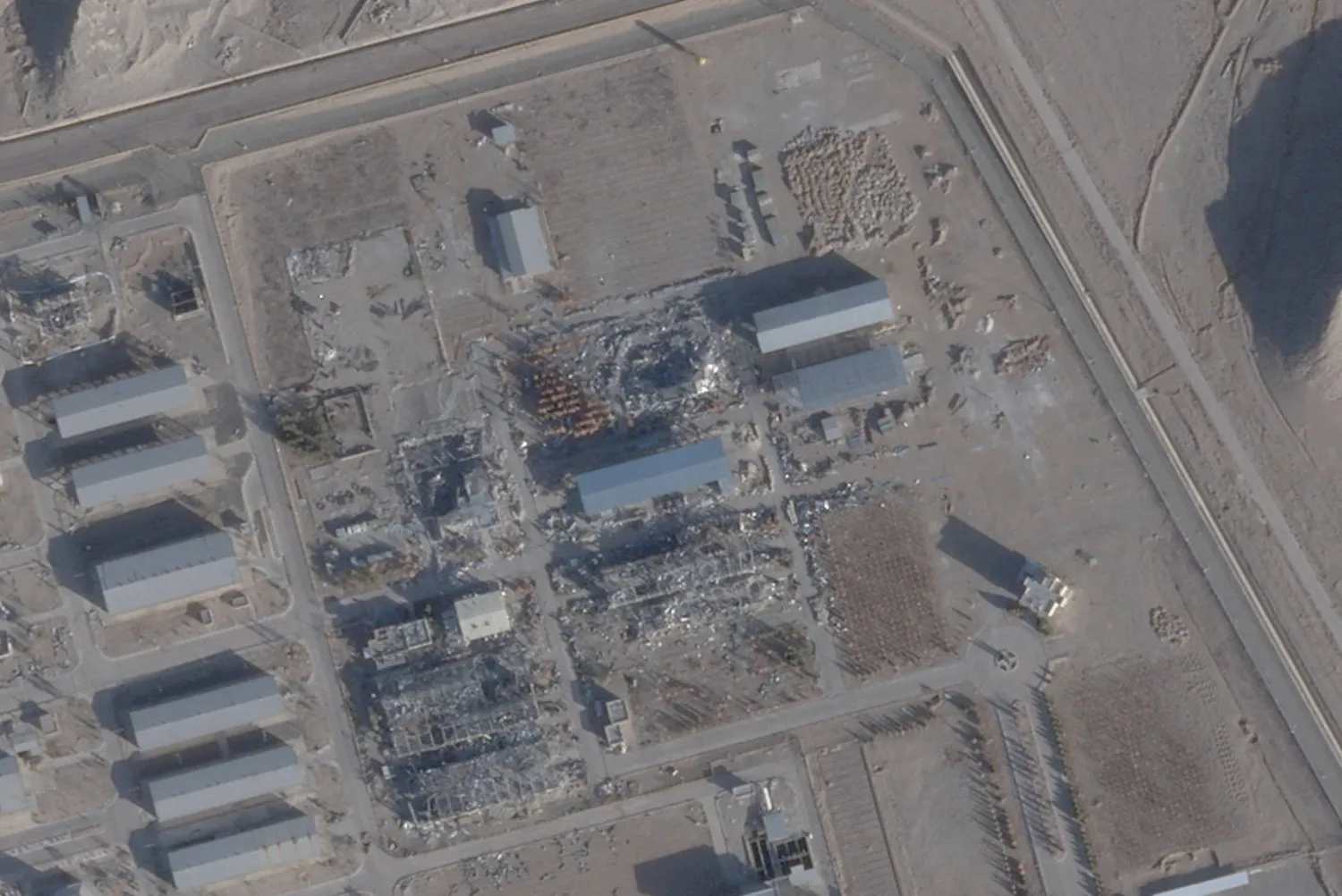
A satellite imagery taken on February 1, 2026, shows a new roof over a previously destroyed building at Isfahan nuclear site, Iran. (2026 PLANET LABS PBC/Handout via Reuters)
TT

Report: Iran Hardliners Ramp up Calls for a Nuclear Bomb

A satellite imagery taken on February 1, 2026, shows a new roof over a previously destroyed building at Isfahan nuclear site, Iran. (2026 PLANET LABS PBC/Handout via Reuters)

The debate among Iranian hardliners over whether Tehran should seek a nuclear bomb in defiance of an escalating US-Israeli attack is getting louder, more public and more insistent, sources in the country say.

With the Revolutionary Guards now dominant following the killing of veteran Supreme Leader Ali Khamenei at the start of the war on February 28, hardline views on Iran's nuclear approach are in the ascendant, two senior Iranian sources said according to Reuters.

While Western countries have long believed that Iran wants the bomb - or at least the ability to make one very quickly - it has always denied that, saying Khamenei had banned nuclear arms as forbidden in Islam and citing its membership of the Nuclear Non-Proliferation Treaty.

There was no plan to change Iran's nuclear doctrine yet and Iran had not decided to seek a bomb, one of the sources said, but serious voices in the establishment were questioning the existing policy and demanding a change.

The US-Israeli attacks on Iran, which came midway through talks on Tehran's nuclear program, may have changed the equation, convincing Iranian ‌strategists that they ‌have little to gain by forswearing a bomb or staying in the NPT.

HARDLINER STANCE

The idea ‌of ⁠quitting the NPT - ⁠something hardliners have previously threatened - has been increasingly aired on state media along with the idea - once taboo in public - that Iran should go outright for the bomb.

The Tasnim News Agency, which is affiliated with the Guards, on Thursday published an article saying Iran should withdraw from the NPT as soon as possible while sticking with a civilian nuclear program.

Hardline politician Mohammad Javad Larijani, brother of senior official Ali Larijani who was killed in a strike this month, was quoted by state media this week urging Iran to suspend its membership of the NPT.

"The NPT should be suspended. We should form a committee to assess whether the NPT is of any use to us at all. If it ⁠proves useful, we will return to it. If not, they can keep it," he said.

Earlier in ‌the month, state television aired a segment with conservative commentator Nasser Torabi in ‌which he said the Iranian public demanded: "We need to act in order to build a nuclear weapon. Either we build it or we acquire ‌it."

Nuclear policy has also been a subject of private discussion in ruling circles, said the two sources, adding that there ‌was divergence between harder line elements including the Guards and those in the political hierarchy over the wisdom of such a move.

To be sure, Iranian officials have threatened in the past to reconsider membership of the NPT as a negotiating tactic during more than two decades of talks with the West over Iran's nuclear program without ever having done so.

The more public debate may represent just such a tactic. It is also far from clear ‌how quickly Iran might be able to push for a bomb after suffering weeks of air strikes on its nuclear, ballistic and other scientific facilities and after a shorter air campaign ⁠by Israel and the United ⁠States last year.

Israel had repeatedly warned over many years that Iran was only months away from being able to make a nuclear bomb, citing intelligence reports, Tehran's enrichment of uranium needed for a warhead almost to weapons grade, and its ballistics program.

NO CHANGE TO NUCLEAR POLICY YET

Analysts have said the country's goal has been to attain the status of a "threshold state" - able to produce a bomb quickly if needed but without incurring the pariah status that could come with the weapon itself.

Guards commanders and other senior figures had in the past warned that Iran would have to go straight for a bomb if the regime survival was threatened - a condition that the present war may meet.

Khamenei's fatwa, or religious opinion, that nuclear weapons were not permissible in Islam, was made in the early 2000s, though never issued in written form. Khamenei reiterated it in 2019.

One of the two senior Iranian sources said that with Khamenei's death and that of Ali Larijani, who the source said had also pushed back against hardliners, it was becoming more difficult to counter the more hawkish arguments.

It was also not clear whether the obligation to obey Khamenei's unwritten fatwa survived his death, though it would likely remain valid unless revoked by the new supreme leader - his son Mojtaba Khamenei, who has not been seen in public since the death of his father.


Sheibani, an Iranian Diplomat with Intelligence Clout

 Iranian ambassador to Lebanon Mohammad Reza Sheibani (Iranian media)
Iranian ambassador to Lebanon Mohammad Reza Sheibani (Iranian media)
TT

Sheibani, an Iranian Diplomat with Intelligence Clout

 Iranian ambassador to Lebanon Mohammad Reza Sheibani (Iranian media)
Iranian ambassador to Lebanon Mohammad Reza Sheibani (Iranian media)

Only weeks after Iranian diplomat Mohammad Reza Sheibani returned to Beirut as ambassador, his name has become the focus of a diplomatic crisis.

Lebanon’s Foreign Ministry withdrew its approval and declared him “persona non grata”, reflecting rising tensions between Beirut and Tehran and drawing renewed attention to a career tied to some of the Middle East’s most complex issues.

The decision swiftly ended the mission of a diplomat Tehran had sent back to Beirut, relying on his long experience on Lebanon and Syria.

His return had collided with a Lebanese political climate increasingly sensitive to the limits of foreign diplomatic roles.

War experience and regional role

Sheibani is no stranger to Lebanon. He served as Iran’s ambassador to Beirut from 2005 to 2009, a period that coincided with the 2006 war between Hezbollah and Israel, giving him direct experience managing ties under complex security and political conditions.

His reappointment in early 2026 reflected an Iranian preference for seasoned diplomats in areas where politics and security overlap.

He replaced former ambassador Mojtaba Amani, who was injured in a pager explosion in Beirut, at a time of regional escalation, giving his return added weight beyond routine diplomacy.

Between Beirut and Damascus

Born in 1960, Sheibani joined Iran’s Foreign Ministry in the 1980s and rose through its ranks, focusing on Middle East affairs.

He served as chargé d’affaires in Cyprus and as head of Iran’s interests section in Egypt, before being appointed ambassador to Lebanon and later to Syria from 2011 to 2016, during which he covered the early years of the war.

He later served as ambassador to Tunisia and non-resident ambassador to Libya, and as assistant foreign minister for Middle East affairs.

He also worked as a senior adviser and researcher at the Institute for Political and International Studies at the Foreign Ministry, before returning to the forefront amid rising regional tensions.

Roles during escalation

In October 2024, he was named special representative of the Iranian foreign minister for West Asia, and in January 2025, he was appointed special envoy to Syria following developments in Damascus, including the closure of Iran’s embassy.

He was also tasked with following the Lebanese file as a special envoy during a sensitive phase, reinforcing his role as a crisis diplomat.

His career reflects a distinction within Iran’s diplomatic structure, as he is linked to the Ministry of Intelligence rather than the Quds Force of the Revolutionary Guard Corps, highlighting a division of roles in foreign policy.

Legal and constitutional debate

The move by Lebanon’s Foreign Ministry has also sparked legal debate over how such decisions are made and enforced.

Constitutional expert Saeed Malek said the decision is based on Article 9 of the Vienna Convention on Diplomatic Relations, which allows a state to declare a diplomat persona non grata without a specific procedure.

He said the measure does not amount to a break in diplomatic ties but falls within the management of diplomatic representation, adding that such decisions fall within the foreign minister’s authority under Article 66 of the constitution.

Malek said the decision is binding, and once the deadline to leave Lebanon expires, the ambassador’s presence becomes unlawful.

He added that security forces are required to enforce the decision and remove him once located.

However, he said enforcement remains bound by international rules, as the ambassador’s presence inside the embassy prevents Lebanese forces from entering under diplomatic immunity, meaning his expulsion can only be carried out once he leaves the premises.


Mohammad Baqer Zolghadr: A Man with Strong Connections at the Heart of Iran’s Revolutionary Guards

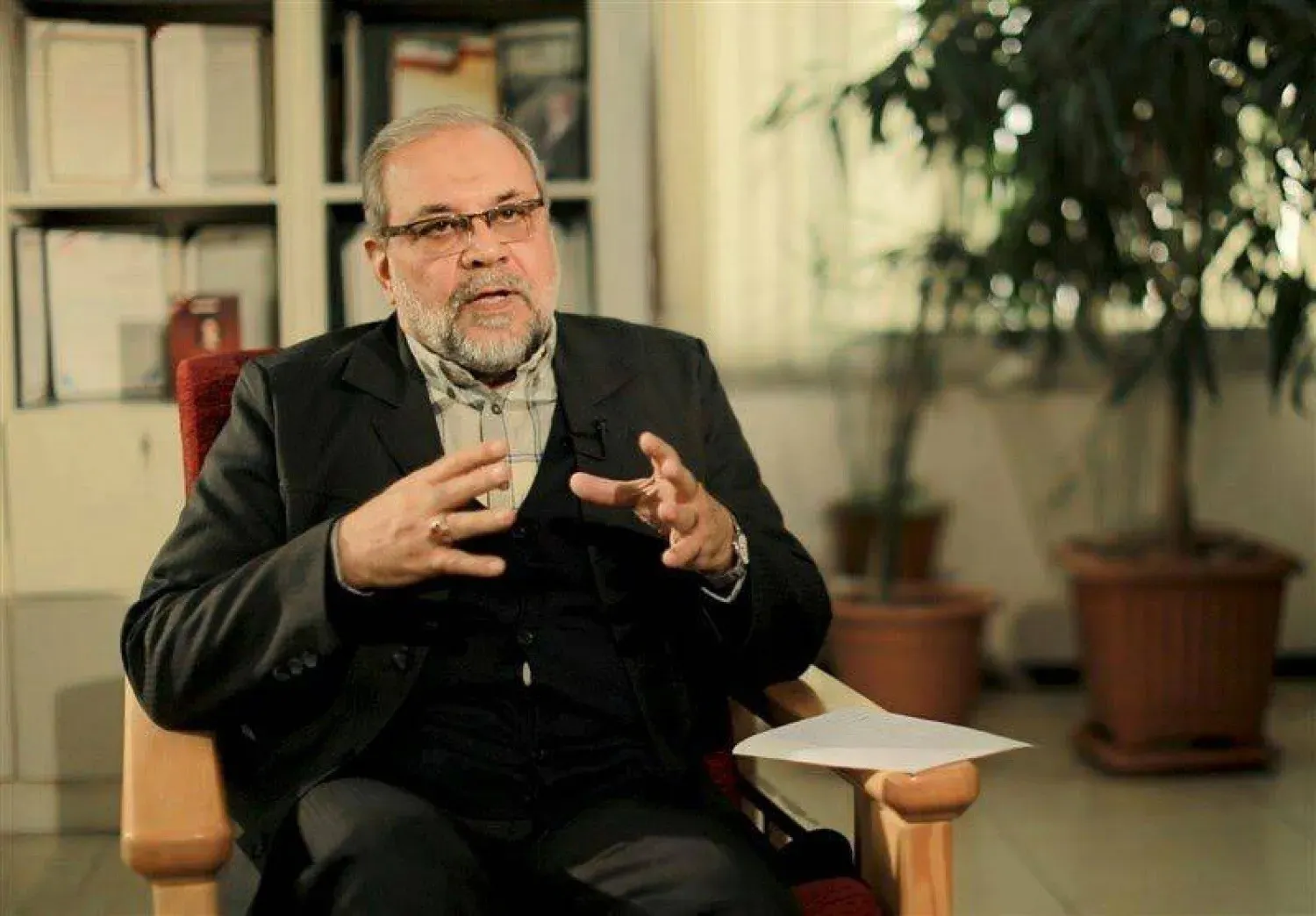
Zolghadr speaks in an interview with the Tasnim News Agency, December 2020.
TT

Mohammad Baqer Zolghadr: A Man with Strong Connections at the Heart of Iran’s Revolutionary Guards

Zolghadr speaks in an interview with the Tasnim News Agency, December 2020.

Mohammad Baqer Zolghadr was not an unfamiliar figure when he was appointed on Tuesday as secretary of Iran’s Supreme National Security Council. One week after the killing of Ali Larijani, and amid a war that has thinned the ranks of Iran’s top leadership, authorities turned to a man shaped within one of the deepest layers of the “Islamic Republic’s” power structure.

Mehdi Tabatabaei, the Iranian president’s deputy communications director, said on Tuesday that General Zolghadr had been appointed to replace Larijani. He wrote on X that Iran’s new Supreme Leader Mojtaba Khamenei had approved the decision.

The Supreme National Security Council, formally headed by President Masoud Pezeshkian, coordinates security and foreign policy. It includes senior military, intelligence and government officials, as well as representatives of the Supreme Leader, who has final authority in state affairs.

Zolghadr’s appointment appears to reflect state priorities in a time of crisis. A further decree is expected to name him as the Supreme Leader’s representative on the council, allowing him to vote under the constitution.

Unlike politicians who rise through elections or public platforms, Zolghadr belongs to a different category: a figure who boasts internal networks that predate the state and later embedded themselves within it. He accumulated power within the agencies instead of confronting them. His career resembles less a sequence of administrative posts and more a continuous thread linking some of the most entrenched centers of power in Iran.

His elevation to one of the country’s top security posts is significant not only for the positions he has held, but for the role he has played within the system. A veteran of the Iran-Iraq war, he developed expertise in organization and network-based operations, consolidating his position within the Iranian Revolutionary Guard Corps (IRGC) and later extending his influence through the interior ministry, judiciary and Expediency Council.

The appointment signals a broader logic within Iran’s ruling establishment: in moments of heightened pressure, figures rooted in institutional networks tend to take precedence over those with a public political profile.

Early career

Zolghadr’s career is closely tied to the political environment from which he emerged. He belongs to a generation associated with the “Mansouroun” network, an early group that later produced influential figures within the IRGC, including Mohsen Rezaei, Ali Shamkhani, Gholam Ali Rashid, and Mohammad and Ahmad Forouzandeh.

The significance of this affiliation lies not only in early organizational ties, but in the nature of the group itself: an ideologically driven pre-revolutionary network that repositioned itself within the state through the IRGC.

Zolghadr’s rise was not an individual climb through institutional ranks, but growth within a web of relationships and loyalties embedded at the core of the system. He emerged not simply as a professional military officer, but as part of a generation that viewed security and politics as intertwined domains in safeguarding the regime. This gave him the rare ability to “reposition” himself and retain power as successive government ruled Iran.

War and the ‘Ramadan’ headquarters

After the fall of the Shah, Zolghadr, like other members of Mansouroun, initially operated through revolutionary committees before joining the IRGC. His most defining wartime role was leading the “Ramadan Headquarters,” a key unit during the Iran-Iraq war.

This post was central to his political and security development. The Ramadan Headquarters served as a nucleus for external operations, coordinating cross-border activities with Iraqi Kurdish and Shiite groups opposed to Saddam Hussein and managing operations inside Iraq. It later evolved into what became the Quds Force, the IRGC’s current foreign arm.

There, Zolghadr developed a hallmark approach: operating at the intersection of military, intelligence and political spheres. The role involved not only managing battlefield operations, but also building networks, cultivating allies and leveraging conflict to generate long-term influence.

This model — combining military structure, indirect operations and proxy management — became a defining feature of Iran’s regional strategy. Within this environment, Zolghadr gained a reputation as a manager and strategist rather than a public-facing commander.

Rise within the IRGC

Following the end of the war in the late 1980s, Zolghadr spent 16 years at the top of the IRGC hierarchy: eight years as chief of the joint staff and eight years as deputy commander-in-chief.

These roles emphasized administration, coordination and institutional discipline rather than field command. His influence was rooted not in public charisma but in his position within the IRGC’s internal machinery.

Over time, he became firmly aligned with Iran’s conservative camp. His political role became more visible during the reformist presidency of Mohammad Khatami, when tensions between reformists and hardline institutions intensified.

Reform era

During the late 1990s, Zolghadr was among military figures associated with the conservative bloc within the IRGC. His name was linked to a letter sent by IRGC commanders to President Khatami, widely seen as a signal of military intervention in political affairs at a time of unrest. He was also associated with hardline opposition to the reform movement and the student protests of that period.

This phase highlighted a structural aspect of his career: his political role did not begin after leaving the military, but was embedded within the IRGC itself as it became increasingly politicized during its confrontation with reformists.

Interior Ministry under Ahmadinejad

When Mahmoud Ahmadinejad became president in 2005, Zolghadr was appointed deputy interior minister for security affairs. The position placed him at the heart of internal security, overseeing provincial governors and managing crises, protests and local tensions. It marked a transition from military service to the executive branch, while maintaining a focus on security.

His move illustrated a broader pattern: shifting from protecting the system through force to safeguarding it through security bureaucracy, expanding his network within the state apparatus.

Basij

Zolghadr left the interior ministry in 2007 amid reports of differences with Ahmadinejad, but his departure did not signal a loss of influence. In December of that year, Supreme Leader Ali Khamenei appointed him deputy chief of staff of the armed forces for Basij affairs, a newly created role.

The Basij, a paramilitary force, plays a key role in ideological mobilization and maintaining the IRGC’s presence in Iranian society. The decree emphasized strengthening and expanding the Basij’s reach, underlining the importance of Zolghadr’s assignment.

Judiciary and expanding influence

In 2010, Zolghadr moved to the judiciary, serving first as deputy for social prevention and crime reduction, and later as strategic deputy to the head of the judiciary until 2020.

The shift did not represent a departure from security work, as Iran’s judiciary operates closely under the authority of the Supreme Leader. Instead, it broadened his influence across another pillar of the state.

In September 2021, he was appointed secretary of the Expediency Council, succeeding Mohsen Rezaei. The role involves overseeing the council’s committees and acting as a link to the highest levels of decision-making.

Zolghadr also has family ties that extend his influence. He is the father-in-law of Kazem Gharibabadi, Iran’s deputy foreign minister for legal and international affairs and a prominent figure in nuclear negotiations.

Gharibabadi previously served as Iran’s ambassador to international organizations in Vienna, including the International Atomic Energy Agency.

From Larijani to Zolghadr

Larijani’s death deprived Iran of a political figure skilled in navigating between power centers. The choice of Zolghadr suggests a shift in priorities.

While Larijani represented balance and negotiation, Zolghadr embodies institutional discipline and internal cohesion. His selection follows speculation over other candidates, including former defense minister Hossein Dehghan, who was ultimately not appointed.

The decision reflects the system’s preference, in wartime conditions, for figures trusted by security networks over those known for political flexibility.

He may not be a prominent public figure, but he represents a type of official often relied upon in times of crisis: a man with internal networks, brought back to the forefront as Iran faces one of its most challenging periods.