EU Restarts Rafah Border Crossing Mission, Says Foreign Policy Chief Kallas
A view shows a gate at the Rafah border crossing, amid a ceasefire between Israel and Hamas, in Rafah, Egypt, January 28, 2025. (Reuters)
TT
TT
EU Restarts Rafah Border Crossing Mission, Says Foreign Policy Chief Kallas
A view shows a gate at the Rafah border crossing, amid a ceasefire between Israel and Hamas, in Rafah, Egypt, January 28, 2025. (Reuters)
The European Union has restarted its civilian mission to monitor the border crossing between Gaza and Egypt at Rafah, a key entry and exit point for the Palestinian territory, the bloc's foreign policy chief Kaja Kallas said on Friday.
The health ministry of Hamas-run Gaza said the first Palestinians - injured civilians and fighters - would enter Egypt on Saturday via the Rafah crossing, which has been shut to human traffic since last May.
People will only be allowed to travel in one direction, from Gaza to Egypt, for the time being, officials said.
Kallas announced on Monday there was broad agreement among member states that the EU Border Assistance Mission (EUBAM) could play a "decisive role" in supporting the ceasefire agreement between Israel and the Palestinian group Hamas.
"The EU’s civilian border mission deploys today (Friday) to the Rafah Crossing at the request of the Palestinians and the Israelis. It will support Palestinian border personnel and allow the transfer of individuals out of Gaza, including those who need medical care," she posted on X.
Egyptian security sources confirmed that members of the EU team had arrived at the facility.
The crossing will now be run by members of the Palestinian Authority and European monitors, PA and Hamas officials said.
It will be opened initially for 50 injured fighters and 50 wounded civilians, along with the people escorting them, the officials said, adding that a further 100 people, most likely students, would be allowed through on humanitarian grounds.
Gaza's health ministry said the transportation of patients from two hospitals in the north and south of the enclave would be coordinated with the World Health Organization.
A civilian EU mission to help monitor the Rafah crossing began work there in 2005 but was suspended in June 2007 after the Hamas group took over the Gaza Strip.
In standby mode thereafter, the mission had maintained 10 international and eight local staff.
Spain, Italy and France are now contributing personnel to the renewed mission.
The Spanish continent comprises eight security specialists and two agents assigned to the border management team, joining two Spanish members of the mission already deployed there, the foreign and interior ministries in Madrid said.
France said it had deployed three gendarmes specialized in border policing on Friday as part of the EU mission, while Italy said it had sent seven paramilitary Carabinieri officers to join two Italians already at the Rafah mission.
German ministries are also discussing sending a contingent.
Netanyahu Says Palestinian Authority in for 'Big Surprise'https://english.aawsat.com/arab-world/5333022-netanyahu-says-palestinian-authority-big-surprise
Netanyahu Says Palestinian Authority in for 'Big Surprise'
Israeli troops patrol in the West Bank city of Nablus, 24 October 2026. EPA/ALAA BADARNEH
Israeli Prime Minister Benjamin Netanyahu said that the Palestinian Authority (PA) was in for a "big surprise" after he ordered a major military operation in response to an attack on soldiers in the West Bank.
Netanyahu, days ahead of elections, declined to answer directly when he was asked if he would dismantle the Palestinian Authority but said he favored "ruse and surprise.”
"We transformed the Middle East. I said that we would change things and we have," Netanyahu told i24News in an interview conducted late Friday.
"There is a very big surprise for the Palestinian Authority as well."
Netanyahu on Friday promised a massive military response after Palestinian militants killed two Israeli soldiers near Hebron in the occupied West Bank.
One of his far-right allies called after the attack for Israel to bring down the Palestinian Authority, the semi-autonomous body that governs parts of the West Bank in cooperation with Israel as part of peace accords in the 1990s.
No evidence suggests that the PA was connected to Friday's attack.
700 Square Kilometers Under Israeli Occupation in Lebanon: What Does the ‘Security Belt’ Mean?https://english.aawsat.com/arab-world/5333006-700-square-kilometers-under-israeli-occupation-lebanon-what-does-%E2%80%98security-belt%E2%80%99
700 Square Kilometers Under Israeli Occupation in Lebanon: What Does the ‘Security Belt’ Mean?
Israel’s expanding operations in southern Lebanon are raising questions about how much territory its forces actually occupy, and how much they control through surveillance, firepower and the ability to launch attacks from forward positions.
Israeli Defense Minister Israel Katz has repeatedly cited an area of roughly 700 square kilometers. But developments on the ground paint a more complex picture: Israeli control varies from troops stationed at fixed positions to mobile incursions and firepower dominance over much wider areas.
Military assessments suggest the area is far from a uniform security belt stretching from the Mediterranean coast to Mount Hermon. Its depth varies sharply across sectors, shaped by terrain, commanding heights and routes of movement.
Israeli troops and military vehicles are stationed in some areas. Others have no permanent Israeli military presence but remain under aerial surveillance or within striking range, allowing forces to operate there without maintaining troops on the ground.
Single Front
Defense and security expert Riad Kahwaji told Asharq Al-Awsat that Israel views Lebanon and the Golan Heights as "a single front" stretching from Mount Hermon to the Mediterranean coast at Naqoura and Bayada, despite crossing two countries.
"From its perspective, Israel is establishing a security belt along its northern border," Kahwaji said, adding that the belt is "no longer confined to areas south of the Litani River but has extended north of it in some locations."
Geography helps explain why.
"The geographical scope has effectively expanded beyond the area south of the Litani, particularly from the direction of Metula, where the river is only about seven kilometers away, compared with roughly 30 kilometers between Naqoura and the Litani," he said.
That difference, Kahwaji explained, means the security belt can extend north of the Litani in some areas without maintaining the same depth across the entire border.
The river, therefore, is not a uniform dividing line between northern and southern operational zones. Distances vary, and geography dictates how far Israeli troops or firepower can reach.
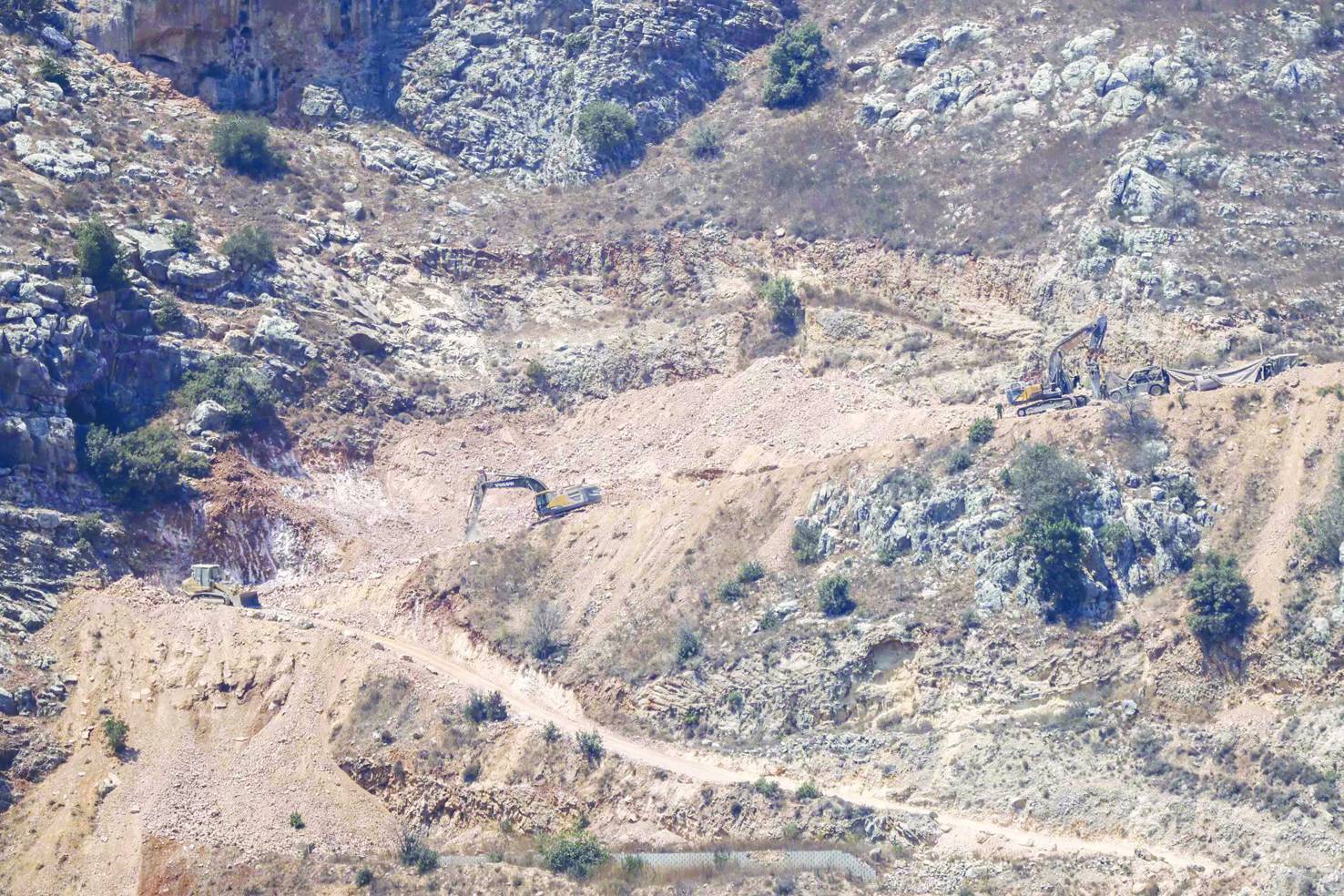
Israeli bulldozers carve roads through the mountainous al-Shaqif region in southern Lebanon (AFP)
Firepower
Kahwaji drew a distinction between occupying territory and controlling it through surveillance and firepower.
He said Israel relies on about 20 military positions, each capable of accommodating a small force, while drones continuously monitor movements deeper inside the area.
"Each position could accommodate a company-sized force, while drones operate continuously farther behind these positions to monitor movements," he said.
"When drones detect movement, it is targeted by artillery or an airstrike. Alternatively, a patrol can be dispatched from one of these positions toward the location where the movement was detected within what is known as the yellow belt."
That, he said, is what control through firepower means.
"It does not require an extensive military presence throughout the entire belt. Instead, it relies on specific military positions, continuous surveillance through drones and firepower, and the ability to target any movement or dispatch a patrol."
The result is a military footprint that extends well beyond the positions troops physically occupy.
From elevated or fortified positions, forces can monitor surrounding roads and towns, strike targets or send patrols without establishing permanent bases in every location.
From the Coast to Beaufort Castle
The pattern is visible across southern Lebanon.
In the west, Israeli operations extend from Naqoura and the coastal sector into areas that have recently faced incursions, demolitions and repeated shelling, including Mansouri and its surroundings.
Farther east, central-sector towns such as Beit Yahoun, Hadatha, Haris and Aita al-Jabal have experienced varying degrees of Israeli military activity or attacks, though the level of troop presence differs.
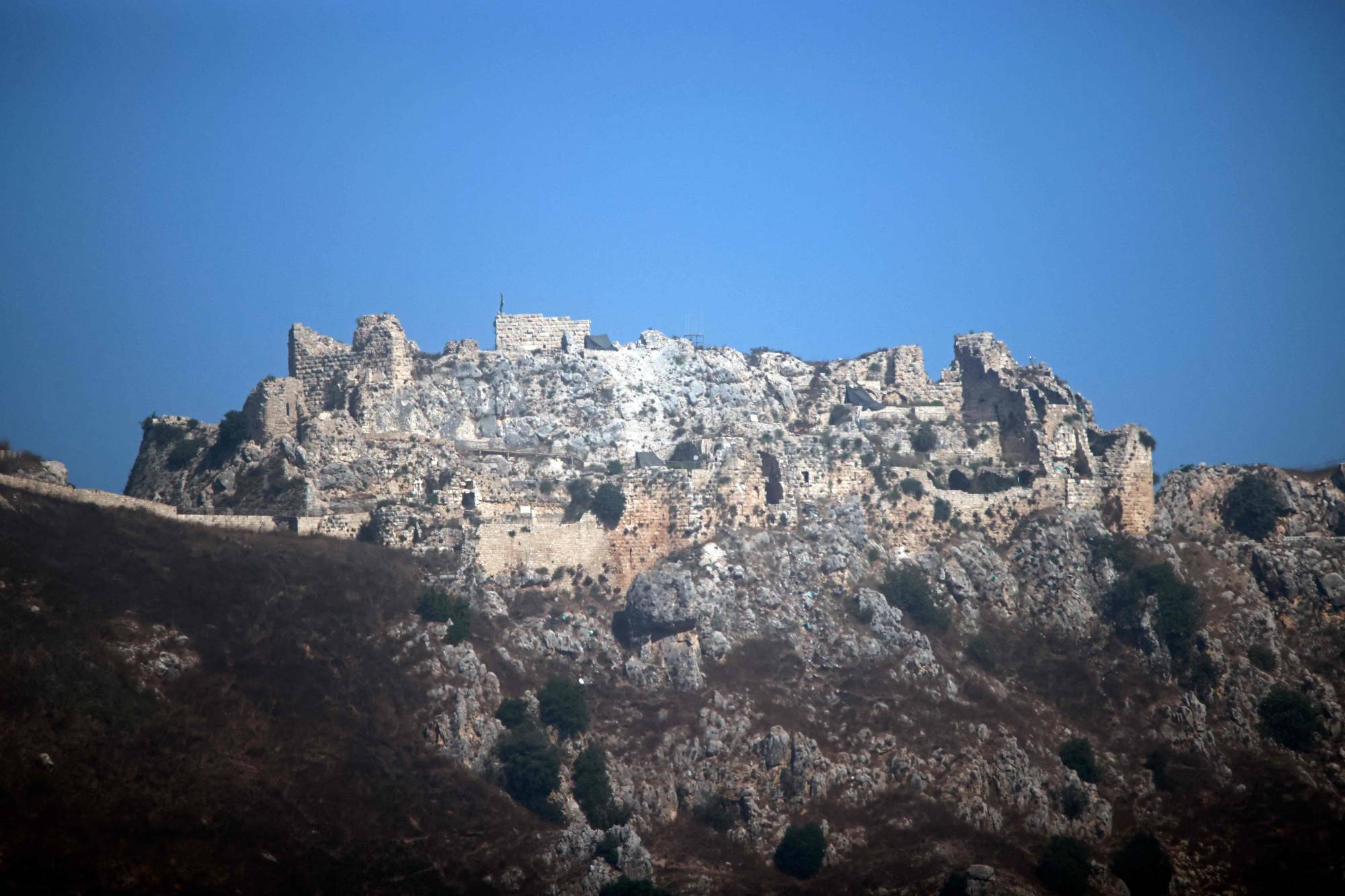
The reach of operations extends farther inland toward Beaufort Castle and the Ali al-Taher heights.
There, elevated terrain offers commanding views over wider areas toward Nabatieh, Iqlim al-Tuffah and surrounding movement routes.
The result is a zone of control shaped less by a continuous border strip than by strategic elevations and the areas they overlook.
Could Israeli Operations Reach the Awali River?
Retired Brigadier General Fadi Daoud offered a broader assessment of where Israeli operations could extend, arguing that control of high ground may determine the limits of any advance.
"What is clear in southern Lebanon is that the expansion could reach the Awali River. Even if it does not, forces will remain positioned on the heights overlooking the river," Daoud told Asharq Al-Awsat.
He said such a deployment could also encompass Rihan and areas around Jezzine, particularly Kfarhouna.
"The western boundary will be the Awali River," he said, identifying geographical control, especially over commanding heights, as the key factor shaping military movements.
Holding elevated positions, he argued, would allow Israeli forces to dominate lower-lying areas with firepower without maintaining troops throughout them.
"Geographical control will enable Israel to control the western Bekaa from the right flank because it is already present on Mount Hermon. The western Bekaa has effectively become a pocket between Mount Hermon and Rihan," Daoud said.
"Israel will establish positions there to control the Bekaa."
Dense clouds of dust cover the hills of Arnoun and al-Shaqif surrounding Beaufort Castle, as seen from Marjayoun in southern Lebanon (AFP)
The Strategic Heights of Rihan and Iqlim al-Tuffah
Daoud said the potential advance could stretch from Mount Rihan toward the heights of Iqlim al-Tuffah, including Mount Safi.
"It will move from Mount Rihan to the heights of Iqlim al-Tuffah, including Mount Safi, where it will establish control over Hezbollah's stronghold in Iqlim al-Tuffah, as well as Sidon, eastern Sidon and the Awali River," he said.
For Daoud, terrain is the determining factor.
"Geography is fixed, and Israel will follow it," he said, stressing that forces positioned on high ground can control areas below through firepower without deploying throughout them.
He argued that Israeli control of Mount Hermon would leave the western Bekaa militarily exposed as far as Qaraoun.
"Its control of Mount Hermon makes the western Bekaa militarily vulnerable as far as Qaraoun," he said.
Mount Hermon, he explained, overlooks two major areas: the western Bekaa to the west and Daraa in Syria to the east.
Both, he said, "will form pockets" on either side of the mountain.
The two military assessments point to a central distinction in the debate over the 700-square-kilometer area: the territory Israel can monitor, strike or enter is not necessarily territory it physically occupies.
Commanding heights, observation posts, fields of fire and the ability to deploy patrols can extend military control far beyond fixed positions, even as the scale of Israel's actual troop presence varies from one sector to another.
Israeli Drone Strike, Demolitions Hit Southern Lebanon
Meanwhile, Israeli military operations continued across southern Lebanon on Friday.
An Israeli drone struck a roundabout in Kfar Tebnit, in the Nabatieh district, with preliminary reports indicating casualties.
At the same time, Israeli troops carried out two demolitions, one on the outskirts of Kfar Tebnit and another in Mansouri in the Tyre district.
Israeli forces also set fire to wooded areas in Qantara and swept Wadi al-Hujeir with machine-gun fire.
An Israeli drone dropped a stun grenade near Kfarshouba, while low-flying drones were reported over Beirut's southern suburbs, Tyre and surrounding areas.
Khartoum Denies Army Role in ‘Abyei Massacre’https://english.aawsat.com/arab-world/5333001-khartoum-denies-army-role-%E2%80%98abyei-massacre%E2%80%99
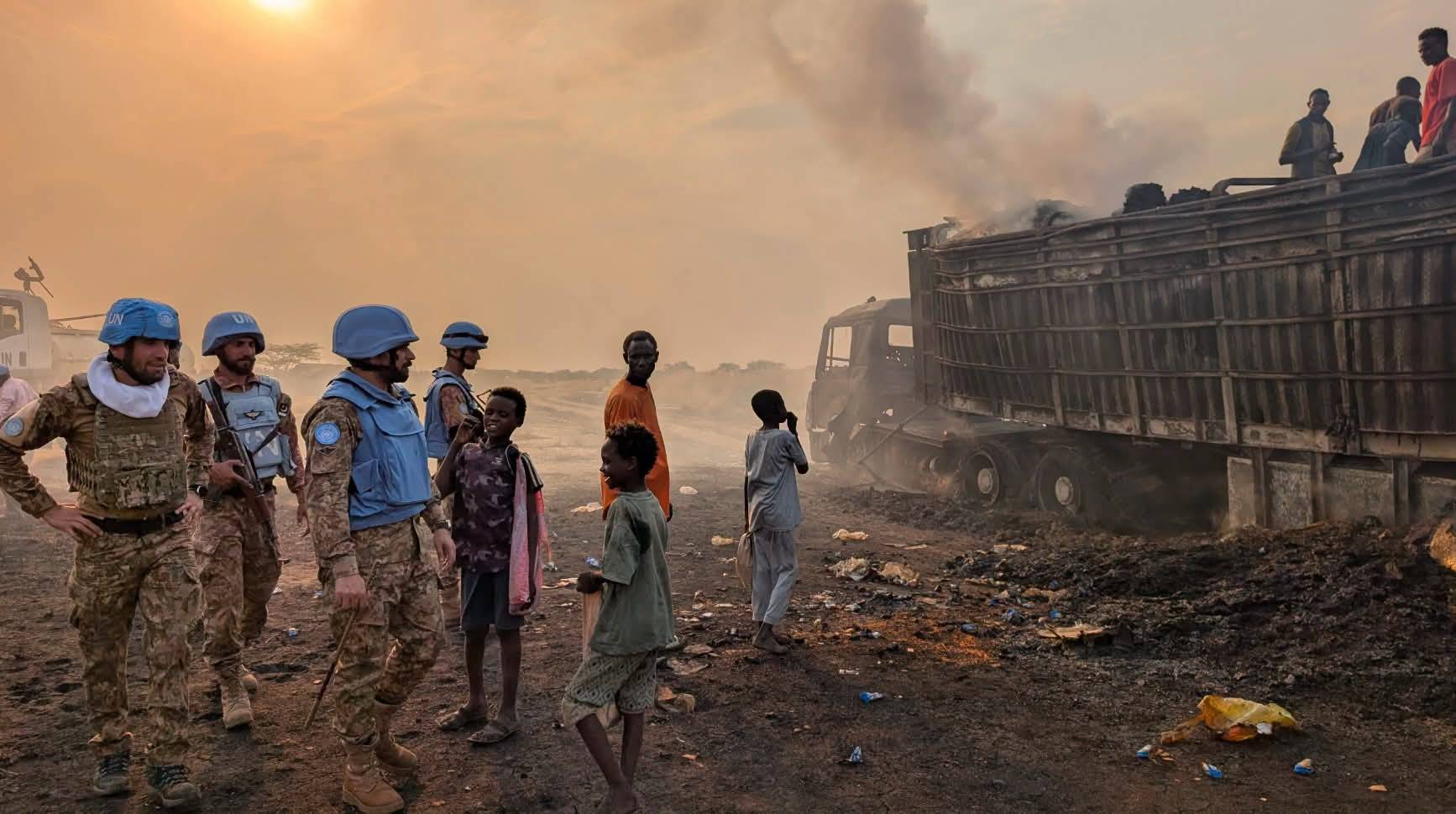
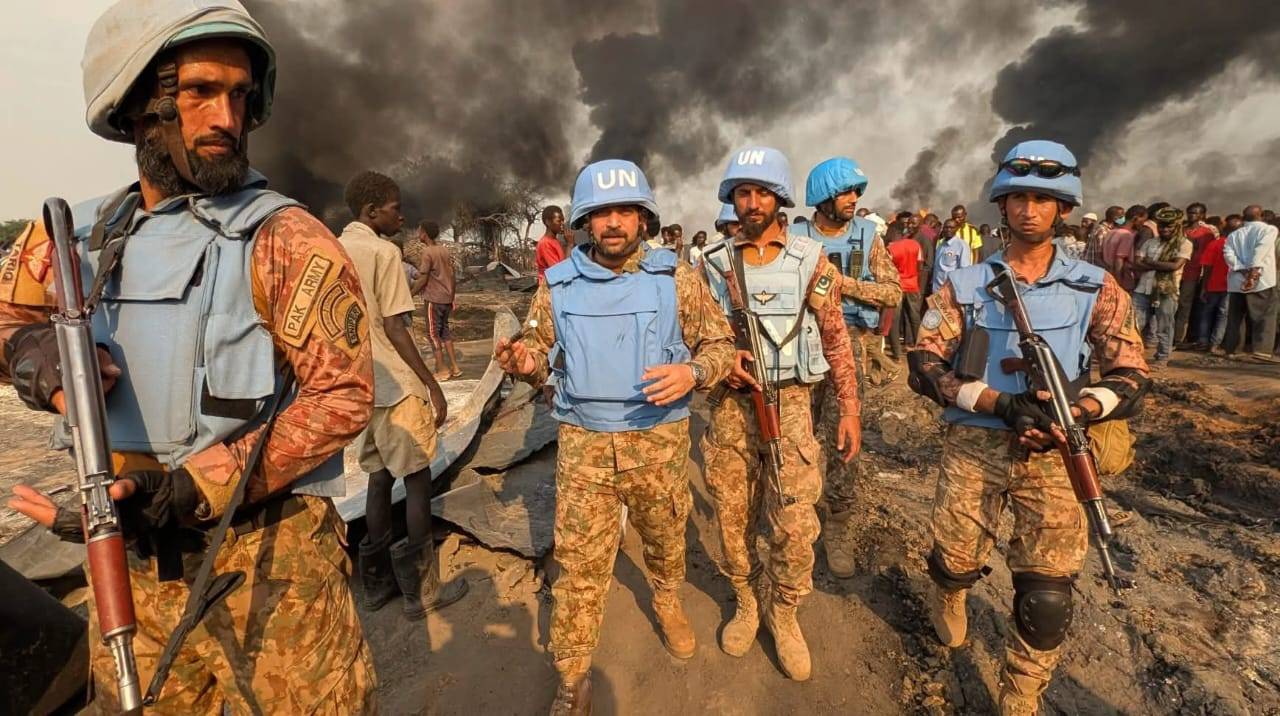
UN peacekeeping forces (UNISFA) attempting to extinguish fires in Al-Na'am market in the Abyei area (United Nations - Facebook)
Sudan’s government denied army involvement in a drone strike that killed more than 150 people at a market in the disputed Abyei region bordering South Sudan, according to local reports, as drone warfare intensified across Darfur and Kordofan.
The army, meanwhile, said it had recaptured military positions in Blue Nile state near the Ethiopian border and shot down a drone that crossed into Sudan from Ethiopia.
In a statement issued late Thursday, Sudan’s Foreign Ministry expressed deep regret over the civilian deaths, categorically denying “any connection between the Sudanese Armed Forces and this unfortunate incident.”
Aftermath of the fire that targeted a civilian truck in Abyei market (United Nations - Facebook)
The ministry said the attack bore similarities to atrocities blamed on the paramilitary Rapid Support Forces (RSF), citing a December 2025 strike on a United Nations peacekeeping headquarters in Kadugli, South Kordofan, that killed peacekeepers, as well as attacks on humanitarian aid convoys.
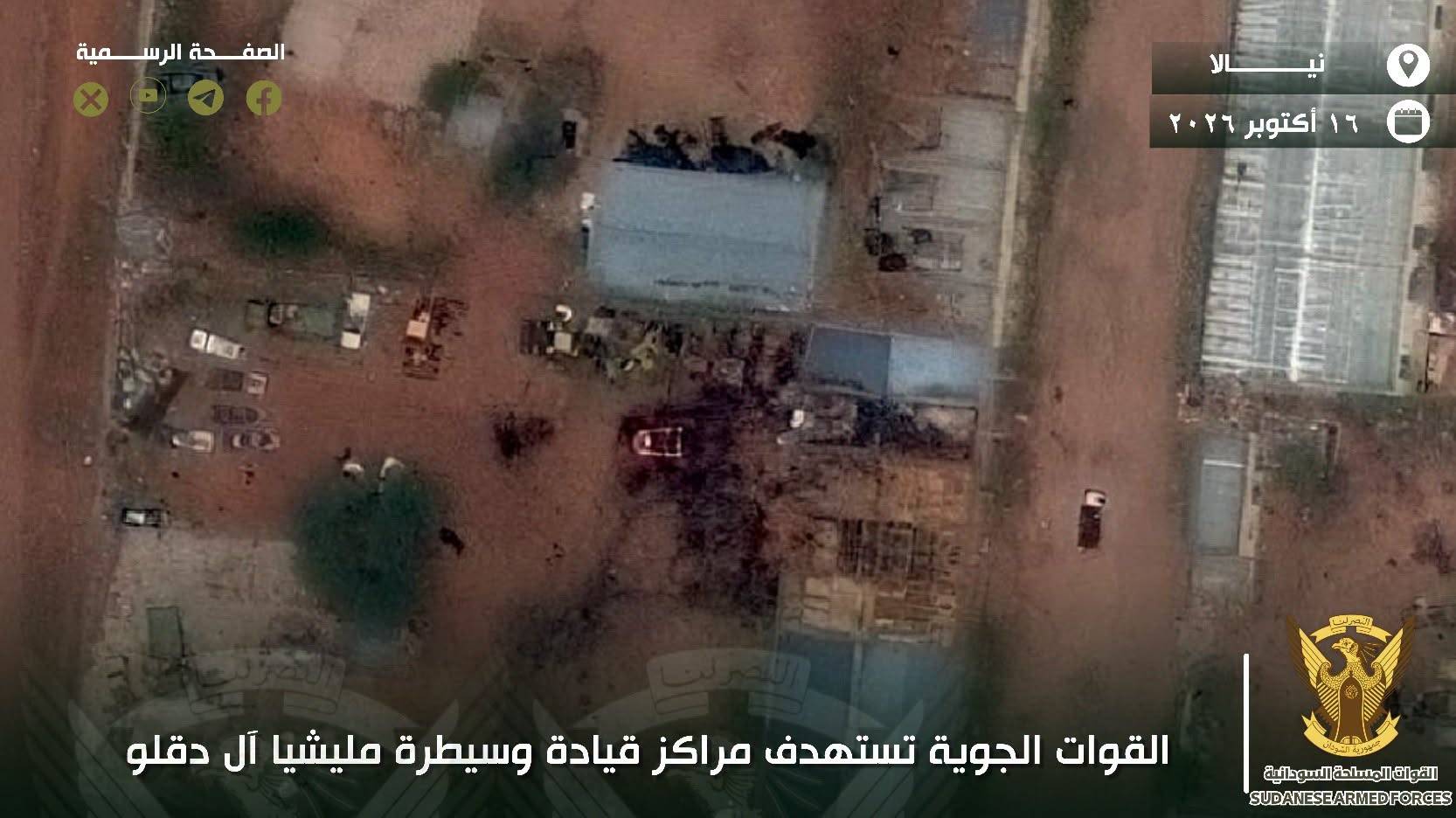
The denial followed the army’s publication of images on Facebook in recent days indicating it had struck RSF command centers in the area.
An army officer also told the Associated Press that the strikes targeted fuel trucks heading to the RSF, denying that civilians had been targeted. The army leadership has made no official admission of responsibility.
South Sudan’s Foreign Ministry summoned Sudan’s ambassador in Juba to protest the attack, amid growing fears that the war’s fallout could spill across the border.
Peacekeeping forces in Abyei (UNISFA) participating in rescuing victims from Al-Na'am market (United Nations - Facebook)
UN, African Union Condemn Strikes
Oil-rich Abyei remains a flashpoint between Sudan and South Sudan, with sovereignty over the territory disputed since South Sudan’s independence in 2011. A UN peacekeeping force is deployed in the area.
UN Secretary-General Antonio Guterres strongly condemned Monday’s drone attacks on Abyei, which killed dozens of civilians, including women and children, urging Khartoum and Juba to prevent further strikes and uphold the region’s demilitarized status.
African Union Commission Chairperson Mahmoud Ali Youssouf also condemned the attacks, citing local and medical reports of more than 150 deaths.
He urged the warring sides to avoid actions that could inflame the conflict or threaten neighboring countries and reaffirmed support for mediation efforts to secure an immediate humanitarian ceasefire.
Elsewhere, the RSF-led parallel government, known as Tasis, accused the Sudanese army of striking a hospital in El Daein, the capital of East Darfur, with a drone on Thursday, killing three people and wounding dozens, according to its account.
In a statement Friday, Tasis said further airstrikes hit the government secretariat in Nyala, the capital of South Darfur, where the RSF runs its administration of territories under its control.
Pro-army social media platforms reported heavy airstrikes on RSF positions in Nyala, El Daein, El Fasher and parts of West Kordofan.
Local reports said the strikes hit fuel depots and military vehicles in the oil-producing Abu Jabra area of East Darfur, as well as positions in Babanusa, West Kordofan.
A military source cited in the reports said the raids aimed to cripple RSF logistics ahead of possible ground operations.
Image published by the Sudanese Army of a command post belonging to the Rapid Support Forces (RSF) in Abyei (its Facebook page)
Army Reports Gains in Blue Nile
On another front, Sudan’s army said Thursday evening it had retaken Bakori and Aklili in southeastern Blue Nile state near the Ethiopian border after clashes with an alliance of the RSF and the Sudan People’s Liberation Movement-North (SPLM-N), led by Abdelaziz al-Hilu.
The army’s 4th Infantry Division, based in Damazin, said on Facebook that its troops had “liberated” both areas, inflicting heavy losses on opposing forces.
Bakori holds strategic military importance as the site of a 13th Brigade base along a route to Damazin, the state capital. RSF-allied forces had seized the area in August.
The army also said it had downed a drone it described as “strategic” over Bakori, claiming it had tracked the aircraft from the moment it crossed the Ethiopian border. It said the drone targeted fuel trucks believed to be heading to the RSF.
Sudan has accused Ethiopia of allowing the RSF to use its territory to launch drone strikes and ground operations inside Sudan, allegations Addis Ababa denies.
لم تشترك بعد
انشئ حساباً خاصاً بك لتحصل على أخبار مخصصة لك ولتتمتع بخاصية حفظ المقالات وتتلقى نشراتنا البريدية المتنوعة