


US Treasury Chief Urges Canada, Mexico to Match US tariffs on China as Deadline Looms

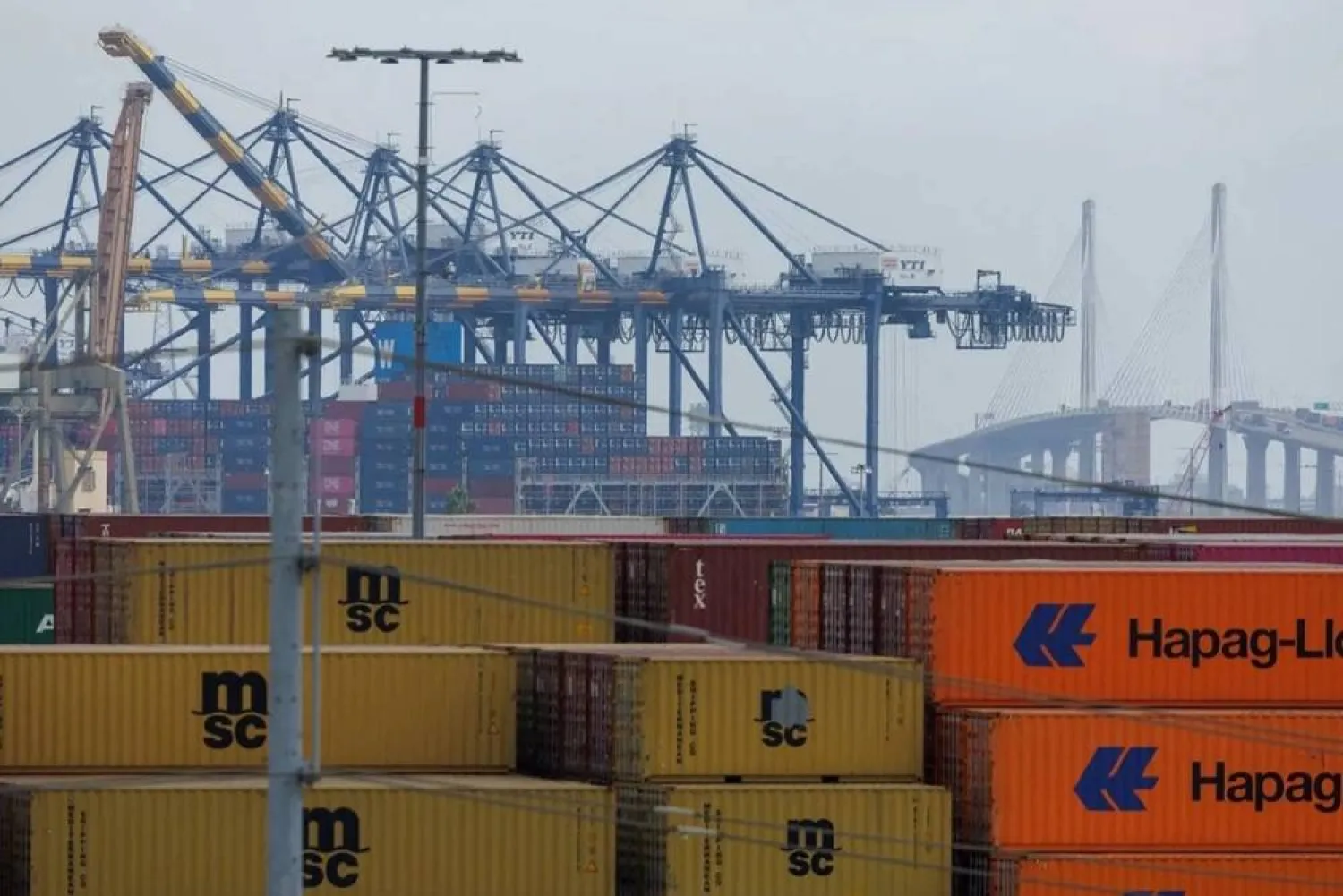
Shipping containers are shown at the Terminal 1 Container Terminal at the Port of Los Angeles in Wilmington, California, US, October 17, 2024. (Reuters)
TT

US Treasury Chief Urges Canada, Mexico to Match US tariffs on China as Deadline Looms

Shipping containers are shown at the Terminal 1 Container Terminal at the Port of Los Angeles in Wilmington, California, US, October 17, 2024. (Reuters)

US Treasury Secretary Scott Bessent pushed Friday for Canada and Mexico to match Washington's tariff hikes on China when asked in an interview if doing so could help them avert President Donald Trump's fresh levies.

Trump last Thursday said his proposed 25% tariffs on Mexican and Canadian goods will take effect on March 4, along with an extra 10% duty on Chinese imports, in addition to the 10% tariff levied on February 4.

“I do think one very interesting proposal that the Mexican government has made is perhaps matching the US on our China tariffs,” Bessent told Bloomberg Television in an interview.

“I think it would be a nice gesture if the Canadians did it also,” he added.

If both US neighbors did so, Bessent said, “we could have Fortress North America” guarding against a flood of Chinese goods.

Meanwhile, China’s vice premier said Beijing and Washington should seek ways to work together, even as Trump announced additional tariffs on the world’s second-largest economy.

“China and the US have extensive common interests and broad space for cooperation,” He Lifeng said at a dinner in Beijing Friday hosted by the American Chamber of Commerce in China, according to the official Xinhua News Agency.

“The nature of economic and trade relations between the two countries is mutually beneficial and win-win,” he said.

He indicated China would respond with countermeasures if the US continues to introduce additional trade restrictions, according to two people who attended the dinner, declining to be named because they were speaking about a private event.

Sarah Beran, deputy chief of mission at the US Embassy in Beijing, also spoke at the event, stressing the US wants fairness and reciprocity in the trade relationship. “We want to see an end to the unfair subsidies, and other measures that tilt the playing field against US companies,” Beran said, according to remarks shared by the US embassy in Beijing.

AI

Meanwhile, Chinese authorities are instructing the country's top artificial intelligence entrepreneurs and researchers to avoid travel to the United States, the Wall Street Journal reported on Friday, citing people familiar with the matter.

The authorities are concerned that Chinese AI experts traveling abroad could divulge confidential information about the nation's progress, the newspaper said.

Authorities also fear that executives could be detained and used as a bargaining chip in US-China negotiations, the Journal said, drawing parallels to the detention of a Huawei executive in Canada at Washington's request during the first Trump administration.

The Journal report also reported that executives at leading Chinese companies in AI and other strategically sensitive industries, such as robotics, are being discouraged from traveling to the US and its allies unless absolutely necessary.



China Widens Foreign Investment Incentive List to Stem Falling Inflows

People visit a shopping center in Beijing on December 20, 2025. (AFP)
TT

China Widens Foreign Investment Incentive List to Stem Falling Inflows

People visit a shopping center in Beijing on December 20, 2025. (AFP)

China on Wednesday listed more sectors eligible for foreign investment incentives, from tax breaks to preferential ​land use, in its latest effort to stem a prolonged decline in overseas capital inflows.

Under the 2025 edition of the catalogue of industries for encouraging foreign investment, China added more than 200 and revised about 300, with a ‌focus on ‌advanced manufacturing, modern services and ‌green ⁠and ​high-tech ‌sectors, the list jointly issued by the National Development and Reform Commission and the commerce ministry showed.

The new catalogue, which takes effect on February 1, 2026, replaces the 2022 version and continues a policy framework ⁠that offers foreign-invested enterprises tariff exemptions on imported equipment, preferential ‌land pricing, reduced corporate income ‍tax rates in ‍designated regions and tax credits for reinvestment ‍of profits.

The catalogue also extends incentives to central and western regions, as well as the northeast and Hainan, as Beijing seeks to attract ​more foreign investment into less developed areas.

China has in recent months ⁠taken a raft of measures to boost foreign investment, including pilot programs in Beijing, Shanghai and other regions to expand market access in services such as telecoms, healthcare and education, amid trade tensions with the United States.

Foreign direct investment in China totaled 693.2 billion yuan ($98.84 billion) from January to November this year, down 7.5% from the ‌same period last year, data from the commerce ministry showed.


Environment Ministry Launches Saudi Citrus Season with Production Exceeding 158,000 Tons

The citrus production season in the Kingdom begins in July and continues through March each year. (SPA)
TT

Environment Ministry Launches Saudi Citrus Season with Production Exceeding 158,000 Tons

The citrus production season in the Kingdom begins in July and continues through March each year. (SPA)

The Saudi Ministry of Environment, Water and Agriculture launched on Wednesday the Kingdom’s citrus season in local markets as part of its efforts to support and develop the agricultural sector and enhance food security in the country, in line with the Saudi Vision 2030.

The is part of the ministry’s ongoing efforts to support national agricultural products, raise awareness of citrus varieties and their nutritional benefits and production areas, and highlight their year-round diversity across production seasons.

These efforts help in improving marketing efficiency, boost competitiveness, and achieve rewarding economic returns.

Citrus fruits are among the most widely cultivated crops in the Kingdom. They are grown in several regions that produce a variety of citrus types, most notably lemons, oranges, mandarins, grapefruit, citron, and kumquats.

The ministry said lemon production leads Saudi citrus output, with total production exceeding 123,000 tons and more than 1.5 million fruit-bearing trees. Orange production follows, with total output reaching 35,700 tons and more than 397,000 fruit-bearing trees.

The citrus production season in the Kingdom begins in July and continues through March each year, it added.

The ministry said the Saudi citrus season has been launched with a number of major retail markets across the Kingdom showcasing local products through innovative packaging and display methods. This boosts the quality and reliability of local products and increases consumer demand during production seasons.


SLB Awarded 5-Year Contract to Stimulate Unconventional Gas in Saudi Arabia

SLB has been awarded a five-year contract by Saudi Aramco to provide stimulation services for its unconventional gas fields. (Asharq Al-Awsat)
TT

SLB Awarded 5-Year Contract to Stimulate Unconventional Gas in Saudi Arabia

SLB has been awarded a five-year contract by Saudi Aramco to provide stimulation services for its unconventional gas fields. (Asharq Al-Awsat)

Global technology company, SLB, has been awarded a five-year contract by Saudi Aramco to provide stimulation services for its unconventional gas fields, the company said in a statement on Tuesday.

The move is part of a broader multi-billion contract, supporting one of the largest unconventional gas development programs globally, it said.

The contract encompasses advanced stimulation, well intervention, frac automation, and digital solutions, which are important to unlocking the potential of Saudi Arabia’s unconventional gas resources - a cornerstone of the Kingdom’s strategy to diversify its energy portfolio and support the global energy transition.

“This agreement is an important step forward in Aramco’s efforts to diversify its energy portfolio in line with Vision 2030 and energy transition goals,” said Steve Gassen, SLB executive vice president.

“With world-class technology, deep local expertise, and a proven track record in safety and service quality, SLB is well positioned to deliver tailored solutions that could help redefine operational performance in the development of Saudi Arabia’s unconventional resources,” he added.

These solutions provide the tools to work toward new performance benchmarks in unconventional gas development.

SLB is a global technology company that drives energy innovation for a balanced planet.

With a global footprint in more than 100 countries and employees representing almost twice as many nationalities, it works on innovating oil and gas, delivering digital at scale, decarbonizing industries, and developing and scaling new energy systems that accelerate the energy transition.