Saudi Arabia Concludes Third IMFC Deputies Meeting

The Kingdom's chairmanship of the IMFC is a testament to its strong commitment to promoting multilateralism and reflects its leading role in supporting regional and global economic growth. - SPA
TT

Saudi Arabia Concludes Third IMFC Deputies Meeting

The Kingdom's chairmanship of the IMFC is a testament to its strong commitment to promoting multilateralism and reflects its leading role in supporting regional and global economic growth. - SPA

The Kingdom of Saudi Arabia concluded the third deputies meeting for the International Monetary Fund's (IMF) International Monetary and Financial Committee (IMFC), which was held under the Saudi chairmanship in Diriyah on April 6-7, and co-organized by the Ministry of Finance and the IMF.
During his opening speech, Minister of Finance Mohammed Aljadaan praised the efforts of the IMF's leadership and the members of the IMFC in guiding the IMF during challenging times. He also emphasized the importance of collaboration to ensure global financial stability and strong, inclusive economic growth. "The IMF has shown resilience by adapting to the ever-changing global landscape," Minister Aljadaan said.
In her opening speech, Managing Director of the International Monetary Fund Dr. Kristalina Georgieva expressed her gratitude for Saudi Arabia's ongoing and robust support for the IMF and the strong leadership of the IMFC, SPA reported.
"Amid significant global policy changes, the IMF's mission to foster macroeconomic and financial stability remains just as essential as it was 80 years ago. Our 191 member countries can rely on the IMF as a trusted advisor," she said.
The IMFC deputies discussed several topics during the high-level discussion sessions, including ways to enhance global financial stability and inclusive development. They addressed the challenges facing the global economy due to uncertainty in trade flows and its impact on capital in both advanced and developing economies. Emphasis was placed on the effect of high debt levels on investments in infrastructure and jobs and the opportunities and risks arising from technological and demographic shifts.
Additionally, they discussed the IMF's role in supporting countries through financial stability programs and coordinating regional financial arrangements.



Saudi Arabia Says Dialogue is Essential to Preserve Regional Stability

Saudi Vice Minister of Foreign Affairs Waleed Elkhereiji speaks at the BRICS Foreign Ministers’ Meeting in New Delhi. Photo: Saudi Foreign Ministry
TT

Saudi Arabia Says Dialogue is Essential to Preserve Regional Stability

Saudi Vice Minister of Foreign Affairs Waleed Elkhereiji speaks at the BRICS Foreign Ministers’ Meeting in New Delhi. Photo: Saudi Foreign Ministry

Saudi Vice Minister of Foreign Affairs Waleed Elkhereiji has stressed the importance of continuing dialogue among all concerned parties, including BRICS countries, to enhance regional stability and security.

On behalf of Minister of Foreign Affairs Prince Faisal bin Farhan bin Abdullah, Elkhereiji took part on Thursday in the BRICS Foreign Ministers’ Meeting in New Delhi under the theme “Building for Resilience, Innovation, Cooperation and Sustainability.”

The Kingdom participated in its capacity as a BRICS member country.

In his speech, Elkhereiji said the world is witnessing rapid technological and economic transformations, stressing the importance of enabling countries to keep pace with accelerating digital transformation, particularly in light of the growing opportunities and future implications associated with artificial intelligence.

He said ensuring fair access to technology and digital capabilities will remain an essential element in achieving sustainable and balanced development for all.

“The Kingdom affirms that stability in the Arabian Gulf and the Red Sea is not merely a regional matter, but a fundamental pillar for the resilience and stability of the global economy, particularly during periods of uncertainty and crises. Preserving this stability is a shared responsibility and a collective interest of the entire international community,” he said.

Elkhereiji stressed that the Kingdom expresses deep concern over the current situation and recent attacks targeting Gulf countries and Jordan. He said the Kingdom also stresses the importance of de-escalation, restraint, and adherence to international law, while emphasizing the need to avoid further steps that could exacerbate tensions in the region.

He reaffirmed the Kingdom’s emphasis on the importance of continuing dialogue among all concerned parties, including BRICS countries, in support of efforts exerted to enhance regional stability and security.

Elkhereiji said the region remains a vital hub in global trade networks, with a large share of global energy supplies and commercial goods moving between Asia and Europe through maritime corridors in the Arabian Gulf and the Red Sea.

He stressed that any disruption affecting the security or stability of the region would have immediate and wide-ranging repercussions for global energy markets, inflation rates, sustainable development efforts, and global economic growth in general.


Saudi Arabia Condemns Provocative Israeli Practices at Al-Aqsa

Saudi Arabia condemned raising the Israeli flag in the Al-Aqsa Mosque compound. REUTERS/Ilan Rosenberg
TT

Saudi Arabia Condemns Provocative Israeli Practices at Al-Aqsa

Saudi Arabia condemned raising the Israeli flag in the Al-Aqsa Mosque compound. REUTERS/Ilan Rosenberg

Saudi Arabia has condemned “repeated provocative practices” by Israeli officials at Al-Aqsa mosque compound in Jerusalem.

A Foreign Ministry statement said Thursday that most recently an Israeli official stormed the Mosque under police protection, and another official raised the Israeli flag in the Mosque compound.

The statement said that “the Kingdom reaffirms its categorical rejection of all actions that undermine the historical and legal status of Al-Quds and its holy sites.”

It urged the international community “to put an end to such practices that violate international laws and norms, and to hold the Israeli occupation authorities accountable for their serious and ongoing violations against Islamic holy sites and innocent civilians in the State of Palestine.”


860,000 Pilgrims Arrive as Saudi Arabia Declares Full Readiness for Hajj

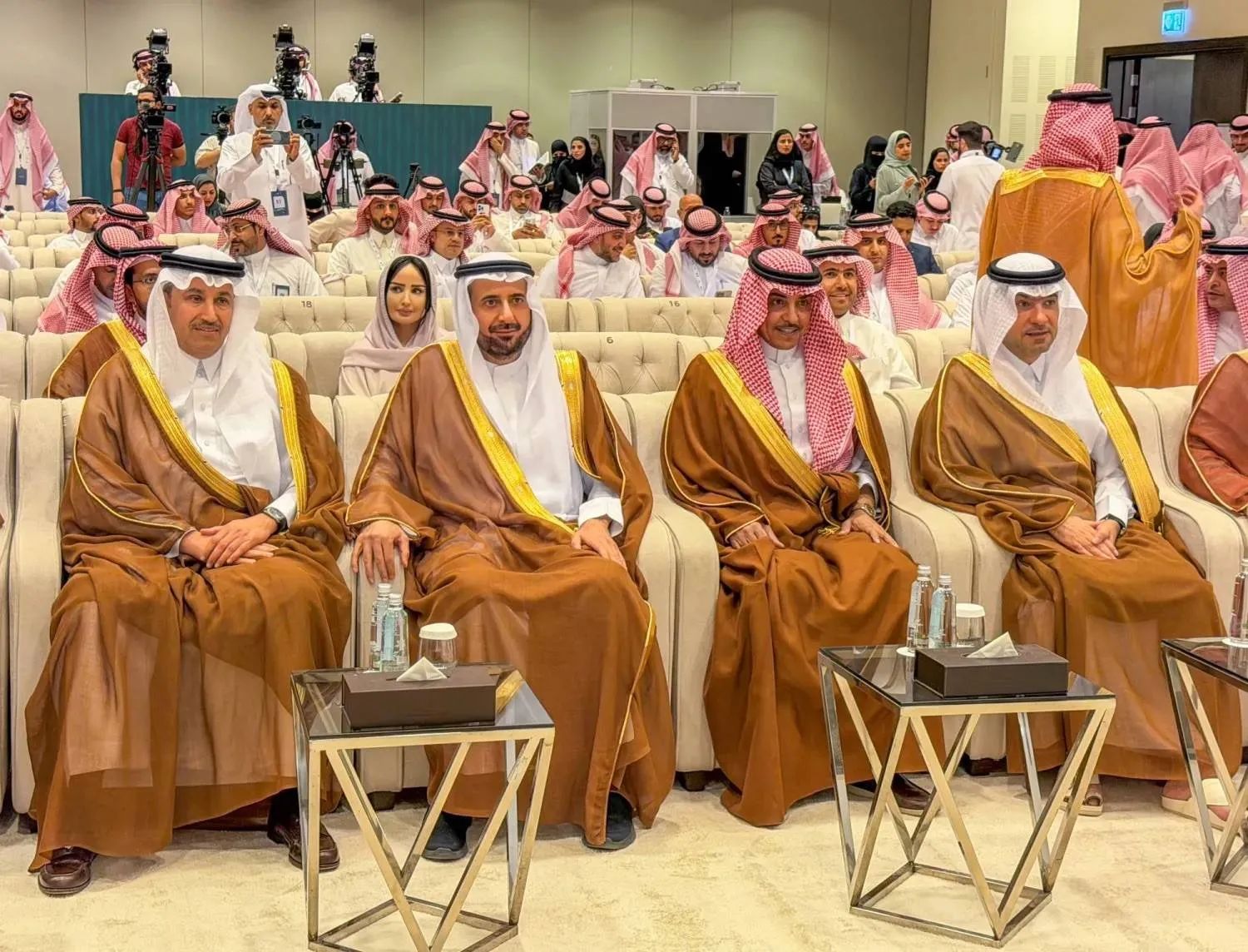
The ministers affirmed the Kingdom’s full readiness to serve pilgrims. (Photo by Saleh Al-Ghannam) 
TT

860,000 Pilgrims Arrive as Saudi Arabia Declares Full Readiness for Hajj

The ministers affirmed the Kingdom’s full readiness to serve pilgrims. (Photo by Saleh Al-Ghannam) 

Saudi Arabia said on Wednesday it was fully prepared to receive and serve pilgrims during this year’s Hajj season through an integrated system of security, health, transport and logistical services from arrival through departure.

Speaking at a government press conference on Wednesday, five Saudi ministers stressed the Kingdom’s readiness to ensure the safety of pilgrims, facilitate their movement and improve services at the holy sites in Makkah and Medina.

Saudi Information Minister Salman Al-Dossary said the Kingdom’s Hajj security system was operating through detailed plans based on crowd movement analysis and forecasting using artificial intelligence and modern technologies to improve response times and safety.

Al-Dossary stressed that the Interior Ministry continued to implement the “Makkah Route” initiative for an eighth year in 10 countries through 17 entry points. Since its launch, more than 1.2 million pilgrims have benefited from the program, he said. He added that fifth-generation mobile network coverage at the holy sites had reached 100%, supported by more than 4,200 technical personnel working on the ground.

More than 150 media organizations and over 3,000 local and international journalists are covering this year’s Hajj season, according to Al-Dossary.

Meanwhile, Hajj and Umrah Minister Tawfiq Al-Rabiah said more than 860,000 pilgrims had arrived so far through air, land and sea ports.

“The opportunity has been made available for more than 30 Saudi companies to provide services for foreign pilgrims and enable direct booking without intermediaries from more than 126 non-Muslim countries,” Al-Rabiah stated.

He added that accommodation capacity at Mina had been expanded through the construction of the Kedana Al-Khaif camps near the Jamarat complex over an area of 24,000 square meters.

Al-Rabiah revealed that the “Pilgrim Without a Bag” initiative had been expanded to all foreign pilgrims this year, allowing them to ship luggage directly from their home countries to their accommodation and have it returned after the pilgrimage. He said processing times had been cut from 120 minutes to 15 minutes.

He added that services for pilgrims were being coordinated among more than 60 government and operational entities through over 600 work plans. The Nusuk application now serves more than 51 million users worldwide and offers more than 130 digital services during this year’s Hajj season, he underlined.

For his part, Transport and Logistics Minister Saleh Al-Jasser noted that the aviation sector had mobilized its operational capacity across Saudi airports to ensure a smooth travel experience for pilgrims.

More than 3 million seats have been allocated through six airports linking the Kingdom to more than 300 airports worldwide via 104 airlines, he said, adding that airports were equipped to receive more than 1.5 million pilgrims arriving from abroad. Early transport packages introduced for pilgrims would help shield them from rising transportation costs, he remarked.

The minister further pointed that authorities had carried out extensive road maintenance and bridge repairs and expanded the use of road-cooling technology at the holy sites.

He explained that more than 3,000 buses have been allocated to transport pilgrims between accommodations and the Grand Mosque, while another 5,000 buses will provide shuttle services. More than 46,000 personnel have also been deployed to serve pilgrims during the Hajj season.

Municipalities and Housing Minister Majed Al-Hogail said services provided to pilgrims had evolved significantly in recent years through greater coordination among government agencies.

He told the press conference that municipal authorities across the Kingdom were working together to support pilgrims arriving through ports and regional roads, while advanced infrastructure networks covering 4.6 million square meters had been completed between the holy sites.

More than 88,000 sanitation workers are operating around the clock, while authorities are conducting 2,800 daily inspections covering food, water and public facilities, according to Al-Hogail.

Health Minister Fahad Al-Jalajel said Saudi Arabia had continued developing its Hajj system year after year until it became a global model for managing mass gatherings.

Responding to concerns over epidemics, including hantavirus, Al-Jalajel stated that there was “no concern over any epidemic” affecting pilgrims and that Saudi authorities were closely coordinating with international organizations.

He noted that more than 52,000 healthcare workers had been deployed for this year’s Hajj season, supported by over 20,000 hospital beds, including 3,800 beds at the holy sites — triple last year’s capacity.

Authorities have also allocated 3,000 ambulances, 11 medical evacuation aircraft and 7,700 paramedics, in addition to 25 healthcare centers supporting hospitals at the holy sites, he added.