


Altar Found in Guatemalan Jungle Evidence of Mingling of Mayan and Teotihuacan Cultures, Experts Say 

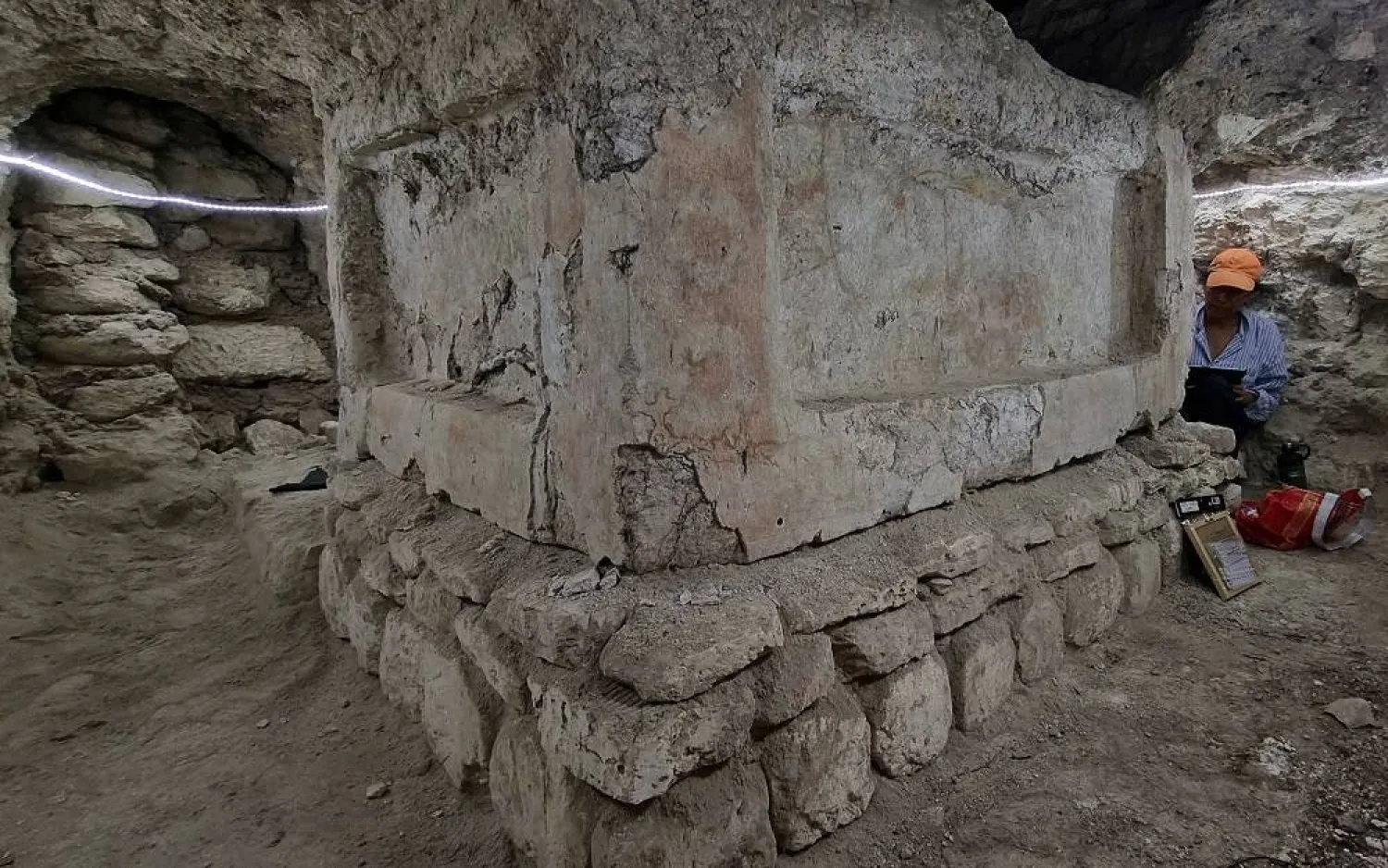
An undated handout picture released by the Guatemalan Ministry of Culture office on April 7, 2025, shows an archaeologist working on a Teotihuacan altar found in 2022 in the Tikal Mayan National Park in Guatemala. (Handout / Guatemalan Ministry of Culture and Sports / AFP)
TT

Altar Found in Guatemalan Jungle Evidence of Mingling of Mayan and Teotihuacan Cultures, Experts Say 

An undated handout picture released by the Guatemalan Ministry of Culture office on April 7, 2025, shows an archaeologist working on a Teotihuacan altar found in 2022 in the Tikal Mayan National Park in Guatemala. (Handout / Guatemalan Ministry of Culture and Sports / AFP)

An altar from the Teotihuacan culture, at the pre-Hispanic heart of what became Mexico, was discovered in Tikal National Park in Guatemala, the center of Mayan culture, demonstrating the interaction between the two societies, Guatemala’s Culture and Sports Ministry announced Monday.

The enormous city-state of Tikal, whose towering temples still stand in the jungle, battled for centuries with the Kaanul dynasty for dominance of the Maya world.

Far to the north in Mexico, just outside present day Mexico City, Teotihuacan -- “the city of the gods” or “the place where men become gods” -- is best known for its twin Temples of the Sun and Moon. It was actually a large city that housed over 100,000 inhabitants and covered around 8 square miles (20 square kilometers).

The still mysterious city was one of the largest in the world at its peak between 100 B.C. and A.D. 750. But it was abandoned before the rise of the Aztecs in the 14th century.

Lorena Paiz, the archaeologist who led the discovery, said that the Teotihuacan altar was believed to have been used for sacrifices, “especially of children.”

“The remains of three children not older than 4 years were found on three sides of the altar,” Paiz told The Associated Press.

“The Teotihuacan were traders who traveled all over the country (Guatemala),” Paiz said. “The Teotihuacan residential complexes were houses with rooms and in the center altars; that’s what the residence that was found is like, with an altar with the figure representing the Storm Goddess.”

It took archaeologists 1½ years to uncover the altar in a dwelling and analyze it before the announcement.

Edwin Román, who leads the South Tikal Archaeological Project within the park, said the discovery shows the sociopolitical and cultural interaction between the Maya of Tikal and Teotihuacan’s elite between 300 and 500 A.D.

Román said the discovery also reinforces the idea that Tikal was a cosmopolitan center at that time, a place where people visited from other cultures, affirming its importance as a center of cultural convergence.

María Belén Méndez, an archaeologist who was not involved with the project, said the discovery confirms “that there has been an interconnection between both cultures and what their relationships with their gods and celestial bodies was like.”

“We see how the issue of sacrifice exists in both cultures. It was a practice; it’s not that they were violent, it was their way of connecting with the celestial bodies,” she said.

The altar is just over a yard (1 meter) wide from east to west and nearly 2 yards (2 meters) from north to south. It is about a yard (1 meter) tall and covered with limestone.

The dwelling where it was found had anthropomorphic figures with tassels in red tones, a detail from the Teotihuacan culture, according to the ministry’s statement.

Tikal National Park is about 325 miles (525 kilometers) north of Guatemala City, and the discovery site is guarded and there are no plans to open it to the public.



Cultural Camp at King Abdulaziz Camel Festival Showcases Saudi Heritage

The camp celebrates authentic Saudi heritage and reinforces culture as a cornerstone of national identity - SPA
TT

Cultural Camp at King Abdulaziz Camel Festival Showcases Saudi Heritage

The camp celebrates authentic Saudi heritage and reinforces culture as a cornerstone of national identity - SPA

The cultural camp is a key feature of the 10th King Abdulaziz Camel Festival, held in Al-Sayahid desert. The camp celebrates authentic Saudi heritage and reinforces culture as a cornerstone of national identity, according to SPA.

It offers a range of programs, including live performances and interactive events, that highlight camels' historical significance in Arab culture and illustrate the values of patience, strength, and belonging.

The camp has attracted over 2,000 guests from 71 nationalities, emphasizing its global appeal as a cultural platform for diversity and tradition.

Visitors engage with cultural content through innovative methods that merge authenticity with modern technology, enhancing awareness of the camel's cultural legacy. This initiative aligns with Saudi Vision 2030 by preserving heritage and connecting younger generations with their roots.


Tuwaiq Sculpture 2026 Announces 25 Participating Artists for Seventh Edition

The 2026 edition features a month-long live sculpting phase alongside a community engagement program - SPA
TT

Tuwaiq Sculpture 2026 Announces 25 Participating Artists for Seventh Edition

The 2026 edition features a month-long live sculpting phase alongside a community engagement program - SPA

Under the Royal Commission for Riyadh City and Riyadh Art, Tuwaiq Sculpture has announced the selection of 25 artists for the seventh edition of the annual sculpture symposium and exhibition, taking place from January 10 to February 22, 2026.

This year’s edition unfolds under the curatorial theme “Traces of What Will Be,” inviting artists to reflect on how sculptural form can express the physical, cultural and conceptual traces that shape the future of cities and communities, SPA reported.

A total of 25 artists from 18 countries, including Saudi artists, have been selected for the seventh edition. Their proposals reflect a diverse range of artistic approaches, responding to the theme through explorations of transformation, place, and materiality.

Director of the Tuwaiq Sculpture Symposium Sarah Alruwayti said: "The seventh edition of Tuwaiq Sculpture received more than 590 applications, reflecting the cultural diversity and global interest in the symposium. The selection of the 25 participating artists was carried out by a jury of industry experts and specialists. Their proposals show meaningful engagement with the theme and reflect the strength and diversity of contemporary sculptural practice. We look forward to welcoming them to Riyadh for the creation of new works that will become lasting additions to the city.”

Building on the evolving material practice of the symposium, Tuwaiq Sculpture 2026 introduces two sculpting categories: granite with optional stainless-steel integration and reclaimed metal. Twenty artists will work in granite, while five will create new works in reclaimed metal. Over four weeks, they will produce large-scale sculptures that will later be added to Riyadh Art’s permanent public art collection.

The 2026 edition features a month-long live sculpting phase alongside a community engagement program, inviting visitors to witness the creation of artworks and take part in panel discussions and workshops. The symposium will conclude with a public exhibition showcasing the completed sculptures from its seventh edition.


ALECSO Celebrates Opening of Arabic Calligraphy Center in Saudi Arabia

Arabic calligraphy adorns wrcades, Walls of the Grand Mosque of Makkah - SPA
TT

ALECSO Celebrates Opening of Arabic Calligraphy Center in Saudi Arabia

Arabic calligraphy adorns wrcades, Walls of the Grand Mosque of Makkah - SPA

The Arab League of Educational, Cultural and Scientific Organization (ALECSO) congratulated Saudi Arabia on the opening of the Prince Mohammed bin Salman Global Center for Arabic Calligraphy in Madinah on December 22, 2025.

In a statement, ALECSO called the center a significant addition to the Arab and Islamic cultural landscape, noting its role in preserving Arabic calligraphy and enhancing its global presence, SPA reported.

This achievement reflects the Kingdom's commitment to culture and heritage, aligning with Saudi Vision 2030’s objectives of fostering cultural creativity and reinforcing Arabic identity.

ALECSO emphasized that such institutions serve as global bridges for cultural exchange and ensure the relevance of traditional arts through dedicated research and training facilities.