WHO: Dire State of Maternal and Neonatal Health in Yemen

 Hemorrhage and pre-eclampsia/eclampsia remain leading causes of maternal deaths in Yemen (UN) 
 Hemorrhage and pre-eclampsia/eclampsia remain leading causes of maternal deaths in Yemen (UN) 
TT

WHO: Dire State of Maternal and Neonatal Health in Yemen

 Hemorrhage and pre-eclampsia/eclampsia remain leading causes of maternal deaths in Yemen (UN) 
 Hemorrhage and pre-eclampsia/eclampsia remain leading causes of maternal deaths in Yemen (UN) 

The World Health Organization (WHO) raised on Thursday the alarm about the dire state of maternal and neonatal health in Yemen, which it described as “devastating.”

The agency also underscored the urgent need for scaled-up interventions to save lives and protect the well-being of Yemen's most vulnerable.

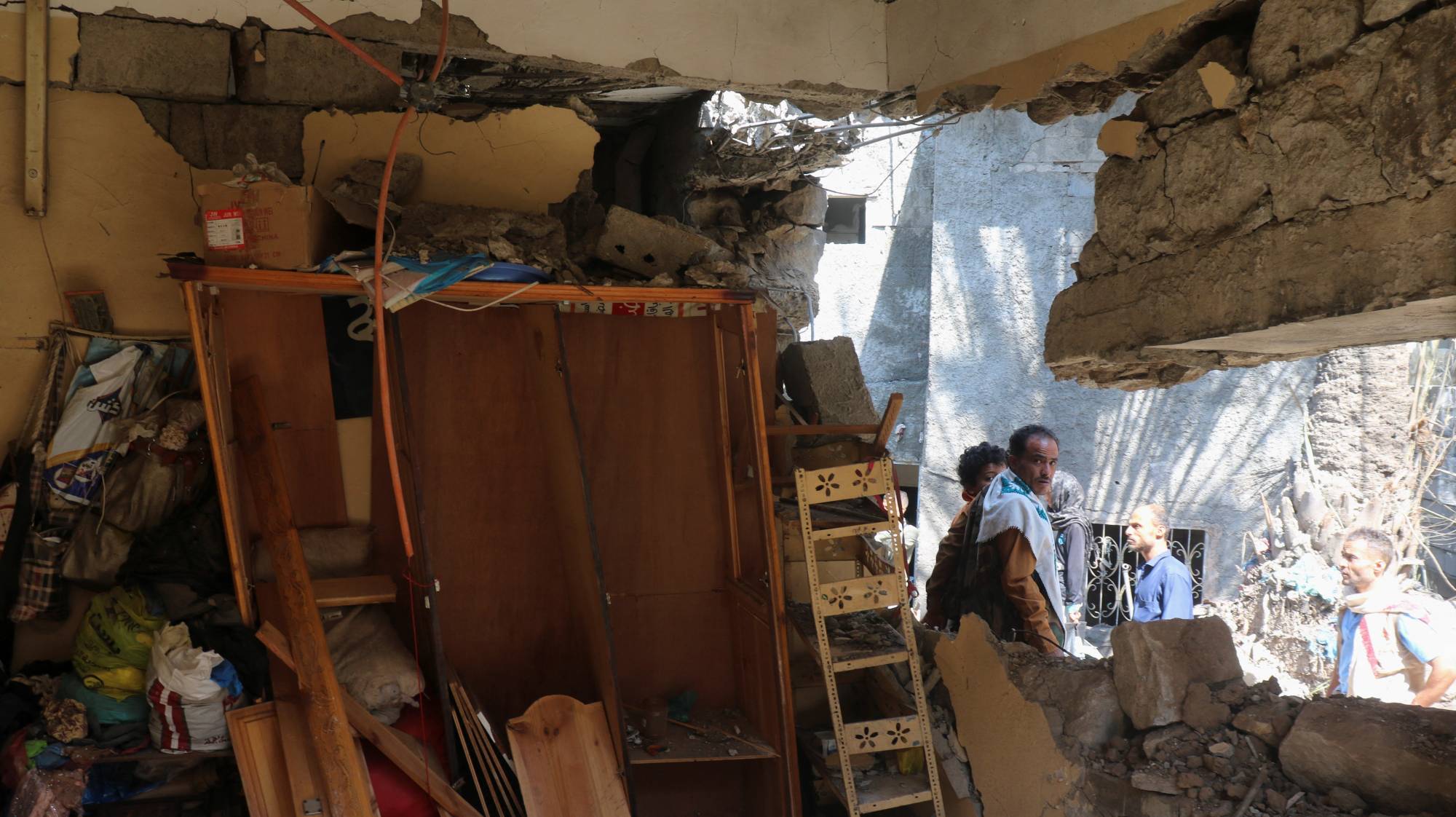
“Decades of conflict and a spiraling humanitarian crisis have decimated Yemen's health system,” WHO said in a report issued on World Health Day 2025.

Its statistics painted a stark picture of suffering and loss. Figures showed that maternal mortality reached 183 deaths per 100,000 live births in 2020, a devastating regression in maternal health outcomes.

WHO said preventable complications such as hemorrhage and pre-eclampsia/eclampsia remain leading causes of maternal deaths, claiming the lives of women who should be experiencing the joy of motherhood.

It also noted that prematurity, asphyxia, pneumonia and sepsis contribute to unacceptably high neonatal mortality rates while malnutrition and anemia are rampant among women of reproductive age, jeopardizing their health and the health of their babies.

“The reality for mothers and newborns in Yemen is heartbreaking,” said acting WHO Representative in Yemen Dr Ferima Coulibaly-Zerbo.

“Behind these statistics are stories of immense hardship and loss. On this World Health Day, we cannot accept this as the status quo. We must act decisively and with unwavering commitment to ensure healthy beginnings and pave the way for hopeful futures,” Coulibaly-Zerbo added.

In this regard, WHO said it works tirelessly with health partners to deliver critical support and implement lifesaving interventions in Yemen, including strengthening surveillance systems to better understand and respond to maternal deaths and improving the quality of care in health facilities, ensuring access to skilled birth attendance and emergency obstetric care.

It also works on providing essential medicines, equipment and supplies to health facilities and training, supporting midwives and other health care providers and addressing malnutrition through screening, counseling and supplementation programs.

WHO called on the international community to increase funding for maternal and neonatal health interventions, for the government and health authorities to prioritize and strengthen the health system and all stakeholders to work together to overcome barriers to access and ensure that every mother and newborn receives the care they need.

“The future of Yemen depends on the health and well-being of its mothers and children,” said Couliba-Zerbo. “Let World Health Day 2025 be a turning point, a moment when we collectively resolve to protect and invest in hopeful futures for all Yemenis,” she added.


Khaddam: Despite My Warning, Hariri Stayed in Lebanon for Electoral Reasons, He Was Killed 6 Days Later

Abdul Halim Khaddam and Rafik al-Hariri meet in June 2001. (AFP)
TT

Khaddam: Despite My Warning, Hariri Stayed in Lebanon for Electoral Reasons, He Was Killed 6 Days Later

Abdul Halim Khaddam and Rafik al-Hariri meet in June 2001. (AFP)

Former Syrian Vice President Abdul Halim Khaddam reveals new details in his memoirs about a February 2005 meeting with late Lebanese former Prime Minister Rafik al-Hariri at his Beirut residence six days before his assassination.

The memoirs, edited and introduced by Ibrahim Hamidi, are due to be published in early September by Raff Publishing, a subsidiary of the Saudi Research and Media Group (SRMG).

Khaddam recalled that he and Hariri met over a lunch, where the Syrian official, concerned over the former PM’s life, urged him to leave Lebanon “immediately.”

They met on February 8, 2005. Hariri was killed six days later.

The memoirs are due to be published in early September by Raff Publishing, a subsidiary of the Saudi Research and Media Group (SRMG).

In January 2005, during a Baath party meeting at the Syrian presidential palace, then President Bashar al-Assad told the command members: "There is an American-French conspiracy against Syria, and Rafik al-Hariri is involved in it."

Khaddam said that he and the other members were surprised by this dangerous talk, and that two days later, he sent a verbal message to Hariri through former Lebanese Defense Minister Mohsen Dalloul, warning him that dangers were growing and he must leave Lebanon immediately.

On February 8, 2005, Khaddam traveled to Beirut for a medical appointment and accepted a lunch invitation from Hariri. The former PM was anxious and inquired about the message conveyed by Dalloul. Khaddam explained the situation and advised him to leave Lebanon immediately.

Hariri responded, "I have elections... how can I leave the people?"

Khaddam replied: "Your life is more important than the people, and your family is more important than the elections."

Khaddam and other officials take part in Hariri’s funeral on February 6, 2005. (AFP)

The memoirs note two striking details from that lunch. The first was Hariri’s inquiry about the role of Maher al-Assad, Bashar’s brother. He revealed that Aouni Al-Kaaki, owner of Al-Sharq newspaper had informed him that Maher was keen on forming ties with him – Hariri - and was ready to resolve the existing disputes between him and Bashar because he is viewed as "a loyal friend to Syria."

Khaddam replied: "You must be careful and leave Lebanon."

The second detail was Hariri’s revelation about his security detail: "I used to have 50 security personnel, but they withdrew them and left only six."

Six days later, on February 14, while Khaddam was attending a Baath meeting in Damascus, he saw the breaking news flash on a television in a colleague's office about a massive explosion in Beirut. It was subsequently reported that the explosion had targeted Hariri's convoy, killing him along with his security guards and several citizens.

Khaddam with Jumblatt at the Beirut hospital where Hamadeh was being treated after the attempt on his life in October 2004. (AFP)

Khaddam recounted that he informed the presidency of his intention to travel to Beirut to offer his condolences. The reply, which came through the president's chief of staff, said "If you wish to go, go in your personal capacity."

He did indeed attend with his wife and two sons, while the Syrian regime decided to boycott the funeral and the wake.

Syrian official newspapers carried the headline "Massive Explosion in Beirut" without Hariri's name appearing on their front pages, merely noting in the report that he was "among" the casualties - a detail Khaddam said further directed the accusation toward Bashar al-Assad.

The memoirs also shed light on an incident that preceded the lunch by four months: the assassination attempt on Lebanese Minister Marwan Hamadeh, an ally of then Progressive Socialist Party leader Walid Jumblatt, in October 2004, which Khaddam described as "a warning to all opponents of President (Emile) Lahoud in Lebanon."

He recounted that the following day, he called Rustom Ghazaleh, the head of Syrian military intelligence in Lebanon, to inform him that he was heading to Beirut to visit Hamadeh. He was received by Jumblatt at the Beirut hospital, along with his party leaders, and Jebran Tueni, while the injured minister was in the operating room.

Khaddam and then Syrian President Bashar al-Assad (C) during a meeting in June 2005. (AFP)

Khaddam noted that his direct contact with the president had effectively ceased since late October 2004, with communications subsequently taking place through his chief of staff or through written letters.

The strength of this testimony lies in its place within a sequence of publicly documented events: the extension of Lahoud’s presidential term on September 3, 2004, the adoption of UN Security Council Resolution 1559 a day earlier, the assassination attempt on Hamadeh, followed by the political and media campaign against Hariri, and ultimately, his assassination.

The memoirs do not render a judgment; rather, they add an insider perspective, completing a full countdown: an accusation within the command, a warning message, a final lunch, and then the February 14 explosion.

The details of the final lunch and the messages that preceded it appear in full in the chapter titled "The Assassination of Rafik Hariri" in Khaddam’s book.


Lebanon: Israeli Airstrikes, Demolitions Hit Southern Villages

Smoke rises after Israeli tanks shelled targets in  the municipality of Mais al-Jabal, as seen from Chaqra village, in southern Lebanon, 21 August 2026. EPA/STRINGER
Smoke rises after Israeli tanks shelled targets in the municipality of Mais al-Jabal, as seen from Chaqra village, in southern Lebanon, 21 August 2026. EPA/STRINGER
TT

Lebanon: Israeli Airstrikes, Demolitions Hit Southern Villages

Smoke rises after Israeli tanks shelled targets in  the municipality of Mais al-Jabal, as seen from Chaqra village, in southern Lebanon, 21 August 2026. EPA/STRINGER
Smoke rises after Israeli tanks shelled targets in the municipality of Mais al-Jabal, as seen from Chaqra village, in southern Lebanon, 21 August 2026. EPA/STRINGER

Israeli warplanes carried out a series of strikes on Saturday near the area of Kfar Rumman in southern Lebanon and also struck the vicinity of Ali al-Taher hills.

At dawn, Israeli shelling targeted the town of Mansouri, the outskirts of Buyut al-Siyad and the outskirts of Majdal Zoun in southern Lebanon.

Overnight, Israeli forces carried out extensive demolitions in the villages and towns of Mansouri, Majdal Zoun and Buyut al-Siyad. Reports said not a single house remained undamaged.

Similar Israeli demolitions were reported in Hadatha, Beit Yahoun and Aita al-Jabal, along with machine-gun fire directed toward nearby valleys. Israeli drones also continued to fly over villages and towns in the western and central sectors.


At Least 13 Tunisians Missing after Migrant Boat Sinks off Tunisia

Migrants on a boat waiting for assistance from a rescue vessel in the Mediterranean Sea, July 24, 2025 (Reuters)
TT

At Least 13 Tunisians Missing after Migrant Boat Sinks off Tunisia

Migrants on a boat waiting for assistance from a rescue vessel in the Mediterranean Sea, July 24, 2025 (Reuters)

At least 13 Tunisians are missing after a migrant boat sank off the Tunisian coast while sailing towards Italy, and two people were rescued, the head of a migrant rights group said on Saturday.

The boat set off early on Thursday, Mostafa Abdelkebir, the head of the Tunisian Observatory for Human Rights, told Reuters.

One of the two ‌survivors told ‌rescuers in a local boat ‌they had ⁠been stranded at ⁠sea for hours after their vessel capsized. The second survivor was in critical condition, said Abdelkebir, whose group monitors migration issues.

Tunisia was once a major departure point for migrants crossing the Mediterranean, but departures have fallen sharply over the ⁠past two years amid a crackdown ‌and tighter maritime controls, ‌backed by European funding and modern border-monitoring equipment, particularly ‌from Italy.

Human Rights Watch, Amnesty International and ‌dozens of other human rights and humanitarian groups said in a statement last month that the EU-Tunisia migration deal had fueled and normalized serious abuses against ‌migrants and asylum seekers in Tunisia.

The groups called on the EU to suspend ⁠funding ⁠for migration and border-control activities involving Tunisian security forces.

Tunisia has not commented on the statement but has repeatedly said it is bearing the brunt of a major migration influx. President Kais Saied said in 2023 that the influx was aimed at changing the country's demographic makeup.

The central Mediterranean route is one of the world's deadliest migration routes, used by migrants from Africa and the Middle East seeking to reach Europe, often in overcrowded or unseaworthy boats.