


New Zealand PM Proposes Banning Under-16s from Social Media

(FILES) A student uses his phone in Melbourne on November 27, 2024. (Photo by William WEST / AFP)
TT

New Zealand PM Proposes Banning Under-16s from Social Media

(FILES) A student uses his phone in Melbourne on November 27, 2024. (Photo by William WEST / AFP)

New Zealand's prime minister on Tuesday proposed banning children under 16 from social media, stressing the need to protect them from the perils of big tech platforms.

Regulators the world over are wrestling with how to keep children safe online, as social media is increasingly flooded with violent and disturbing content.

Prime Minister Christopher Luxon unveiled draft laws that would force social media companies to verify users were at least 16 years old, or face fines of up to NZ$2 million (US$1.2 million), AFP reported.

The proposed ban was modelled on that of Australia, which sits at the forefront of global efforts to regulate social media.

"This is about protecting our children. It's about making sure social media companies are playing their role in keeping our kids safe," Luxon said.

It was not clear when the legislation would be introduced to parliament, but Luxon said he was hopeful of garnering support across the chamber.

The laws were drafted by Luxon's center-right National Party, the biggest member in New Zealand's three-way governing coalition.

To be passed they would need the support of Luxon's two other coalition partners.

"Parents are constantly telling us that they are really worried about the impact that social media is having on their children," Luxon said.

"And they say they are really struggling to manage access to social media."

Australia passed landmark laws in November banning under-16s from social media -- one of the world's toughest crackdowns on popular sites such as Facebook, Instagram and X.

The move sparked a fierce backlash from big tech companies who variously described the laws as "rushed", "vague", and "problematic".


Elusive Wolf in South Korea Captured, Returned to Zoo after 9 Days on the Run

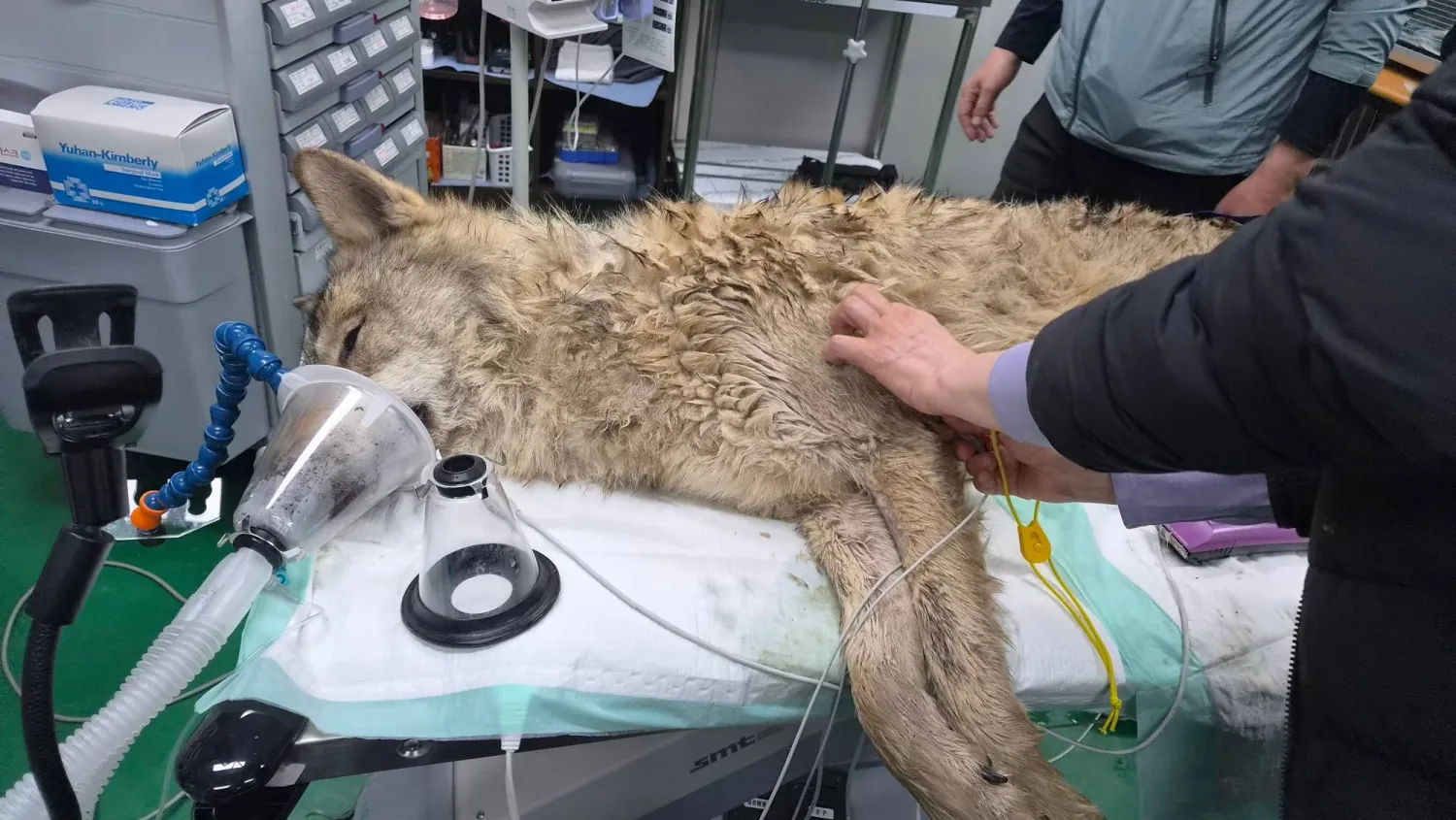
In this photo provided by Daejeon Municipality, a veterinarian examines the condition of the male wolf, named Neukgu, at Daejeon O-World theme park in Daejeon, South Korea, Friday, April 17, 2026. (Daejeon Municipality via AP)
TT

Elusive Wolf in South Korea Captured, Returned to Zoo after 9 Days on the Run

In this photo provided by Daejeon Municipality, a veterinarian examines the condition of the male wolf, named Neukgu, at Daejeon O-World theme park in Daejeon, South Korea, Friday, April 17, 2026. (Daejeon Municipality via AP)

A wolf that escaped from a zoo in the South Korean city of Daejeon was recaptured on Friday after nine days on the run, bringing to a close a saga that gripped the public as the elusive animal evaded earlier capture attempts.

After a number of sightings following the escape of the 2-year-old male wolf, the animal, named Neukgu, was spotted near a highway interchange about 4 km (2.5 miles) from the zoo on Thursday, according to a zoo official.

A search team then successfully recaptured Neukgu at 12:44 a.m. on Friday (1544 GMT on Thursday) using a tranquilizer gun operated by a veterinarian, Reuters reported.

Neukgu was ⁠transported back to ⁠the O-World zoo and was undergoing a health check, the official said, adding his vital signs were normal though vets found and removed a fishing hook from his stomach.

The zoo and an associated theme park were closed after his escape and will take some time to reopen, the official said.

Daejeon Mayor Lee Jang-woo ⁠welcomed the wolf's safe return and thanked the search party, pledging in a Facebook post to "prepare measures for animal welfare and civil safety in the process of reorganizing (the zoo)."

Neukgu's escape in Daejeon, about 170 km (105 miles) south of the capital Seoul, had captured the nation's attention.

South Korean online message boards were abuzz with news of the recapture, with some posts calling Neukgu an "honorary ambassador for the zoo" and vowing to visit him once it reopened.

Neukgu appeared to have slipped out of the zoo last week ⁠by burrowing under ⁠a fence, a zoo official said at the time.

A nearby elementary school was closed as a precaution, while more than 100 personnel searched for the animal, in an effort that included the use of drones equipped with thermal imaging cameras.

The episode even spawned a cryptocurrency meme coin named "Neukgu", which appeared on decentralized cryptocurrency exchanges a week ago.

President Lee Jae Myung also weighed in on the social media platform X last week, urging authorities to ensure a safe outcome.

Born in 2024, Neukgu is part of a program to restore the Korean wolf, a species considered extinct in the wild.


Madinah Tops Saudi Cities in Hotel Occupancy in 2025

The hospitality sector in Madinah recorded a strong performance in 2025. (SPA)
TT

Madinah Tops Saudi Cities in Hotel Occupancy in 2025

The hospitality sector in Madinah recorded a strong performance in 2025. (SPA)

The hospitality sector in Madinah recorded a strong performance in 2025, ranking first among cities in Saudi Arabia in hotel occupancy rates, the Saudi Press Agency said on Friday.

The figures reflect growing demand for the destination and the continued growth in tourism activity associated with visits to the Prophet’s Mosque and the region’s historical landmarks.

The growth is supported by continued development in tourism infrastructure and increased investment in accommodation.

It also reflects ongoing efforts to enhance the experience of visitors and Umrah performers, in line with Saudi Vision 2030 goals to develop the tourism sector and improve service quality for pilgrims and visitors to the Prophet’s Mosque. 


Mexican Baby Monkey Finds Comfort in Plush Companion

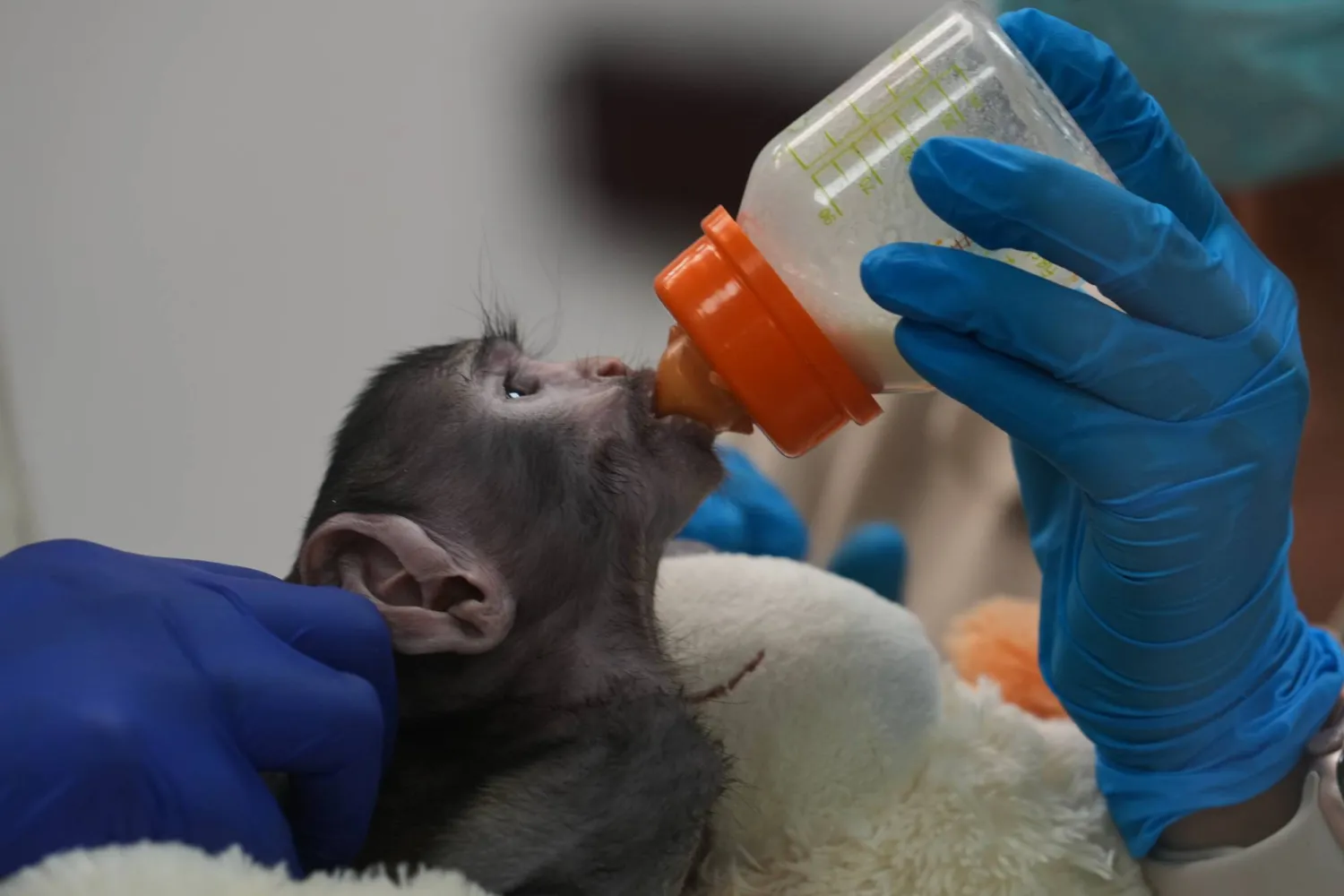
A baby monkey named Yuji drinks milk while receiving care at a special care center at the zoo in Guadalajara, Mexico, Wednesday, April 15, 2026. (AP Photo/Refugio Ruiz)
TT

Mexican Baby Monkey Finds Comfort in Plush Companion

A baby monkey named Yuji drinks milk while receiving care at a special care center at the zoo in Guadalajara, Mexico, Wednesday, April 15, 2026. (AP Photo/Refugio Ruiz)

Yuji, a 6-week-old patas monkey in Mexico, wakes up every day clinging to a stuffed dog. More than a toy, this plush companion acts as a surrogate mom after the tiny primate was rejected by his own mother, Kamaria, a first-time parent unable to form a maternal bond.

Weighing a mere 673 grams (1.4 pounds), Yuji represents the most recent case of assisted rearing at the Guadalajara Zoo in western Mexico.

The story of Yuji has captured the attention of the Mexican public, drawing parallels to Punch, the Japanese macaque that went viral on social media after growing up clinging to a stuffed orangutan following his mother’s rejection, The Associated Press reported.

Unlike Punch, Yuji has not yet had physical contact with other members of his species; he spends most of his time inside a monkey crate at the Guadalajara Zoo’s Comprehensive Center for Animal Medicine and Welfare, CIMBA, where he is under the care of 12 veterinarians and biologists.

No date has been set for Yuji’s transfer to a habitat shared by 12 other adult patas monkeys and three other infants. That will depend on when he is weaned from a milk-only diet and starts an adult diet complete with fruits and vegetables, said veterinarian Iván Reynoso Ruiz, head of the primate section at the Guadalajara Zoo. That could happen when Yuji is around 6 months old, he said.

Just hours after giving birth on March 3, Kamaria began exhibiting irregular behavior. She struggled to hold her firstborn correctly, leaving the infant unable to secure a grip on its mother.

After noticing a problem, keepers separated the mother from her newborn, who weighed just 443 grams (less than a pound) and required immediate placement in an incubator at CIMBA to stabilize his temperature and safeguard his health, Reynoso Ruiz said.

This was the start of the infant's assisted rearing, a process often used by zoos to protect the health and development of at-risk offspring. A caregiver named him Yuji after a popular Japanese manga character.

During his first few weeks, Yuji was under round-the-clock supervision and was bottle-fed fortified milk.

From the start, Yuji was given a stuffed animal for comfort. Reynoso Ruiz explained that the toy fulfills the role of a mother by serving as his primary source of security. To maintain hygiene, staff rotate the original stuffed dog with two other toys — a bear and a monkey — to ensure he always has a clean companion.

To stimulate his development, caregivers outfitted Yuji’s crate with a small hammock and ropes. As he began gaining weight and sleeping for longer intervals, his team adjusted his feeding schedule. Yuji now receives the first of his four daily bottles at 7:00 a.m.

While the stories of Punch and Yuji have been popular on social media, some animal rights advocates oppose the practice of assisted rearing.

Diana Valencia, an animal rights activist, argues that there is no substitute for a natural habitat, and that animals “have the right to be born, grow, develop, and die where they belong.”

Responding to these criticisms, the Guadalajara Zoo’s primate expert emphasized that modern zoos provide a unique opportunity to protect species from global threats. He said the intervention was a matter of life or death, and that Yuji likely would have perished in the wild without a “second chance” at survival.