Zalando Uses AI to Speed Up Marketing Campaigns, Cut Costs

FILE PHOTO: A person with a shopping bag of Zalando outlet walks along Kurfuerstendamm shopping street looking for bargains in Berlin, Germany, December 3, 2022. REUTERS/Lisi Niesner/File Photo
TT

Zalando Uses AI to Speed Up Marketing Campaigns, Cut Costs

FILE PHOTO: A person with a shopping bag of Zalando outlet walks along Kurfuerstendamm shopping street looking for bargains in Berlin, Germany, December 3, 2022. REUTERS/Lisi Niesner/File Photo

European online fashion retailer Zalando is using generative artificial intelligence to produce imagery faster for its app and website, it said on Wednesday, as AI shakes up the fashion industry and cuts costs.
Zalando, which sells branded clothes, shoes, and accessories across 25 markets in Europe, is using AI to produce imagery quickly enough to respond to short-lived fashion trends spread on social media. It is also developing AI-generated "digital twins" of models to use in its marketing.
"We are using AI to be able to be reactive," Matthias Haase, vice president of content solutions at Zalando, told Reuters in an interview.
Using generative AI cuts the time needed to produce imagery to around three to four days from six to eight weeks, and reduces costs by 90%, Haase said, adding the AI-generated content drives greater engagement from customers.
"It's not because of AI content that is better than human-created content, it is really about how new, how relevant it is to our customers," Haase added.
Around 70% of Zalando's editorial campaign images were AI-generated in the fourth quarter of last year as it has increased use of the technology. AI-generated images illustrated Zalando's recap of the year's biggest trends, including "brat summer", "mob wife", and double denim.
For an industry used to costly, meticulously planned fashion shoots on sets or in far-flung locations, the prospect of using AI to speed up production and use marketing money more efficiently is of particular appeal to retailers with far smaller budgets than the big, luxury players.
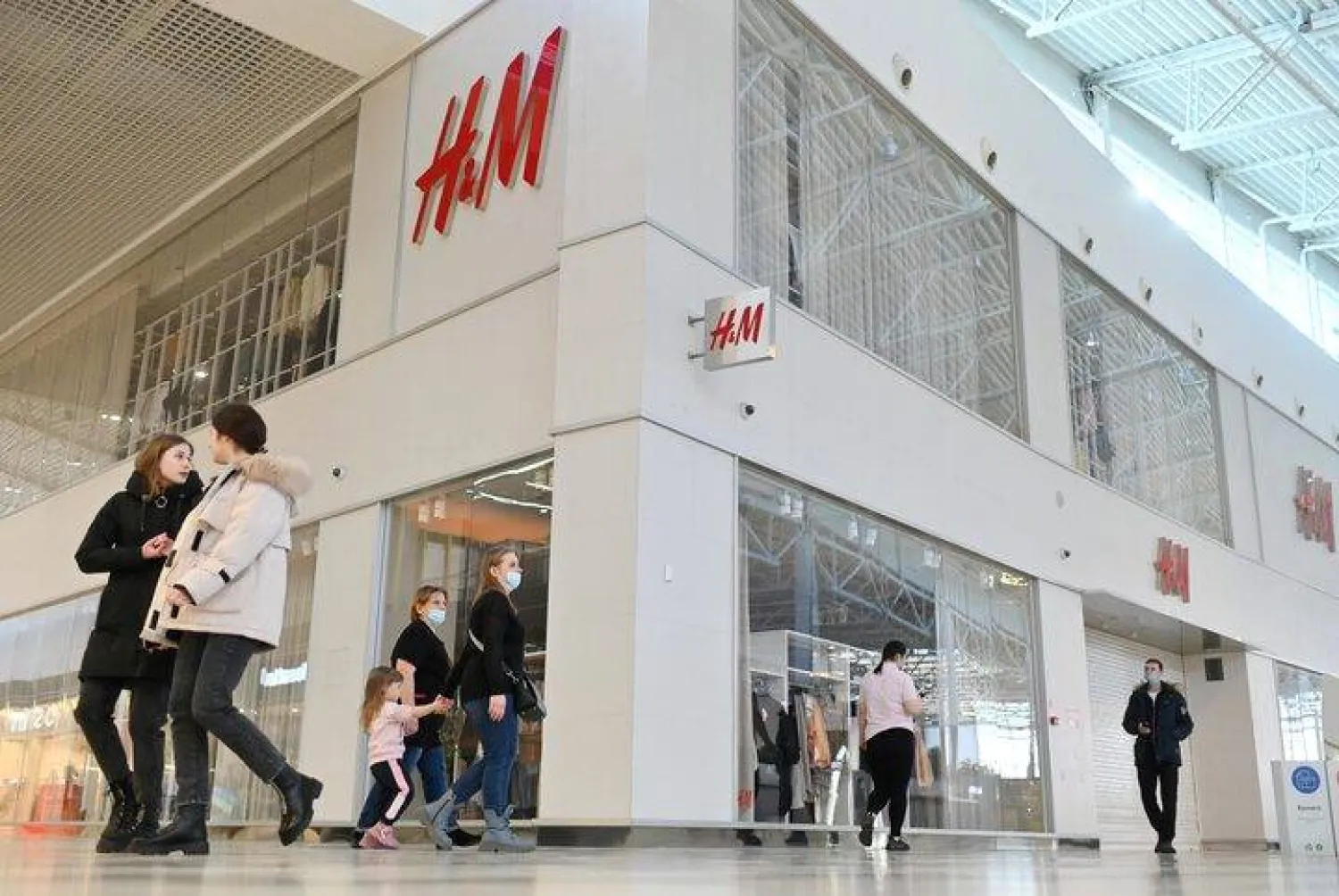
Zalando is the latest retailer to try out AI-generated digital twins of models, after Sweden's H&M in March said it created digital twins in collaboration with a modelling agency.
The AI-generated three-dimensional replicas enable Zalando to feature a model in a campaign and show an exact replica of that model in the app's product pages, without needing to take hundreds of photos.
Asked how generative AI could affect job prospects for fashion photographers, Haase said traditional fashion shoots will still be needed, but that photographers and other creatives will also have to adapt to using AI tools.
"Creative people fear that AI makes creatives redundant," Haase said. "I don't see that at all, to be honest... I see it rather that creative minds have now, instead of two hands, six hands."



Pieter Mulier Named Creative Director of Versace

(FILES) Pieter Mulier attends the 2025 CFDA Awards at The American Museum of Natural History on November 03, 2025 in New York City. (Photo by Dimitrios Kambouris / GETTY IMAGES NORTH AMERICA / AFP)
TT

Pieter Mulier Named Creative Director of Versace

(FILES) Pieter Mulier attends the 2025 CFDA Awards at The American Museum of Natural History on November 03, 2025 in New York City. (Photo by Dimitrios Kambouris / GETTY IMAGES NORTH AMERICA / AFP)

Belgian fashion designer Pieter Mulier has been named the new creative director of the Milan fashion house Versace starting July 1, according to an announcement on Thursday from the Prada Group, which owns Versace.

Mulier is currently creative director of the French fashion house Alaïa, and was previously the right-hand man of fellow Belgian designer and Prada co-creative director Raf Simons at Calvin Klein, Jil Sander and Dior.

In his new role, Mulier will report to Versace executive chairman Lorenzo Bertelli, the designated successor to manage the family-run Prada Group. Bertelli is the son of Miuccia Prada and Prada Group chairman Patrizio Bertelli.

“We believe that he can truly unlock Versace’s full potential and that he will be able to engage in a fruitful dialogue,’’ The Associated Press quoted Lorenzo Bertelli as saying of Mulier in a statement.

Mulier takes over from Dario Vitale, who departed in December after previewing just one collection during his short-lived Versace stint.

Mulier was honored last fall by supermodel and longtime Alaïa muse Naomi Campbell at the Council of Fashion Designers of America for his work paying tribute to brand founder Azzedine Alaïa. Mulier took the creative helm in 2021, after Alaïa’s death.


Ralph Lauren’s Margin Caution Eclipses Stronger‑than‑expected Quarterly Results

Guests wait after viewing the latest Ralph Lauren collection in New York City, US, April 17, 2025. REUTERS/Caitlin Ochs/File photo
TT

Ralph Lauren’s Margin Caution Eclipses Stronger‑than‑expected Quarterly Results

Guests wait after viewing the latest Ralph Lauren collection in New York City, US, April 17, 2025. REUTERS/Caitlin Ochs/File photo

Ralph Lauren posted third-quarter results above Wall Street estimates on Thursday, but the luxury retailer's warning of margin pressure tied to US tariffs sent its shares down nearly 6.4% in premarket trading.

The company expects fourth-quarter margins, its smallest revenue period, to shrink about 80 to 120 basis points due to higher tariff pressure and marketing spend.

Ralph Lauren, which sources its products from regions such as China, India and Vietnam, has relied on raising prices and reallocating production to regions with lower duty exposure to offset US tariff pressures, Reuters reported.

"Ralph Lauren has been able to raise prices for some time now. There is some limit on how long it can continue to do this. I think (the company's) gross margins are near peak levels," Morningstar analyst David Swartz said.

The company, which sells $148 striped linen shirts and $498 leather handbags, has tightened inventory, lifted full-price sales and refreshed core styles, boosting its appeal among wealthier and younger customers, including Gen Z.

Higher-income households are still splurging on luxury items, travel and restaurant meals, while lower- and middle-income consumers are strained by higher costs for rents and food as well as a softer job market.

The New York City-based company saw quarterly operating costs jump 12% year-on-year as it ramped up brand building efforts through sports-focused brand campaigns such as Wimbledon and the US Open tennis championship.

The luxury retailer said revenue in the quarter ended December 27 rose 12% to $2.41 billion, above analysts' estimates of a 7.9% rise to $2.31 billion, according to data compiled by LSEG.

It earned $6.22 per share, excluding items, compared to expectations of $5.81, aided by a 220 basis points increase in margins and an 18% rise in average unit retail across its direct-to-consumer channel.

Ralph Lauren now expects fiscal 2026 revenue to rise in the high single to low double digits on a constant currency basis, up from its prior forecast of a 5% to 7% growth.


Saudi Fashion Commission, Kering Launch 'Kering Generation Award X MENA'

This year's award builds on the strong success of the 2025 award, which attracted more than 500 applications, shortlisted 21 finalists, and recognized three winners. SPA
TT

Saudi Fashion Commission, Kering Launch 'Kering Generation Award X MENA'

This year's award builds on the strong success of the 2025 award, which attracted more than 500 applications, shortlisted 21 finalists, and recognized three winners. SPA

Saudi Arabia’s Fashion Commission and global luxury group Kering have launched the "Kering Generation Award X MENA" across the Middle East and North Africa (MENA) for 2026.

The announcement was made on Tuesday during the opening of the RLC Global Forum, hosted at the French Embassy in Riyadh.

This year's award builds on the strong success of the 2025 award, which attracted more than 500 applications, shortlisted 21 finalists, and recognized three winners.

Participants benefited from mentorship programs, workshops, and opportunities to strengthen their global presence. Building on this momentum, the 2026 program seeks to expand its impact across the MENA region.

The 2026 award focuses on four key areas of sustainable fashion: innovation in regenerative materials and clean production, circular design and sustainable business models, nature conservation and animal welfare, and consumer awareness and cultural engagement.

The program targets startups across the MENA region that operate in, or positively influence, the sustainable fashion sector, provided they demonstrate innovation capabilities and the ability to deliver measurable sustainability outcomes.