


Bernard Haykel to Asharq Al-Awsat: Trump’s Visit Reflects Saudi Arabia’s Significant Global Role

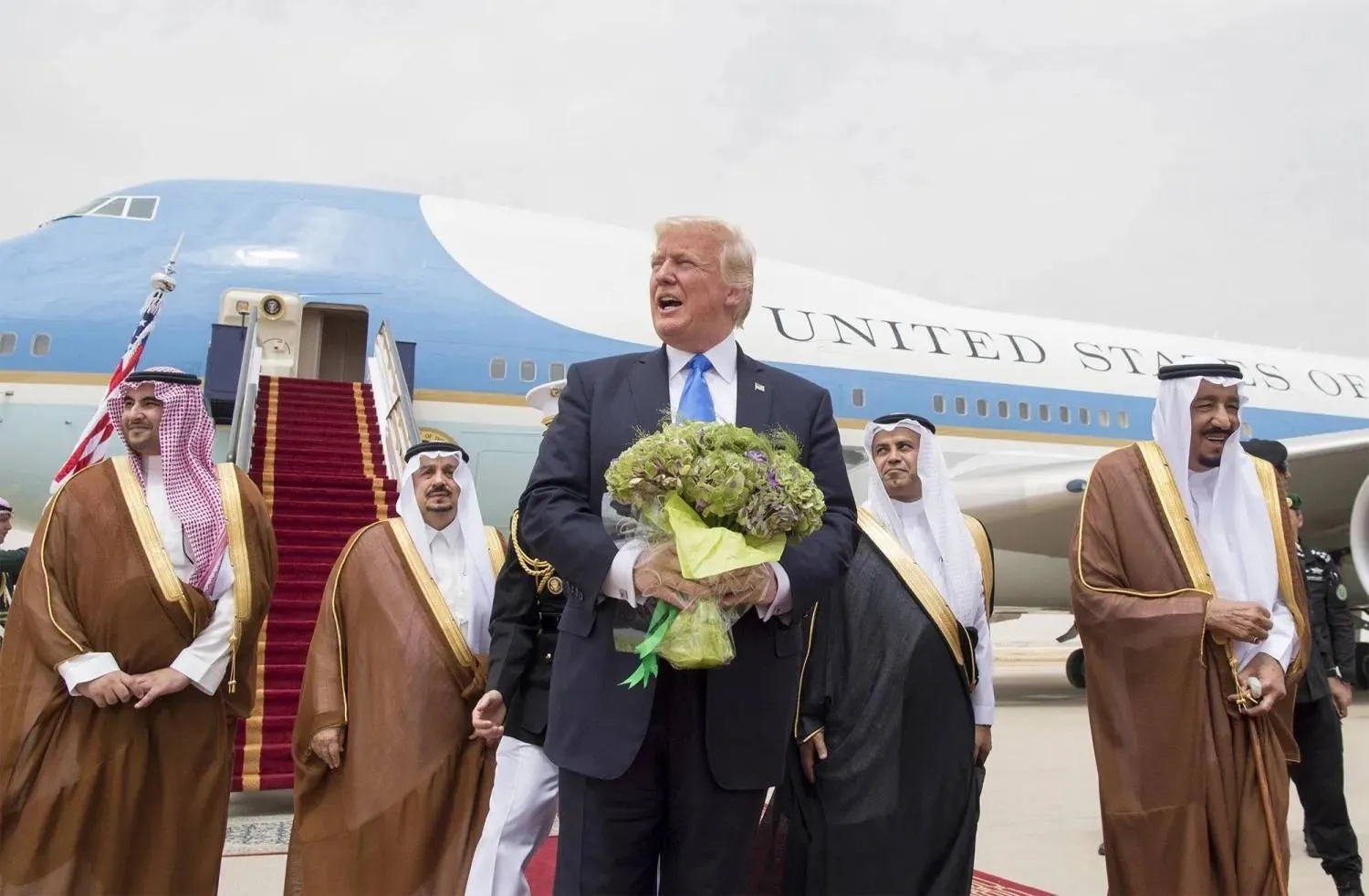
US President Donald Trump is welcomed in Riyadh during his visit to the Kingdom in May 2017. (SPA)
TT

Bernard Haykel to Asharq Al-Awsat: Trump’s Visit Reflects Saudi Arabia’s Significant Global Role

US President Donald Trump is welcomed in Riyadh during his visit to the Kingdom in May 2017. (SPA)

Dr. Bernard Haykel, professor of Near Eastern Studies at Princeton University, said US President Donald Trump’s visit to Saudi Arabia on Tuesday is very important and that it sends messages not just to the international community, but inside the US itself.

The messages indicate that Saudi Arabia is the most important country for American interests, not just in the Middle East, but the entire world, Haykel told Asharq Al-Awsat in an interview.

Haykel added that Prince Mohammed bin Salman, Saudi Crown Prince and Prime Minister, has dedicated his life in service of his country and has set national interests above all else.

Haykel expects Trump’s visit to Riyadh to yield several bilateral agreements. The deals may cover vital sectors such as AI, the development of a peaceful nuclear program and facilitating arms deals.

He ruled out, however, reaching any agreement that would pave the way for the normalization of ties between Saudi Arabia and Israel. Such an agreement must be tied with a clear pledge from Israel to establish an independent sovereign Palestinian state.

‘Excellent’ relations

Trump’s visit is expected to be a success on several levels, notably on the level of bilateral ties or files related the war on Ukraine, Haykel went on to say.

Relations between Riyadh and Washington are “excellent”, as they have been during the final two year’s of former President Joe Biden’s term in office, despite the difference in policies, he noted.

Trump’s return to the White House has restored momentum in the bilateral relations, while Saudi Arabia recognizes the differences between the former and current administration, he continued.

The Kingdom has managed to build solid relations with both the Republican and Democratic parties based on its firm policy that is founded on consolidating regional security and stability, explained Haykel.

This policy intersects with American interests in several files, most notably achieving regional peace and over Iran’s nuclear program.

Trump and Biden both oppose Iran developing nuclear weapons, Haykel said.

Saudi Arabia’s global standing

By choosing Saudi Arabia again as the destination of his first foreign visit, Trump is clearly saying that the Kingdom is the United States’ most important partner, not just in the Middle East, but the world, Haykel added.

The Kingdom’s role in complex international files, such as the Russian-Ukrainian war, consolidated its standing as an influential global player, he remarked.

He warned, however, that the visit is not without its risks. He explained that Trump still faces severe internal opposition, and his rivals will use the visit to target Saudi Arabia in the media.

Circumstances, though, have changed since his first term in office. The media attacks will not be as intense as the first time he visited the Kingdom given its balanced foreign policy and strong ties with the Republican and Democratic parties, predicted Haykel.

On this note, he hailed Crown Prince Mohammed’s ability to forge strong ties with world leaders. He has dedicated his life to serving the Kingdom and so, he realizes the importance of establishing strong ties with various world leaders.

The Crown Prince places Saudi interests above all else as demonstrated by his decision to open a new chapter in relations with Iran, for example, Haykel said.

No normalization

During Trump’s visit, Riyadh and Washington will likely negotiate a number of strategic agreements that cover security cooperation, a peaceful nuclear program, exchange of goods, AI and facilitating US arms sales to the Kingdom.

Some of these agreements were tied to Saudi Arabia normalizing ties with Israel, said Haykel, but such a deal is unlikely to happen without the latter making real concessions to the Palestinians, starting with accepting the establishment of an independent Palestinian state.

It is obvious that Saudi Arabia will not go ahead with the normalization, he stressed. Strategic agreements will be separated from the normalization efforts.



Saudi Arabia Welcomes US Decision to Lift Sanctions on Syria, Congratulates Damascus

The Saudi Ministry of Foreign Affairs logo
TT

Saudi Arabia Welcomes US Decision to Lift Sanctions on Syria, Congratulates Damascus

The Saudi Ministry of Foreign Affairs logo

Saudi Arabia welcomed on Friday a US decision to lift sanctions imposed on Syria pursuant to the Caesar Act, affirming that this step will contribute to supporting the country’s stability, prosperity, and development in a manner that fulfills the aspirations of the Syrian people.

The Saudi Ministry of Foreign Affairs said in a statement that the Kingdom commended the significant and positive role played by US President Donald Trump, beginning with his announcement to lift all sanctions imposed on Syria during his historic visit to Riyadh in May 2025, and culminating in his signing of the National Defense Authorization Act for Fiscal Year 2026, which included the repeal of the Caesar Act.

The Kingdom also extended its sincere congratulations to the Syrian leadership, government, and people on the lifting of all sanctions imposed on Syria.

The statement expressed Saudi Arabia’s appreciation for the steps taken by the Syrian government to restore stability across all Syrian territories, create conducive conditions for rebuilding the state and economy, and facilitate the return of refugees and displaced persons.


Saudi Foreign Minister Holds Phone Call with Foreign Minister II of Brunei Darussalam

Saudi Foreign Minister Prince Faisal bin Farhan bin Abdullah -File Photo (Reuters)
TT

Saudi Foreign Minister Holds Phone Call with Foreign Minister II of Brunei Darussalam

Saudi Foreign Minister Prince Faisal bin Farhan bin Abdullah -File Photo (Reuters)

Saudi Minister of Foreign Affairs Prince Faisal bin Farhan bin Abdullah held a phone call with Minister for Foreign Affairs II of Brunei Darussalam Dato Erywan Pehin Yusof, the Saudi Press Agency reported on Friday.

During the call, the two officials reviewed bilateral relations between their countries and discussed issues of common interest.


King Salman Center Sets Up Camps for Displaced Gaza Residents


The King Salman Humanitarian Aid and Relief Center has established the largest displacement camp in Deir al-Balah, as displaced people struggle with the impact of war and cold weather (KSrelief)
TT

King Salman Center Sets Up Camps for Displaced Gaza Residents


The King Salman Humanitarian Aid and Relief Center has established the largest displacement camp in Deir al-Balah, as displaced people struggle with the impact of war and cold weather (KSrelief)

Saudi Arabia’s King Salman Humanitarian Aid and Relief Center (KSrelief) said it has set up the largest displacement camp in Deir al-Balah in Gaza, as thousands of Palestinians displaced by the war grapple with harsh winter conditions brought by a cold and rainy weather system this week.

Fahad Al-Osaimi, the center’s director of emergency relief, told Asharq Al-Awsat that the camp is sheltering more than 200 displaced families, with the number of beneficiaries exceeding 2,000 women, children and elderly people whose homes and tents were damaged or destroyed by the war and recent weather conditions.

He said the center is currently operating under a rapid response mechanism to appeals received by its operations and emergency room in the Gaza Strip.

Al-Osaimi said two fully equipped camps were completed this week, and that preparations are underway to establish several additional camps in coordination with relevant United Nations agencies, based on assessed needs on the ground.

He said the camp is playing a critical role in providing refuge to hundreds of families whose tents were flooded or collapsed due to heavy rainfall, offering safer shelter that helps mitigate humanitarian risks, particularly for children, women and the elderly.

Al-Osaimi said the center’s efforts extend beyond emergency shelter, noting that work is ongoing to establish organized camps that meet international humanitarian response standards and to ensure they are supplied with essential services.

These services include blankets, shelter materials, clothing for women and children, sanitation facilities such as toilets, hygiene kits and cleaning supplies, in addition to other forms of relief assistance as needs arise.

He said the interventions form part of KSrelief’s sustained efforts to alleviate the suffering of displaced people in the Gaza Strip and bolster their resilience amid severe humanitarian and weather conditions.

The deteriorating weather has coincided with growing uncertainty over the future of the ceasefire agreement and the possibility of moving to its second phase. According to local and international organizations, living conditions for displaced people continue to worsen.

Against this backdrop, the establishment of the largest displacement camp in Deir al-Balah marks a fresh chapter in Saudi Arabia’s emergency response to Palestinians, particularly Gaza residents, since the outbreak of the war following Oct. 7, 2023, providing lifelines to more than 2,000 people facing mounting challenges.