


India and US at Odds on Kashmir Truce

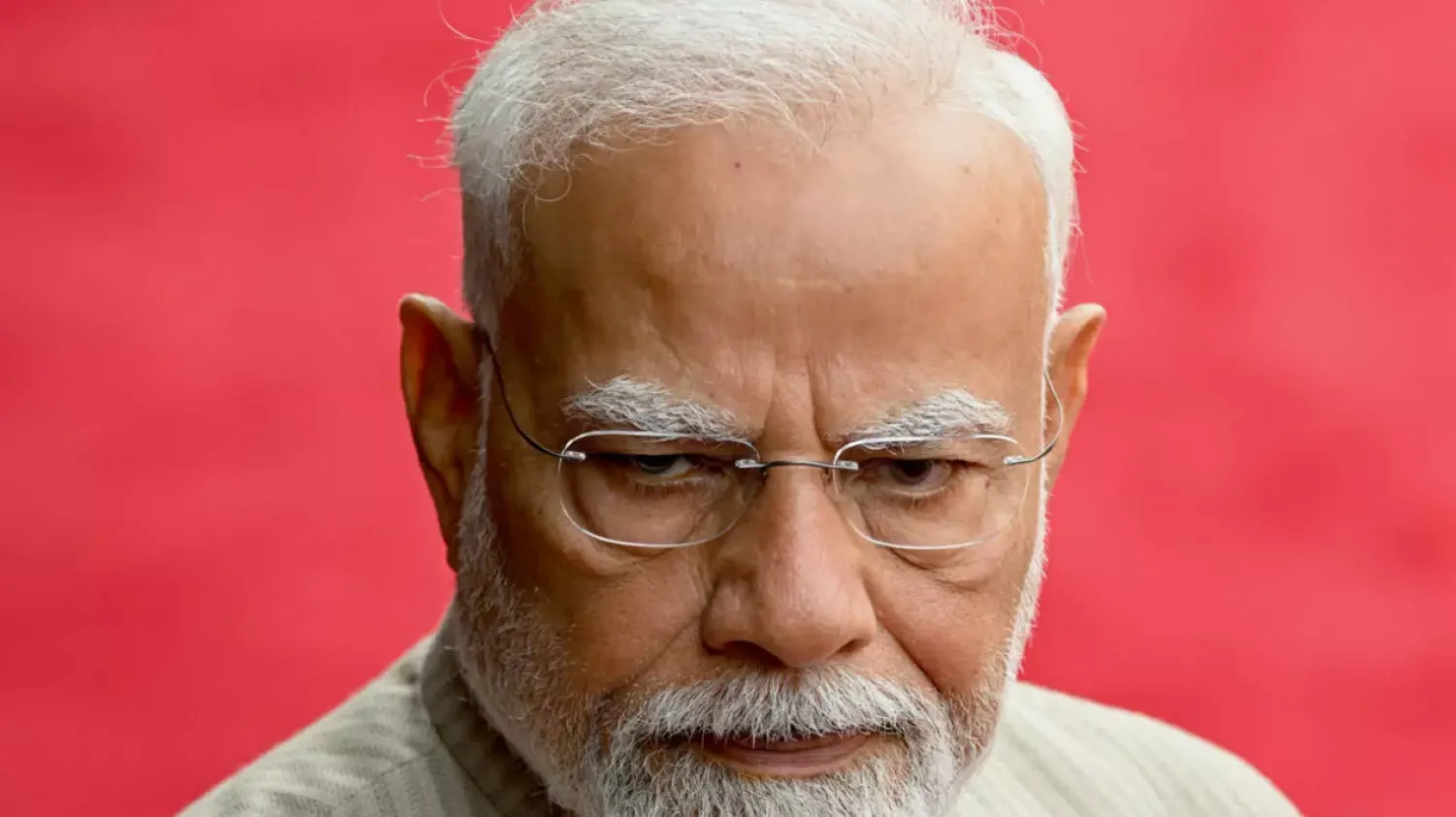
Modi's first speech since the ceasefire did not mention US involvement and his government has since insisted that talks with Pakistan are 'strictly bilateral' © Money SHARMA / AFP
TT

India and US at Odds on Kashmir Truce

Modi's first speech since the ceasefire did not mention US involvement and his government has since insisted that talks with Pakistan are 'strictly bilateral' © Money SHARMA / AFP

A week since Trump announced a surprise truce between India and Pakistan to end a brief but intense conflict, New Delhi and Washington differ about the way it was achieved.

The US administration thought "an intervention at this stage might give them some basic benefit in terms of highlighting Trump's role," Indian foreign policy expert Harsh V. Pant told AFP.

"That... became the driver and in a sense the hurry which with Trump announced the ceasefire," said Pant from the New Delhi-based Observer Research Foundation (ORF) think tank.

Fighting began when India launched strikes on May 7 against what it called "terrorist camps" in Pakistan following an April militant attack in Indian-administered Kashmir that killed 26 people.

New Delhi blamed Islamabad for backing the militants it claimed were behind the attack, which Pakistan denies.

Trump announced the truce after four days of missile, drone and artillery attacks from both sides, killing about 70 people, including dozens of civilians, and sent thousands fleeing.

He later boasted about bringing India and Pakistan "back from the brink", telling Fox News on Friday it was "a bigger success than I'll ever be given credit for".

New Delhi however shrugs off these claims, which go against decades-long Indian policy that opposes foreign mediation in conflicts with Islamabad.

India and Pakistan claim the currently divided Kashmir in full. New Delhi considers the Himalayan region an internal matter, with politicians long viewing external mediation as a sign of weakness.

Modi's first speech since the ceasefire did not mention US involvement and his government has since insisted that talks with Pakistan are "strictly bilateral".

India was also quick to dismiss Trump's suggestion that trade pressures hastened a truce.

"The issue of trade did not come up" in discussions with US officials, the Indian foreign ministry said this week.

According to ORF fellow Manoj Joshi, Trump's rhetoric is "irritating" for India -- whose strategic location and massive market size have made the country an important ally for the United States.

But India is being "very cautious" because it is in negotiations for a trade deal with Washington to avoid steep tarriffs, he said.

"We (India) would like the agenda to go in a different direction," said Joshi.

It is also a thorny matter domestically.

Main opposition Congress party said Trump's announcement had "upstaged" the Hindu nationalist leader's "much-delayed address".

It also demanded an all-party meeting to ask whether India is changing its policy on "third-party mediation" for Kashmir, disputed between Pakistan and India.

The two South Asian rivals had in the 1970s agreed to settle "differences by peaceful means through bilateral negotiations".

Modi has previously poked fun at former Congress governments for "weak" responses against Pakistan in various skirmishes.

"So India would obviously respond to that and deny that... about as politely as they feel they can get away with," said South Asia researcher Pramit Pal Chaudhuri of political consultancy Eurasia Group.

Trump's claimed mediation was welcomed by Islamabad, which "needed an American intervention to give them the off-ramp they needed to get out of a conflict", Chaudhuri added.

On Thursday, Indian Foreign Minister Subrahmanyam Jaishankar reaffirmed that "where Pakistan is concerned, our relations, our dealings with them will be bilateral, and strictly bilateral."

But the same day, speaking from Qatar, Trump repeated claims of brokering a ceasefire and using trade as a tool.

"(I said) let's do trade instead of war. And Pakistan was very happy with that, and India was very happy with that," Trump said in his speech.

It has been a decade since Modi last met a Pakistani leader. Since then, relations have deteriorated, coming to a head when India unilaterally revoked Kashmir's limited autonomy in 2019.

According to Joshi, "the hyphenation of India and Pakistan" is also "irritating" for New Delhi, which has tried to carve out a separate identity on the global stage.

"The optics of Trump hammering it day after day... is politically damaging for Modi," Sushant Singh, a former Indian soldier and South Asian studies lecturer at Yale University, wrote on X.

"(Modi) can't personally counter Trump, and despite attempts by India's big media to play it down, social media amplifies Trump," Singh said.



Top Trump Iran Negotiator Says Visits US Aircraft Carrier in Middle East

US Special Envoy Steve Witkoff delivers a press conference upon the signing of the declaration on deploying post-ceasefire force in Ukraine, during the so-called "Coalition of the Willing" summit, at the Elysee Palace in Paris, France, January 6, 2026. (Reuters)
TT

Top Trump Iran Negotiator Says Visits US Aircraft Carrier in Middle East

US Special Envoy Steve Witkoff delivers a press conference upon the signing of the declaration on deploying post-ceasefire force in Ukraine, during the so-called "Coalition of the Willing" summit, at the Elysee Palace in Paris, France, January 6, 2026. (Reuters)

US President Donald Trump's lead Iran negotiator Steve Witkoff on Saturday said he visited the USS Abraham Lincoln aircraft carrier currently in the Arabian Sea, with Washington and Tehran due to hold further talks soon.

"Today, Adm. Brad Cooper, Commander of US Naval Forces Central Command, Jared Kushner, and I met with the brave sailors and Marines aboard the USS Abraham Lincoln, her strike group, and Carrier Air Wing 9 who are keeping us safe and upholding President Trump's message of peace through strength," said Witkoff in a social media post.

Iranian Foreign Minister Abbas Araghchi said on Saturday he hoped talks with the United States would resume soon, while reiterating Tehran's red lines and warning against any American attack.


Israel’s Netanyahu Expected to Meet Trump in US on Wednesday and Discuss Iran

Israeli Prime Minister Benjamin Netanyahu delivers a speech during a special session to mark the 77th anniversary of the Knesset's establishment and the 60th anniversary of the dedication of the current building at the Knesset, the Israeli parliament, in Jerusalem, 02 February 2026. (EPA)
TT

Israel’s Netanyahu Expected to Meet Trump in US on Wednesday and Discuss Iran

Israeli Prime Minister Benjamin Netanyahu delivers a speech during a special session to mark the 77th anniversary of the Knesset's establishment and the 60th anniversary of the dedication of the current building at the Knesset, the Israeli parliament, in Jerusalem, 02 February 2026. (EPA)

Israeli Prime Minister Benjamin Netanyahu is expected to meet US President Donald Trump on Wednesday in Washington, where they will discuss negotiations with Iran, Netanyahu's office said on Saturday.

Iranian and US officials held indirect nuclear ‌talks in the ‌Omani capital ‌Muscat ⁠on Friday. ‌Both sides said more talks were expected to be held again soon.

A regional diplomat briefed by Tehran on the talks told Reuters Iran insisted ⁠on its "right to enrich uranium" ‌during the negotiations with ‍the US, ‍and that Tehran's missile capabilities ‍were not raised in the discussions.

Iranian officials have ruled out putting Iran's missiles - one of the largest such arsenals in the region - up ⁠for discussion, and have said Tehran wants recognition of its right to enrich uranium.

"The Prime Minister believes that any negotiations must include limiting ballistic missiles and halting support for the Iranian axis," Netanyahu's office said in a ‌statement.


Italy FM Rules Out Joining Trump’s ‘Board of Peace’

Italy's Minister for Foreign Affairs Antonio Tajani speaks to the press during the EPP Leaders’ meeting, in Zagreb, Croatia, 30 January 2026. (EPA)
TT

Italy FM Rules Out Joining Trump’s ‘Board of Peace’

Italy's Minister for Foreign Affairs Antonio Tajani speaks to the press during the EPP Leaders’ meeting, in Zagreb, Croatia, 30 January 2026. (EPA)

Italy will not take part in US President Donald Trump's "Board of Peace", Italian Foreign Minister Antonio Tajani said Saturday, citing "insurmountable" constitutional issues.

Trump launched his "Board of Peace" at the World Economic Forum in Davos in January and some 19 countries have signed its founding charter.

But Italy's constitution bars the country from joining an organization led by a single foreign leader.

Prime Minister Giorgia Meloni, a Trump ally, last month noted "constitutional problems" with joining, but suggested Trump could perhaps reopen the framework "to meet the needs not only of Italy, but also of other European countries".

Tajani appeared Saturday to rule that out.

"We cannot participate in the Board of Peace because there is a constitutional limit," he told the ANSA news agency.

"This is insurmountable from a legal standpoint," he said, the day after meeting US Secretary of State Marco Rubio and US Vice President JD Vance at the Olympics in Milan.

Although originally meant to oversee Gaza's rebuilding, the board's charter does not limit its role to the Palestinian territory and appears to want to rival the United Nations.