Türkiye Seeking to Establish Naval, Air Bases in Syria

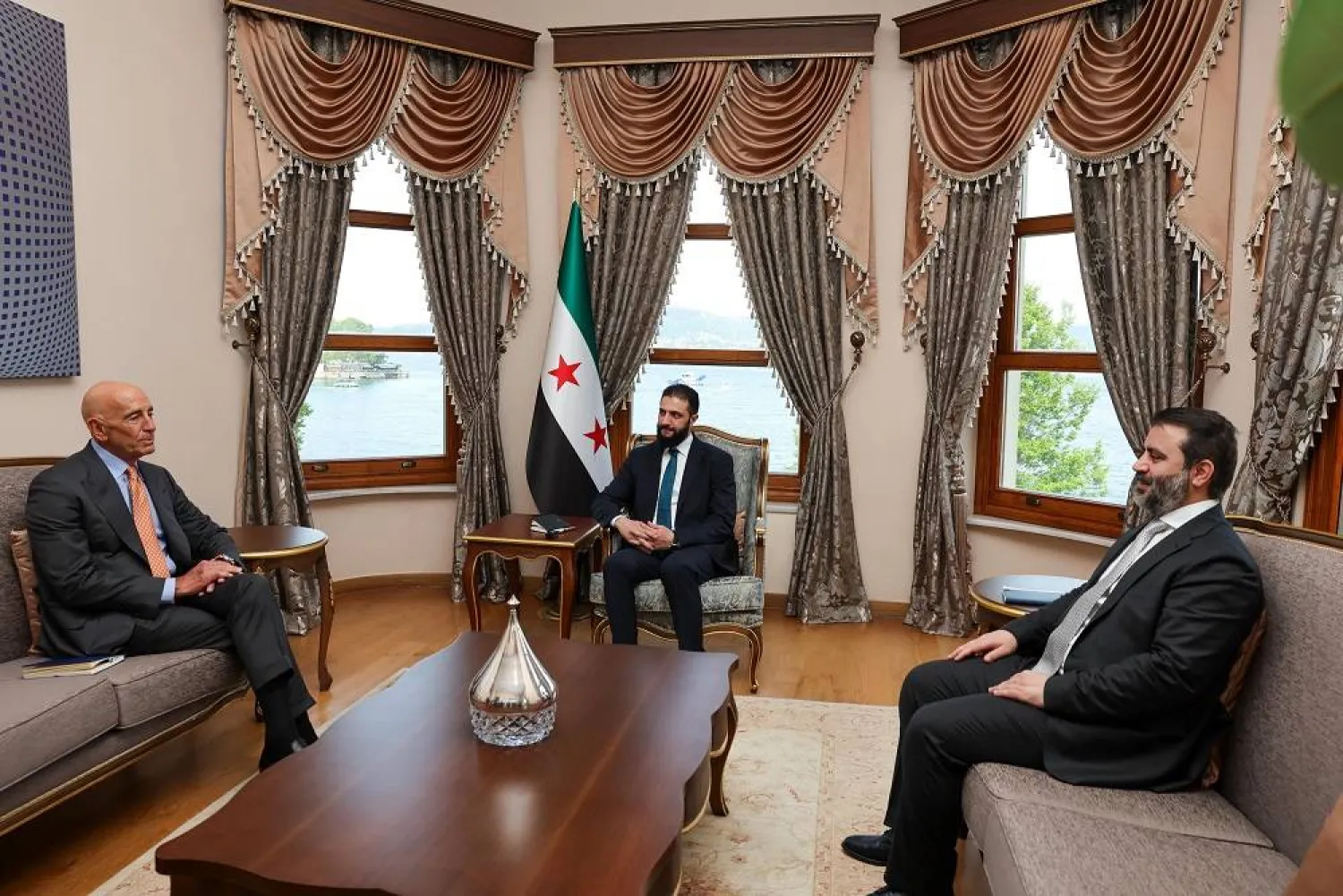
A handout photo made available by the Turkish Foreign Ministry Press Office shows Syrian President Ahmed al-Sharaa (C) and Thomas J. Barrack of the US Embassy in Türkiye (L) during their meeting in Istanbul, Türkiye, 24 May 2025. (EPA/ Turkish Foreign Ministry Press Office Handout)
TT

Türkiye Seeking to Establish Naval, Air Bases in Syria

A handout photo made available by the Turkish Foreign Ministry Press Office shows Syrian President Ahmed al-Sharaa (C) and Thomas J. Barrack of the US Embassy in Türkiye (L) during their meeting in Istanbul, Türkiye, 24 May 2025. (EPA/ Turkish Foreign Ministry Press Office Handout)

Türkiye is seeking to establish an airbase and a naval base in Syria to “bolster counter-terrorism efforts, especially in the fight against ISIS,” revealed media close to the Turkish government.

Security sources said the armed forces are determined to set up the two bases as part of a comprehensive plan to restore security in Syria, reported the Türkiye newspaper.

The effort will take place in cooperation with the Damascus government and receive direct support from the Turkish government. Support will take the shape of training and restructuring the Syrian army and security forces.

Turkish President Recep Tayyip Erdogan and Syrian interim President Ahmed al-Sharaa discussed defense cooperation between Ankara and Damascus during a meeting in Istanbul on Saturday.

Israel has voiced alarm over the possibility of an expanded Turkish military role in Syria. Ankara and Tel Aviv, however, agreed on a “deconfliction mechanism” in Syria during talks in Azerbaijan to avoid any tensions between them.


WFP Warns of a Critical Situation in Sudan

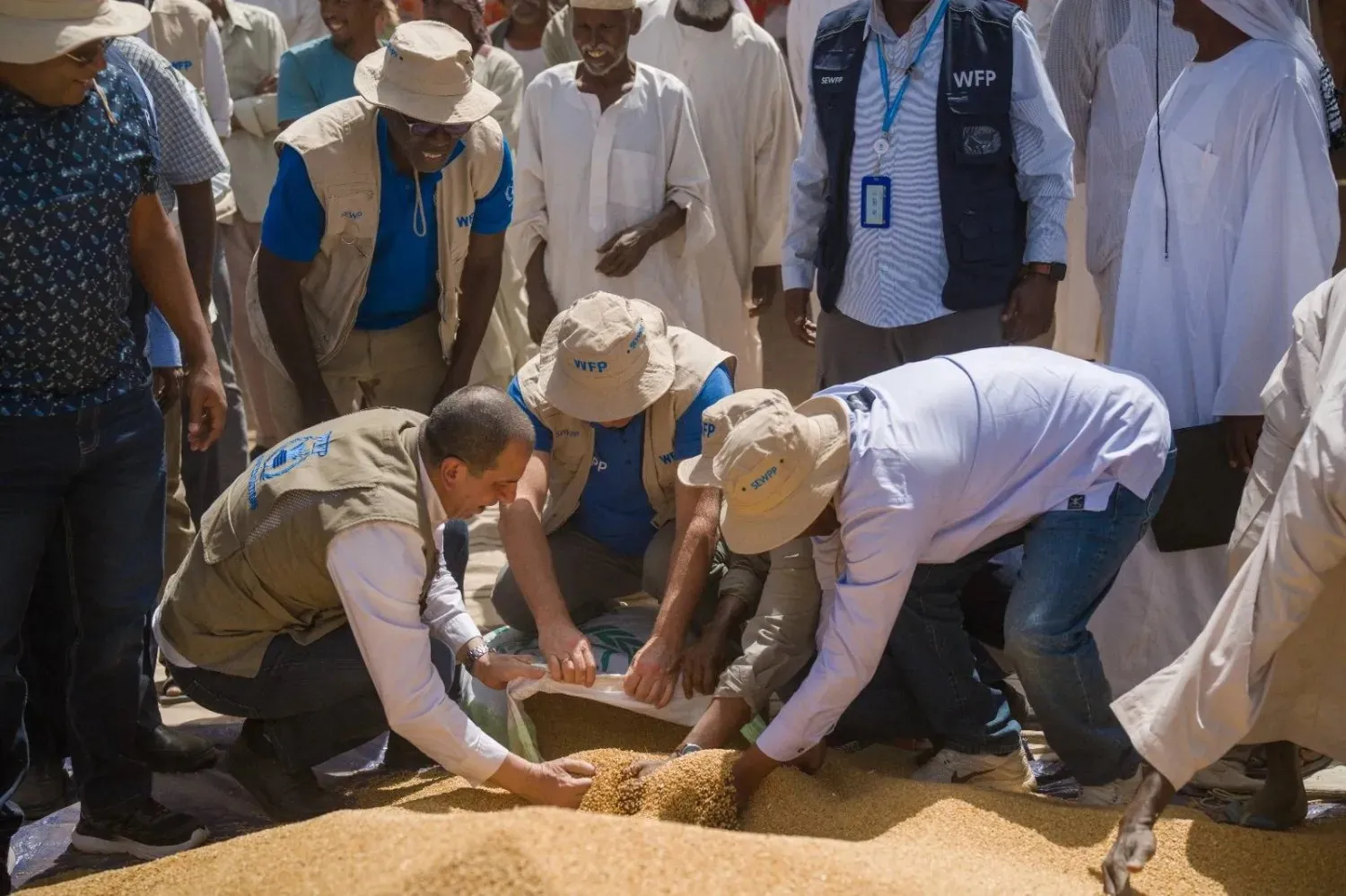
Alwardat participates in the distribution of food grains in one of Sudan's regions (Asharq Al-Awsat)
TT

WFP Warns of a Critical Situation in Sudan

Alwardat participates in the distribution of food grains in one of Sudan's regions (Asharq Al-Awsat)

The World Food Programme (WFP) has warned of the deteriorating humanitarian situation in Sudan, saying while there is a severe shortage of food, the situation cannot yet be described as a famine.

"We cannot say there is a famine to the extent that people are dying of hunger in the streets. We are talking about a critical food security situation in conflict-affected areas of Darfur, Kordofan, and other parts of Sudan,” Abdallah Alwardat, the WFP's country director in Sudan, told Asharq Al-Awsat.

He warned that humanitarian conditions could become even more difficult because of declining international funding.
In October, the Sudanese government strongly rejected international claims that famine exists in the country, asserting that the food situation remains "reassuring."

The government's stance came in response to a joint statement issued by 32 countries and international partners, including the United States, Britain, and several European nations, warning of a troubling deterioration in food security and the possibility of famine in the coming months unless urgent measures are taken to facilitate aid delivery.


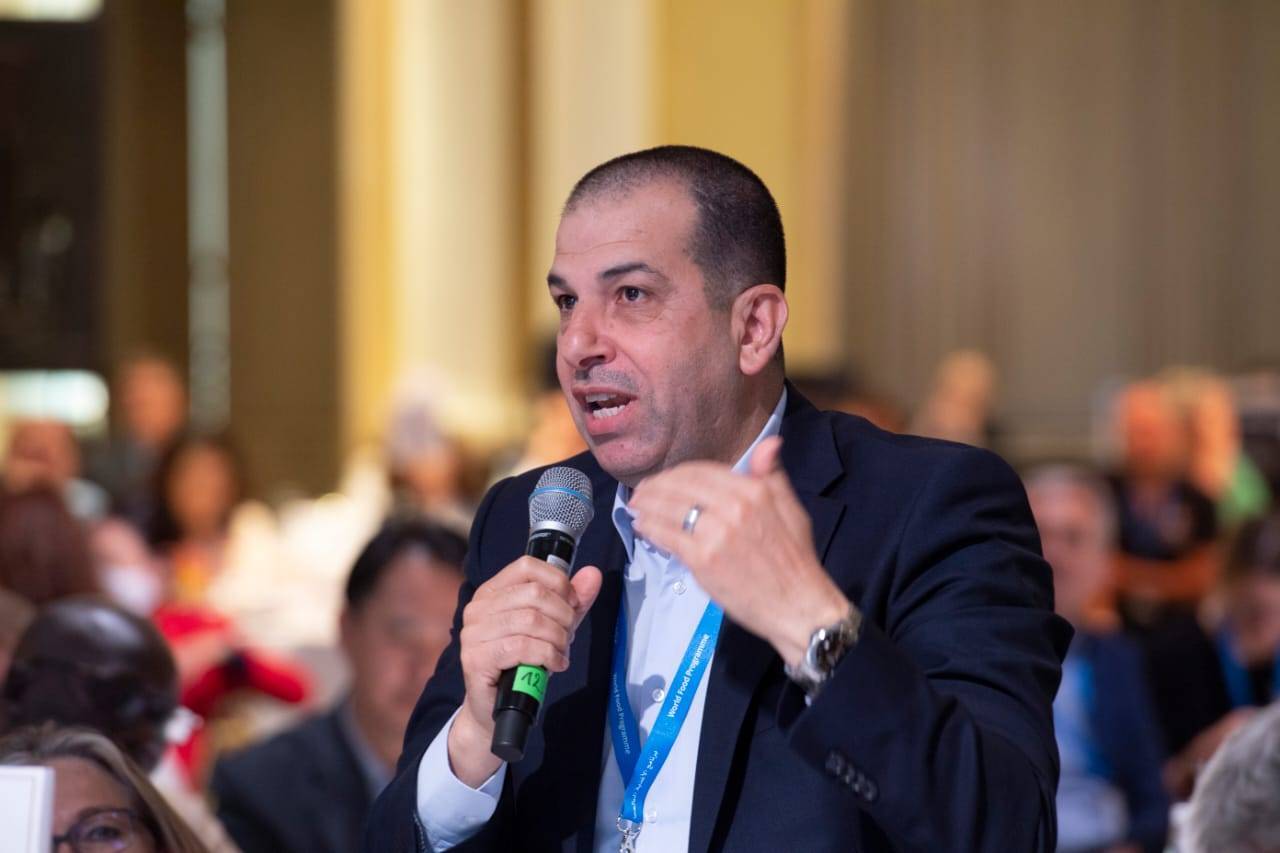
Abdallah Alwardat, the WFP's country director in Sudan (Asharq Al-Awsat)

Poor Rainfall

Alwardat also pointed to food shortages in agricultural areas that rely heavily on seasonal rainfall. Insufficient rain in recent months has adversely affected the farming season and reduced crop yields.

He said the WFP requires $520 million over the next six months to continue providing emergency humanitarian assistance to more than four million people in Sudan. Current funding is sufficient only through February. Without additional resources, the agency may be forced by March to reduce assistance for nearly 1.5 million people across the country.

Alwardat said senior WFP officials are maintaining regular contact with donors. He noted that the organization had previously been compelled to cut emergency aid for around 900,000 people because of funding shortages.

According to Alwardat, the WFP's priority is to assist more than five million people classified as facing acute food insecurity.

He added: "Because of limited financial resources, we cannot provide assistance to everyone in need in Sudan. We are focusing on those in the most urgent need."

Darfur Region

Regarding Darfur in western Sudan, Alwardat said the WFP has distributed humanitarian aid to approximately 2.3 million displaced people living in camps, particularly in the Tawila camp, which accounts for about half of the assistance provided. The agency is also providing monthly support to about 32,000 residents inside El Fasher, the region's largest city.

He added that the WFP had delivered emergency aid to more than 87,000 people in Damazin, the capital of Blue Nile State in southeastern Sudan, where displacement has increased because of fighting in various parts of the region.

Alwardat said security conditions in some areas continue to hinder humanitarian access and endanger aid workers. He revealed that WFP convoys have been subjected to 17 attacks this year.

The war in Sudan, which erupted in April 2023 between the Sudanese army and the Rapid Support Forces (RSF), has killed more than 200,000 people, according to estimates by aid workers, and displaced more than 12 million people, creating what the United Nations describes as the world's worst humanitarian crisis.


Houthi Siege Puts Vaccination of Over 350,000 Children at Risk in Yemen’s Taiz

Children displaced by the Houthis at a school for displaced people near Aden (AP)
TT

Houthi Siege Puts Vaccination of Over 350,000 Children at Risk in Yemen’s Taiz

Children displaced by the Houthis at a school for displaced people near Aden (AP)

More than 350,000 children in Yemen’s Taiz governorate risk missing out on lifesaving vaccines as security restrictions and the ongoing Houthi siege of the city prevent immunization teams from reaching their communities, fueling fears of measles and rubella outbreaks.

The threat comes amid a deepening humanitarian crisis triggered by the military escalation that began in August, forcing more than 364,000 people from their homes, including over 145,000 in Taiz alone, according to UN figures.

The UN and its partners have managed to deliver food and relief supplies to around 300,000 displaced people, accounting for 70% of those displaced since the escalation began. Some 30% remain beyond the reach of humanitarian aid.

UN health partners said around 350,000 children in Taiz had missed out on a national measles and rubella vaccination campaign as insecurity and access restrictions prevented vaccines from reaching them.

The threat extends beyond those targeted by the campaign. More than 30,000 children under the age of one risk missing routine vaccinations as disruptions prevent health services and medical supplies from reaching affected areas.

The World Health Organization (WHO) and the United Nations Children’s Fund (UNICEF) have the resources and vaccines needed to carry out immunization campaigns. Yet neither can currently reach the children in Taiz.

A vaccination campaign launched in early November in other government-controlled areas immunized more than 600,000 children, underscoring the widening gap in healthcare access as security restrictions hamper vaccine deliveries.

Mass Displacement, Limited Aid

More than 364,000 people have fled their homes since the latest military escalation began in August, as hostilities and insecurity persist across several governorates, according to the UN Office for the Coordination of Humanitarian Affairs (OCHA).

Taiz governorate hosts the largest displaced population, with more than 145,000 people, piling pressure on health services, shelters and food supplies in host communities.

Despite access constraints, more than 25 humanitarian partners have provided healthcare to over 100,000 displaced people since the escalation began through mobile medical teams, ambulances and support for health facilities.

Emergency food aid, hygiene supplies and essential relief items have reached around 300,000 displaced people. Yet the response continues to fall short of mounting needs as displacement persists and more areas are affected.

Road Closures, Civilian Casualties

The UN Human Rights Office has verified 323 civilian casualties since the beginning of August, including 76 deaths and 247 injuries. Children account for more than a third of all casualties and half of those killed.

Road restrictions continue to hamper civilian movement and the flow of commercial goods into Taiz city. Most roads leading to the governorate were open for only a few hours during the day last week and were subject to sudden closures, the UN report said.

The restrictions are delaying deliveries of food and essential goods, leaving families stranded for prolonged periods, often without adequate sanitation facilities.

In Marib governorate, health facilities received 19 trucks carrying emergency medical supplies from a humanitarian partner, bringing the total to 33 since the first shipment arrived on November 4.

The UN renewed its calls for the protection of civilians and safe, unhindered humanitarian access, urging the lifting of restrictions preventing Taiz residents from receiving basic healthcare and relief aid as hundreds of thousands of children risk going without essential vaccinations.


Rural Taiz Defies Houthi Mobilization and Militarization

Children in a rural village in Taiz improvise a classroom game after being cut off from schooling. (X)
TT

Rural Taiz Defies Houthi Mobilization and Militarization

Children in a rural village in Taiz improvise a classroom game after being cut off from schooling. (X)

Rural communities in southern Taiz province, southwestern Yemen, have emerged as a flashpoint near the front lines, where the conflict has spilled into classrooms and the wider community. Houthi efforts to turn schools into platforms for ideological indoctrination and student recruitment have met with widespread resistance and boycotts.

Government authorities have suspended classes across Taiz since the Houthis escalated their offensive and seized control of most districts.

Despite the group's efforts to reopen schools, most teachers have opted to stay home or flee to government-controlled areas, leaving tens of thousands of children at risk of losing an academic year.

Several mothers in Al-Shamayatayn district told Asharq Al-Awsat their children were distraught at being unable to attend school.

The Houthis have turned many schools into military barracks, deepening parents' fears about sending their children back amid continued fighting and mounting resistance to the group's control and interference in daily life.

One mother recalled trying to persuade her child to stay home by showing him photographs of his school converted into a Houthi military barracks and military vehicles stationed nearby.

But when he asked to transfer to another school, she struggled to explain her fears that he could be subjected to indoctrination and recruitment.

The Houthis have pressed ahead with efforts to persuade parents to send their children back to school while repeatedly threatening education officials, staff and teachers with punitive measures.

A report by the American Center for Justice (ACJ) and the Yemeni Teachers Syndicate in Taiz documented Houthi abuses in October, including killings, abductions, enforced disappearances and the destruction and looting of schools.

It recorded the deaths of 13 teachers and education workers across several districts from shelling and direct gunfire, reflecting a systematic effort to subjugate educational institutions and communities in war-affected areas.

Houthi pressure and infighting

Local sources said a campaign was gaining traction on social media, with residents of rural southern Taiz circulating messages under slogans such as "Our schools are for education, not recruitment."

Women have also burned ideological pamphlets distributed by the Houthis in schools, government offices and markets.

A teacher working in Al-Shamayatayn recounted to Asharq Al-Awsat an unusual encounter with rival Houthi officials.

The teacher had fled to his native Al-Maqatirah district in neighboring Lahj province before the Houthis seized control of the area. He was surprised when a Houthi supervisor approached him, asking him to cooperate with the group and help resume classes at a local school.

He declined, saying that if he returned to teaching, it would be at the school where he was employed.

The supervisor tried to win him over, promising to facilitate his transfer and grant him privileges in return for his cooperation.

But another Houthi official, who oversaw his school in Al-Shamayatayn, called to warn him against accepting the offer and demanded that he return to his original workplace.

The teacher seized on the warning to fend off the first supervisor's demands. The incident, however, sparked a dispute between the two officials, who accused each other of overstepping their authority and obstructing their work, threatening to take the matter to the group's senior leadership.

Another education worker told Asharq Al-Awsat that the Houthis were pressuring education personnel through phone calls, social media messages and home visits by field commanders.

Their tactics ranged from veiled threats to promises of promotions and greater influence for those who complied.

Grassroots resistance

Field sources in Al-Mawasit, Al-Shamayatayn and Al-Ma'afer districts said markets and roads remained unusually quiet, with commercial activity sharply reduced nearly six weeks after the Houthi takeover. The group's supporters have also found Houthi slogans on walls erased overnight.

Traders and shop owners have refused to donate to the group or disclose details of their business activities and sales to its supervisors. Many have kept their shops closed or opened for limited hours.

Vendors and restaurant owners have refused to provide Houthi members with free goods or meals, insisting on payment upfront. Houthi members, meanwhile, have sought to win over residents by sharing food or handing out bread and canned goods, particularly to children.

Earlier this month, Asharq Al-Awsat reported that the Houthis were seeking to reactivate networks that had operated covertly before their recent expansion into rural villages to offset manpower losses, using schools and educational activities as a gateway into local communities.

The group has sought to step up its mobilization campaigns and lectures targeting young people and children, but few residents have attended.

Observers fear the Houthis could exploit the crippling economic crisis and deteriorating living conditions to lure young people and children.

Taiz's local authorities have intervened, formally warning education personnel and parents against participating in mobilization programs targeting students, following strict directives suspending classes over the Houthi escalation.

The authorities stressed that anyone facilitating or assisting recruitment efforts would face legal action.

Since taking control of southern Taiz, the Houthis have used the districts, particularly Al-Shamayatayn, as bases for military attacks in Al-Mudaribah and Al-Arah, Al-Maqatirah and Tur Al-Baha in Lahj province.