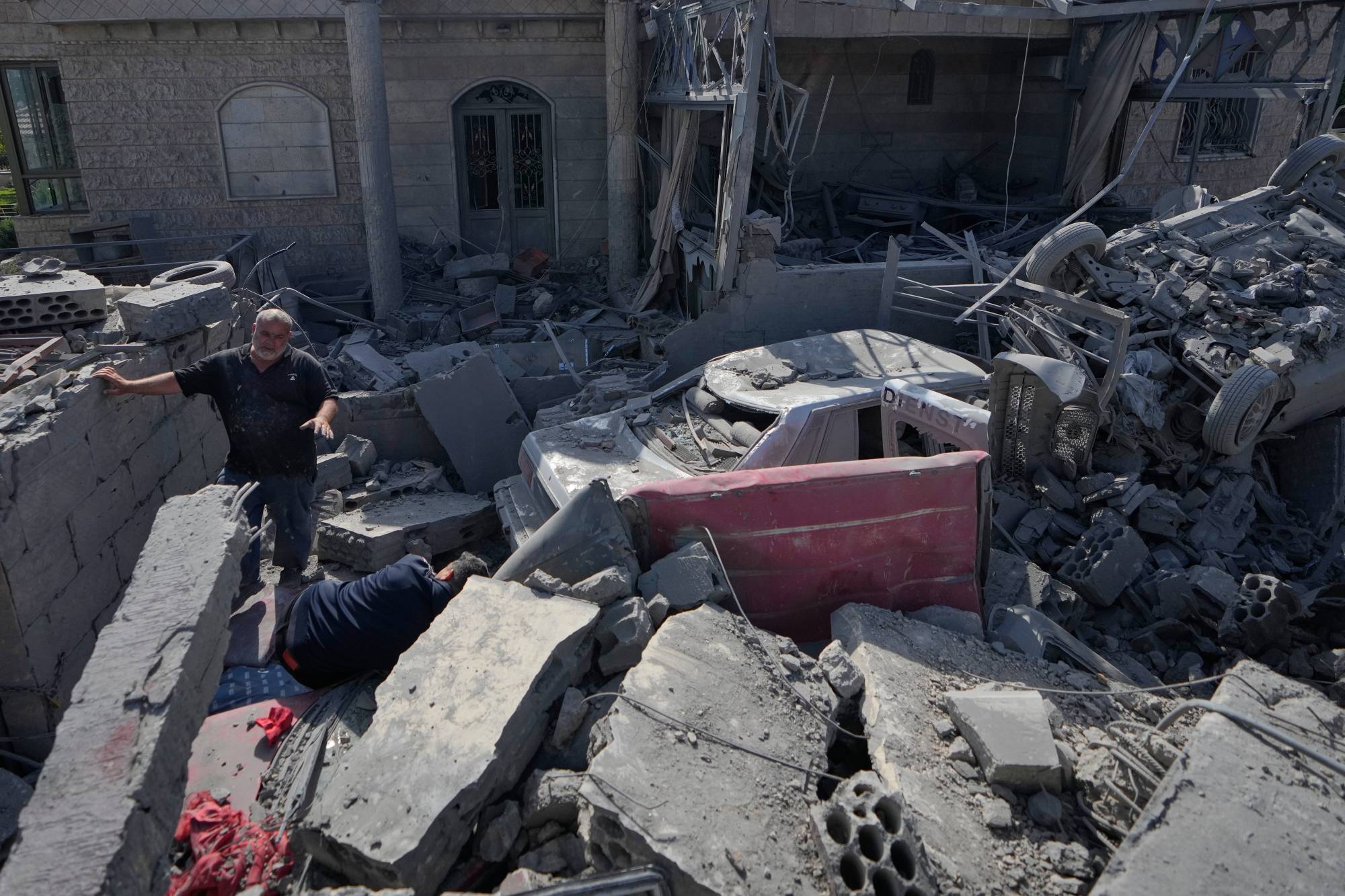
'No Eid' for West Bank Palestinians Who Lost Sons in Israeli Raids

Internally displaced Palestinians walk in the streets during Eid al-Adha in Gaza City, 06 June 2025. EPA/MOHAMMED SABER
TT

'No Eid' for West Bank Palestinians Who Lost Sons in Israeli Raids

Internally displaced Palestinians walk in the streets during Eid al-Adha in Gaza City, 06 June 2025. EPA/MOHAMMED SABER

Abeer Ghazzawi had little time to visit her two sons' graves for the Muslim holiday of Eid al-Adha before Israeli soldiers cleared the cemetery near the refugee camp in the occupied West Bank city of Jenin.

The Israeli army has conducted a months-long operation in the camp which has forced Ghazzawi, along with thousands of other residents, from her home.

For Ghazzawi, the few precious minutes she spent at her sons' graves still felt like a small victory.

"On the last Eid (Eid al-Fitr, celebrating the end of Ramadan in March), they raided us. They even shot at us. But this Eid, there was no shooting, just that they kicked us out of the cemetery twice", the 48-year-old told AFP.

"We were able to visit our land, clean up around the graves, and pour rosewater and cologne on them", she added.

Eid al-Adha, which begins on Friday, is one of the biggest holidays in the Muslim calendar.

As part of the celebrations, families traditionally visit the graves of their loved ones.

In the Jenin camp cemetery, women and men had brought flowers for their deceased relatives, and many sat on the side of their loved ones' graves as they remembered the dead, clearing away weeds and dust.

An armored car arrived at the site shortly after, unloading soldiers to clear the cemetery of its mourners who walked away solemnly without protest.

Ghazzawi's two sons, Mohammad and Basel, were killed in January 2024 in a Jenin hospital by undercover Israeli troops.

The Palestinian Islamic Jihad militant group claimed the two brothers as its fighters after their deaths.

Like Ghazzawi, many in Jenin mourned sons killed during one of the numerous Israeli operations that have targeted the city, a known bastion of Palestinian armed groups fighting Israel.

-'There is no Eid'-

In the current months-long military operation in the north of the West Bank, which Israel has occupied since 1967, Israeli forces looking for militants have cleared three refugee camps and deployed tanks in Jenin.

Mohammad Abu Hjab, 51, went to the cemetery on the other side of the city to visit the grave of his son, killed in January by an Israeli strike that also killed five other people.

"There is no Eid. I lost my son -- how can it be Eid for me?" he asked as he stood by the six small gravestones of the dead young men.

The Israeli military did not offer details at the time but said it had carried out "an attack in the Jenin area".

"There's no accountability, no oversight", lamented Abu Hjab.

"One of the victims (of the strike) was just a kid, born in 2008 -— so he was only 16 years old."

"I still have three other children. I live 24 hours a day with no peace of mind", he added, referring to the army's continued presence in Jenin.

All around him, families sat or stood around graves at Jenin's eastern neighborhood cemetery, which they visited after the early morning Eid prayer at the city's nearby Great Mosque.

The mosque's imam led a prayer at the cemetery for those killed in Gaza and for the community's dead, particularly those killed by the Israeli army.

Hamam al-Sadi, 31, told AFP he has visited the cemetery at every religious holiday since his brother was killed in a strike, to "just sit with him."

-'Our only hope'-

Several graves marked "martyr" -- a term broadly applied to Palestinian civilians killed by Israel -- were decorated with photos of young men holding weapons.

Mohammad Hazhouzi, 61, lost a son during a military raid in November 2024.

He has also been unemployed since Israel stopped giving work permits to West Bank residents after the Gaza war erupted.

Despite the army's continued presence in Jenin, Hazhouzi harbored hope.

"They've been there for months. But every occupation eventually comes to an end, no matter how long it lasts".

"God willing, we will achieve our goal of establishing our Palestinian state. That's our only hope," he said.

"Be optimistic, and good things will come".
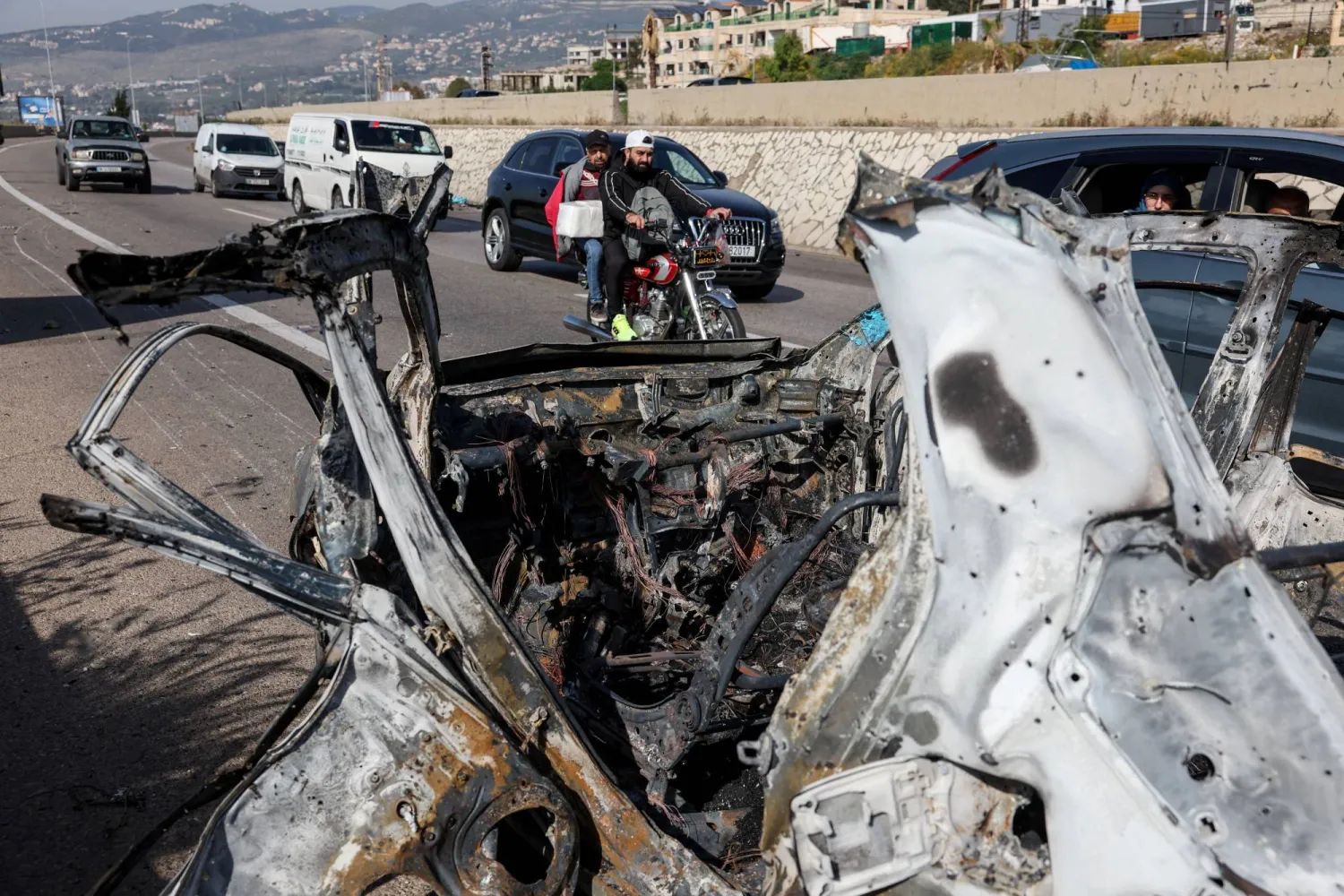


EU Condemns Israel's West Bank Control Measures

The Israeli settlement of Har Homa, seen from the West Bank city of Bethlehem, Tuesday, Dec. 17, 2024. (AP)
TT

EU Condemns Israel's West Bank Control Measures

The Israeli settlement of Har Homa, seen from the West Bank city of Bethlehem, Tuesday, Dec. 17, 2024. (AP)

The European Union on Monday condemned new Israeli measures to tighten control of the West Bank and pave the way for more settlements in the occupied Palestinian territory, AFP reported.

"The European Union condemns recent decisions by Israel's security cabinet to expand Israeli control in the West Bank. This move is another step in the wrong direction," EU spokesman Anouar El Anouni told journalists.


Atrocities in Sudan's El-Fasher Were 'Preventable Human Rights Catastrophe'

Sudanese displaced people who left El Fasher after its fall, sit in the shade in Tawila at the Rwanda camp reception point on December 17, 2025. (Photo by AFP)
TT

Atrocities in Sudan's El-Fasher Were 'Preventable Human Rights Catastrophe'

Sudanese displaced people who left El Fasher after its fall, sit in the shade in Tawila at the Rwanda camp reception point on December 17, 2025. (Photo by AFP)

The atrocities unleashed on El-Fasher in Sudan's Darfur region last October were a "preventable human rights catastrophe", the United Nations said Monday, warning they now risked being repeated in the neighbouring Kordofan region.


"My office sounded the alarm about the risk of mass atrocities in the besieged city of El-Fasher for more than a year ... but our warnings were ignored," UN rights chief Volker Turk told the Human Rights Council in Geneva.


He added that he was now "extremely concerned that these violations and abuses may be repeated in the Kordofan region".


Arab League Condemns Israel's Decisions to Alter Legal, Administrative Status of West Bank

A general view shows the opening session of the meeting of Arab foreign ministers at the Arab League Headquarters (Reuters)
TT

Arab League Condemns Israel's Decisions to Alter Legal, Administrative Status of West Bank

A general view shows the opening session of the meeting of Arab foreign ministers at the Arab League Headquarters (Reuters)

The General Secretariat of the Arab League strongly condemned decisions by Israeli occupation authorities to impose fundamental changes on the legal and administrative status of the occupied Palestinian territories, particularly in the West Bank, describing them as a dangerous escalation and a flagrant violation of international law, international legitimacy resolutions, and signed agreements, SPA reported.

In a statement, the Arab League said the measures include facilitating the confiscation of private Palestinian property and transferring planning and licensing authorities in the city of Hebron and the area surrounding the Ibrahimi Mosque to occupation authorities.

It warned of the serious repercussions of these actions on the rights of the Palestinian people and on Islamic and Christian holy sites.

The statement reaffirmed the Arab League’s firm support for the legitimate rights of the Palestinian people, foremost among them the establishment of their independent state on the June 4, 1967 borders, with East Jerusalem as its capital.