


Contractor in Syria Uncovers a Surprise Beneath the Rubble: An Ancient Tomb Complex

A boy walks out of a pit after exploring the tombs from a Byzantine underground complex, believed to be over 1,500 years old, uncovered by a contractor during the reconstruction of a war-damaged house in Maarat al-Numan, Idlib suburb, Syria, Friday, May 30, 2025. (AP)
TT

Contractor in Syria Uncovers a Surprise Beneath the Rubble: An Ancient Tomb Complex

A boy walks out of a pit after exploring the tombs from a Byzantine underground complex, believed to be over 1,500 years old, uncovered by a contractor during the reconstruction of a war-damaged house in Maarat al-Numan, Idlib suburb, Syria, Friday, May 30, 2025. (AP)

A contractor digging into the earth where the rubble of a destroyed house had been cleared away in northern Syria stumbled across a surprise: the remains of an underground Byzantine tomb complex believed to be more than 1,500 years old.

The discovery emerged last month in the town of Maarat al-Numan in Idlib province, which is strategically located on the route between the cities of Aleppo and Damascus. The community became a touchpoint in the nearly 14-year Syrian civil war that ended with the fall of former President Bashar al-Assad in a lightning opposition offensive in December.

Assad’s forces seized the area back from opposition control in 2020. Houses were looted and demolished. Aerial images of the area show many houses still standing but without roofs.

Now residents are beginning to return and rebuild. In the course of a reconstruction project, stone openings were uncovered indicating the presence of ancient graves. Residents notified the directorate of antiquities, which dispatched a specialized team to inspect and secure the site.

Aboveground, it’s a residential neighborhood with rows of cinder-block buildings, many of them damaged in the war. Next to one of those buildings, a pit leads down to the openings of two burial chambers, each containing six stone tombs. The sign of the cross is etched into the top of one stone column.

"Based on the presence of the cross and the pottery and glass pieces that were found, this tomb dates back to the Byzantine era," said Hassan al-Ismail, director of antiquities in Idlib. He noted that the discovery adds to an already rich collection of archeological sites in the area.

A guard inspects an engraved stone, originally found at a Byzantine underground tomb complex believed to be over 1,500 years old and uncovered by a contractor during the reconstruction of a war-damaged house and brought to a museum yard in Maarat al-Numan, Syria, Friday, May 30, 2025. (AP)

Idlib "has a third of the monuments of Syria, containing 800 archaeological sites in addition to an ancient city," al-Ismail said.

The Byzantine Empire, which began in the 4th century AD, was a continuation of the Roman empire with its capital in Constantinople — today's Istanbul — and Christianity as its official religion.

Abandoned Byzantine-era settlements called Dead Cities stretch across rocky hills and plains in northwest Syria, their weathered limestone ruins featuring remnants of stone houses, basilicas, tombs and colonnaded streets.

In the past, the owners of sites where archeological ruins were found sometimes covered them up, fearful that their property would be seized to preserve the ruins, said Ghiath Sheikh Diab, a resident of Maarat al-Numan who witnessed the moment when the tomb complex was uncovered.

He said he hoped the new government will fairly compensate property owners in such cases and provide assistance to the displaced people who have returned to the area to find their homes destroyed.

The years of war led to significant damage to Syria’s archeological sites, not only from bombing but from looting and unauthorized digging.

Some see in the ruins a sign of hope for economic renewal.

Another local resident, Abed Jaafar, came with his son to explore the newly discovered tombs and take pictures.

"In the old days, a lot of foreign tourists used to come to Maarat just to see the ruins," he said. "We need to take care of the antiquities and restore them and return them to the way they were before ... and this will help to bring back the tourism and the economy."


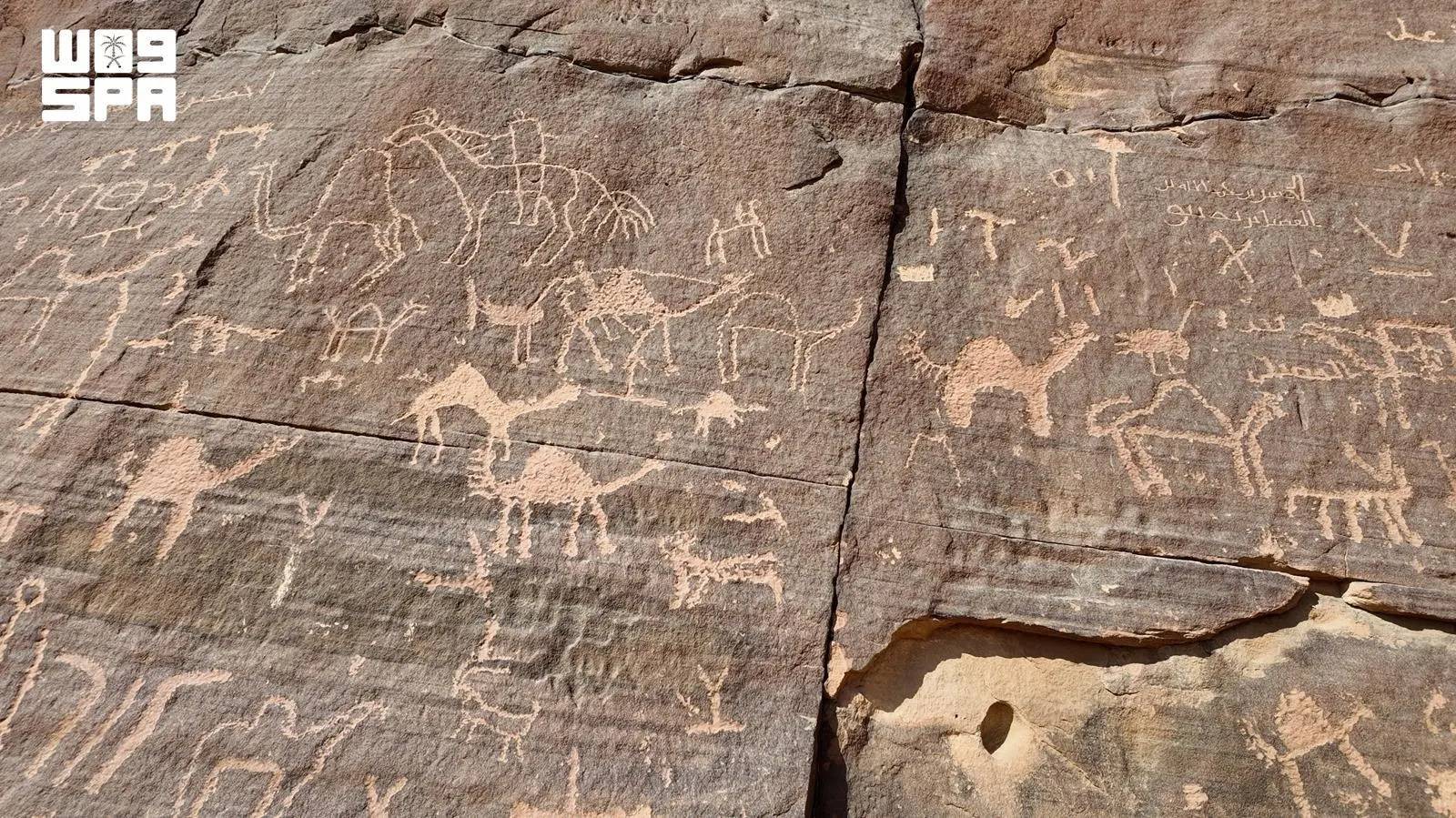
Jazan Festival 2026 Kicks Off Thursday with Grand Parade

his year’s festival offers an unprecedented experience that brings together the charm of the region’s unique geographic diversity - SPA
TT

Jazan Festival 2026 Kicks Off Thursday with Grand Parade

his year’s festival offers an unprecedented experience that brings together the charm of the region’s unique geographic diversity - SPA

The Jazan Festival 2026 will launch on Thursday in a carnival anticipated by thousands of visitors from within the region and beyond.

The festival will open with a grand celebratory parade starting at 3:45 p.m. along the Jazan city waterfront, signaling the start of an entertainment and cultural season that will extend for several months, according to SPA.

This year’s festival offers an unprecedented experience that brings together the charm of the region’s unique geographic diversity, from its towering green mountains and golden beaches to its picturesque islands, alongside the authenticity of its rich heritage, complemented by modern touches in entertainment programs designed to meet the aspirations of all age groups.

Performing arts inspired by local folklore will add an authentic dimension, while moving installations will flow in harmonious rhythm.

Completing the visual spectacle, integrated light and sound shows will create an enchanting atmosphere before the festivities conclude with a dazzling fireworks display lighting up the Jazan sky in vibrant colors.


UNESCO Chair in Translating Cultures Hosts Lectures on Safeguarding Intangible Cultural Heritage

The program was presented as an advanced knowledge initiative that combined theoretical perspectives with practical application - SPA
TT

UNESCO Chair in Translating Cultures Hosts Lectures on Safeguarding Intangible Cultural Heritage

The program was presented as an advanced knowledge initiative that combined theoretical perspectives with practical application - SPA

The United Nations Educational, Scientific and Cultural Organization (UNESCO) Chair in Translating Cultures at the King Faisal Center for Research and Islamic Studies (KFCRIS), with support from the Literature, Publishing, and Translation Commission, organized a training course and a series of specialized lectures on the translation and safeguarding of intangible cultural heritage, SPA reported.

The program was presented as an advanced knowledge initiative that combined theoretical perspectives with practical application, opening space for in-depth discussion of the challenges of translating intangible heritage as a living, evolving form of culture closely tied to its cultural, social, and performative contexts.

The course and lectures adopted a comprehensive approach that views translation as a cultural tool for preserving oral memory and building bridges between local specificity and the global sphere.

This approach was reflected through applied models, field experiences, and contemporary conceptual frameworks.


Ancient Egyptian Pharaoh’s Boat Is Being Reassembled in Public at Grand Egyptian Museum

People walk next to King Khufu's boat gem, also known as the Solar Boat, as work to restore the second solar boat has started with wooden planks part of the 1,650-piece structure being installed on a metal frame through Egyptian-Japanese cooperation with two Japanese universities, marking the start of preparations for the second boat's public display at the Grand Egyptian Museum (GEM), near the Giza Pyramid Complex, in Giza, Egypt, December 23, 2025.
TT

Ancient Egyptian Pharaoh’s Boat Is Being Reassembled in Public at Grand Egyptian Museum

People walk next to King Khufu's boat gem, also known as the Solar Boat, as work to restore the second solar boat has started with wooden planks part of the 1,650-piece structure being installed on a metal frame through Egyptian-Japanese cooperation with two Japanese universities, marking the start of preparations for the second boat's public display at the Grand Egyptian Museum (GEM), near the Giza Pyramid Complex, in Giza, Egypt, December 23, 2025.

A boat belonging to an Egyptian pharaoh is being assembled in full view at the Grand Egyptian Museum’s exhibition hall.

Staff began piecing together the cedarwood boat, one of two that were found that belong to King Khufu, Tuesday morning as dozens of visitors watched.

The assembly of the 42-meter (137-foot) -long vessel, which sits next to its already-assembled twin that has been on display, is expected to take around four years, according to Issa Zeidan, head of restoration at the Grand Egyptian Museum. It contains 1,650 wooden pieces.

King Khufu ruled ancient Egypt more than 4,500 years ago and built the Great Pyramid of Giza.

“You’re witnessing today one of the most important restoration projects in the 21st century,” said Tourism and Antiquities Minister Sherif Fathy, who attended the event.

The $1 billion museum, also known as GEM, was touted as the world’s largest when it was lavishly inaugurated last month. It's home to nearly 50,000 artifacts, including the collection of treasures from the tomb of the famed King Tutankhamun, which was discovered in 1922. The museum, located near the pyramids at the edge of Cairo, is expected to boost Egypt’s tourism revenues and help bolster its economy.

The boat was one of two discovered in 1954, opposite the southern side of the Great Pyramid. The excavation of its wooden parts began in 2014, according to the museum’s website.

The exact purpose of the boats remains unclear, but experts believe they were either used to transport King Khufu’s body during his funeral or were meant to be used for his afterlife journey with the sun god Ra, according to the museum.
