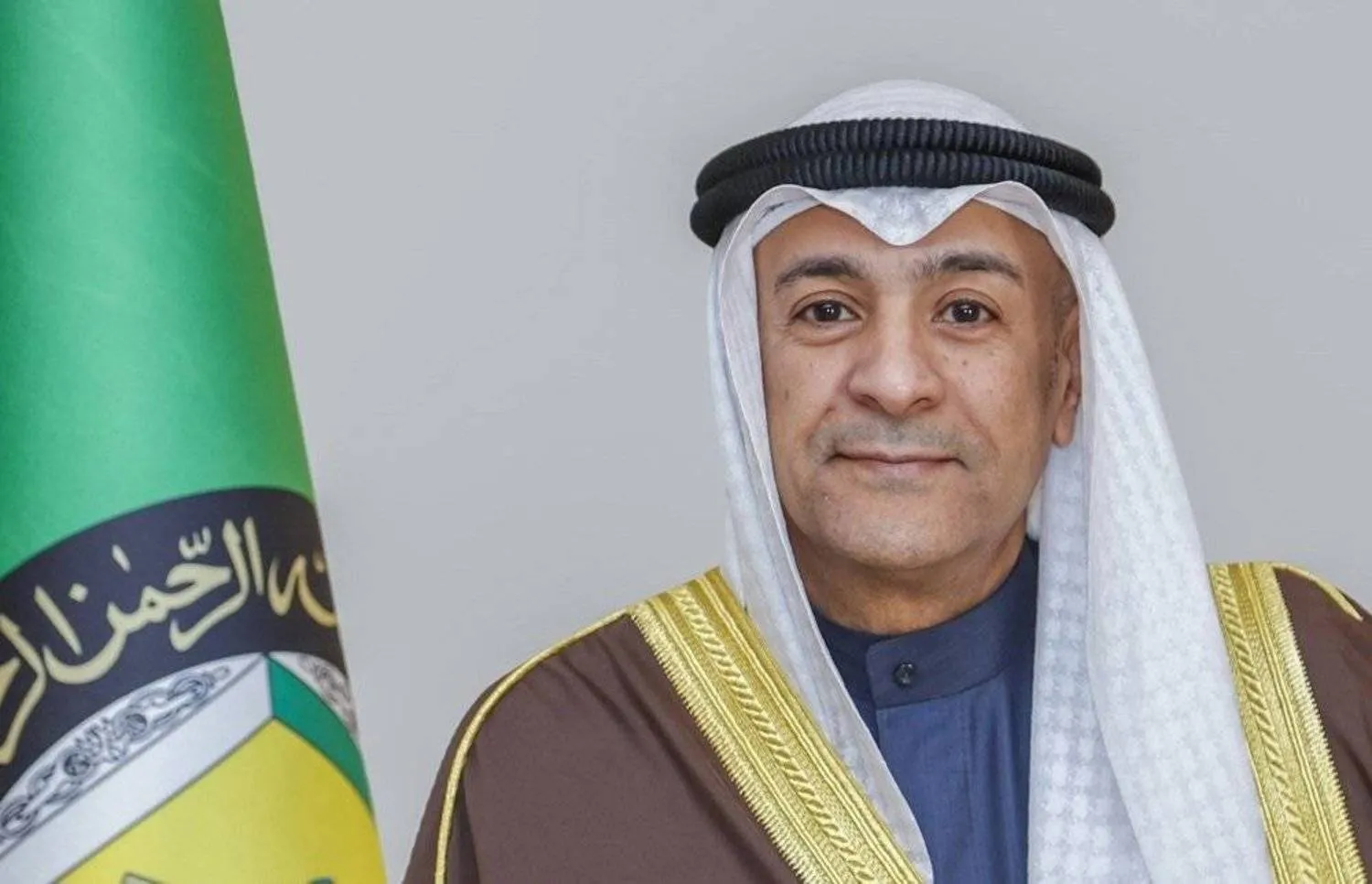
Gulf Cooperation Council Condemns Israeli Strike on Iran, Calls for Diplomacy

Jasem Mohammed Albudaiwi, Secretary-General of the Gulf Cooperation Council, during the extraordinary meeting of the GCC Ministerial Council held via video conference (GCC). 
TT

Gulf Cooperation Council Condemns Israeli Strike on Iran, Calls for Diplomacy

Jasem Mohammed Albudaiwi, Secretary-General of the Gulf Cooperation Council, during the extraordinary meeting of the GCC Ministerial Council held via video conference (GCC). 

In an extraordinary virtual session held Sunday, the Gulf Cooperation Council (GCC) strongly condemned Israel’s recent airstrikes on Iran, denouncing them as a violation of Iranian sovereignty and a blatant breach of international law and the UN Charter. The council urged an immediate return to diplomatic efforts to de-escalate the growing regional tensions.

GCC Secretary-General Jasem Mohamed Albudaiwi described the current escalation as “unprecedented,” pointing to the Israeli military strikes on Iranian territory and Tehran’s subsequent retaliatory actions.

“These developments have sharply heightened tensions in the region,” he said, warning that they “open the door to uncertain and troubling scenarios.”

Albudaiwi revealed that in light of the unfolding crisis, the GCC Emergency Management Center had been activated to monitor and respond to potential consequences, particularly those involving Iran’s nuclear facilities.

“We acted swiftly and responsibly in recognition of the gravity of the situation,” he said, citing the danger of strikes on nuclear infrastructure and the potential for serious environmental and technical fallout.

Among the chief concerns raised during the meeting were the regional consequences of a broader escalation - especially any damage to nuclear sites - and the far-reaching impacts this could have on the environment, regional infrastructure, and the economic stability of Gulf states. The GCC also highlighted the risks to global supply chains, energy markets, and the security of key maritime corridors.

In a statement, the council emphasized that “until now, all technical indicators remain within safe limits,” adding that there is no immediate cause for alarm. Nonetheless, member states remain on high alert. “Full readiness and constant vigilance are essential in facing this volatile situation,” said Albudaiwi.

He also reaffirmed the council’s foundational values of unity, collective security, and regional stability. “The GCC was established on the principles of solidarity and joint action,” he said. “We continue to believe that stability is essential for the prosperity and well-being of our peoples.”

Albudaiwi reiterated the GCC’s longstanding commitment to conflict prevention, dialogue facilitation, and the avoidance of military escalation.

“We renew our call to all nations and actors to exercise maximum restraint and refrain from further military action,” he said. “The region stands at the edge of a wider conflict that could spiral out of control, with consequences no one can predict or manage.”


Hajj Ministry: Umrah Performances Exceed 11.9 Million in Jumada Al Akhira

The data also revealed that over 1.7 million Umrah performers arrived from outside the Kingdom during this month - SPA
TT

Hajj Ministry: Umrah Performances Exceed 11.9 Million in Jumada Al Akhira

The data also revealed that over 1.7 million Umrah performers arrived from outside the Kingdom during this month - SPA

The Ministry of Hajj and Umrah, in partnership with the General Authority for the Care of the Affairs of the Two Holy Mosques, reported more than 11.9 million Umrah performances during the month of Jumada Al Akhira by pilgrims from inside and outside the Kingdom, according to official statistics.

This remarkable figure reflects the growing momentum of performing Umrah and highlights the exceptional efficiency of the services and facilities dedicated to serving the worshipers.

The data also revealed that over 1.7 million Umrah performers arrived from outside the Kingdom during this month. This influx underscores the positive impact of advanced digital platforms and integrated logistical services, which have streamlined arrival procedures and allowed Umrah performers to perform their rituals with ease, comfort, and peace of mind, SPA reported.

The continued surge in the performance of Umrah rituals embodies the Kingdom’s unwavering commitment to cultivating the Hajj, Umrah, and visitation ecosystem, in line with the goals of the Saudi Vision 2030.

Through continuous innovation and care, the Kingdom is making access to the two holy mosques easier while delivering a comprehensive spiritual journey that prioritizes the comfort and safety of Umrah performers at every stage—from planning their visit to departing the Kingdom.


KSrelief Implements Volunteer General Surgery Medical Project in Gaza Strip

This project is an extension of the volunteer medical initiatives provided by the Kingdom of Saudi Arabia through its humanitarian arm, KSrelief - SPA
TT

KSrelief Implements Volunteer General Surgery Medical Project in Gaza Strip

This project is an extension of the volunteer medical initiatives provided by the Kingdom of Saudi Arabia through its humanitarian arm, KSrelief - SPA

The King Salman Humanitarian Aid and Relief Center (KSrelief) is implementing a volunteer general surgery medical project at Al-Ahli Arab Hospital in the Gaza Strip, running from December 5 to 31.

Since the start of the campaign, the KSrelief volunteer medical team has performed 150 surgical operations, all of which were successful. In addition, 300 people benefited from medical examinations and outpatient clinic services, SPA reported.

This project is an extension of the volunteer medical initiatives provided by the Kingdom of Saudi Arabia through its humanitarian arm, KSrelief, to assist countries and communities in need, as well as those affected worldwide.


Over 68 Million Visitors to Two Holy Mosques during Jumada Al Akhira

The authority uses advanced sensor technology to monitor the number of worshippers and pilgrims among visitors at the main entrances - SPA
TT

Over 68 Million Visitors to Two Holy Mosques during Jumada Al Akhira

The authority uses advanced sensor technology to monitor the number of worshippers and pilgrims among visitors at the main entrances - SPA

The General Authority for the Care of the Affairs of the Grand Mosque and the Prophet’s Mosque announced that the total number of worshippers and visitors to the Two Holy Mosques during Jumada Al Akhira 1447 AH reached 68,741,853.

The authority said that the number of worshippers at the Grand Mosque totaled 30,016,073, including 94,776 worshippers in Hijr Ismail (Al-Hateem), while the number of Umrah performers reached 11,863,477, SPA reported.

It noted that the number of worshippers at the Prophet’s Mosque during the same month reached 23,116,271, including 1,319,653 worshippers in Al-Rawdah Al-Sharifa. Meanwhile, 2,331,603 visitors greeted the Prophet and his two companions.

The authority uses advanced sensor technology to monitor the number of worshippers and pilgrims among visitors at the main entrances of the Grand Mosque and the Prophet’s Mosque.

This step aims to enhance operational efficiency by monitoring flows and crowds, empowering relevant authorities to manage crowds in partnership with associated entities better.