


CIA Chief Told Lawmakers Iran Nuclear Program Set Back Years with Strikes on Metal Conversion Site

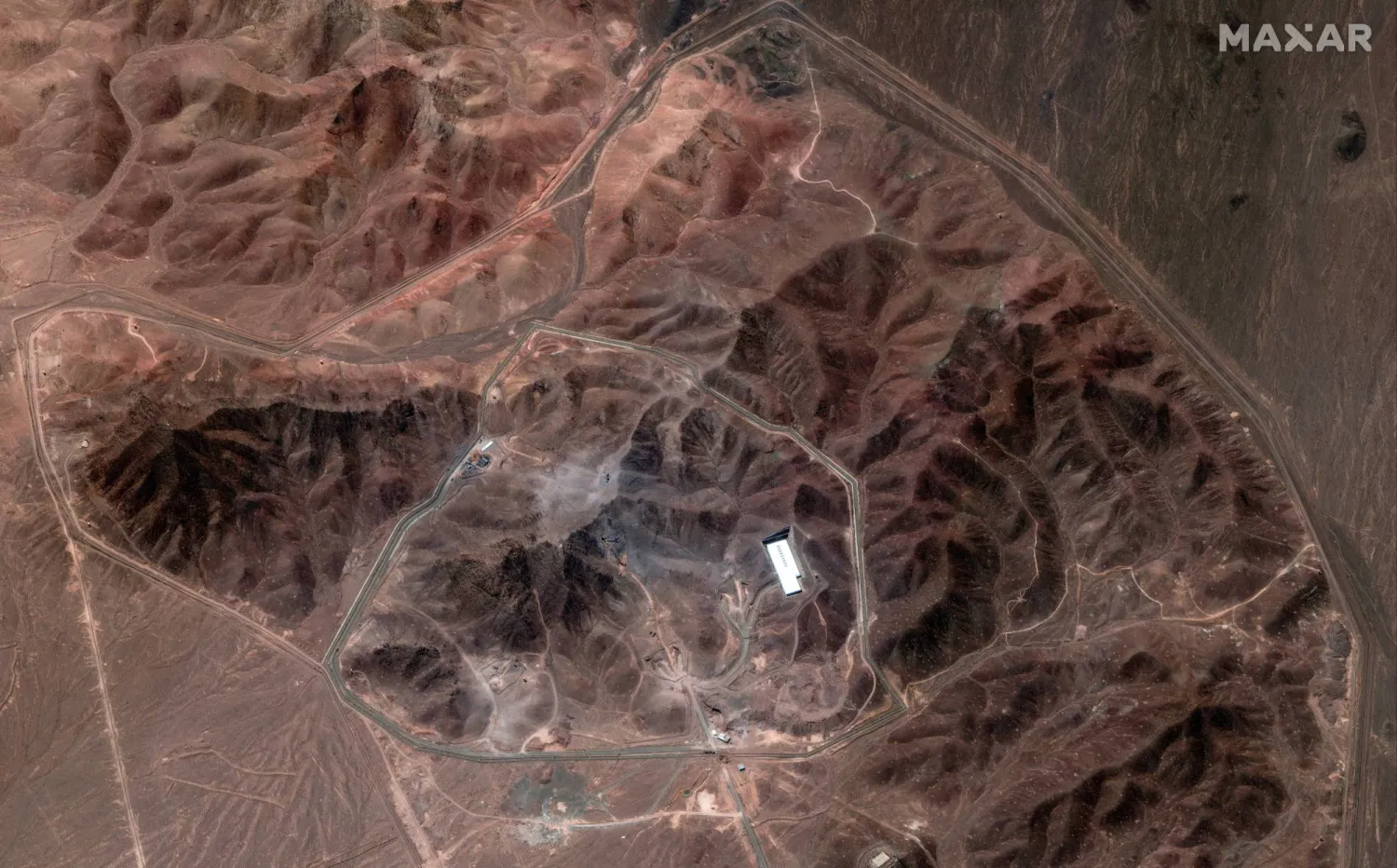
This satellite image provided by Maxar Technologies shows overview of Fordo enrichment facility in Iran, on June 29, 2025. (Maxar Technologies via AP)
TT

CIA Chief Told Lawmakers Iran Nuclear Program Set Back Years with Strikes on Metal Conversion Site

This satellite image provided by Maxar Technologies shows overview of Fordo enrichment facility in Iran, on June 29, 2025. (Maxar Technologies via AP)

CIA Director John Ratcliffe told skeptical US lawmakers that American military strikes destroyed Iran's lone metal conversion facility and in the process delivered a monumental setback to Tehran’s nuclear program that would take years to overcome, a US official said Sunday.

The official, who spoke on the condition of anonymity to discuss the sensitive intelligence, said Ratcliffe laid out the importance of the strikes on the metal conversion facility during a classified hearing for US lawmakers last week.

Details about the private briefings surfaced as President Donald Trump and his administration keep pushing back on questions from Democratic lawmakers and others about how far Iran was set back by the strikes before last Tuesday’s ceasefire with Israel took hold.

“It was obliterating like nobody’s ever seen before,” Trump said in an interview on Fox News Channel’s “Sunday Morning Futures.” “And that meant the end to their nuclear ambitions, at least for a period of time.”

Ratcliffe also told lawmakers that the intelligence community assessed the vast majority of Iran's amassed enriched uranium likely remains buried under the rubble at Isfahan and Fordo, two of the three key nuclear facilities targeted by US strikes.

But even if the uranium remains intact, the loss of its metal conversion facility effectively has taken away Tehran's ability to build a bomb for years to come, the official said.

Rafael Grossi, head of the International Atomic Energy Agency, said Sunday on CBS' “Face the Nation” that the three Iranian sites with “capabilities in terms of treatment, conversion and enrichment of uranium have been destroyed to an important degree.”

But, he added, “some is still standing” and that because capabilities remain, “if they so wish, they will be able to start doing this again.” He said assessing the full damage comes down to Iran allowing in inspectors.

"Frankly speaking, one cannot claim that everything has disappeared, and there is nothing there," Grossi said.

Trump has insisted from just hours after three key targets were struck by US bunker-buster bombs and Tomahawk missiles that Iran's nuclear program was “obliterated.”

His defense secretary, Pete Hegseth, has said they were “destroyed.” A preliminary report issued by the US Defense Intelligence Agency, meanwhile, said the strikes did significant damage to the Fordo, Natanz and Isfahan sites, but did not totally destroy the facilities.

As a result of Israeli and US strikes, Grossi says that “it is clear that there has been severe damage, but it’s not total damage." Israel claims it has set back Iran’s nuclear program by “many years.”

The metal conversion facility that Ratcliffe said was destroyed was located at the Isfahan nuclear facility. The process of transforming enriched uranium gas into dense metal, or metallization, is a key step in building the explosive core of a bomb.

Secretary of State Marco Rubio in comments at the NATO summit last week also suggested that it was likely the US strikes had destroyed the metal conversion facility.

“You can’t do a nuclear weapon without a conversion facility," Rubio said. "We can’t even find where it is, where it used to be on the map. You can’t even find where it used to be because the whole thing is just blackened out. It’s gone. It’s wiped out.”

The CIA director also stressed to lawmakers during the congressional briefing that Iran’s air defense was shattered during the 12-day assault. As a result, any attempt by Iran to rebuild its nuclear program could now easily be thwarted by Israeli strikes that Iran currently has little wherewithal to defend against, the official said.

Ratcliffe's briefing to lawmakers on the US findings appeared to mesh with some of Israeli officials' battle damage assessments.

Israeli officials have determined that Iran's ability to enrich uranium to a weapons-grade level was neutralized for a prolonged period, according to a senior Israeli military official who was not authorized to talk publicly about the matter.

Tehran's nuclear program also was significantly damaged by the strikes killing key scientists, damage to Iran's missile production industry and the battering of Iran's aerial defense system, according to the Israeli's assessment.

Grossi, and some Democrats, note that Iran still has the know-how.

“You cannot undo the knowledge that you have or the capacities that you have,” Grossi said, emphasizing the need to come to a diplomatic deal on the country's nuclear program.



France Accuses Iran of ‘Repression’ in Sentence for Nobel Laureate

People cross an intersection in downtown Tehran, Iran, Monday, Feb. 9, 2026. (AP)
TT

France Accuses Iran of ‘Repression’ in Sentence for Nobel Laureate

People cross an intersection in downtown Tehran, Iran, Monday, Feb. 9, 2026. (AP)

France accused Iran on Monday of "repression and intimidation" after a court handed Nobel Peace Prize laureate Narges Mohammadi a new six-year prison sentence on charges of harming national security.

Mohammadi, sentenced Saturday, was also handed a one-and-a-half-year prison sentence for "propaganda" against Iran's system, according to her foundation.

"With this sentence, the Iranian regime has, once again, chosen repression and intimidation," the French foreign ministry said in a statement, describing the 53-year-old as a "tireless defender" of human rights.

Paris is calling for the release of the activist, who was arrested before protests erupted nationwide in December after speaking out against the government at a funeral ceremony.

The movement peaked in January as authorities launched a crackdown that activists say has left thousands dead.

Over the past quarter-century, Mohammadi has been repeatedly tried and jailed for her vocal campaigning against Iran's use of capital punishment and the mandatory dress code for women.

Mohammadi has spent much of the past decade behind bars and has not seen her twin children, who live in Paris, since 2015.

Iranian authorities have arrested more than 50,000 people as part of their crackdown on protests, according to US-based Human Rights Activists News Agency (HRANA).


Iran's Supreme Leader Urges Iranians to Show 'Resolve' against Foreign Pressure

Iran's supreme leader Ali Khamenei on (File Photo/Supreme Leader's website).
TT

Iran's Supreme Leader Urges Iranians to Show 'Resolve' against Foreign Pressure

Iran's supreme leader Ali Khamenei on (File Photo/Supreme Leader's website).

Iran's supreme leader Ali Khamenei on Monday called on his compatriots to show "resolve" ahead of the anniversary of the 1979 Islamic revolution this week.

Since the revolution, "foreign powers have always sought to restore the previous situation", Ali Khamenei said, referring to the period when Iran was under the rule of shah Reza Pahlavi and dependent on the United States, AFP reported.

"National power is less about missiles and aircraft and more about the will and steadfastness of the people," the leader said, adding: "Show it again and frustrate the enemy."


UK PM's Communications Director Quits

British Prime Minister Keir Starmer delivers a speech at Horntye Park Sports Complex in St Leonards, Britain, February 05, 2026. Peter Nicholls/Pool via REUTERS
TT

UK PM's Communications Director Quits

British Prime Minister Keir Starmer delivers a speech at Horntye Park Sports Complex in St Leonards, Britain, February 05, 2026. Peter Nicholls/Pool via REUTERS

British Prime Minister Keir Starmer's director of communications Tim Allan resigned on Monday, a day after Starmer's top aide Morgan McSweeney quit over his role in backing Peter Mandelson over his known links to Jeffrey Epstein.

The loss of two senior aides ⁠in quick succession comes as Starmer tries to draw a line under the crisis in his government resulting from his appointment of Mandelson as ambassador to the ⁠US.

"I have decided to stand down to allow a new No10 team to be built. I wish the PM and his team every success," Allan said in a statement on Monday.

Allan served as an adviser to Tony Blair from ⁠1992 to 1998 and went on to found and lead one of the country’s foremost public affairs consultancies in 2001. In September 2025, he was appointed executive director of communications at Downing Street.