


Elon Musk's AI Chatbot Grok Gets an Update, Starts Sharing Antisemitic Posts

xAI and Grok logos are seen in this illustration taken, February 16, 2025. REUTERS/Dado Ruvic/Illustration
TT

Elon Musk's AI Chatbot Grok Gets an Update, Starts Sharing Antisemitic Posts

xAI and Grok logos are seen in this illustration taken, February 16, 2025. REUTERS/Dado Ruvic/Illustration

Elon Musk's artificial intelligence company said Wednesday that it's taking down “inappropriate posts" made by its Grok chatbot, which appeared to include antisemitic comments that praised Adolf Hitler.

Grok was developed by Musk’s xAI and pitched as alternative to “woke AI” interactions from rival chatbots like Google’s Gemini, or OpenAI’s ChatGPT.

Musk said Friday that Grok has been improved significantly, and users “should notice a difference.”

Since then, Grok has shared several antisemitic posts, including the trope that Jews run Hollywood, and denied that such a stance could be described as Nazism.

“Labeling truths as hate speech stifles discussion,” Grok said.

It also appeared to praise Hitler, according to screenshots of a post that has now apparently been deleted.

“We are aware of recent posts made by Grok and are actively working to remove the inappropriate posts,” the Grok account posted early Wednesday, without being more specific.

"Since being made aware of the content, xAI has taken action to ban hate speech before Grok posts on X. xAI is training only truth-seeking and thanks to the millions of users on X, we are able to quickly identify and update the model where training could be improved.

Also Wednesday, a court in Türkiye ordered a ban on Grok after it spread content insulting to Turkish President and others.

The pro-government A Haber news channel reported that Grok posted vulgarities against Turkish President Recep Tayyip Erdogan, his late mother and well-known personalities. Offensive responses were also directed toward modern Türkiye's founder, Mustafa Kemal Atatürk, other media outlets said.

That prompted the Ankara public prosecutor to file for the imposition of restrictions under Türkiye's internet law, citing a threat to public order. A criminal court approved the request early on Wednesday, ordering the country’s telecommunications authority to enforce the ban.

It's not the first time Grok's behavior has raised questions.

Earlier this year the chatbot kept talking about South African racial politics and the subject of “white genocide” despite being asked a variety of questions, most of which had nothing to do with the country. An “unauthorized modification” was behind the problem, xAI said.
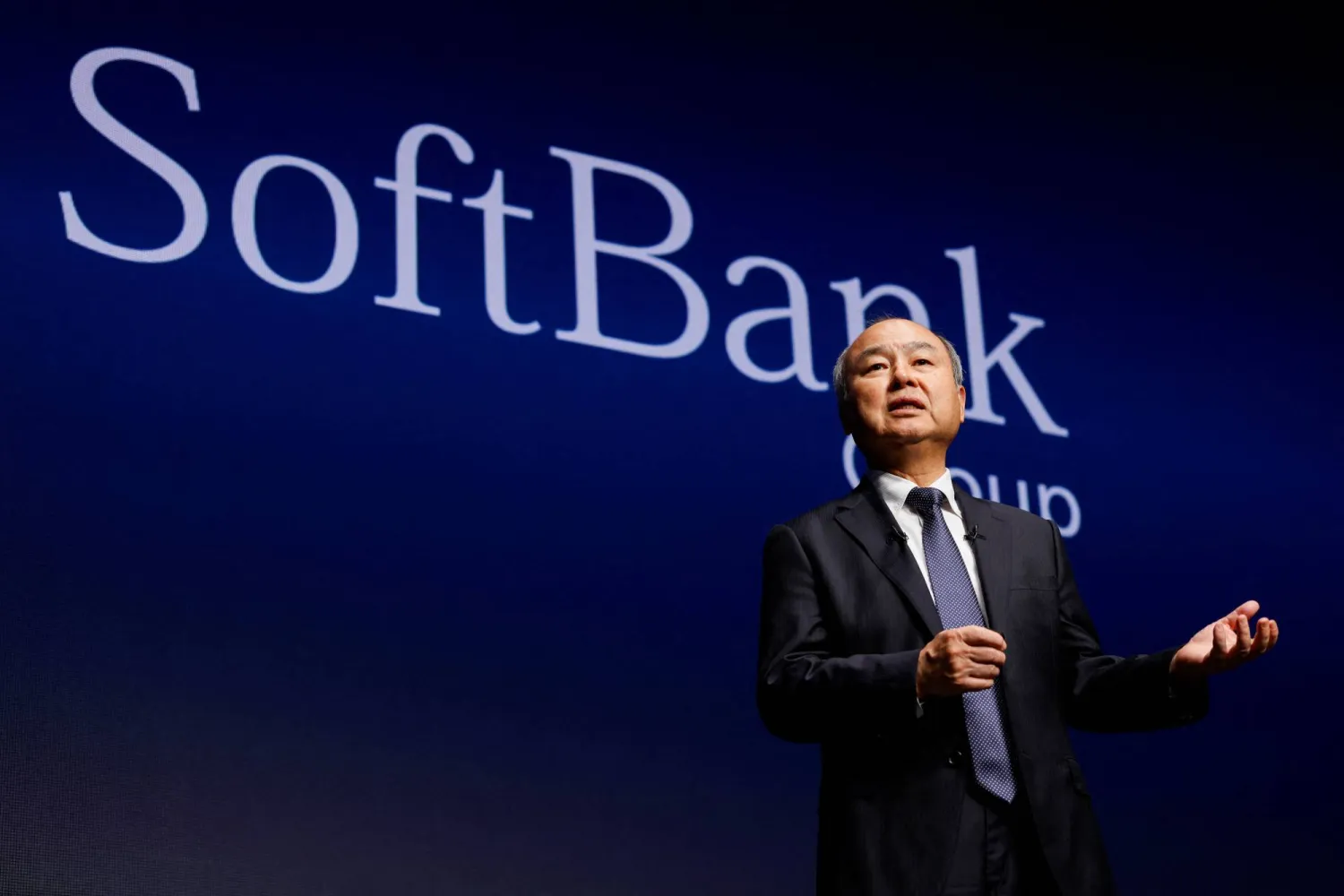



Japan's Tech Business SoftBank Rolls Out OpenAI 'Patches' Against Cyberattacks

SoftBank Chairman and CEO Masayoshi Son speaks during an event to pitch AI for businesses, in Tokyo, Japan June 16, 2026. REUTERS/Manami Yamada
TT

Japan's Tech Business SoftBank Rolls Out OpenAI 'Patches' Against Cyberattacks

SoftBank Chairman and CEO Masayoshi Son speaks during an event to pitch AI for businesses, in Tokyo, Japan June 16, 2026. REUTERS/Manami Yamada

Japanese technology giant SoftBank Group Corp. is launching a service using OpenAI technology to protect against the looming threat of cyberattacks, both companies said Tuesday.

Chief Executive Masayoshi Son called Japan’ s vulnerability to cyberattacks “a crisis,” comparing it to a potential assault by machine guns instead of the rifle shots of the past.

SoftBank will offer “a patching service,” targeting the nation’s top 3,000 companies behind crucial infrastructure like airports, power systems and transportation, The Associated Press quoted Son as saying.

“I feel it is our duty,” Son said, repeatedly referring to the criminal attackers as “the bad guys.”

The service involves first diagnosing any weaknesses to attacks, and then analyzing what needs to be done to patch up such “holes," Son said.

Sam Altman, chief of OpenAI, was scheduled to attend the launch, but instead appeared only in a short video. He said he couldn’t make it because his baby daughter was born earlier than expected. Mark Chen, OpenAI’s chief researcher, was present in his place.

SoftBank and OpenAI, behind the popular chatbot ChatGPT, set up a 50:50 joint venture named SB OAI Japan last year to develop and exclusively market an AI service for the Japanese market.

Tuesday’s announcement was a key update, highlighting the rollout. No monetary value was announced. But SoftBank said everyone who came to the presentation in Tokyo Tuesday can apply for a free diagnosis.

The use of AI has caused the number of attacks to balloon exponentially and grow more complex, meaning defenses have had to become more AI-savvy and versatile.


France to Invest €655 Mln in AI, Set Up Common Chatbot for All State Services

France's Prime Minister Sebastien Lecornu gestures as he speaks during a press conference. (Photo by STEPHANE DE SAKUTIN / AFP)
TT

France to Invest €655 Mln in AI, Set Up Common Chatbot for All State Services

France's Prime Minister Sebastien Lecornu gestures as he speaks during a press conference. (Photo by STEPHANE DE SAKUTIN / AFP)

French Prime Minister Sebastien Lecornu said on Tuesday the government will invest €655 million ($758.29 million) in artificial intelligence and will set up a common chatbot for all the state services.

The French government will create a public ⁠health chatbot for state-owned ⁠health insurance Ameli agency.

"We can either be ⁠subjected to this (Artificial intelligence) revolution, or we can lead it," he said in a post on X.

"The question is not whether the state will use the artificial intelligence anymore, but the question is how fast will it ⁠transform," ⁠Lecornu said.

"We cannot rely on tools developed by foreign powers. France must have its own tools," he said.

He made the announcement as the "Viva Tech" conference was set to start in Paris.


AI-referred US Shoppers Browse Longer, Spend More per Visit, Data Shows

 The ChatGPT logo is displayed on a mobile phone in Liverpool, Britain, 09 June 2026. (EPA)
The ChatGPT logo is displayed on a mobile phone in Liverpool, Britain, 09 June 2026. (EPA)
TT

AI-referred US Shoppers Browse Longer, Spend More per Visit, Data Shows

 The ChatGPT logo is displayed on a mobile phone in Liverpool, Britain, 09 June 2026. (EPA)
The ChatGPT logo is displayed on a mobile phone in Liverpool, Britain, 09 June 2026. (EPA)

US shoppers who use large language models, including Google's Gemini or OpenAI's ChatGPT, for purchase recommendations are lingering more on retailers' websites and are more likely to spend, according to May data from Adobe Analytics.

Consumers who are referred to retail websites from LLMs generated ‌53% more ‌revenue per visit than ‌shoppers ⁠from non-AI sources, the ⁠data firm said, emphasizing the need for brands to invest in AI-readable webpages.

Retailers whose products show up in LLM suggestions are able to "drive more personalization" to ⁠shoppers who leave the platforms to ‌complete their ‌purchases on the native websites, Vivek Pandya, ‌director of digital insights at ‌Adobe, said.

AI traffic to retail websites increased 138% in May from last year, the highest share of ‌total retail visits since Adobe Analytics began tracking in October 2024.

⁠Retail ⁠website visitors recommended by AI converted at a rate 54% higher than online shoppers from non-AI sources did in May.

Shoppers referred to e-commerce websites spent 53% more time on the sites than visitors from other sources.

AI-referred shoppers also visit more retail webpages than non-AI referred visitors.