
WHO to Asharq Al-Awsat: Gaza Health Crisis Critical, Immediate Global Intervention Needed

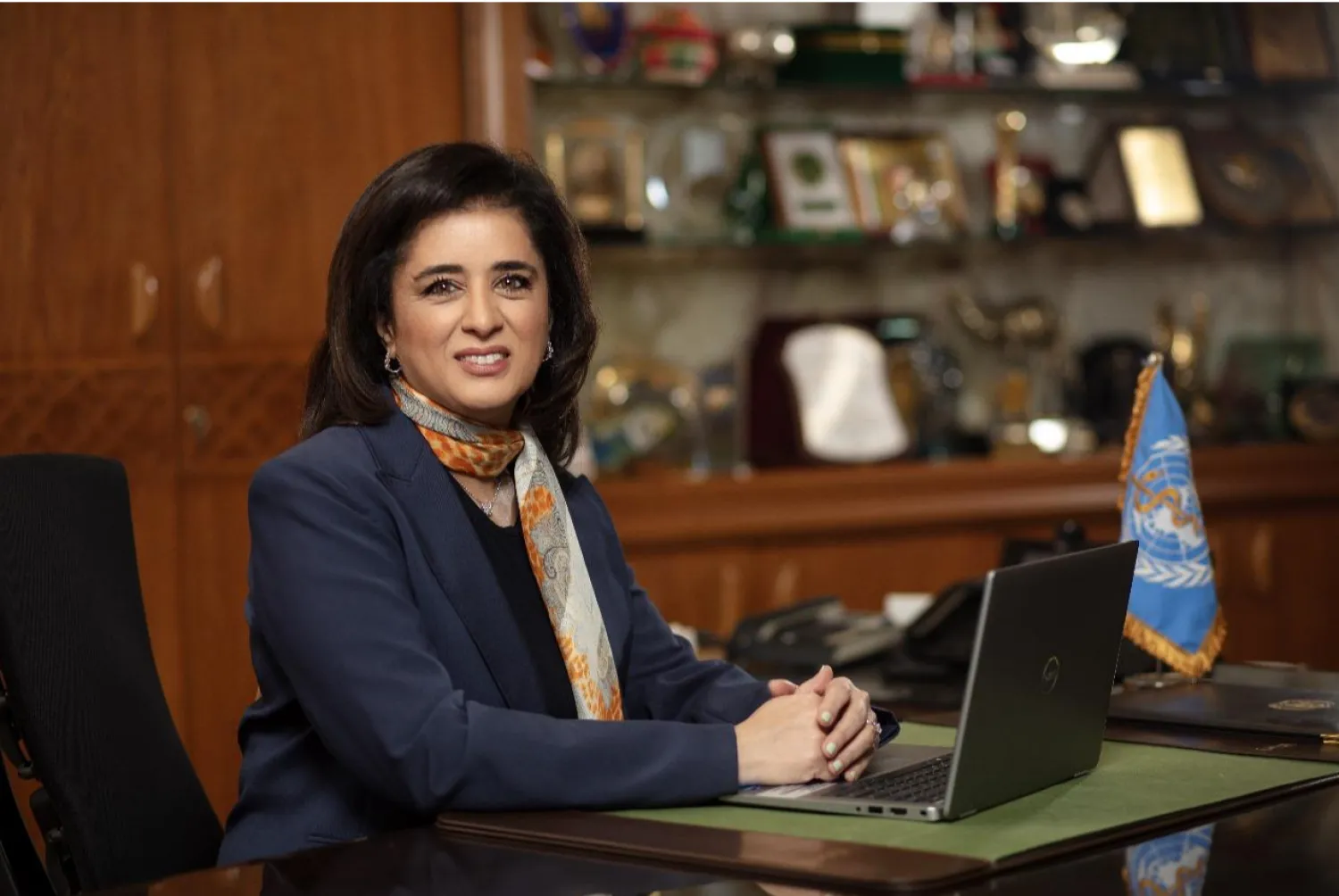
Dr. Hanan Balkhy, WHO Regional Director for the Eastern Mediterranean. (Asharq Al-Awsat) 
TT

WHO to Asharq Al-Awsat: Gaza Health Crisis Critical, Immediate Global Intervention Needed

Dr. Hanan Balkhy, WHO Regional Director for the Eastern Mediterranean. (Asharq Al-Awsat) 

The World Health Organization has issued an urgent appeal for immediate international intervention in Gaza, warning that the catastrophic health situation in the besieged enclave is spiraling beyond control amid unrelenting Israeli attacks and a worsening humanitarian crisis.

The UN agency has documented 746 Israeli strikes on Gaza’s health sector since the war began, and warned that without fuel, critical health services face total shutdown.

The health situation in Gaza is catastrophic and continues to deteriorate at an alarming rate, Dr. Hanan Balkhy, WHO Regional Director for the Eastern Mediterranean, told Asharq Al-Awsat.

The health system is barely functioning due to ongoing hostilities, the blockade, and the lack of basic resources to keep medical facilities running, she added.

Balkhy said that only 18 of Gaza’s 36 hospitals are partially operational, and even those are working under extreme risk and with severe shortages of fuel and essential medical supplies.

She warned that key units, such as intensive care, emergency departments, dialysis wards and oxygen stations, face imminent closure as no fuel has entered Gaza in more than 120 days.

Access severely restricted

Amid worsening security conditions, nearly 90% of Gaza is either under evacuation orders or classified as closed military zones, making it nearly impossible for patients, healthcare workers and humanitarian aid to move freely, Balkhy said.

Healthcare facilities are under unprecedented pressure due to soaring injury rates and rising cases of severe malnutrition, especially among children and pregnant women, she said.

All of this is unfolding as medical supplies are depleted daily and supply chains are severely disrupted, making the provision of life-saving care increasingly difficult.

The crisis is further compounded by restrictions on international medical teams. WHO said 58 doctors and specialists have been denied entry since March, while only 16% of its 2025 emergency response plan for Palestine has been funded.

'Unprecedented' public health emergency

What the organization is witnessing in Gaza is a multi-dimensional humanitarian and public health catastrophe of unprecedented scale and severity, Balkhy stressed.

Since the start of the war in October 2023, more than 60,000 people have been killed and over 145,000 injured, many of them women and children.

The disaster extends beyond physical injuries and psychological trauma; Gaza now faces an existential threat in the form of famine, she warned.

In July alone, 77 people died from malnutrition, including 27 children under the age of five. Since April, over 20,000 children have been treated for acute malnutrition, more than 3,000 of whom are in critical condition. More than 40% of pregnant and breastfeeding women are suffering from severe undernourishment.

WHO said the four remaining therapeutic feeding centers in Gaza are overwhelmed, operating far beyond capacity and critically low on supplies. Stocks are expected to run out by mid-August, risking a full collapse of life-saving nutrition services.

The cumulative impact of these factors not only threatens current health outcomes but endangers the long-term viability of the entire healthcare system, said Balkhy. It deprives civilians of their right to live with dignity.

Mounting medical needs

Balkhy said over 14,000 patients in Gaza require urgent medical evacuation, including cancer patients, people with chronic diseases, and critically ill children, none of whom can be treated locally due to the decimation of the healthcare system.

The remaining operational facilities are struggling to cope amid severe shortages of antibiotics, insulin, cancer medications, and surgical supplies, she said.

The prolonged fuel crisis threatens to shut down ICUs, dialysis machines, oxygen generators, and operating theatres.

The most vulnerable, children, pregnant and lactating women, and the elderly, are bearing the brunt. Thousands of children are being hospitalized monthly with life-threatening hunger-related complications.

Meeting these urgent needs requires more than just medical services. It demands sustained access to fuel and supplies, unimpeded movement for humanitarian workers, and at least a minimum operational capacity across health facilities, Balkhy said.

The scale of need demands a rapid and large-scale international response, including medical, logistical and financial support.

WHO under fire

The WHO is facing immense operational challenges in Gaza, with security risks topping the list. On July 21, the agency’s staff residence in Deir al-Balah was struck three times, forcing the evacuation of employees and their families under heavy bombardment.

One staff member remains in detention, and WHO is calling for his immediate release. Its main warehouse was also damaged and subsequently looted.

These threats don’t only affect WHO, but also other UN agencies operating in Gaza, Balkhy said, adding that getting medical shipments into the enclave remains difficult due to limited approvals.

The restrictions on international medical missions have significantly undermined our response efforts, she said, repeating that 58 medical professionals were denied entry since March.

Emergency response underway

Despite the dangers, WHO remains on the ground and committed to its operations in Gaza. Since August 1, the agency has delivered 24 trucks loaded with essential medicines, surgical supplies, lab equipment and water testing kits to overwhelmed hospitals.

WHO has also helped evacuate 47 patients along with 129 companions to countries including Spain, Türkiye, France, Norway and Jordan. The organization is working to ensure a steady and secure flow of fuel and medical supplies into Gaza.

It continues to call for the immediate release of its detained colleague and for the protection of health workers and medical infrastructure, in line with international humanitarian law, Balkhy said.

She reaffirmed WHO’s commitment to scaling up its response, in cooperation with humanitarian partners, despite the immense challenges on the ground.


Hezbollah Unhappy with Political Negotiations with Israel but Unlikely to Confront the State

A joint patrol of UNIFIL forces and the Lebanese Army in the Marjayoun area near the border with Israel (AFP)
TT

Hezbollah Unhappy with Political Negotiations with Israel but Unlikely to Confront the State

A joint patrol of UNIFIL forces and the Lebanese Army in the Marjayoun area near the border with Israel (AFP)

Hezbollah officials have avoided commenting on the Lebanese government’s decision to appoint former ambassador Simon Karam as head of the Lebanese delegation to the “mechanism committee” overseeing the ceasefire with Israel, which effectively shifted the committee’s work from military-technical talks to political negotiations.

A formal party position is expected Friday, to be delivered by Hezbollah Secretary-General Sheikh Naim Qassem in a previously scheduled appearance.

Yet media outlets aligned with Hezbollah, along with its supporters on social platforms, quickly denounced the presidential decision. They described it as “another act of surrender by Lebanon, taken despite the absence of any Israeli willingness to meet Lebanese demands, chief among them ending attacks and violations, withdrawing from occupied territory, and releasing detainees.”

Sources familiar with Hezbollah’s internal discussions told Asharq Al-Awsat that Qassem will reiterate the party’s refusal to enter “a new round of negotiations as long as Israel fails to meet its obligations.”

He is also expected to reference the open letter he sent on November 6 to Lebanon’s President, Parliament Speaker, Premier and the public, stressing rejection of any new talks and reaffirming “the right of resistance.”

The sources added that both Hezbollah and Speaker Nabih Berri are dissatisfied with Karam’s appointment because of his known political stance against “the resistance.”

Still, neither intends to provoke internal conflict. Instead, they will continue working with the state “within the framework of insisting that Lebanon assume responsibility for halting Israeli aggression, recovering land, securing prisoner releases, initiating reconstruction, and above all, preventing another Israeli war.”

On Wednesday evening, Hezbollah’s Al-Manar TV criticized the inclusion of a civilian in the mechanism committee, declaring that “the Lebanese state has taken its decisions and must bear their consequences.”

It added that the government “has stepped into the unknown without guaranteed returns,” insisting that “the people of the land will not concede rights or surrender.”

Political analyst Kassem Kassir, who closely follows Hezbollah, stressed that the priority for the party and its supporters remains achieving concrete outcomes: stopping Israeli assaults, withdrawing from occupied land, freeing prisoners, and rebuilding devastated areas.

Ali Al-Amin, editor of the Janoubia news site, recalled that Hezbollah had already informed Lebanon’s leaders of its rejection of negotiations with Israel.

Still, Karam’s appointment was “a Lebanese decision driven by internal considerations,” and the party cannot block it at a time when Israel has threatened a devastating war.

While Hezbollah signaled displeasure - prompting small street protests - it has not issued an outright rejection.

Asked about the party’s red lines, Al-Amin said Hezbollah will not relinquish its weapons, particularly north of the Litani River.

Should the government attempt to enforce disarmament, he warned, confrontation with the army could follow, an outcome still viewed by Hezbollah as less costly than a new Israeli war with unpredictable consequences.


Israel Meets Lebanon’s Diplomatic Overture with Strikes on the South

Smoke rises following Israeli airstrikes that targeted the Nabatieh area in May 2025 (Archive – EPA). 
TT

Israel Meets Lebanon’s Diplomatic Overture with Strikes on the South

Smoke rises following Israeli airstrikes that targeted the Nabatieh area in May 2025 (Archive – EPA). 

Israel on Thursday ended days of ambiguity over whether the recent “positive atmosphere” created by civilian negotiations with Lebanon might ease tensions. Instead, it launched four airstrikes targeting homes in South Lebanon, including one north of the Litani River.

The attacks came less than 24 hours after the latest meeting of the joint “mechanism” committee.

The escalation appeared to answer leaked Lebanese reports that Ambassador Simon Karam, head of Lebanon’s negotiating delegation, had been tasked with discussing a cessation of hostilities, a prisoner exchange, Israeli withdrawal from occupied Lebanese areas, and technical adjustments along the Blue Line.

Al-Jadeed channel quoted President Joseph Aoun as saying Lebanon “has not entered normalization nor signed a peace agreement.”

At Thursday’s cabinet session, Aoun presented his decision to appoint Karam after consultations with Speaker Nabih Berri and Prime Minister Nawaf Salam, stressing the need for talks in Naqoura and for a civilian figure in the delegation.

The initial meeting, he said, “was not expected to be highly productive,” but it paved the way for subsequent sessions beginning on the 19th. “The language of negotiation must replace the language of war,” he added.

Army Commander Gen. Rodolphe Haykal also submitted his monthly report on enforcing the state’s monopoly over arms, outlining operations south of the Litani River. Lebanese media reported a significant step in this direction: the army, accompanied by UNIFIL, reportedly seized Hezbollah rockets in the area.

As Lebanon tries to widen the diplomatic window to contain tensions and avert a large-scale Israeli attack, two contrasting messages have emerged from Israel. One camp welcomed the appointment of Karam, while another insists on separating diplomacy from military operations and preventing negotiations from influencing conditions on the ground.

This harder line became clear when Israeli army spokesperson Avichay Adraee warned residents of Mahrouna, Bar’ashit, al-Majadal (south of the Litani), and Jbaa (north of it) to evacuate at least 300 meters away because the army would soon strike Hezbollah infrastructure across the south.

Hours later, Israel carried out the strikes, saying it targeted depots embedded in residential areas - an example, it claimed, of Hezbollah’s use of civilian buildings for military purposes.

MP Ashraf Rifi told Asharq Al-Awsat that the political and security climate “remains dangerous despite the sense of relief surrounding the negotiations.” Messages from Israeli officials, he said, show that talks “do not automatically halt targeting of Hezbollah or its weapons,” adding that escalation “remains highly possible.”

Rifi said Israel has “a clear strategic project aimed at ending Iranian influence across the Arab region,” and if it concludes that Lebanon cannot disarm Hezbollah, it “may resort to military action.”

He cited the return of Israeli drones over Beirut as proof that Lebanon “remains squarely within the circle of threat.”

MP Akram Chehayeb of the Democratic Gathering said the essential question is whether Israel genuinely seeks peace, given ongoing actions against Palestinians. He argued that a return to the 1949 Armistice framework would be a major gain for Lebanon, recalling earlier negotiation rounds, including those leading to the 2022 maritime agreement.


'Land Without laws': Israeli Settlers Force Bedouins from West Bank Community

AFP visited Ahmed Kaabneh weeks before he was forced to flee his home in the al-Hathrura area. Menahem Kahana / AFP
TT

'Land Without laws': Israeli Settlers Force Bedouins from West Bank Community

AFP visited Ahmed Kaabneh weeks before he was forced to flee his home in the al-Hathrura area. Menahem Kahana / AFP

As relentless harassment from Israeli settlers drove his brothers from their Bedouin community in the central occupied West Bank, Ahmed Kaabneh remained determined to stay on the land his family had lived on for generations.

But when a handful of young settlers constructed a shack around 100 meters above his home and started intimidating his children, 45-year-old Kaabneh said he had no choice but to flee too.

As with scores of Bedouin communities across the West Bank, the small cluster of wood and metal houses where Kaabneh's father and grandfather had lived now lies empty.

"It is very difficult... because you leave an area where you lived for 45 years. Not a day or two or three, but nearly a lifetime," Kaabneh told AFP at his family's new makeshift house in the rocky hills north of Jericho.

"But what can you do? They are the strong ones and we are the weak, and we have no power."

Israel has occupied the West Bank since 1967, and violence there has soared since the Gaza war erupted in October 2023 following Hamas's attack on Israel.

Some 3,200 Palestinians from dozens of Bedouin and herding communities have been forced from their homes by settler violence and movement restrictions since October 2023, the UN's humanitarian agency OCHA reported in October.

The United Nations said this October was the worst month for settler violence since it began recording incidents in 2006.

Almost none of the perpetrators have been held to account by the Israeli authorities.

'Terrifying'

Kaabneh, four of his brothers and their families, now live together some 13 kilometers (eight miles) northeast of their original homes, which sat in the al-Hathrura area.

Outside his freshly constructed metal house, boys kicked a football while washing hung from the line. But Kaabneh said the area didn't feel like home.

"We are in a place we have never lived in before, and life here is hard," he said.

Alongside surging violence, the number of settler outposts has exploded in the West Bank.

While all Israeli settlements are illegal under international law, outposts are also prohibited under Israeli law. But many end up being legalized by the Israeli authorities.

AFP had visited Kaabneh in the al-Hathrura area weeks before he was forced to flee.

On the dirt road to his family's compound, caravans and an Israeli flag atop a hill marked an outpost established earlier this year -- one of several to have sprung up in the area.

On the other side of the track, in the valley, lay the wreckage of another Bedouin compound whose residents had recently fled.

While in Kaabneh's cluster of homes, AFP witnessed two settlers driving to the top of a hill to surveil the Bedouins below.

"The situation is terrifying," Kaabneh said at the time, with life becoming almost untenable because of daily harassment and shrinking grazing land.

Less than three weeks later, the homes were deserted.

Kaabneh said the settlers "would shout all night, throw stones, and walk through the middle of the houses."

"They didn't allow us to sleep at night, nor move freely during the day."

'Thrive on chaos'

These days, only activists and the odd cat wander the remnants of Kaabneh's former life -- where upturned children's bikes and discarded shoes reveal the chaotic departure.

"We are here to keep an eye on the property... because a lot of places that are abandoned are usually looted by the settlements," said Sahar Kan-Tor, 29, an Israeli activist with the Israeli-Palestinian grassroots group Standing Together.

Meanwhile, settlers with a quadbike and digger were busy dismantling their hilltop shack and replacing it with a sofa and table.

"They thrive on chaos," Kan-Tor explained.

"It is, in a way, a land without laws. There (are) authorities roaming around, but nothing is enforced, or very rarely enforced."

A report by Israeli settlement watchdogs last December said settlers had used shepherding outposts to seize 14 percent of the West Bank in recent years.

NGOs Peace Now and Kerem Navot said settlers were acting "with the backing of the Israeli government and military".

Some members of Israel's right-wing government are settlers themselves, and far-right ministers have called for the West Bank's annexation.

Kan-Tor said he believed settlers were targeting this stretch of the West Bank because of its significance for a contiguous Palestinian state.

But Kaabneh said the threat of attacks loomed even in his new location in the east of the territory.

He said settlers had already driven along the track leading to his family's homes and watched them from the hill above.

"Even this area, which should be considered safe, is not truly safe," Kaabneh lamented.

"They pursue us everywhere."