


New York Declares Total War on Prolific Rat Population

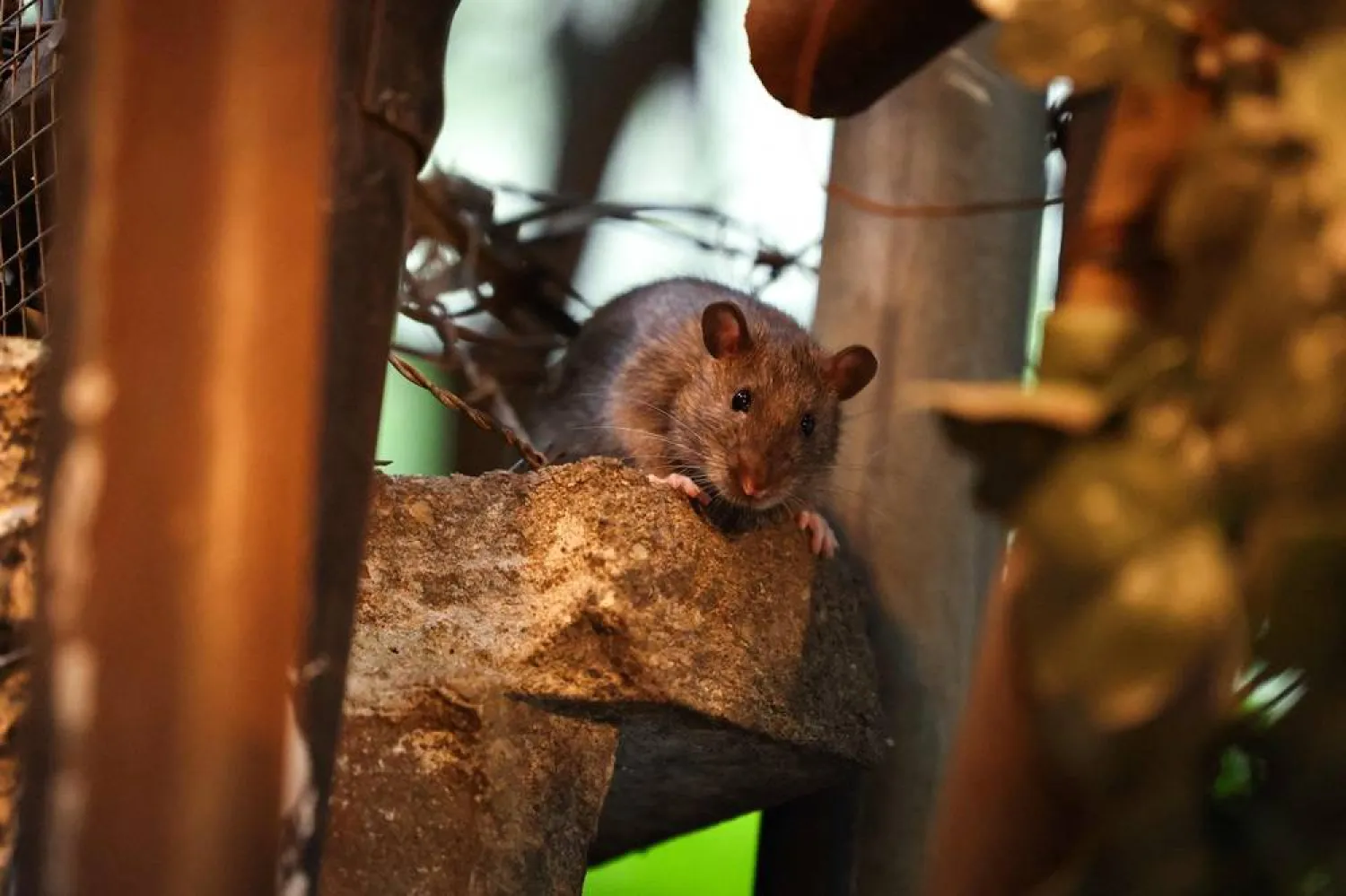
A rat is seen in a Harlem backstreet in the Manhattan borough of New York City on August 1, 2025. (AFP)
TT

New York Declares Total War on Prolific Rat Population

A rat is seen in a Harlem backstreet in the Manhattan borough of New York City on August 1, 2025. (AFP)

New York is waging a war on multiple fronts to combat the near ubiquitous rats that plague city streets and the subways, leaving some residents afraid to let their children walk on sidewalks.

Faced with an overwhelming and ever-growing problem, officials have moved beyond gassing burrows to suffocate rodents and are now using high-tech mapping tools to try and sterilize the population.

Alongside targeted interventions, officials are mounting an effort to educate the public about the need to avoid leaving behind food waste that feeds and sustains the rat population.

Caroline Bragdon, director of neighborhood interventions for Pest Control Services within New York City's Department of Health, told AFP that the lack of food "stresses" rats and other vermin.

"Perhaps this forces them to go further in search of food, but perhaps they simply have fewer offspring," she said.

"That's usually what we're seeing. Fewer rats over time. Less breeding leads to less rat activity," Bragdon added.

The city is testing out an arsenal of different tools in the Harlem neighborhood, aiming to find new products and methods to tackle the rats.

For large, densely populated cities like New York -- with its 8.5 million inhabitants -- food sources for the rodents are bountiful, whether it's on sidewalks, in overflowing trash bins, or in parks.

"Lately, I haven't felt that I have to run in between the mounds of trash to run away from rats because they have those new (sealed trash) containers," said Harlem resident Karen Del Aguila, 50.

Rats, which survive on practically the same diet as humans, can flourish even on items discarded as trash -- like soda cans thrown into recycling bins, or crumbs given to pigeons, warned Bragdon.

A rat needs one ounce (28 grams) of food per day to sustain itself, and it can have up to 12 offspring per litter.

During its short life of less than a year, it can have between five and seven litters.

The best way to counter the scourge of rats is to "remove their food source... So make it harder for them, then they're going to have to travel further to try and find something," said Alexa Albert, a supervisor for the city's pest control service.

- 'It can be done' -

She swiped her screen to show the street-level data logged on a rat tracker app used by those involved in the crusade against rodent infestation.

The city health department's 70 inspectors use the mobile app to detect, report and monitor rodent activity -- as well as plot abatement tactics.

Inspectors go door to door asking businesses and residents to clean buildings, stores, and sidewalks.

Authorities also now offer training on how to combat rats, taken by thousands of residents and building managers.

In October 2022, New York City vaunted a "trash revolution," aimed at installing sealed containers to allow the removal of black bags of organic waste from sidewalks after rats surged during the coronavirus pandemic.

Pre-pandemic, their population had been cut by as much as 90 percent in some areas.

"So we know it can be done," said Bragdon, who added that she hoped 2025 would be a "turnaround year."

Local resident Jessica Sanchez said she had observed much fewer rats in her neighborhood.

"Not a long time ago, when you went to put out the trash, five of them came out," she said.

"I was even afraid to put my son on the floor."

The rat warriors are seeking to learn the rodents' dietary habits throughout the year by using samples of different food types to identify what bait they are most likely to take.

In 2024, complaints about rat activity dropped 25 percent compared to the year before, according to official data.

But so far, only Manhattan's Chinatown has managed to bring the rat population under control.


Pioneering CNN Founder Ted Turner Dead at 87

Ted Turner speaks during the CNN World Report Contributors banquet in Atlanta on May 4, 1995. (AP)
TT

Pioneering CNN Founder Ted Turner Dead at 87

Ted Turner speaks during the CNN World Report Contributors banquet in Atlanta on May 4, 1995. (AP)

Ted Turner, the flamboyant US entrepreneur who transformed television news with the creation of CNN in 1980, has died at the age of 87, the network said Wednesday.

The mustached southerner, yachting enthusiast and philanthropist, whose empire also included sports clubs, had been suffering from the degenerative disease Lewy Body Dementia.

Cable News Network upended established broadcasting with its dedication to around-the-clock breaking news and shot to global recognition with its coverage of the Gulf War in 1990-91.

The 24-hour network was the first in the United States to run non-stop news and quickly built a worldwide footprint.

Correspondents brought live coverage from major events ranging from the collapse of the Soviet Union to the Chinese crackdown on the Tiananmen Square protests. CNN's decision to keep reporters in Baghdad amid US bombing on the Iraqi capital cemented the network's reputation as an indispensable source of breaking news.

"Ted is the giant on whose shoulders we stand, and we will all take a moment today to recognize him and his impact on our lives and the world," Mark Thompson, chairman and CEO of CNN Worldwide, said in a statement.

"He was and always will be the presiding spirit of CNN."

Born in Cincinnati, Ohio in November 1938, Robert Edward "Ted" Turner III went to a military boarding school in Tennessee, and then attended Brown University, but was expelled before graduating.

Turner took over a faltering family advertising business after his father, despondent over financial problems, committed suicide.

After buying a number of radio stations, Turner's purchase of a struggling Atlanta station in 1970 was his first move into television.

Ten years later, that became the flagship of his nationwide Turner Broadcasting System, the profits from which he parlayed into the launch of CNN.

CNN's success inspired the creation of other 24-hour news channels including Fox News by longtime Turner rival Rupert Murdoch, MSNBC and countless networks worldwide.

Turner's television empire expanded beyond CNN and included TBS and TNT channels for sports and entertainment, Turner Classic Movies and Cartoon Network, among others.


Antarctica's Tourism Boom Raises Concerns about Contamination and Disease

This handout photograph released by The British Antarctic Survey on April 8, 2026, shows Emperor Penguins on Antarctica on November 13, 2010. (Photo by PETER BUCKTROUT / BRITISH ANTARCTIC SURVEY / AFP)
TT

Antarctica's Tourism Boom Raises Concerns about Contamination and Disease

This handout photograph released by The British Antarctic Survey on April 8, 2026, shows Emperor Penguins on Antarctica on November 13, 2010. (Photo by PETER BUCKTROUT / BRITISH ANTARCTIC SURVEY / AFP)

Driven in part by fears that the frozen landscapes of Antarctica may be irreversibly melting away because of climate change, tourism to the bottom of the world is soaring. And experts warn that with more visitors comes an increased risk of contamination, illness and other damage to the continent.

While visitor numbers are still small — in part due to the high costs and time it can take — they are growing so fast that scientists and environmentalists are sounding alarms.

A deadly outbreak of the rare hantavirus aboard a Dutch ship on a weekslong polar cruise has brought attention to the growing tourism trend, The Associated Press said.

Most expeditions head to the Antarctic Peninsula, one of the fastest-warming places in the world. From 2002 to 2020, roughly 149 billion metric tons (164 billion tons) of Antarctic ice melted per year, according to the National Aeronautics and Space Administration.

A common route is to voyage south from Argentina toward Antarctica before heading north up the coast of Africa — the same route taken by the cruise ship MV Hondius.

“The sites you will see in Antarctica are extremely unique and not replicable anywhere else on the planet — the whales, the seals, the penguins, the icebergs — it’s all really stunning and it makes a huge impression on people,” said Claire Christian, executive director of the environmental group Antarctic and Southern Ocean Coalition.

Explosive growth of trips to the southern continent

In 2024, more than 80,000 tourists touched down on the vast ice-cloaked continent and 36,000 viewed from the safety of ships, according to data collected by the International Association of Antarctica Tour Operators.

The International Union of Concerned Scientists estimates that tourism to Antarctica has grown tenfold in the past 30 years.

That number could rise further in the next decade as costs fall with more ice-capable hulls hitting the water and technological advances, said Hanne Nielsen, a senior lecturer of Antarctic law at the University of Tasmania. Her colleagues at the university estimate the annual figure could triple or quadruple to over 400,000 visits in that time.

Some tourists come to Antarctica for “last chance tourism,” knowing the melting landscape is rapidly changing, Nielsen said.

Risks of contamination Officials have not indicated any evidence of contamination from the MV Hondius.

However, flocks of migratory birds brought avian flu from South America to Antarctica in recent years, according to the US Centers for Disease Control and Prevention.

That outbreak prompted the International Association of Antarctica Tour Operators and others to harden rules for tourists’ conduct and hygiene to protect visitors from being contaminated. To protect the fragile ecosystem from invasive species large and microscopic, visitors are told to stay away from animals and to avoid touching the ground with anything but their feet.

“There are rules that people are bound by when they’re heading south,” Nielsen said, describing her five voyages as a former guide. Crews and passengers use vacuums, disinfectants and brushes to scrub shoes and equipment clear of bugs, feathers, seeds and microbe-carrying dirt.

“Between the tongues and the laces of the boots you can find a lot of things,” she said.

Cruise ships have been struck by outbreaks of diseases like norovirus, which can spread quickly in a ship's close quarters. In 2020, a COVID-19 outbreak on the Diamond Princess turned the cruise ship into an incubator for the then-mysterious virus.

Hantavirus usually spreads by inhaling contaminated rodent droppings.

The Hondius' island hopping cruise The World Health Organization said Tuesday that MV Hondius left Ushuaia, Argentina, on April 1 and visited Antarctica and several isolated islands.

WHO is investigating possible human-to-human transmission on the cruise ship, said Dr. Maria Van Kerkhove, WHO’s director of epidemic and pandemic preparedness. Officials suspect the first infected person likely contracted the virus before boarding, she said, and officials have been told there are no rats on board.

Antarctica is governed by the Antarctic Treaty, which in 1959 enshrined the territory as a scientific preserve used only for peaceful purposes. A series of rules that followed “aim to ensure that all visits, regardless of location, do not adversely impact the Antarctic environment or its scientific and aesthetic values,” according to the treaty’s secretariat.

Companies and scientific ventures voluntarily comply with biosecurity guidelines and submit environmental impact assessments for Antarctic operations.

The treaty was written when tourism numbers were much lower, Christian said.

“Activity needs to be regulated appropriately, as you would with any of the world’s sensitive and precious ecological sites,” Christian said from Hiroshima, Japan, where she was preparing for an Antarctic Treaty Consultative Meeting. There she'll join calls to strengthen protections for Antarctica's penguins, whales, seabirds, seals and krill — tiny creatures at the base of the food chain.

For now, the lure of the frozen frontier continues to draw visitors.

“You can put a footprint in Antarctica and it’s still there 50 years later,” Christian said.


Bear Attack Injures 2 Hikers in Yellowstone National Park in the US

FILE - This photo provided by the National Park Service shows a sign marking the north entrance of Yellowstone National Park, May 7, 2018. (Jacob W. Frank/National Park Service via AP, File)
TT

Bear Attack Injures 2 Hikers in Yellowstone National Park in the US

FILE - This photo provided by the National Park Service shows a sign marking the north entrance of Yellowstone National Park, May 7, 2018. (Jacob W. Frank/National Park Service via AP, File)

Two hikers were injured in a bear attack on a popular hiking trail near Yellowstone National Park's Old Faithful geyser, park officials said Tuesday.

The attack was described by officials as a single event Monday afternoon along the Mystic Falls Trail.

A large area of the park near the Midway Geyser Basin was temporarily closed pending an investigation, The Associated Press reported. The area includes at least five trails and several backcountry campsites.

Park officials said one or more bears were involved, but did not specify which species. The park has populations of both grizzly bears and black bears, which can be difficult to tell apart at times. Grizzlies can be more aggressive and they grow much larger — as much as twice as big as black bears. Black bears usually have darker coloring.

Further information — including whether the victims were hiking together and whether they were hospitalized for their injuries — was not being immediately released, said Yellowstone spokesperson Ashton Hooker.

Yellowstone gets more than 4 million visits by tourists annually and attacks by grizzlies or black bears are rare.

In September, a hiker suffered injuries to his chest and arm in an attack on the Turbid Lake Trail northeast of Yellowstone Lake, and a grizzly killed a woman just west of Yellowstone in 2023. The last fatal bear mauling in the park was in 2015 when a 63-year-old Billings, Montana man was killed while hiking alone in the park's Lake Village area.

The fate of bears that attack humans is typically dictated by the circumstances of the encounter.

Following the 2015 fatal attack, officials captured and killed an adult female grizzly because it had eaten part of the victim's body and hid the rest, which is not normal behavior for a bear defending its young.

By comparison, last year's attack on the Turbid Lake Trail happened during a surprise encounter between the victim and the bear. The animal's reaction was considered natural, so it was not relocated or killed.

The heavily traveled Mystic Falls trail where Monday's attack occurred includes a loop that leads to a 70-foot (21-meter) tall waterfall. The trailhead is about two miles (three kilometers) northwest of Old Faithful.
