


Kuwait to Launch Biggest Judicial Reform Plan in Its History

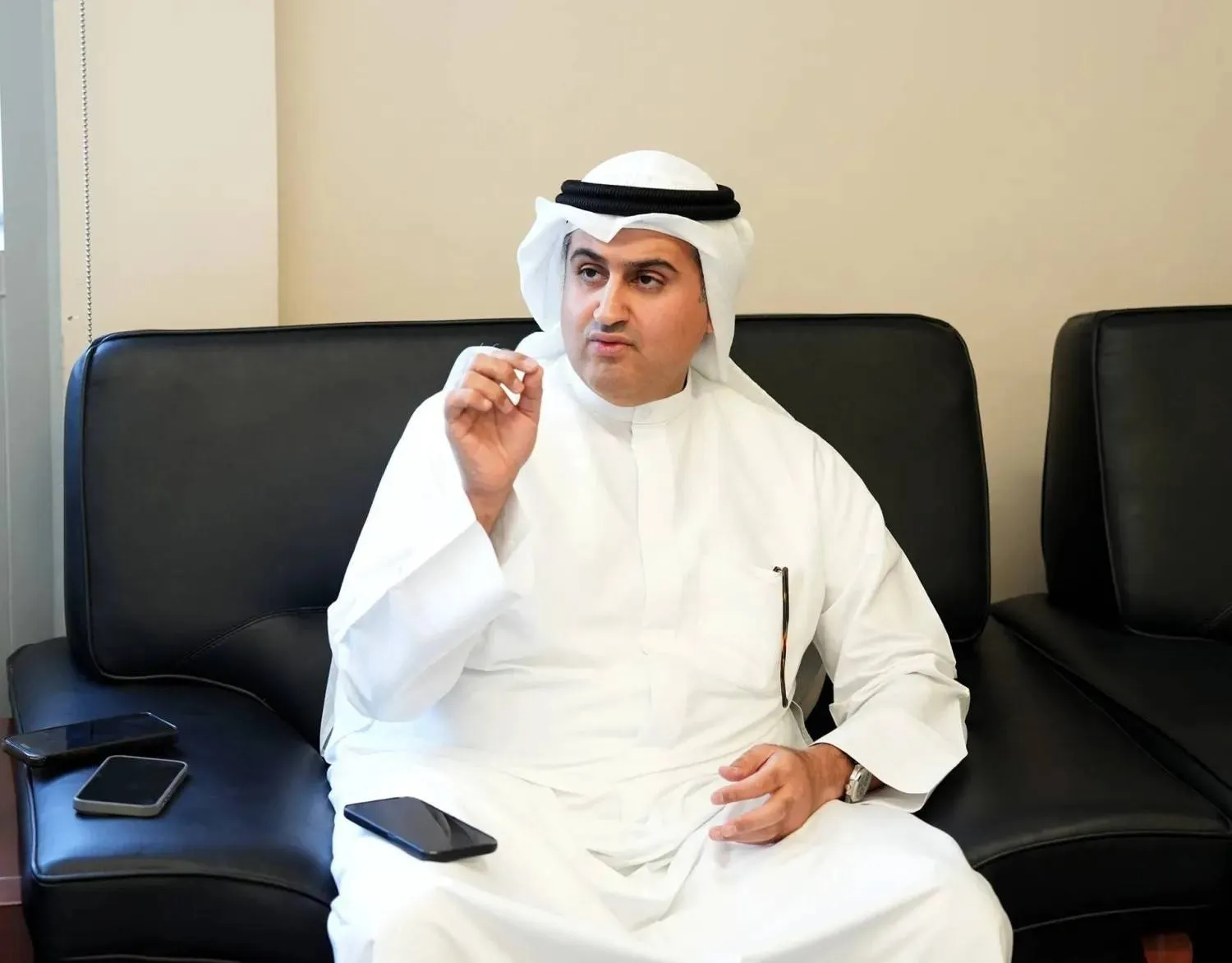
Kuwaiti Justice Minister Nasser al-Sumait
TT

Kuwait to Launch Biggest Judicial Reform Plan in Its History

Kuwaiti Justice Minister Nasser al-Sumait

Kuwait will soon launch its largest legislative reform plan in history to modernize the judicial system and ease court backlogs, Justice Minister Nasser al-Sumait said on Wednesday.

Speaking during an inspection tour of the Reggae court complex, Sumait said the reform drive will involve “the combined efforts of all state bodies and civil society institutions,” harnessing digital technology to make justice more efficient and accessible.

He said all core laws will be reviewed and updated, with eight working committees currently examining legislation including the economic courts law, tenancy and landlords law, penal code, criminal procedure law and labor law, to simplify litigation.

The plan also seeks to expand alternative dispute resolution mechanisms, including judicial mediation panels staffed by seconded judges, arbitration, and technological upgrades to court systems.

Sumait said a new judiciary law was in its final stages and expected to be completed soon, describing it as “a gateway” to the most extensive judicial reform in Kuwait’s history.

Kuwait has 983 laws in force, he said, adding that since taking office he pledged to review 10% of them within a year, but committees had already examined 118 laws in eight months – surpassing the target. The goal is now to review 25% of all laws within a year.

Sumait praised the contribution of judges, prosecutors, legal scholars, the Fatwa and Legislation Department, and civil society groups. Committees are consulting experts and studying best practices in the Gulf, Arab states and beyond.

Kuwait has seen two major waves of legislative reform – from 1959 to 1965, before the constitution was adopted, and from 1978 to 1984, when most of the laws still in effect today, such as the civil code, litigation law and personal status law, were issued, Sumait said.

Citing World Bank standards that recommend eight judges per 100,000 people for swift justice, Sumait said Kuwait has 33 judges per 100,000, one of the highest ratios globally. But court caseloads far exceed those in other Gulf states – up to 10 times higher in some comparisons – meaning judges handle even the simplest disputes.

He blamed delays partly on outdated systems, noting serious flaws in notarization and power-of-attorney procedures. The only obstacle now, he said, is time. “There is no other excuse... What has been achieved is exceptional, and you will see the results soon,” he added.


Jeddah Port Welcomes First Group of Sudanese Pilgrims

The directorate reaffirmed its readiness to manage pilgrim influxes at all ports -SPA
TT

Jeddah Port Welcomes First Group of Sudanese Pilgrims

The directorate reaffirmed its readiness to manage pilgrim influxes at all ports -SPA

The General Directorate of Passports at Jeddah Islamic Port welcomed the first group of Sudanese pilgrims arriving for the 1447 AH Hajj season, completing their entry procedures with speed and efficiency, SPA reported.

The directorate reaffirmed its readiness to manage pilgrim influxes at all ports by deploying state-of-the-art technology and multilingual, highly qualified personnel to ensure a smooth transit process.

Also on Friday, the General Directorate of Passports at Prince Mohammad bin Abdulaziz International Airport in Madinah welcomed the inaugural flight of Moroccan pilgrims arriving for the 1447 AH Hajj season.

The directorate reaffirmed its full readiness to manage the influx of pilgrims across all air, land, and sea ports by deploying state-of-the-art technology and multilingual, highly qualified personnel to ensure a smooth transit process.


King of Bahrain: Iran Must Cease Meddling in Our Internal Affairs

Bahrain’s King Hamad bin Isa Al Khalifa. (BNA file)
TT

King of Bahrain: Iran Must Cease Meddling in Our Internal Affairs

Bahrain’s King Hamad bin Isa Al Khalifa. (BNA file)

Bahrain’s King Hamad bin Isa Al Khalifa called on Thursday Iran to cease interfering in the internal affairs of his country and Arab Gulf nations, stressing that the “nation comes above all and that Bahrain is a trust borne by all its citizens.”

In remarks to the media, he said the recent Iranian attacks against Bahrain’s “security, stability, and the safety of its people exposed those who betrayed the nation and aligned themselves with the enemy.”

“In times when nations face mounting challenges and when people are test, true positions are revealed,” he added, noting: “While the Bahrain Defense Force remained highly vigilant in defense of the kingdom, a small group of individuals chose to collaborate with the enemy and cooperated with those who violated national sovereignty.”

“This was a grave act of treason and an unforgivable crime,” he declared in remarks carried by Bahrain’s state news agency BNA.

King Hamad stressed that Iran must cease meddling in the internal affairs of Bahrain and Gulf Cooperation Council countries, expressing his “deep anger” over the recent developments and adding that the people of Bahrain share this sentiment.

He questioned “how one could not feel anger when those entrusted with the nation’s interests have betrayed it, and when those elected to represent the people stood with traitors who were rejected by public.”

“Public opinion stands united in rejecting such actions and called for the expulsion of those who cooperated” with Iran’s aggression, he went on to say.

“Those who betray the nation do not deserve the honor of belonging to it or the privilege of living on its land. Citizenship is not merely granted, but a binding covenant, and those who break it forfeit their right to it,” announced King Hamad.

Moreover, he expressed regret over the positions of some lawmakers “who sided with traitors instead of upholding their responsibility to protect national interests.”

He underscored the importance of maintaining unity and integrity within the Council of Representatives, adding: “Those who chose to align themselves with those who attacked the nation should go to them, as there is no place among the people for those who side with the country’s enemies.”

“The peoples of the GCC fully support the rulings against those found guilty of betrayal, including imprisonment and the revocation and withdrawal of nationality, and have called for further measures,” he went on to say.

“These deterrent measures are not acts of retribution, but a safeguard for the majority of loyal citizens, and a necessary step to prevent circumstances that could require the armed forces to assume control under military provisions in defense of Bahrain,” said King Hamad.

“Those lawmakers face two options: either to issue a clear apology to the people of Bahrain that restores trust, or to join those they chose to align with, who have left the country or been expelled under final court rulings for acts of betrayal,” he warned.

He stressed that parliamentary membership “is a trust and representation is an honor not deserved by those whose actions are tainted by betrayal. There is no place for them among the people, nor any honor in representing them going forward.”

Furthermore, King Hamad said that stability will not be restored, nor will normal life resume, “until ranks are cleansed of every traitor and accomplice.”

He reiterated that “the nation stands above all and that Bahrain is a trust borne by all.”


UAE Announces Travel Ban on Nationals to Iran, Lebanon and Iraq

The flag of the UAE. (Asharq Al-Awsat)
TT

UAE Announces Travel Ban on Nationals to Iran, Lebanon and Iraq

The flag of the UAE. (Asharq Al-Awsat)

The United Arab Emirates foreign ministry on Thursday announced a travel ban on Emirati nationals going to Iran, Lebanon and Iraq, citing regional developments including the Middle East war.

Iran has targeted the Gulf nation throughout the Middle East conflict sparked by a US-Israeli attack before a fragile ceasefire was announced, including missiles fired at civilian and energy infrastructure.

"In light of current regional developments, the Ministry of Foreign Affairs (MoFA) announces a travel ban on UAE nationals travelling to the Islamic Republic of Iran, the Lebanese Republic, and the Republic of Iraq," state news agency WAM reported.

It said the ministry called on "all UAE nationals currently in these countries to expedite their immediate return" to the UAE.
