Alaska: A Source of Russian Imperial Nostalgia

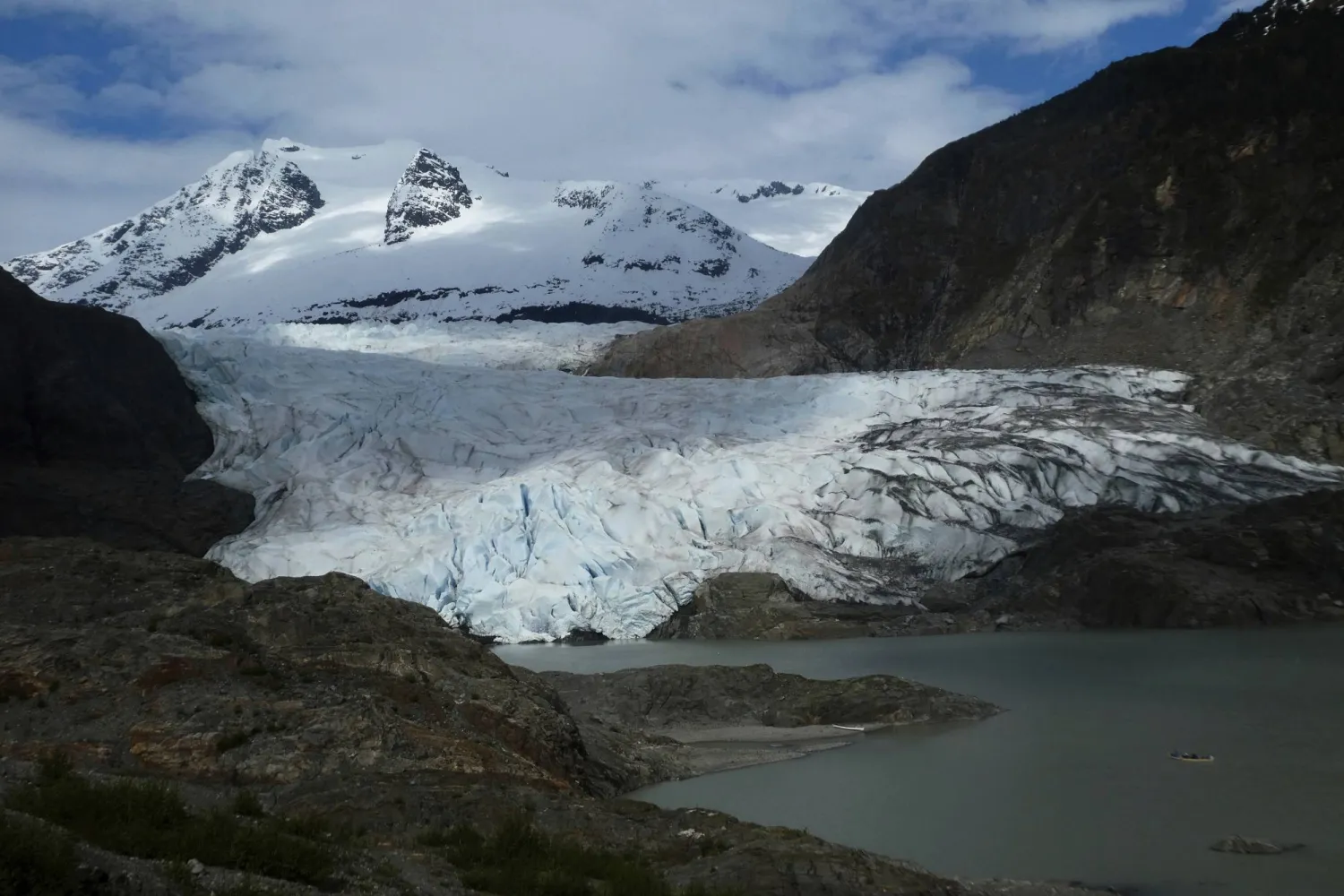
FILE - A canoe, bottom right, glides on Mendenhall Lake, in front of the Mendenhall Glacier, on Sunday, May 18, 2025, in Juneau, Alaska. (AP Photo/Becky Bohrer, File)
TT

Alaska: A Source of Russian Imperial Nostalgia

FILE - A canoe, bottom right, glides on Mendenhall Lake, in front of the Mendenhall Glacier, on Sunday, May 18, 2025, in Juneau, Alaska. (AP Photo/Becky Bohrer, File)

Alaska, the US state that will host the meeting between Vladimir Putin and Donald Trump on Friday, is a source of imperial nostalgia and often less-than-serious territorial claims in Russia.

The territory that Russia sold to the United States in 1867 is now a symbol of the entwined history of the countries, whose relations have been severely damaged since Russia launched its offensive in Ukraine in 2022, AFP reported.

To some experts, the summit in Alaska evoked memories of the thaw between the Soviet Union and the United States during the Cold War.

"It's a classically orchestrated summit, like in the era of detente," Russian political scientist Fyodor Lukyanov said on Telegram.

"Its symbolic significance is the absence of intermediaries: the powers, so to speak, decide for themselves," he added, saying that China is "not close" to Alaska and that Europe is "as far away as possible".

Fur trading hub

But beyond being a unique meeting place, Alaska also fuels Russian memories of the Tsarist empire, the historic predecessor of the Soviet Union.

"For Russia, Alaska symbolizes the peak of an expansion," Alexander Baunov, senior fellow at the Carnegie Russia Eurasia Center, said on the center's website.

It was "when the Russian continental empire had, for the only time, succeeded in crossing an ocean like the European empires", Baunov said.

A Russian colony since the 18th century, Alaska was eventually sold to the United States for $7.2 million in 1867 by Tsar Alexander II.

The remote territory was economically very difficult for the Russians to exploit and at the time its sale was welcomed by the Imperial Court as the country was struggling economically.

But the transaction later came to be seen as a regrettable bargain after what formerly was a fur trading hub turned out to house crucial natural resources: gold and oil.

'Our bears'

In recent years, the price at which Alaska was sold, considered by some to be ridiculously low, and the legal validity of the transaction have become regularly recurring debates in Russia.

In July 2022, in the midst of patriotic fervor in Russia and as tensions soared between Moscow and Washington following the offensive against Ukraine, the Alaska issue resurfaced.

The speaker of the Duma, the lower house of the Russian Parliament, Vyacheslav Volodin, spoke of "lands to be returned", describing Alaska as a "disputed territory".

Russia's authorities are apparently not interested in reclaiming it.

In 2014, Vladimir Putin, asked by a pensioner about the possibility, replied: "My dear, why do you need Alaska?" adding the territory was "too cold".

Still, the idea of reclaiming Alaska is an endless source of memes widely circulating on Russian social media.

One of the most famous claims that "our soul" suffered from the loss of Alaska because "it's where our bears live".

The recapture of Alaska is even mentioned in a 1990s hit by a rock band Putin likes, Lyube, with the lyrics: "Stop messing around, America... And give back our Alaskan lands."


Trump Won Big Spending Promises from NATO Last Year. This Week in Türkiye, He'll Try to Enforce Them

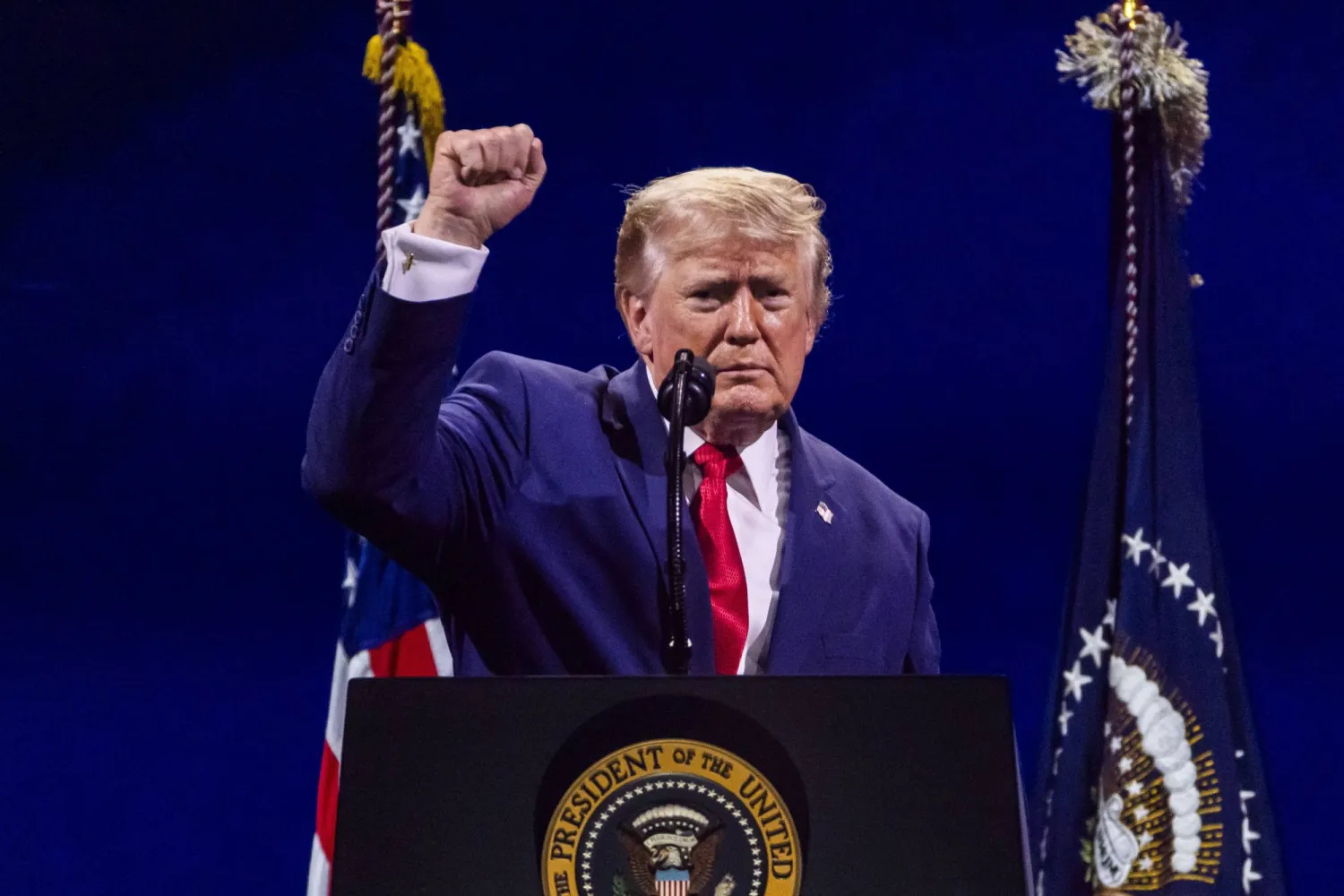
US President Donald Trump speaks during the Salute to America 250 celebration on the National Mall in Washington, DC, USA, 04 July 2026. EPA/JIM LO SCALZO / POOL
TT

Trump Won Big Spending Promises from NATO Last Year. This Week in Türkiye, He'll Try to Enforce Them

US President Donald Trump speaks during the Salute to America 250 celebration on the National Mall in Washington, DC, USA, 04 July 2026. EPA/JIM LO SCALZO / POOL

President Donald Trump got what he wanted from NATO at last year’s summit: an alliance whose members had largely acceded to his demands to step up their defense spending.

This week when he meets leaders in Türkiye, his mission is to enforce that pledge, The Associated Press said.

The speed with which most NATO countries have tried to heed Trump’s call to spend 5% of their annual gross domestic product on defense over the next decade underscores how the US president has reshaped the alliance and bent it to his will — even as he continues to spar with its members over the Iran war, his flirtation with annexing Greenland, and various personal tiffs.

“President Trump fully expects that all allies will step up immediately and get on the path to 5% and do it with urgency,” Matt Whitaker, the US ambassador to NATO, told reporters in a preview of the administration’s message before this week’s summit in Ankara.

Trump leaves Monday evening for the summit, and for days leading up to the trip has been airing grievances about how much the US spends on defense compared with other countries. That’s despite efforts from Mark Rutte, the alliance’s secretary-general, who tried to feed the ego of the tempestuous US leader in an Oval Office meeting last month. There, he displayed large charts on easels showing what he called “ The Trump Trillion ” — how much allies had boosted their spending commitments since 2017.

Luke Coffey, senior fellow at the Hudson Institute, a conservative think thank in Washington, described the Ankara gathering as the “first report card” after last year’s summit in The Hague.

“If NATO members play their cards right — if the leaders show up demonstrating a commitment and a reasonable plan to meet these spending targets — then it’ll allow President Trump to take a victory lap,” Coffey said.

Trump will meet with Ukraine's Zelenskyy Trump left last month’s G7 summit in France buoyed by support from his counterparts for his interim agreement to end the war with Iran. He praised unity among leaders — who also worked to bring Trump onside to boost security assistance for Ukraine in its fight with Russia.

That war, now in its fifth year, is expected to be a key focus at the Ankara summit. The White House said Trump will meet with Ukrainian President Volodymyr Zelenskyy on Wednesday. Trump spoke with both Zelenskyy and Russian President Vladimir Putin on July 4.

Trump also plans to meet on the sidelines of the summit with Syrian President Ahmad al-Sharaa. The White House has not provided goals for that discussion, but it comes as Trump has publicly mused about Syria playing a bigger role fighting Hezbollah in Lebanon. Al-Sharaa has said he has no interest in doing so.

The US president also plans a separate meeting with Turkish President Recep Tayyip Erdogan, the host of the summit whom Trump counts as a close friend.

But he has no bilateral meetings planned with other leaders. Despite the positive tone of the G7 summit, Trump resurrected feuds as soon as he returned stateside.

He proclaimed that Keir Starmer would resign as British prime minister before the embattled leader made it official, arguing that Starmer “failed badly” on immigration and energy. Meanwhile, Trump asserted that Italian Prime Minister Giorgia Meloni had begged him for a photo, prompting a ferocious denial by her and the cancellation of a US visit by the country’s foreign minister.

Despite the fallout, Trump egged it on further on Sunday when he posted a photo on social media of Meloni smiling at him, along with the words “RESTRAINING ORDER NEEDED.”

Trump has remained on tense terms with Canadian Prime Minister Mark Carney, and while French President Emmanuel Macron charmed Trump with a lavish dinner at the Palace of Versailles last month, it hasn’t always been smooth between the two leaders.

Aware of those tensions, a bipartisan group of senators is again headed to the summit this year, trying to represent the broad support for the alliance on Capitol Hill and to serve as a counterweight to Trump’s often caustic attitude toward NATO.

“They are our best allies, they are our best trading partners, they are critical to our national security, to our economic success, and we need to encourage those relationships,” said Sen. Jeanne Shaheen, D-N.H., who is leading the delegation to Ankara. “That’s part of what Congress understands that the administration doesn’t seem to.”

Trump’s team is making the case for more NATO changes

The summit comes as Trump’s administration makes the case for what it calls “NATO 3.0,” which envisions an alliance that has Europe taking on more of its security needs, allowing the US to shift its focus elsewhere.

The strategy was outlined by Elbridge Colby, a US undersecretary of defense, earlier this year at a gathering of NATO defense ministers.

Then, in a scathing speech to other NATO defense ministers last month, Defense Secretary Pete Hegseth added to the pressure by announcing that the US will conduct a six-month review of its forces in Europe. This surprised countries in the alliance that had anticipated coordinating with the Trump administration through the transition.

Trump himself sparked much confusion earlier this year when he seemed to send conflicting signals on the issue, announcing that he would send 5,000 US troops to Poland weeks after ordering the same number of forces pulled out of the continent.

Shaheen said the NATO 3.0 concept “fails to understand -- as this administration has consistently failed to understand -- the threat that Putin and Russia are to Europe and subsequently to the United States.”

Europe is boosting spending, but still counts on the US

The US president last year was the driving factor in a broad target reached in The Hague for NATO countries to spend 5% of their GDP on defense over the next decade.

Of that, 3.5% would be for core defense spending and the rest would be related expenses, such as infrastructure. Spain said at the time that it couldn’t meet those levels, and some others have voiced reservations about the ambitious goal.

Despite the increased pledges and spending, experts say many parts of the continent are nonetheless reliant on the US for their defense should they come under attack. The defining feature of the NATO alliance is the view that an armed attack on one member is an attack on all.

“This is the reality for most Europeans,” said Liana Fix, senior fellow for Europe at the Council on Foreign Relations. She said most are far from being able to defend themselves without the United States, “even if they’re starting to develop all that.”

Apart from the spending pledge, NATO has worked to accommodate Trump in other ways.

The alliance earlier this year introduced “Arctic Sentry,” a NATO-led military exercise aimed at countering Russian and Chinese activities in the region. It’s also meant to address Trump’s repeated threats to seize Greenland, since the Republican president has insisted the US needs to acquire the semiautonomous territory of Denmark for strategic security reasons.



Syrian FM’s Visit Lays Groundwork for Strategic Partnership with Lebanon

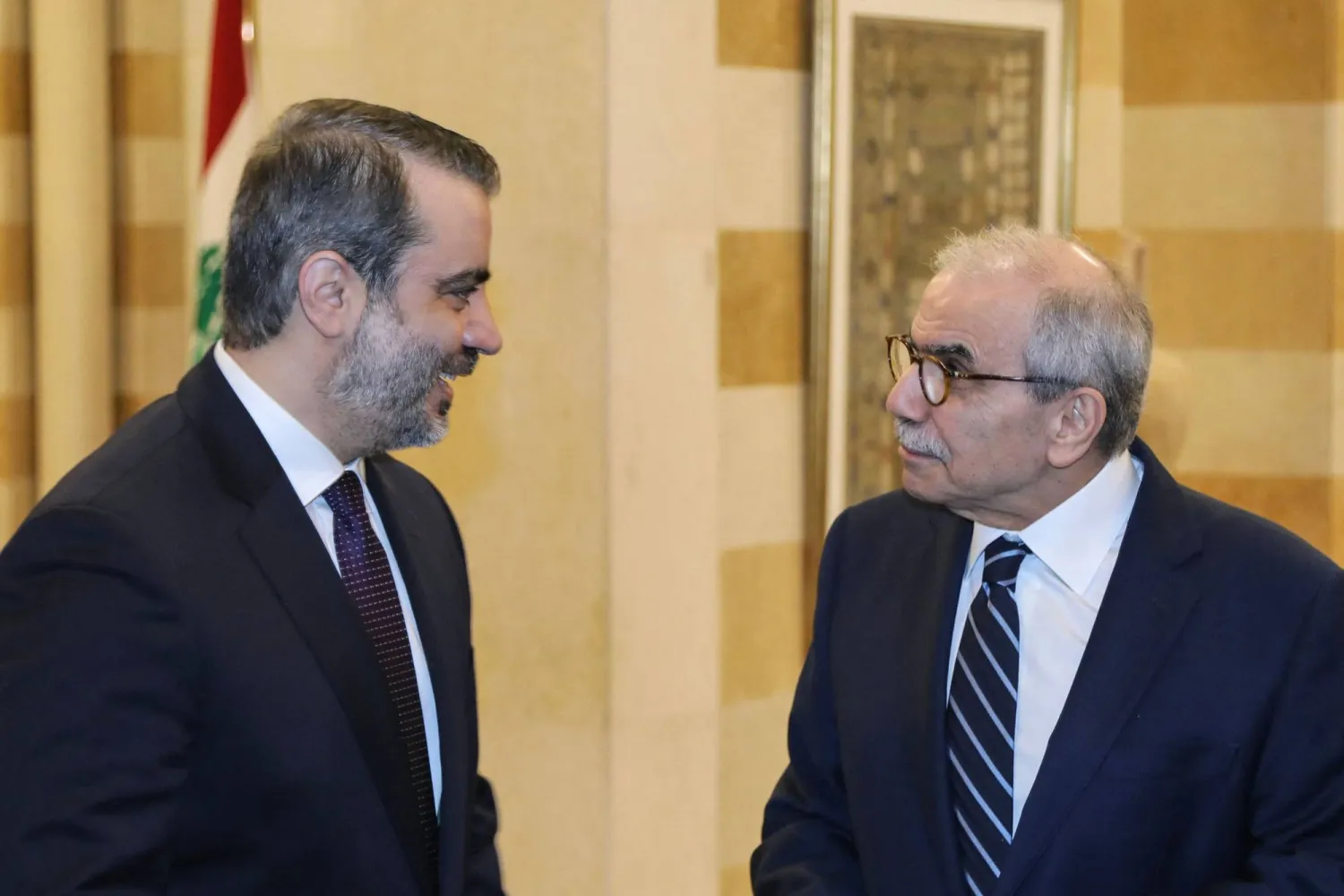
This handout photograph released by the Lebanese Government Press Office shows Lebanon's Prime Minister Nawaf Salam (R) meeting with Syria's Foreign Minister Asaad al-Shaibani at the governmental palace in Beirut on July 2, 2026. (Lebanese Government Press Office / AFP)
TT

Syrian FM’s Visit Lays Groundwork for Strategic Partnership with Lebanon

This handout photograph released by the Lebanese Government Press Office shows Lebanon's Prime Minister Nawaf Salam (R) meeting with Syria's Foreign Minister Asaad al-Shaibani at the governmental palace in Beirut on July 2, 2026. (Lebanese Government Press Office / AFP)

Syrian Foreign Minister Asaad al-Shaibani‘s visit to Beirut was more than a diplomatic stop. Coming amid sweeping regional changes, particularly in Lebanon, it signaled that Syria’s new leadership is seeking to rebuild relations with its neighbor on fundamentally different terms from those that defined more than four decades of Syrian tutelage.

Al-Shaibani’s meetings extended beyond Lebanon’s three top officials — President Joseph Aoun, Parliament Speaker Nabih Berri, and Prime Minister Nawaf Salam — to include religious leaders, politicians and party chiefs.

Head of the Saydet El Jabal Gathering former MP Fares Souaid said the timing of the visit was closely tied to regional and international developments.

Speaking to Asharq Al-Awsat, he noted that it followed repeated remarks by US President Donald Trump, who said Syrian President Ahmed al-Sharaa would “deal with Hezbollah in Beirut.”

This has prompted Damascus to engage directly with developments in Lebanon, he added.

He further stressed that the visit conveyed reassuring messages to Lebanon’s various communities, particularly Christians and Shiites, that “the new Syria is completely different from Bashar al-Assad’s Syria” and has no intention of reviving the Assad-era policy of hegemony over Lebanon.

Souaid described the announcement of a Lebanese-Syrian Higher Committee as the true starting point for a new phase in bilateral relations.

The committee would establish the framework for future political, security and economic cooperation, turning the page on the past and building a partnership between two sovereign states bound by geography and shared interests rather than domination, he explained.

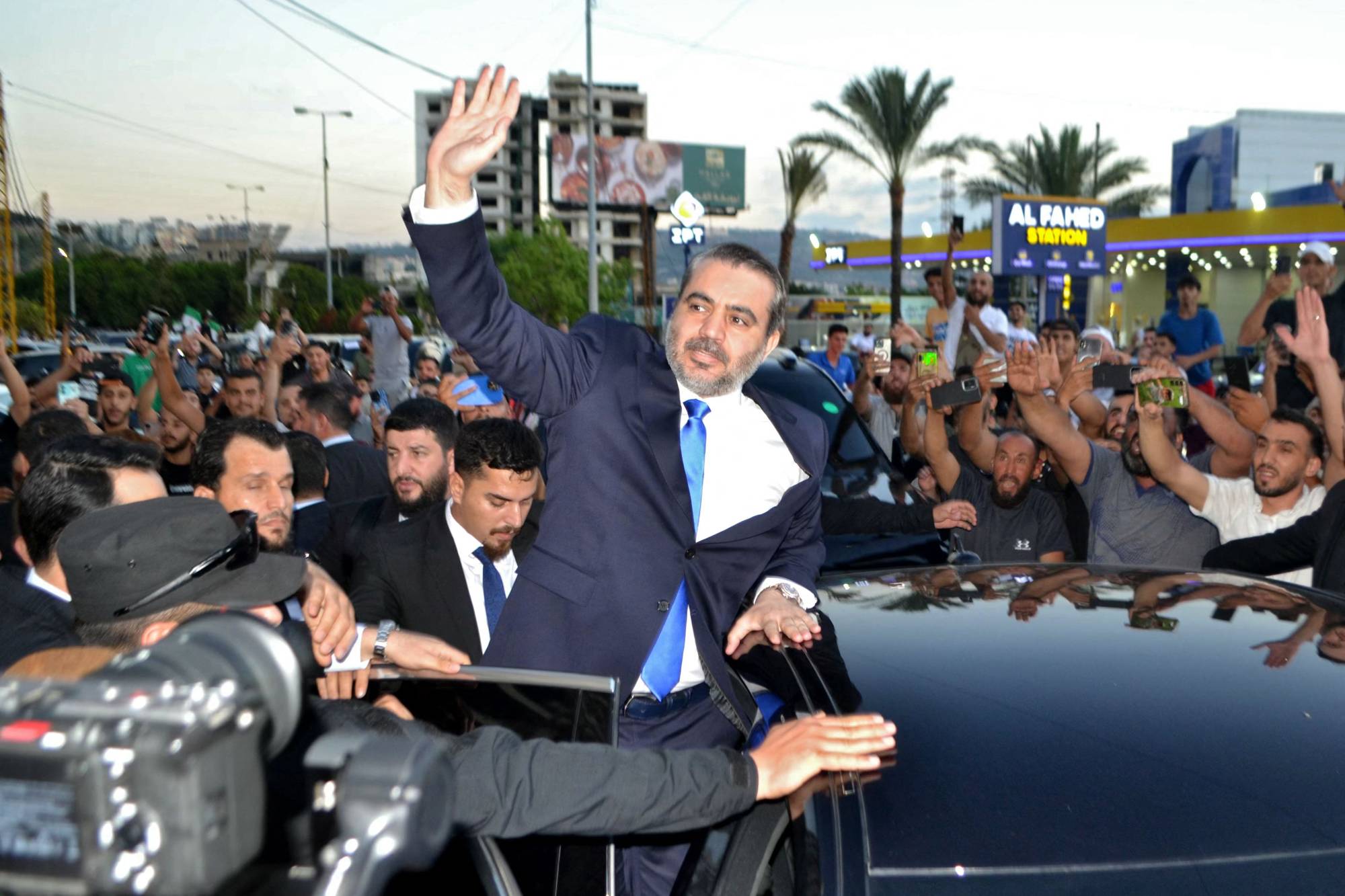
Syria's Foreign Minister Asaad al-Shaibani waves as he is cheered by by the crowds upon his arrival to the northern Lebanese city of Tripoli on July 2, 2026. (AFP)

Toward balanced relations

The visit coincided with renewed US diplomatic activity and discussions about Lebanon’s future and regional influence, including Trump’s remarks suggesting a possible Syrian role in resolving Hezbollah’s weapons issue.

According to Lebanese sources familiar with the visit, Damascus sought to reassure all Lebanese powers that a new chapter had begun, one based on mutual respect for sovereignty, balanced relations and non-interference in each other’s internal affairs.

Al-Shaibani also drew attention after meeting Berri by saying he had no objection to speaking with Hezbollah “if necessary.”

Souaid said the remark reflected the new Syrian government’s openness toward all Lebanese factions, including the “Shiite duo” of Hezbollah and its ally the Amal movement, led by Berri.

The FM’s statement demonstrated that Damascus was not pursuing a policy of revenge against Hezbollah over its actions in Syria during the past decade, added Souaid.

Many Lebanese political forces believe the new Syrian approach reflects not only the outlook of Damascus’ new leadership, but also the aspirations of a broad segment of Lebanese across the political and sectarian spectrum for a normal relationship based on sovereignty and mutual respect.

MP Bilal al-Hashimi said al-Shaibani’s visit marked an important political milestone, reflecting a genuine desire among many Lebanese to close the chapter on the past and build relations founded on mutual respect, good neighborliness and the sovereignty of both states.

Al-Shaibani’s visit to Tripoli in northern Lebanon also drew considerable attention.

Souaid said the city had paid “a heavy price for supporting the Syrian uprising” against Assad and had also borne “significant political and economic costs during the influx of Syrian refugees”.

‘Long marginalized because of its Arab Sunni majority and its political opposition to the Assad family’s rule, Tripoli, viewed al-Shaibani’s visit as carrying important symbolic and political significance for the city and its residents,” he remarked.


NATO Chief May Have to Match His Made-for-Trump Sales Pitch to Keep a Summit on the Rails

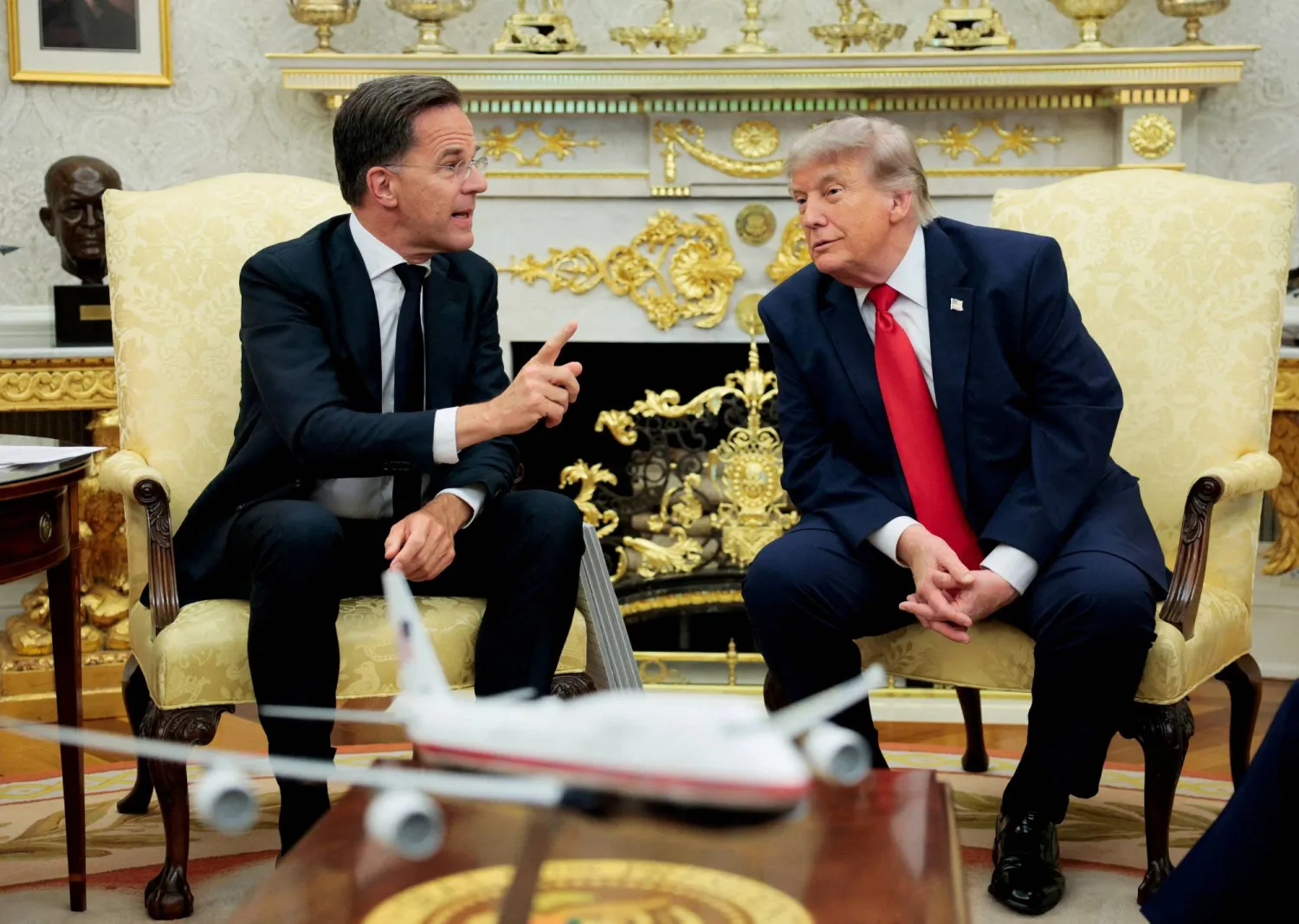
FILE PHOTO: US President Donald Trump participates in a meeting with NATO Secretary General Mark Rutte in the Oval Office at the White House in Washington, D.C., US, June 24, 2026. REUTERS/Evan Vucci/File Photo
TT

NATO Chief May Have to Match His Made-for-Trump Sales Pitch to Keep a Summit on the Rails

FILE PHOTO: US President Donald Trump participates in a meeting with NATO Secretary General Mark Rutte in the Oval Office at the White House in Washington, D.C., US, June 24, 2026. REUTERS/Evan Vucci/File Photo

Since he started work as NATO secretary-general almost two years ago, Mark Rutte has spent much of his time trying to keep the United States anchored to the world’s biggest military alliance, employing outright flattery to dissuade US President Donald Trump from acting on threats to abandon it.

But the goalposts keep shifting, raising the stakes ahead of this week’s summit in Türkiye, The Associated Press said.

Initially, it was about money. Trump has long railed against NATO allies for spending too small a fraction of their national budgets on defense. But those problems were addressed at their summit last year, when US allies committed to invest as much as America, in gross domestic product terms.

NATO's real problem now is turning that money into military capabilities, particularly as European countries worry about a possible attack from Russia.

Still, Rutte tried to put to bed any lingering concerns at a White House meeting last month, with a new pitch using a chart labeled the “The Trump Trillion” in gold letters — showing $1.2 trillion in spending by European allies and Canada since 2017.

But Trump appeared unmoved, saying he was still disappointed at some NATO allies’ refusal to join the Iran war, which he had launched alongside Israel without consulting them.

“We don’t need their money — we don’t need anything,” Trump said. “I just want loyalty.”

Trump suggested he might have skipped the upcoming summit entirely were it not being hosted by Turkish President Recep Tayyip Erdogan. It’s a sign that even Erdogan and Rutte — foreign leaders Trump seems to hold in rare esteem — will have their work cut out for them in keeping the summit on track.

Rutte set a new marker for flattery at the White House Historically, the prime tasks of NATO’s top civilian official — always a European, never an American — have been to encourage consensus in an organization that makes its decisions unanimously, and to speak on behalf of all 32 member countries.

But during both of Trump’s terms, Rutte and his predecessor at the helm of NATO, Jens Stoltenberg, have dedicated a huge amount of energy just to keep the United States inside their alliance.

Trump has threatened to leave NATO, dallied with pulling US troops out of Europe and vowed to take over the island of Greenland — a semiautonomous part of ally Denmark. He has cast doubt over whether he would defend another member not spending enough on their military, eroding trust.

Rutte’s approach has been heavy on flattery. Last month’s carefully choreographed pitch in the Oval Office — with props redolent of an American flag — laid down a new marker, even for a man heavily criticized for likening Trump to a “daddy.”

The charts showed tens of thousands of US jobs were being created and a backlog of $300 billion in European orders for military equipment — all thanks to the “leader of the free world,” Rutte said.

He pushed back, gently, on Trump’s complaints that NATO did not support the US against Iran, noting that up to 5,000 US planes took off from bases in Europe before an April ceasefire.

Trump has threatened to pull forces from Europe at a moment of peril NATO cannot function without its biggest and most powerful ally. Europe is being pushed to fend for itself even as Russia, the historical reason for the alliance, poses a greater threat.

Last month, the Pentagon surprised its NATO allies by announcing that it was scaling back the number of troops, warships, aircraft and drones it would provide if one of them came under attack. Trump has also sent conflicting messages about whether US troop numbers would be lowered or increased.

The cutbacks and mixed messaging has undermined unity at the alliance, just as Russia has been probing Europe's defenses with drone flights near military bases across multiple countries, according to a study released on Thursday.

Flattery worked last year, but now there are new challenges

Each summit is meant to showcase the commitment to collective security — the all-for-one, one-for-all pledge enshrined in Article 5 of NATO’s treaty. It’s only been invoked once, when allies came to America’s aid after the Sept. 11 attacks.

The last NATO summit was held in The Hague, the hometown of Rutte, a former Dutch prime minister. The Dutch royal family hosted dinner, and Trump stayed overnight at the king’s palace.

Rutte got the allies behind a major defense spending pledge, and Trump left a happy man, calling his NATO partners a “nice group of people.”

This year, the summit will be hosted by Erdogan, another key NATO member with an independent streak. His close ties to Trump may keep the American president at the table, but it’s unlikely to mend the rifts.

Rutte has tried to convince Trump that his European partners are spending so much more that America can safely turn its attention to security challenges posed by China while they handle the war in Ukraine.

But Trump wants more now, and his demand for “loyalty” is hard to capture on any chart.

Rutte’s predecessor, Stoltenberg, has written in his memoir about chairing a 2018 summit that Trump nearly upended.

“If an American president says he no longer wishes to defend the other allies and leaves a NATO summit in protest, then the NATO treaty and its security guarantee aren’t worth very much,” Stoltenberg wrote.