


Elon Musk's xAI Sues Apple and OpenAI over AI Competition, App Store Rankings

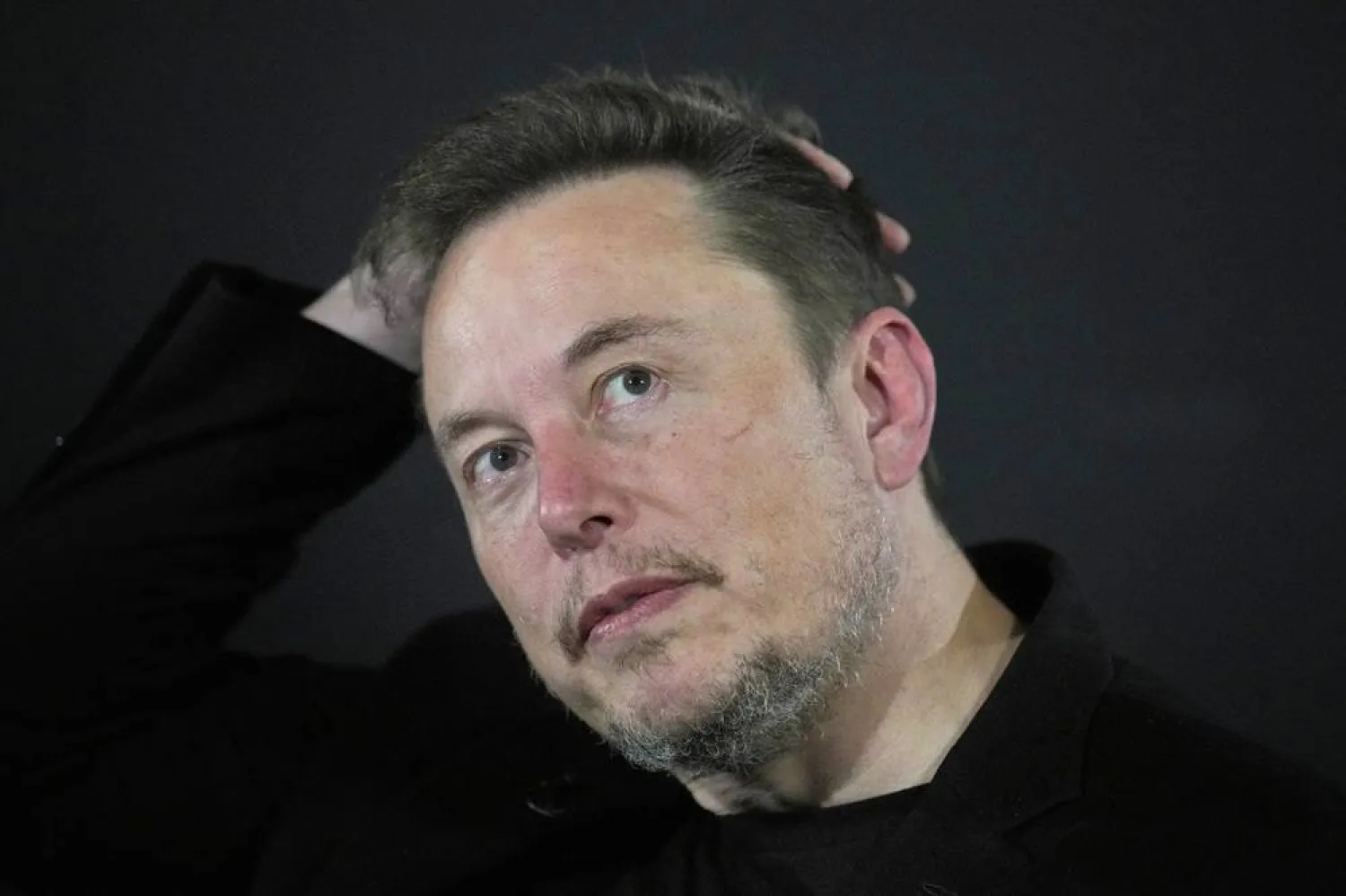
02 November 2023, United Kingdom, London: Elon Musk looks on as he attends an event. (dpa)
TT

Elon Musk's xAI Sues Apple and OpenAI over AI Competition, App Store Rankings

02 November 2023, United Kingdom, London: Elon Musk looks on as he attends an event. (dpa)

Billionaire entrepreneur Elon Musk’s artificial intelligence startup xAI sued Apple and ChatGPT maker OpenAI in US federal court in Texas on Monday, accusing them of illegally conspiring to thwart competition for artificial intelligence.

Apple and OpenAI have "locked up markets to maintain their monopolies and prevent innovators like X and xAI from competing," the lawsuit said.

The complaint said Apple and OpenAI conspired to suppress xAI's products, including on the Apple App Store. "If not for its exclusive deal with OpenAI, Apple would have no reason to refrain from more prominently featuring the X app and the Grok app in its App Store," xAI said.

Apple and OpenAI did not immediately respond to requests for comment.

Earlier this month, Musk threatened to sue Cupertino, California-based Apple, saying in a post on his social media platform X that Apple's behavior "makes it impossible for any AI company besides OpenAI to reach #1 in the App Store.”

Apple’s partnership with OpenAI has integrated its AI platform ChatGPT into iPhones, iPads and Macs.

Musk's xAI Acquired X in March for $33 billion to enhance its chatbot training capabilities. Musk also has integrated the Grok chatbot into vehicles made by his electric automobile company Tesla.

Musk's xAI was launched less than two years ago and competes with Microsoft-backed OpenAI as well as with Chinese startup DeepSeek.

Musk is separately suing OpenAI and its chief executive Sam Altman in federal court in California to stop its conversion from a nonprofit to a for-profit business.

Musk cofounded OpenAI with Altman in 2015 as a nonprofit.

Apple’s App Store practices have been the focus of multiple lawsuits. In one ongoing case by “Fortnite” video game maker Epic Games, a judge ordered Apple to allow greater competition for app payment options.



South Korea's SK Hynix to Invest $64 Billion in Memory Chip Plants

FILE PHOTO: The SK Hynix logo appears in this illustration taken August 25, 2025. REUTERS/Dado Ruvic/File Photo
TT

South Korea's SK Hynix to Invest $64 Billion in Memory Chip Plants

FILE PHOTO: The SK Hynix logo appears in this illustration taken August 25, 2025. REUTERS/Dado Ruvic/File Photo

SK Hynix said it would invest 100 trillion won ($64.38 billion) to build new chip plants, including one for NAND flash memory, as part of a massive South Korean investment drive aimed at spreading returns from the AI boom beyond Seoul.

The projects in the central city of Cheongju outlined on Thursday are included in a broader $2.1 trillion plan unveiled by the chipmaker and its local rival Samsung Electronics this week that also included a new chip cluster in the southwest and existing projects.

The huge capacity buildout by the South Korean chipmakers is a major political win for the country's President Lee Jae Myung, who wants the AI windfall to help revive economies beyond ⁠the Seoul metropolitan area, ⁠though it is stoking fears of a painful reckoning if AI spending cools.

At an event on Thursday attended by Lee, SK Hynix CEO Kwak Noh-jung said the company would spend 80 trillion won to build a new factory for NAND memory chip production by 2029 and 20 trillion won for a chip packaging plant by late 2027 in Cheongju.

The plan to invest 100 trillion won in Cheongju was announced on Monday, but details of the investment were not provided at the time, Reuters reported.

South Korea is hoping the investments will ⁠double the country's memory chip production capacity within five years. Samsung and SK Hynix are the world's largest manufacturers of memory chips alongside US rival Micron.

The investments come as demand from AI hyperscalers has caused a global shortage of all types of memory chips. Prices for both NAND flash memory, a storage chip that retains data even when a device is turned off, and DRAM have soared to historical highs.

SK Hynix shares ended down 15% and Samsung shares closed 9% lower on Thursday, hit by a global selloff in chipmakers as Meta Platforms' plan to sell computing power raised questions over excess AI computing capacity.

Michael Burry, the investor whose successful bets against the US housing market in 2008 were recounted in the movie "The Big Short," expressed caution about the massive South Korean investment plan in a subscriber-only Substack ⁠newsletter on Tuesday, the Wall ⁠Street Journal reported.

The investment drive set off alarm bells for Burry over whether the massive sums of money being poured into AI could ever generate appropriate returns, according to the report, which added that he had made more bearish bets against AI-related stocks.

"I see that as the beginning of the end," he told subscribers.

At the SK Hynix event, Kwak expressed confidence in AI-driven demand for chips.

"While demand for NAND has been increasing and is expected to continue growing in the future, NAND supply is constrained," he said.

SK Hynix said it planned to start construction of the new Cheongju NAND factory, known as M17, next year.

In April, SK Hynix broke ground on the P&T7 fab at Cheongju, a dedicated advanced packaging facility for AI memory, including high-bandwidth memory.

However, the company cautioned in a filing this week that the long-term investment plans could change depending on global chip demand and spending by major customers.

Factors such as delays in selecting and securing construction sites could also cause it to postpone plans, it added.


Microsoft Partners with Singapore's Lightstorm to Build India-Southeast Asia Undersea Cable

FILED - 30 January 2026, Bavaria, Munich: FILE PHOTO - The Microsoft logo can be seen on the Microsoft Germany headquarters building in Munich. Photo: Sven Hoppe/dpa
TT

Microsoft Partners with Singapore's Lightstorm to Build India-Southeast Asia Undersea Cable

FILED - 30 January 2026, Bavaria, Munich: FILE PHOTO - The Microsoft logo can be seen on the Microsoft Germany headquarters building in Munich. Photo: Sven Hoppe/dpa

A consortium including Microsoft and telecom startup Lightstorm plans to build a new undersea cable linking India with Malaysia and Singapore as technology firms compete to expand AI and cloud infrastructure in India, one of the world's fastest-growing data markets.

The consortium, whose other members include Tata Communications , Singapore Telecommunications, Singapore's ASEAN Cableship and Japan's NEC Corporation, will construct the I-2SEA cable to support AI, cloud and hyperscale workloads, Reuters quoted the companies as saying on Thursday.

They did not provide additional details including the investment ⁠size.

The network will ⁠span 3,600 km and have landing stations in Machilipatnam in the southern Indian state of Andhra Pradesh, where Meta and Alphabet have announced data centers.

The cable is expected to be operational in the fourth quarter of 2029, Lightstorm Group CEO and Managing ⁠Director Amajit Gupta told Reuters in an interview.

The I Squared-backed company currently connects 19 AI and cloud zones across India through terrestrial fiber cable networks, with the new network expected to bring this number up to 29, Gupta said.

India's operational data center capacity could double from the current 1.4 gigawatts by 2027, based on projects under construction, and increase five-fold by 2030 if planned projects are fast-tracked, Macquarie Equity Research ⁠said in ⁠a report last October.

Undersea cables carry roughly 95% of the world's internet traffic. India currently has 17 active submarine cables with a maximum potential capacity of 960 terabits per second, and at least 10 more have been publicly announced, according to TeleGeography, a telecommunications research firm.

Separately, Lightstorm plans to list in India in mid-2027, Gupta said, without disclosing any other details. The company was seeking a valuation of up to $1.5 billion in March, according to a media report.


EU Top Court to Rule on Record 4.1 bn Euro Google Fine

A pedestrian walks past the Google offices in London, Britain, August 14, 2025. (Reuters)
TT

EU Top Court to Rule on Record 4.1 bn Euro Google Fine

A pedestrian walks past the Google offices in London, Britain, August 14, 2025. (Reuters)

The EU's top court will decide Thursday whether to uphold a record 4.1 billion euro ($4.7 billion) fine the bloc slapped on Google for anti-competitive practices related to its Android operating system.

It is the second attempt by the US tech giant to overturn the penalty imposed by the European Commission in 2018 -- which remains the bloc's highest ever antitrust fine, said AFP.

The commission, the EU's antitrust regulator, had accused Google of abusing the popularity of its Android operating system to restrict competition.

It alleged Google pressured phone makers using Android to pre-install its search engine and Google Chrome browser -- essentially shutting out rivals -- and ordered it to pay a 4.3-billion-euro fine.

The findings were upheld in 2022 by the General Court, the EU's second-highest. But the Luxembourg-based body slightly reduced the levy to 4.1 billion euros -- still the EU's biggest ever.

Google filed a new challenge arguing before the bloc's top court, the European Court of Justice, that the case was unfounded and that the sanction penalized innovation.

In first instance, the firm had pushed the case that the EU was unfairly blind to practices by Apple, which gives preference to its own services, such as Safari on iPhones.

It also argued that customers were in no way forced to use its products on Android and that downloading competing apps was just a tap away.

But it suffered a legal blow in June last year when the EU top court's adviser recommended upholding the fine in an opinion, describing Google's arguments as "ineffective".

- Legal battles -

Although not binding, such advice carries weight and is often followed by EU judges in their rulings.

The case is one in a series pitting Google against Brussels.

As part of a major push to target big tech abuses, the EU slapped the Mountain View company with fines worth a total of 8.2 billion euros between 2017 and 2019 over antitrust violations.

This set off a series of long-running legal battles.

Brussels has since armed itself with a more powerful legal weapon known as the Digital Markets Act (DMA), to rein in tech giants.

Rather than regulators discovering antitrust violations after probes lasting many years, the DMA gives businesses a list of what they can and cannot do online.

Google is already the subject of several formal DMA probes, and was hit with a massive 2.95 billion euro fine in September in another competition case predating the digital law for favoring its own advertising services.

That drew an angry rebuke from US President Donald Trump who has accused Brussels of unfairly targeting American firms, and repeatedly threatened to impose retaliatory tariffs on EU exports.