



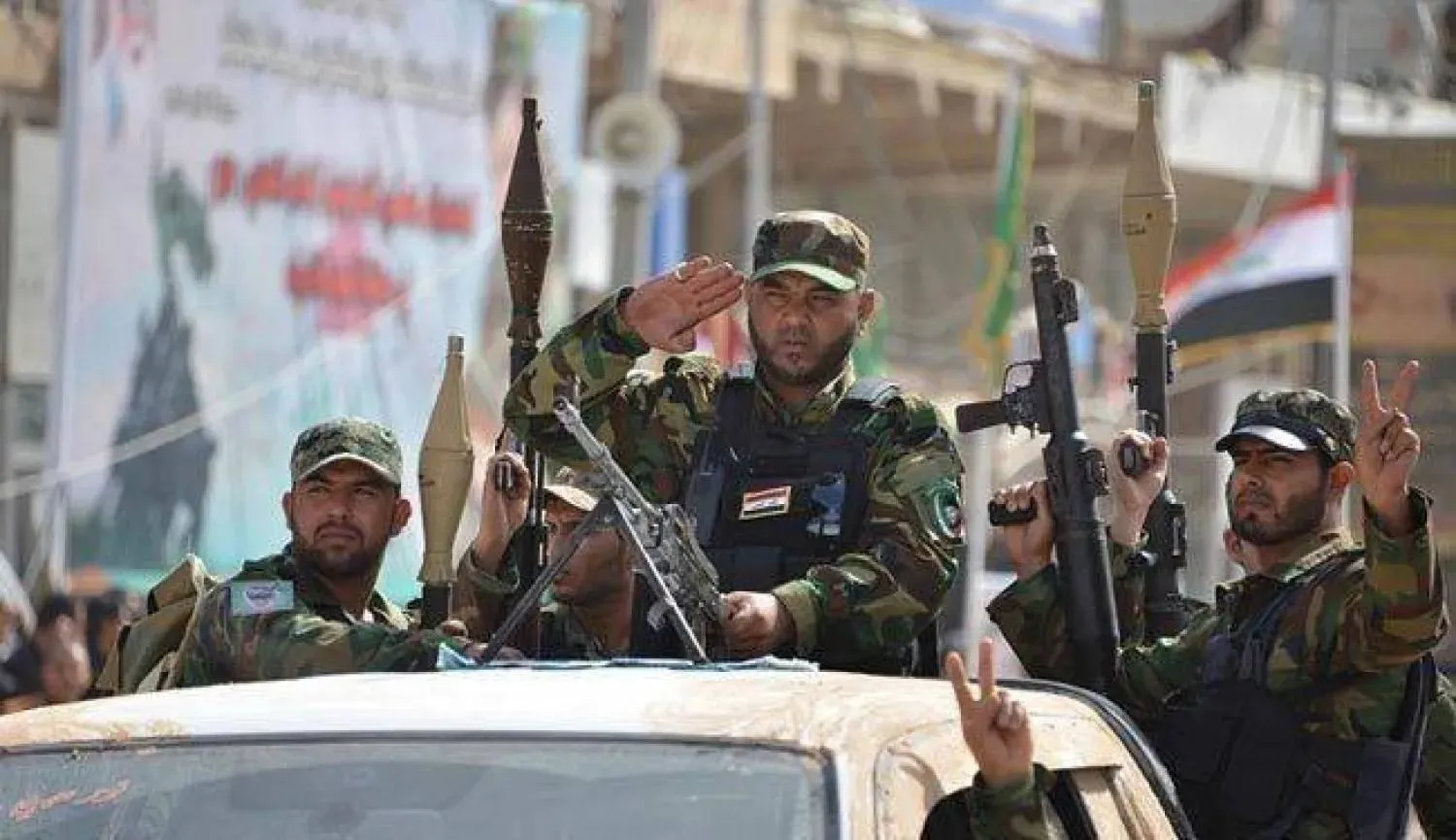

Iraq’s ruling Shi’ite alliance has suspended efforts to pass legislation granting sweeping institutional powers to the Iran-backed Popular Mobilization Forces (PMF), in a move aimed at easing tensions with Washington and buying time until the outcome of the standoff over Hezbollah’s weapons in Lebanon becomes clearer, political sources said.
The draft law, opposed by the United States, would have formalized the PMF – a coalition of mostly Shi’ite armed groups with more than 200,000 fighters – as a parallel structure to the Defense Ministry.
It included independent funding and a military academy, as well as a proposed “doctrinal guidance directorate” that critics said risked embedding sectarian ideology.
Iran’s Supreme Leader Ali Khamenei and senior security officials have repeatedly defended the PMF since the last war with Israel, warning against any attempt to disband it. But within the Shi’ite “Coordination Framework” coalition that dominates the government, divisions have deepened over the law.
“The armed wing that was supposed to shield key actors has become a burning coal no one can hold for long,” a senior coalition figure told Asharq al-Awsat.
While some leaders, including Badr Organisation chief Hadi al-Amiri and Islamic Supreme Council head Humam Hammoudi, pushed to put the law to a vote, others warned it risked provoking US retaliation ranging from sanctions to threats of military action. Parliament Speaker Mahmoud al-Mashhadani even hinted at the possibility of a US-led invasion if the law passed.
Washington’s position, conveyed to Iraqi officials in recent weeks, is that enshrining the PMF would strengthen Iran’s hand in Baghdad and destabilize Iraq’s fragile constitutional order, an Iraqi official briefed on the talks said.
Instead of passing the law, the coalition is now exploring a compromise that would fold PMF command positions more tightly into government structures without requiring a parliamentary vote – a formula insiders describe as largely cosmetic. Prime Minister Mohammed Shia al-Sudani is reluctant to champion even that, fearing a backlash from Washington and political rivals ahead of elections in November.
“It is like standing on a buried landmine,” a veteran Shi’ite politician said. “Any movement risks an explosion.”
The debate has become a no-win scenario for Iraq’s rulers: pushing the law through risks of US punishment, while shelving it angers powerful armed factions who view legal recognition as essential to preserving their influence. Some lawmakers have floated theatrical solutions, such as convening a session with Shi’ite MPs in military uniform but without enough quorum to pass the law.
For now, the coalition has opted for delay, tying the PMF’s fate to Lebanon, where Hezbollah faces unprecedented pressure over its weapons.
“Everything depends on whether Hezbollah can reposition itself, with or without arms,” said a Shi’ite leader. “If they strike a deal, you will see the impact in Baghdad.”


