


Aid Agencies Tell Countries to Send Funds to Help Afghanistan After Earthquake

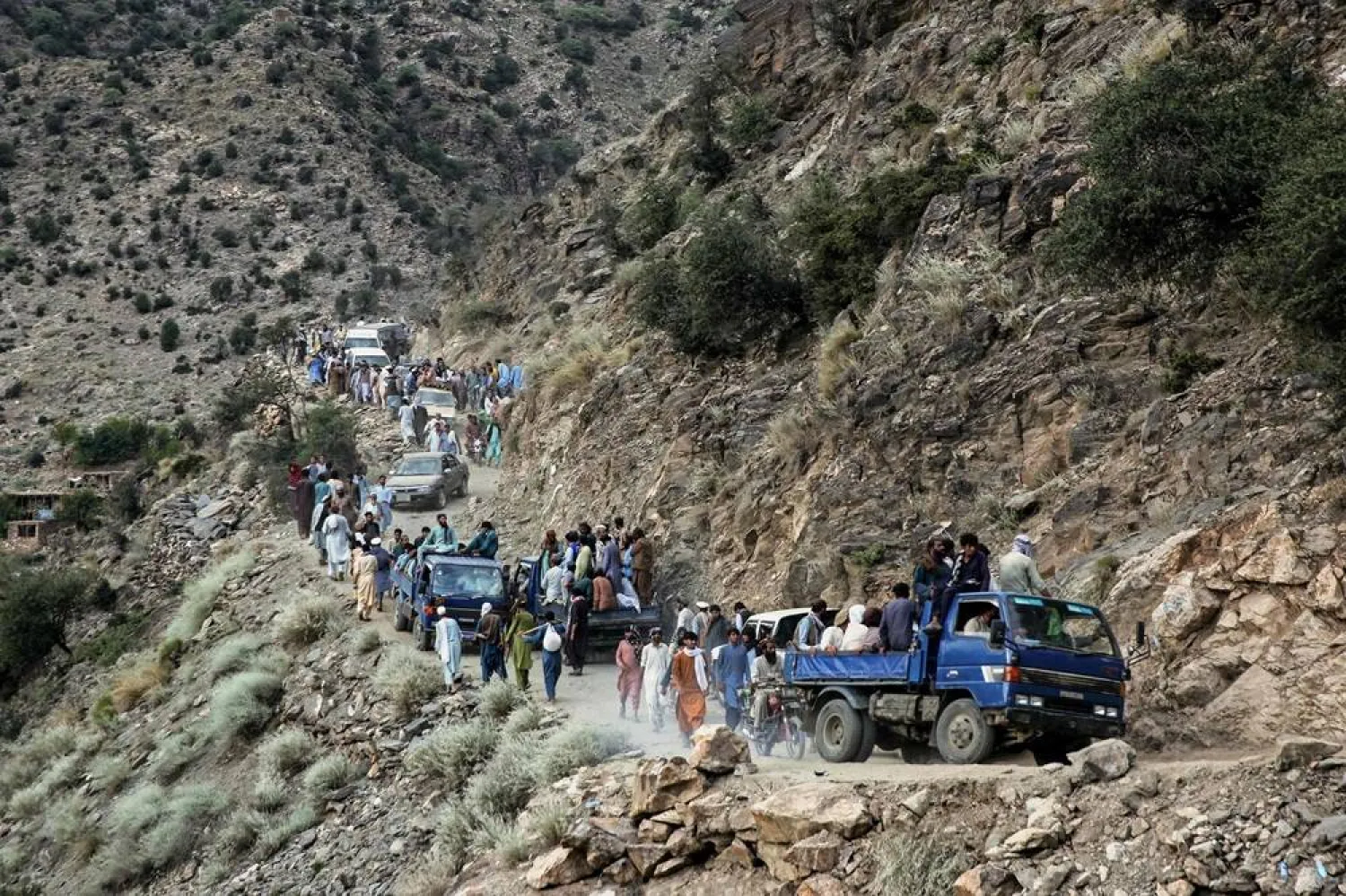
Afghans commute along a hillside, in the aftermath of an earthquake at the Nurgal district of Kunar province on September 3, 2025. (AFP)
TT

Aid Agencies Tell Countries to Send Funds to Help Afghanistan After Earthquake

Afghans commute along a hillside, in the aftermath of an earthquake at the Nurgal district of Kunar province on September 3, 2025. (AFP)

Aid agencies on Wednesday urged the international community to increase funding to Afghanistan after a major earthquake killed at least 1,400 people and injured thousands more.

Just a few countries have publicly committed money since Sunday night’s 6.0-magnitude quake struck several provinces in the mountainous and remote east, leveling villages and trapping people under rubble.

It’s the latest crisis to beset the country, and the third strong quake since the Taliban seized power in 2021.

The United Kingdom is giving 1 million pounds ($1.3 million) to help. This money will go to aid organizations and not the Taliban government, which the UK doesn't recognize. South Korea on Wednesday said that it would provide $1 million through the United Nations.

Australia on Thursday pledged $1 million and said it worked with established partners to ensure its support helped those in need and not the Taliban government.

A further $11 million is being released through funds overseen by the UN and the European Union, while development agencies are channeling money through nongovernmental organizations or charities.

But many traditional donor countries have yet to come forward with financial assistance. The US was once the largest humanitarian funder to Afghanistan until it gutted this support earlier this year.

“Afghans are weary of this never-ending crisis upon crisis, which they have to meet with dwindling external help and their own often desperate efforts,” said Thamindri De Silva, national director of World Vision Afghanistan.

“International governments are queasy about investing in the longer-term solutions that can address the drivers of crises, such as the lack of preparedness, rural health care, and fragile infrastructure that made the impacts of these earthquakes so devastating.”

World Vision has launched a private fundraising campaign, De Silva added.

Some governments and ambassadors have pledged assistance in kind to Afghanistan. India is sending tents and food. The United Arab Emirates dispatched a rescue team and essential relief supplies.

Taliban authorities have appealed for international help despite restricting and, in some cases, interfering with the work of NGOs.

International funding to Afghanistan has fallen dramatically since the Taliban takeover, and just 28% of the humanitarian funding target has been met this year.

Local resources were stretched to breaking point, and the lack of money was limiting the scale and speed of the response to the quake, said Jacopo Caridi, the country director for the Norwegian Refugee Council.

Rescue teams have struggled to reach affected communities in Kunar, the worst-affected province, hampered by rockfalls and landslides. Some are walking for hours to deliver aid and medicine, often up steep hills. People from surrounding areas have rushed in to help.

“The earthquake is not a stand-alone disaster,” Caridi said. “It hit communities that were already struggling with displacement, food insecurity, drought, and the return of hundreds of thousands of Afghan refugees from neighboring countries. Our teams in Kunar report that families are sleeping in the open, enduring repeated aftershocks.”

On Wednesday, UN spokesperson Stéphane Dujarric told reporters that more than 25 square kilometers (around 10 square miles) of land was contaminated by mines and explosive ordnance in earthquake-affected areas because of years of conflict.

He said that assessments of the quake’s impact and response efforts have been “very challenging” because of blocked roads, but the distribution of food and shelter materials and health assistance has started. The priorities are shelter, medical supplies, drinking water, food and sanitation.

“The needs remain immense, and we call on all those who are able to provide support for the earthquake response to do so,” he added.



NATO: Ukraine Still Receiving Arms Despite Mideast War

NATO Secretary General Mark Rutte via Reuters/File
TT

NATO: Ukraine Still Receiving Arms Despite Mideast War

NATO Secretary General Mark Rutte via Reuters/File

Ukraine is still getting essential defense equipment despite the war in the Middle East, which is depleting stockpiles in Europe and the United States, NATO Secretary General Mark Rutte said Thursday.

"The good news is that essential equipment into Ukraine continues to flow," he told reporters. That included American-made Patriot missile interceptors, which Ukraine desperately needs, he added, AFP reported.

The PURL program, launched last year, allows Ukraine to receive US equipment financed by European countries.

Some 75 percent of the missiles used by Patriot batteries in Ukraine have been supplied through the program, and 90 percent of the munitions used by other air-defense systems, Rutte added.

Rutte called on European countries to increase their own production capacity.

"They need to produce more extra production lines, extra shifts, opening new factories. The money is there," he said.


Germany FM Says 'Encouraging' if US Speaking Directly to Iran

German Foreign Minister Johann Wadephul. (Reuters: File Photo)
TT

Germany FM Says 'Encouraging' if US Speaking Directly to Iran

German Foreign Minister Johann Wadephul. (Reuters: File Photo)

Germany's foreign minister Thursday said it was encouraging if the United States was talking directly to Iran to end the war in the Middle East, but Washington should make its intentions clear.

"I hear that there are signs that the US is speaking directly to Iran. I think that this is encouraging and this is welcome," Johann Wadephul told reporters before heading into the meeting of G7 foreign ministers outside Paris, AFP reported.

With US Secretary of State Marco Rubio set to join the discussions from Friday, he added: "For the German government it is of great importance to know precisely what our American partners are intending."


US Envoy Witkoff Says Iran is Seeking an Off-ramp

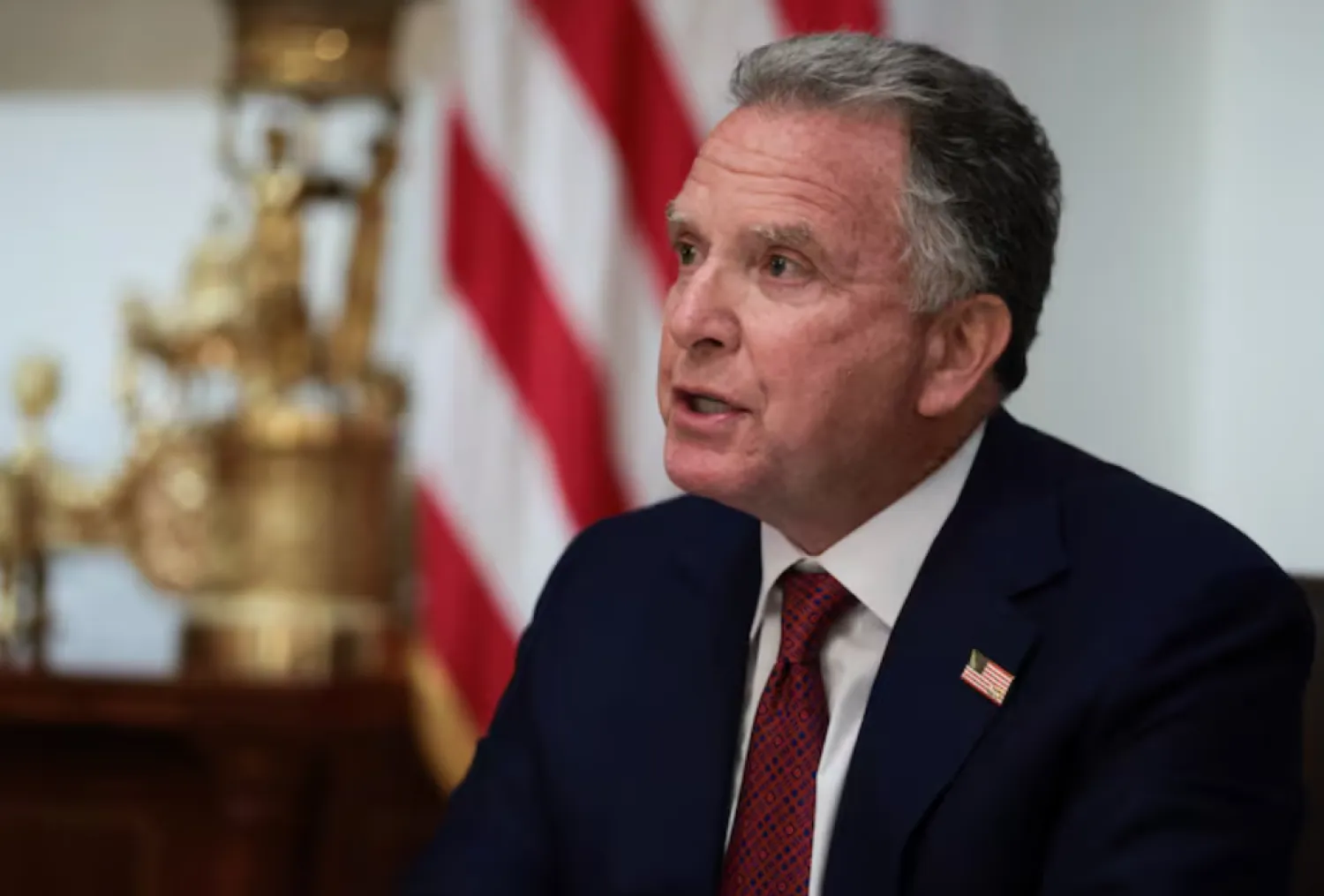
US Special Envoy Steve Witkoff speaks during a cabinet meeting at the White House in Washington, DC, US, March 26, 2026. REUTERS/Evelyn Hockstein
TT

US Envoy Witkoff Says Iran is Seeking an Off-ramp

US Special Envoy Steve Witkoff speaks during a cabinet meeting at the White House in Washington, DC, US, March 26, 2026. REUTERS/Evelyn Hockstein

The United States has sent Iran a "15-point action list" as a basis for negotiations to end the current conflict, US Special Envoy Steve Witkoff said on Thursday, adding that there are signs that Tehran was interested in making a deal.


Witkoff, speaking during a cabinet meeting at the White House, said that the nascent talks could be successful if the Iranians realize there were no good alternatives - a realization Tehran might be coming to, he argued, Reuters reported.


"We will see where things lead, and if we can convince Iran that this is the inflection point with no good alternatives for them other than more death and destruction," Witkoff told reporters.


"We have strong signs that this is a possibility."


Witkoff said Pakistan had been acting as a mediator, confirming statements from Pakistani officials.