
UN Overwhelmingly Endorses Declaration on Two-State Solution for Palestinians, Israel

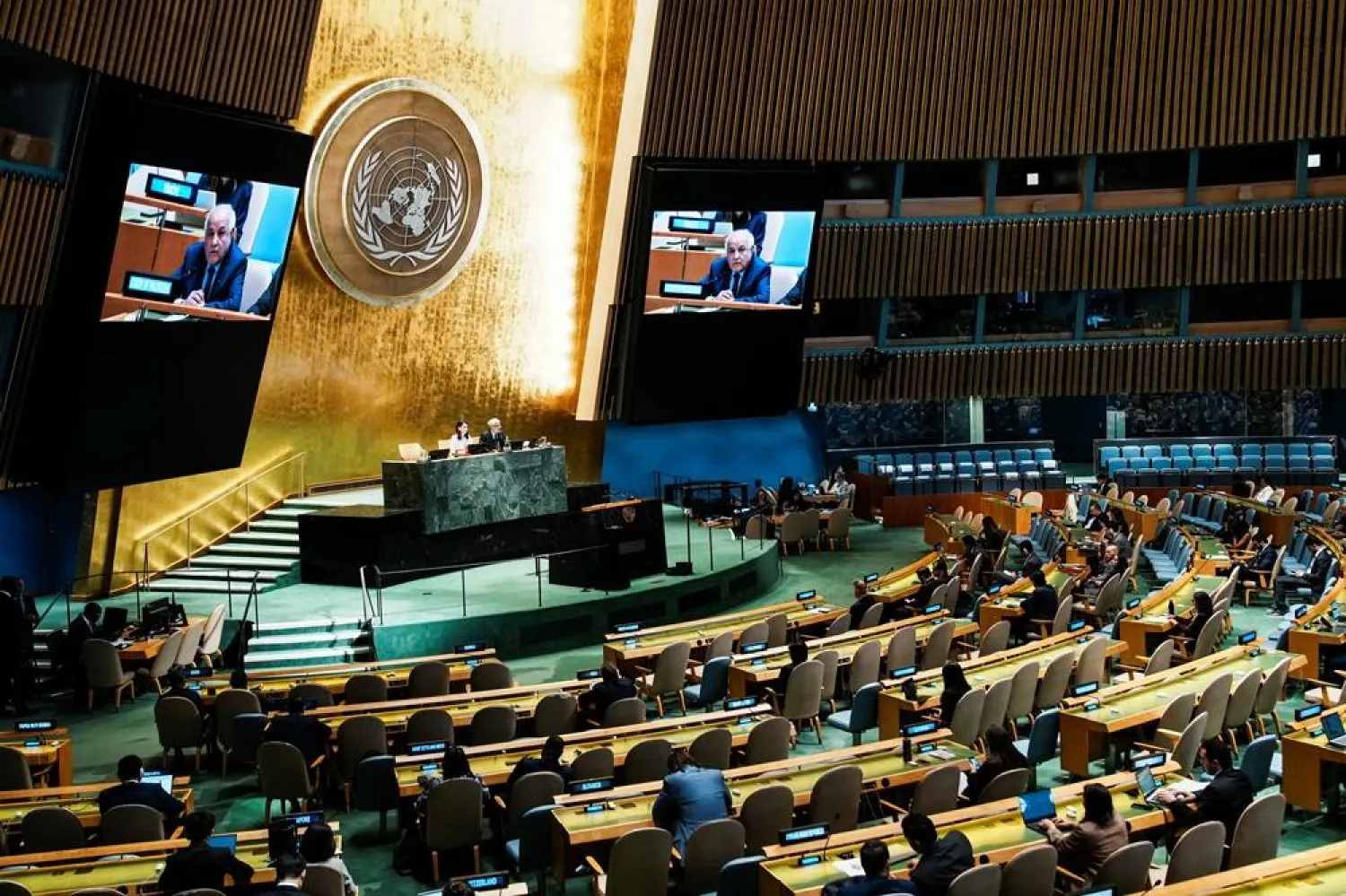
Riyad Mansour, Palestinian Permanent Observer to the United Nations, on screens as he addresses delegates after the United Nations General Assembly vote on the Question of Palestine and the Implementation of the Two-State Solution, at UN headquarters in New York City, US, September 12, 2025. (Reuters)
TT

UN Overwhelmingly Endorses Declaration on Two-State Solution for Palestinians, Israel

Riyad Mansour, Palestinian Permanent Observer to the United Nations, on screens as he addresses delegates after the United Nations General Assembly vote on the Question of Palestine and the Implementation of the Two-State Solution, at UN headquarters in New York City, US, September 12, 2025. (Reuters)

The United Nations General Assembly on Friday overwhelmingly voted to endorse a declaration outlining "tangible, timebound, and irreversible steps" towards a two-state solution between Israel and the Palestinians ahead of a meeting of world leaders.  

The seven-page declaration is the result of an international conference at the UN in July - hosted by Saudi Arabia and France - on the decades-long conflict. The United States and Israel boycotted the event. 

A resolution endorsing the declaration received 142 votes in favor and 10 against, while 12 countries abstained. 

The vote comes ahead of a meeting of world leaders on September 22 - on the sidelines of the high-level UN General Assembly - where Britain, France, Canada, Australia and Belgium are expected to formally recognize a Palestinian state. 

The declaration endorsed by the 193-member General Assembly condemns the attacks against Israel by Palestinian Hamas fighters on October 7, 2023, which triggered the war in Gaza. 

It also condemns the attacks by Israel against civilians and civilian infrastructure in Gaza, siege and starvation, "which have resulted in a devastating humanitarian catastrophe and protection crisis." 

French Foreign Minister Jean-Noel Barrot said the resolution secured the international isolation of Hamas. 

"For the first time today, the United Nations adopted a text condemning it for its crimes and calling for its surrender and disarmament," he said in an X post. 

The resolution was supported by all Gulf Arab states. Israel and the United States voted against it, along with Argentina, Hungary, Micronesia, Nauru, Palau, Papua New Guinea, Paraguay and Tonga. 

The declaration endorsed by the resolution says the war in Gaza "must end now" and support the deployment of a temporary international stabilization mission mandated by the UN Security Council. 

The United States described the vote as "yet another misguided and ill-timed publicity stunt" that undermined serious diplomatic efforts to end the conflict. 

"Make no mistake, this resolution is a gift to Hamas," US diplomat Morgan Ortagus told the General Assembly. "Far from promoting peace, the conference has already prolonged the war, emboldened Hamas and harmed the prospects of peace in both short and long term." 

Israel, which has long criticized the UN for not condemning Hamas by name for the October 7 attacks, dismissed the declaration as one-sided and described the vote as theater. 

"The only beneficiary is Hamas …When terrorists are the ones cheering, you are not advancing peace; you are advancing terror," Israel's UN Ambassador Danny Danon said. 

The October 7, 2023, Hamas attack on Israel killed 1,200 people, mostly civilians, and about 251 were taken hostage, according to Israeli tallies. More than 64,000 people, also mostly civilians, have since been killed during the war in Gaza, according to local health authorities. 


Hamas to Dissolve Gaza Governing Body, Say Officials

Palestinians walk along a road in Gaza City on July 3, 2026. (AFP)
TT

Hamas to Dissolve Gaza Governing Body, Say Officials

Palestinians walk along a road in Gaza City on July 3, 2026. (AFP)

Hamas is preparing to dissolve the body that has governed the Gaza Strip for nearly two decades, officials from the group said Monday, clearing the way for a Palestinian technocratic committee to implement civilian rule.

The move marks a significant political shift by the Hamas group, which has run Gaza since its fighters seized control from rival Palestinian movement Fatah in 2007.

Since a ceasefire took effect in Gaza last October between Hamas and Israel, the group has repeatedly said it is prepared to step aside from day-to-day governance, but the thorny issue of its disarmament remains unresolved.

"The movement has decided to dissolve the Gaza government committee and to appoint a nationally accepted figure to oversee the committee's work until the National Committee for the Administration of Gaza formally assumes its responsibilities," a Hamas official told AFP, speaking on condition of anonymity as he was not authorized to talk publicly on the matter.

Hamas's media office in Gaza said it would hold "an important press conference" later on Monday, without providing details.

A second Hamas official said the group had already informed other Palestinian factions of the move at a recent meeting in Cairo.

"The factions welcomed Hamas's decision, describing it as a serious step towards enabling the National Committee to take up its governing role," the official said.

The dissolution of the Hamas body paves the way for the National Committee for the Administration of Gaza (NCAG), headed by Palestinian official Ali Shaath, to assume administrative responsibilities.

The NCAG was established by the Board of Peace, which was in turn set up by US President Donald Trump when he brokered the ceasefire between Hamas and Israel last October.

But it has remained based outside Gaza for months, reportedly due to Israeli objections to its entry into the war-devastated territory.

Hamas and other Palestinian factions have held several rounds of talks in Cairo with mediators to narrow differences, particularly over the second phase of the Gaza ceasefire.

The first phase involved the release of the last Israeli hostages held by Hamas in exchange for Palestinians detained by Israel.

The transition to the second phase, which was to involve Hamas's disarmament and a gradual withdrawal of Israeli forces from Gaza, has been stalled for months.

Israeli forces have actually expanded their presence in the territory in recent months, taking control of nearly 70 percent.

Meanwhile, Hamas is demanding the establishment of a Palestinian administration before it will consider handing over any part of its arsenal.

The question of Gaza's post-war governance remains one of the main sticking points in negotiations on implementing phase two.

Israel rejects any return of Hamas to power, but also rejects a direct takeover by the Ramallah-based Palestinian Authority at this stage.


UN Rights Council Orders 'Urgent Inquiry' in Sudan's El-Obeid

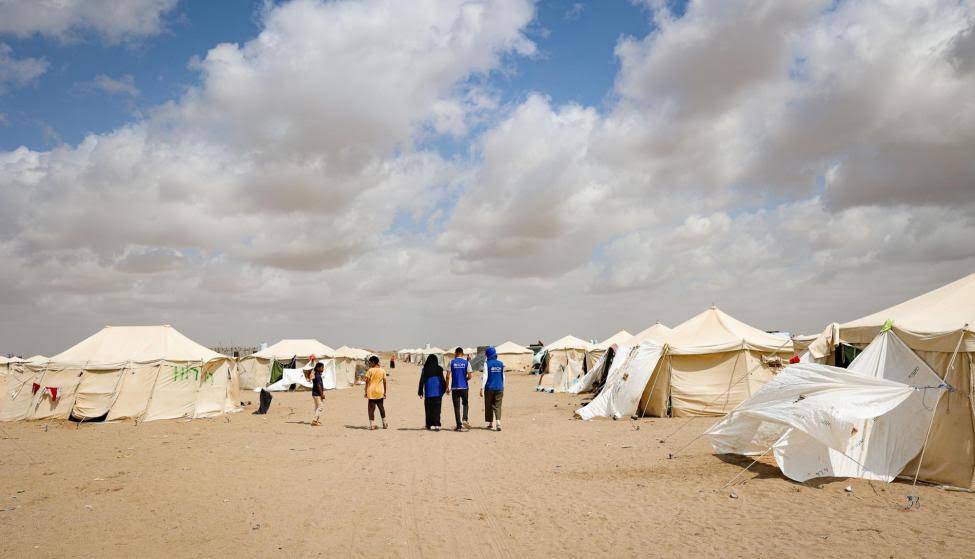
A Sudanese girl reacts while carrying a plastic canister in al-Rahmaniyah camp for displaced people, near the city of El-Obeid in the southern Kordofan region, on June 25, 2026. (Photo by AFP)
TT

UN Rights Council Orders 'Urgent Inquiry' in Sudan's El-Obeid

A Sudanese girl reacts while carrying a plastic canister in al-Rahmaniyah camp for displaced people, near the city of El-Obeid in the southern Kordofan region, on June 25, 2026. (Photo by AFP)

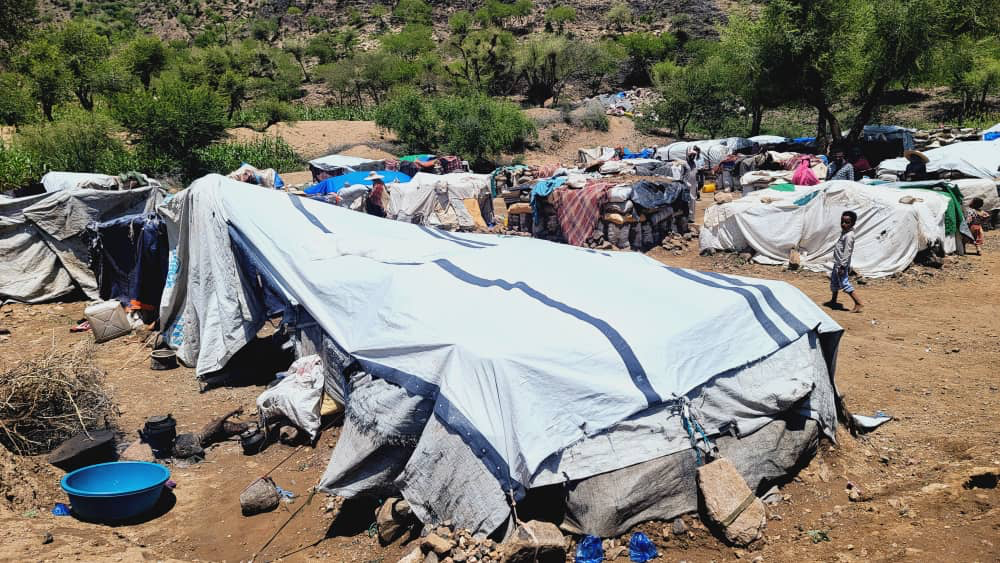
The UN rights council on Monday ordered an "urgent inquiry" into violations and abuses in the Sudanese city of El-Obeid, warning of the looming risk of "large-scale atrocities".

In a resolution adopted by consensus, the 47-member council voiced "deep concern about the imminent risk of large-scale atrocities" in El-Obeid, calling on an independent UN fact-finding mission to conduct "an urgent inquiry into any violations and abuses of international... law and related to international crimes" allegedly committed there.


Macron Becomes First Western Leader to Visit Damascus

Participants at the international conference on Syria in Paris with French President Emmanuel Macron (Reuters)
TT

Macron Becomes First Western Leader to Visit Damascus

Participants at the international conference on Syria in Paris with French President Emmanuel Macron (Reuters)

Since the fall of President Bashar al-Assad‘s regime and the assumption of power by interim President Ahmed al-Sharaa, Paris has led Western efforts to engage with Syria’s new leadership.

That policy has been reflected in three key steps. The first was France’s push within the European Union to lift sanctions imposed on the former Syrian regime, a process that has since been carried out gradually.

The second was its call for an economic conference, hosted in Paris on February 13, 2025, just weeks after Assad’s ouster, to support Syria. The conference produced a political, economic, and social roadmap, along with recommendations on good governance, minority protection, and the establishment of an inclusive political system.

The third step was inviting al-Sharaa to visit Paris. That visit took place on May 7, making Paris the first Western capital to receive the interim Syrian president. It also encouraged other European capitals to follow suit.

Earlier, French Foreign Minister Jean-Noël Barrot became the first Western foreign minister to visit Damascus, alongside his German counterpart Annalena Baerbock, on January 3 last year. On that occasion, the French Embassy in Damascus was “theoretically” reopened, although its staff continue to operate from Beirut while restoration work on the embassy building is completed.

These moves reflect President Emmanuel Macron‘s determination to take the lead in engaging Syria’s new authorities. As one former French ambassador to the region put it, Paris aims “to influence and engage the new leadership while preparing for the country’s reconstruction.”

France is also motivated by its longstanding ties with the Kurds, particularly the Syrian Democratic Forces (SDF), as well as its interest in Syrian-Lebanese relations. Paris believes it can help facilitate dialogue between Damascus and Beirut and encourage both sides to resolve their longstanding border issues.

The former ambassador added that France has sought to support “a peaceful and inclusive political transition.” At the same time, it has not hesitated to condemn the serious security incidents that have occurred across Syria, from the Mediterranean coast to the northeast and south, while calling for those responsible to be prosecuted. Nevertheless, French officials have generally maintained that “overall, developments are moving in the right direction.”

For weeks, diplomatic and media circles have been discussing Macron’s planned visit to Syria, which would mark the first visit by a Western head of state to Damascus since Assad’s fall. The last French president to visit Syria was Nicolas Sarkozy, who made an official trip to Damascus on September 3–4, 2009, as part of efforts to relaunch French-Syrian relations following Assad’s visit to Paris in July of that year.

Among the notable visits to Damascus was that of Ursula von der Leyen, President of the European Commission, in January this year, followed three months later by a visit from Ukrainian President Volodymyr Zelenskyy.

Given the political backing Paris has extended to Syria’s new leadership — reminiscent of the role former President Jacques Chirac sought to play with Bashar al-Assad shortly after he came to power — France is betting on its ability to strengthen its diplomatic, political, and economic position in Syria.

This week’s NATO summit, held Tuesday and Wednesday, provided Macron with an opportunity to make a brief visit to Syria. The trip is expected primarily to advance bilateral relations, deepen consultations on regional issues, continue cooperation in combating terrorism, and explore opportunities for collaboration across a wide range of sectors, as Paris seeks to maintain the close engagement with Syria’s new authorities that it has pursued since they assumed power.